Tajikistan Glass Tiles Market Size, Share & Growth Rate
The Tajikistan Glass Tiles Market was estimated at USD 151 Million in 2025 and is projected to reach USD 208 Million by 2032, growing at a CAGR of 4.7% from 2026 to 2032. This growth trajectory is largely fueled by an uptick in construction activities spurred by urbanization and infrastructure development projects across the country. Moreover, rising disposable incomes are elevating consumer preferences toward high-quality, aesthetically pleasing building materials, further driving demand for glass tiles in residential and commercial settings.
Tajikistan Glass Tiles Market Year-wise Growth Rate and Key Drivers
This graph highlights how the Tajikistan Glass Tiles Market has steadily grown over the years, supported by major growth factors.
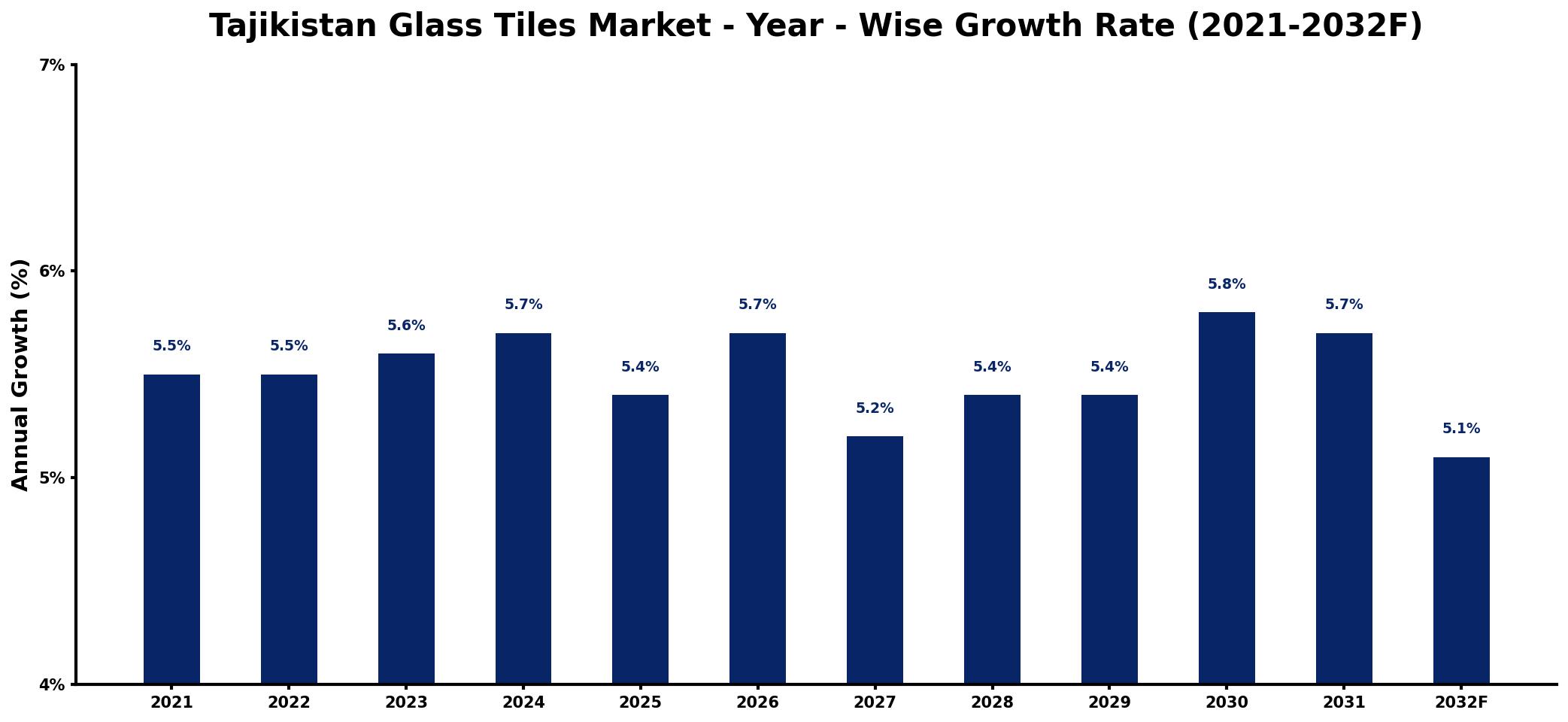
The table below presents the year‑wise growth rates along with the key drivers influencing the market
| Year | Growth Rate | Major Drivers |
| 2021 | 5.5% | Rising construction project investments |
| 2022 | 5.5% | Increased demand for decorative surfaces |
| 2023 | 5.6% | Growing popularity of interior design |
| 2024 | 5.7% | Expansion of urban development initiatives |
| 2025 | 5.4% | Surge in home renovation projects |
| 2026 | 5.7% | Boost in hospitality sector growth |
| 2027 | 5.2% | Increasing focus on sustainable architecture |
| 2028 | 5.4% | rising demand from electronics |
| 2029 | 5.4% | Emergence of innovative design trends |
| 2030 | 5.8% | Heightened awareness of aesthetic appeal |
| 2031 | 5.7% | Rise in luxury residential developments |
| 2032 | 5.1% | Growing emphasis on custom solutions |
Note: Market size estimations and growth projections presented in this report are based on 6Wresearch's proprietary forecasting methodology, utilizing the latest available industry data, government publications, and primary research inputs.
Tajikistan Glass Tiles Market Synopsis
Recently, the Tajikistan Glass Tiles Market has benefitted from a resurgence in construction activities, reflecting increased investment in infrastructure. However, as the market evolves, a significant shift toward innovative and sustainable building materials is on the horizon, positioning glass tiles as a go-to choice for modern designs.
The future promises to be equally dynamic, with rising consumer interest in eco-friendly products and advanced manufacturing techniques. These factors not only enhance design variety but also align with global sustainability trends, creating an exciting landscape for market participants.
Tajikistan Glass Tiles Market Key Takeaways
- Steady growth driven by increasing construction activities and urbanization.
- Heightened consumer preference for aesthetic and durable building materials.
- Emerging trend toward sustainable and eco-friendly glass tiles.
- Investment opportunities in both domestic production and distribution channels.
- Government policies supporting local manufacturing and infrastructure development.
Evaluation of Restraints in Tajikistan Glass Tiles Market
While the Tajikistan Glass Tiles Market shows promising potential, it faces notable restraints that could hinder its expansion. A major concern is the limited domestic production capacity, which is compounded by high import costs and dependency on foreign suppliers for raw materials and manufacturing technology. These factors lead to quality inconsistencies and elevated production costs. Additionally, infrastructure inadequacies, particularly in transportation, complicate the distribution of glass tiles nationwide, potentially impacting overall market performance.
Tajikistan Glass Tiles Market Trends
Current trends in the Tajikistan Glass Tiles Market are heavily influenced by the ongoing construction boom, which is accompanied by rising disposable incomes and a growing emphasis on interior design aesthetics. Consumers increasingly favor glass tiles for their durability and ease of maintenance, while technological advancements are allowing for more innovative designs and finishes. Furthermore, a noticeable shift towards sustainable products is taking root, with increasing interest in recycled glass options.
Tajikistan Glass Tiles Market Opportunities
The market presents significant investment opportunities as the construction sector expands, necessitating high-quality building materials like glass tiles. Additionally, government-backed urbanization projects are likely to further stimulate demand. Investors who align their strategies with the growing trend toward modern, aesthetically appealing products stand to benefit significantly from this burgeoning market.
Government Initiatives in the Tajikistan Glass Tiles Market
The Tajikistani government is actively fostering a conducive environment for the glass tiles market through various initiatives. These include policies aimed at promoting local production, lowering import tariffs on raw materials, and providing financial incentives for businesses. Furthermore, efforts to streamline customs procedures are intended to boost the export potential of domestic manufacturers, thereby enhancing the overall competitiveness of the market.
Future Insights of the Tajikistan Glass Tiles Market
Looking ahead to 2026-2032, the Tajikistan Glass Tiles Market is poised for steady growth, driven by ongoing urbanization and rising construction activities. Consumer interest in aesthetic interior solutions is anticipated to rise, further propelling demand. Additionally, as disposable income levels climb, so too will the appetite for modern and sustainable building materials. However, market players will need to remain vigilant regarding competition from alternative materials and fluctuations in raw material prices, which may pose challenges to growth.
Tajikistan Glass Tiles Market Latest Developments (2025 - 2026)
Recent developments in the Tajikistan Glass Tiles Market highlight a growing emphasis on innovative design and manufacturing practices. Companies are investing in advanced technologies to enhance product variety and quality. Additionally, consumer feedback is increasingly being integrated into product development processes to ensure that offerings align with changing preferences. A noticeable trend is the rising popularity of glass tiles in commercial establishments, including hospitality and retail spaces, indicating a broader acceptance and application of these materials.
Tajikistan Glass Tiles Market - Key Attractiveness of the Report
- 10 Years of Market Numbers
- Historical Data Starting from 2022 to 2025
- Base Year: 2025
- Forecast Data until 2032
- Key Performance Indicators Impacting the Market
- Major Upcoming Developments and Projects
Key Highlights of the Report:
- Tajikistan Glass Tiles Market Outlook
- Market Size of Tajikistan Glass Tiles Market, 2025
- Forecast of Tajikistan Glass Tiles Market, 2032
- Historical Data and Forecast of Tajikistan Glass Tiles Revenues & Volume for the Period 2022-2032F
- Tajikistan Glass Tiles Market Trend Evolution
- Tajikistan Glass Tiles Market Drivers and Challenges
- Tajikistan Glass Tiles Price Trends
- Tajikistan Glass Tiles Porter's Five Forces
- Tajikistan Glass Tiles Industry Life Cycle
- Historical Data and Forecast of Tajikistan Glass Tiles Market Revenues & Volume By Manufacturing Process for the Period 2022-2032F
- Historical Data and Forecast of Tajikistan Glass Tiles Market Revenues & Volume By Smalti Tiles for the Period 2022-2032F
- Historical Data and Forecast of Tajikistan Glass Tiles Market Revenues & Volume By Fused Tiles for the Period 2022-2032F
- Historical Data and Forecast of Tajikistan Glass Tiles Market Revenues & Volume By Sintered Tiles for the Period 2022-2032F
- Historical Data and Forecast of Tajikistan Glass Tiles Market Revenues & Volume By Cast Tiles for the Period 2022-2032F
- Historical Data and Forecast of Tajikistan Glass Tiles Market Revenues & Volume By Other for the Period 2022-2032F
- Historical Data and Forecast of Tajikistan Glass Tiles Market Revenues & Volume By Product Type for the Period 2022-2032F
- Historical Data and Forecast of Tajikistan Glass Tiles Market Revenues & Volume By Matte-finished Glass Tile for the Period 2022-2032F
- Historical Data and Forecast of Tajikistan Glass Tiles Market Revenues & Volume By Smooth Glass Tile for the Period 2022-2032F
- Historical Data and Forecast of Tajikistan Glass Tiles Market Revenues & Volume By End-User Industry for the Period 2022-2032F
- Historical Data and Forecast of Tajikistan Glass Tiles Market Revenues & Volume By Residential for the Period 2022-2032F
- Historical Data and Forecast of Tajikistan Glass Tiles Market Revenues & Volume By Commercial for the Period 2022-2032F
- Historical Data and Forecast of Tajikistan Glass Tiles Market Revenues & Volume By Infrastructure for the Period 2022-2032F
- Tajikistan Glass Tiles Import Export Trade Statistics
- Market Opportunity Assessment By Manufacturing Process
- Market Opportunity Assessment By Product Type
- Market Opportunity Assessment By End-User Industry
- Tajikistan Glass Tiles Top Companies Market Share
- Tajikistan Glass Tiles Competitive Benchmarking By Technical and Operational Parameters
- Tajikistan Glass Tiles Company Profiles
- Tajikistan Glass Tiles Key Strategic Recommendations






































