Tajikistan Identity and Access Management Market Size & Growth Rate (2026-2032)
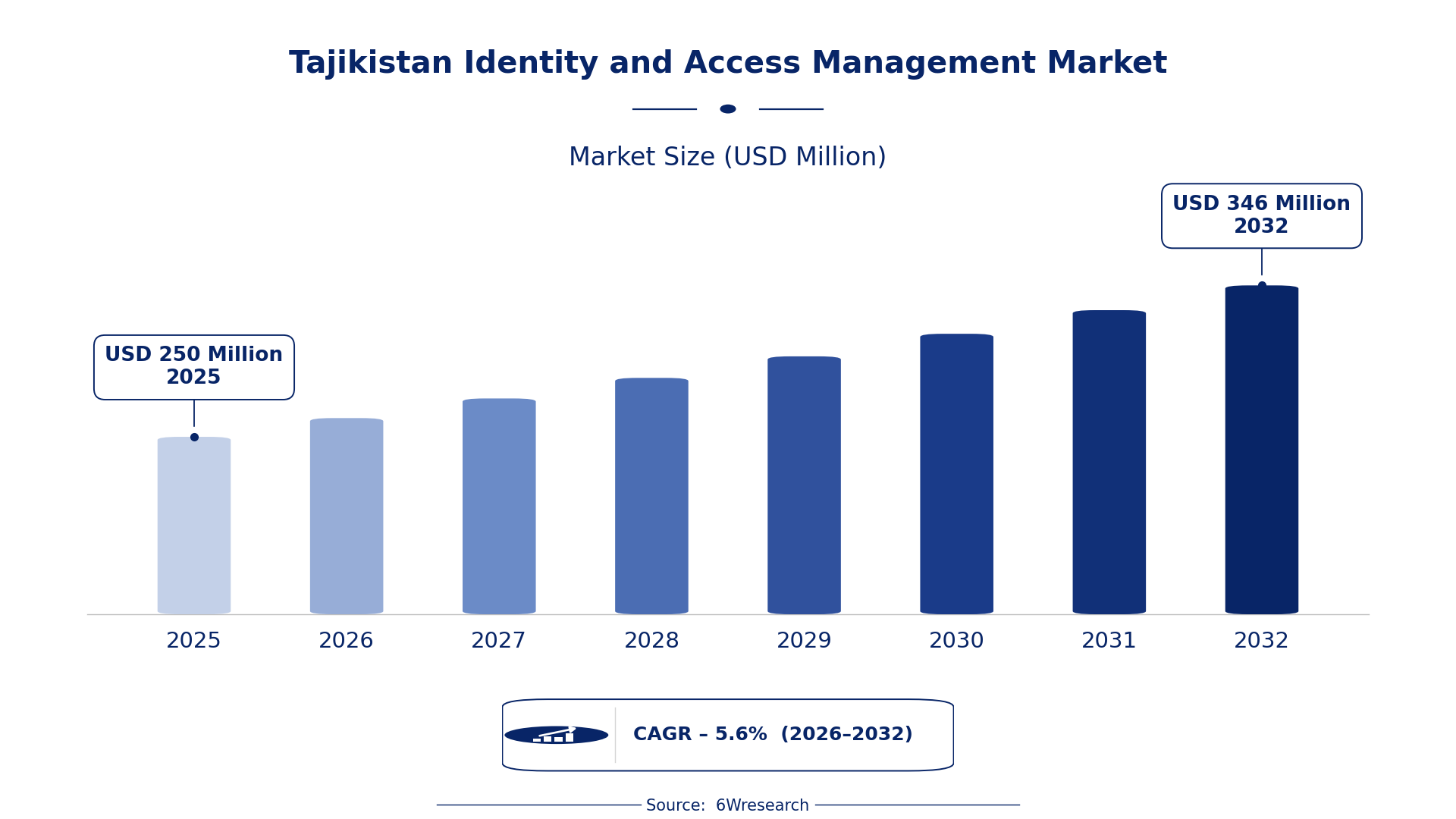
The Tajikistan Identity and Access Management Market was estimated at USD 250 Million in 2025 and is projected to reach USD 346 Million by 2032, growing at a CAGR of 5.6% from 2026 to 2032.
Tajikistan Identity and Access Management Market Synopsis
The demand for Identity and Access Management (IAM) solutions in Tajikistan has surged, driven by a growing awareness of cybersecurity threats among businesses and government entities. Sectors such as finance, healthcare, and public administration are increasingly turning to IAM systems to safeguard their digital assets and meet regulatory compliance requirements.
As digital transformation accelerates, Tajikistan's IAM market is witnessing a notable shift toward cloud-based solutions. These technologies offer scalability and cost advantages, allowing organizations to respond swiftly to emerging security challenges. This trend highlights the critical need for effective IAM strategies to manage user identities and secure sensitive data.
Tajikistan Identity and Access Management Market Year-wise Growth Rate and Key Drivers
This graph illustrates the annual growth rates of the Tajikistan Identity and Access Management Market from 2021 to 2032, highlighting a steady upward trajectory and projected expansion over the forecast period.
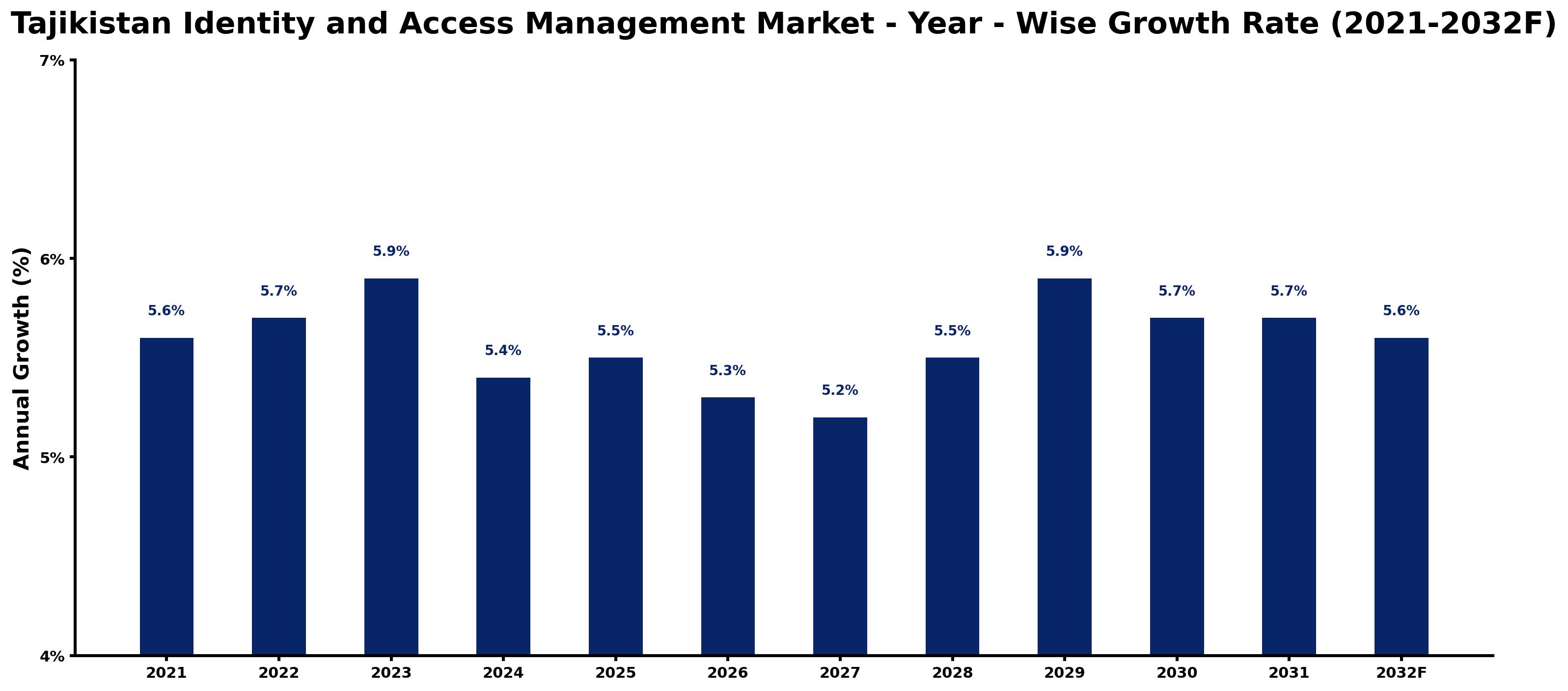
The table below presents the year‑wise growth rates along with the key drivers influencing the market
| Year | Growth Rate | Major Drivers |
| 2021 | 5.6% | National cybersecurity strategy implementation by Tajik government. |
| 2022 | 5.7% | Increased mobile banking adoption driving identity management growth. |
| 2023 | 5.9% | Youth population's digital engagement boosting access management needs. |
| 2024 | 5.4% | Rise in e-government services requiring robust ID systems. |
| 2025 | 5.5% | Partnerships with tech firms enhancing local IAM solutions. |
| 2026 | 5.3% | Regulatory policies favoring digital identity verification processes. |
| 2027 | 5.2% | International aid supporting ID infrastructure modernization efforts. |
| 2028 | 5.5% | Growing remote work culture necessitating secure access solutions. |
| 2029 | 5.9% | Heightened identity theft concerns driving demand for IAM tools. |
| 2030 | 5.7% | Increased foreign investment in fintech solutions for identity management. |
| 2031 | 5.7% | Local startups innovating in biometric authentication technologies. |
| 2032 | 5.6% | Government initiatives promoting digital literacy and identity security. |
Note: Market size estimations and growth projections presented in this report are based on 6Wresearch's proprietary forecasting methodology, utilizing the latest available industry data, government publications, and primary research inputs.
Tajikistan Identity and Access Management Market Key Takeaways
Below are some of the specific key takeaways from the market, including:
- The IAM market is experiencing steady growth, propelled by increased cybersecurity awareness.
- Organizations are prioritizing compliance with local and international data protection regulations.
- Cloud-based IAM solutions are gaining traction for their adaptability and cost-effectiveness.
- Integration of biometric authentication methods is enhancing security features across IAM systems.
- The digital transformation across sectors is expected to fuel the demand for advanced IAM solutions.
Evaluation of Restraints in Tajikistan Identity and Access Management Market
Despite the promising growth trajectory, the IAM market in Tajikistan faces several hurdles. Limited awareness among small and medium enterprises about IAM solutions continues to inhibit broader adoption. Furthermore, the skill gap in the local workforce, particularly regarding the implementation and management of IAM systems, restricts operational efficiency. Organizations also express concerns about the perceived costs and complexities associated with integrating IAM into existing IT infrastructures. Addressing these limitations is crucial for unlocking the market's full potential.
Tajikistan Identity and Access Management Market Trends
Several key trends are shaping the IAM market in Tajikistan. The focus on enhanced cybersecurity measures is prompting organizations to explore sophisticated IAM solutions that can secure digital identities. Cloud-based IAM solutions are particularly favored due to their flexibility and scalability, enabling organizations to manage access controls efficiently.
Additionally, the integration of advanced biometric systems, such as facial recognition and fingerprint scanning, is becoming prevalent. This shift not only strengthens security but also improves user experience, making it a compelling option for many businesses aiming to protect sensitive information.
Tajikistan Identity and Access Management Market Opportunities
The IAM market presents substantial investment opportunities, particularly as digital services continue to proliferate in Tajikistan. Government and private sector initiatives aimed at digitization are fostering a favorable environment for IAM solution providers. Organizations are increasingly realizing the need for effective data protection, positioning IAM as a critical component of their cybersecurity strategy.
Investors can capitalize on this trend by offering tailored IAM solutions that address local regulatory requirements and specific business needs. Early entrants can establish strong footholds, potentially partnering with organizations looking to enhance their cybersecurity frameworks as the market matures.
Government Initiatives in the Tajikistan Identity and Access Management Market
While there are no specific policies targeting the IAM sector directly, Tajikistan's government is actively promoting cybersecurity and data protection through various laws. Recent legislative frameworks emphasize the importance of secure digital transactions and privacy, indirectly supporting the growth of IAM solutions.
- A national digital infrastructure upgrade programme recently initiated aims to enhance cybersecurity capabilities across public sector organizations.
- The Law on Personal Data, enacted in early 2025, mandates businesses to prioritize data protection, influencing IAM adoption across sectors.
- A planned public-private partnership is expected to facilitate the development of a more comprehensive digital identity framework by 2027.
- Ongoing efforts to promote e-governance are anticipated to drive demand for IAM solutions in government sectors, reinforcing security protocols.
- A current initiative focused on raising awareness about cybersecurity best practices is being rolled out, targeting small and medium enterprises to boost IAM knowledge.
Future Insights of the Tajikistan Identity and Access Management Market
Looking ahead to 2026-2032, the IAM market in Tajikistan is set to expand as digital technology adoption accelerates. Organizations are likely to invest heavily in IAM solutions to safeguard sensitive data and comply with evolving regulations. The growing emphasis on remote work and the need for secure identity verification will further drive demand. As local businesses recognize the critical nature of cybersecurity, the IAM market will continue to mature, presenting a myriad of opportunities for vendors.
Tajikistan Identity and Access Management Market Latest Developments
In the past year, the IAM market in Tajikistan has witnessed noteworthy developments reflecting the growing emphasis on cybersecurity. Organizations are increasingly recognizing the necessity of robust identity management systems to address evolving threats. This heightened focus is catalyzing partnerships and technology investments in IAM solutions.
- A major technology vendor launched an innovative cloud-based IAM platform in early 2025, aimed at enhancing digital security for local enterprises.
- Partnerships between technology providers and financial institutions, initiated in Q3 2025, are currently underway to develop tailored IAM solutions for the finance sector.
- Ongoing initiatives to integrate biometric authentication into existing IAM systems are expected to roll out by mid-2026, enhancing security measures.
- A planned initiative to provide training workshops for IAM system implementation is set to begin in late 2026, focusing on building local expertise.
Tajikistan Identity and Access Management Market - Key Attractiveness of the Report
- 10 Years of Market Numbers
- Historical Data Starting from 2022 to 2025
- Base Year: 2025
- Forecast Data until 2032
- Key Performance Indicators Impacting the Market
- Major Upcoming Developments and Projects
Key Highlights of the Report:
- Tajikistan Identity and Access Management Market Outlook
- Market Size of Tajikistan Identity and Access Management Market, 2025
- Forecast of Tajikistan Identity and Access Management Market, 2032
- Historical Data and Forecast of Tajikistan Identity and Access Management Revenues & Volume for the Period 2022-2032F
- Tajikistan Identity and Access Management Market Trend Evolution
- Tajikistan Identity and Access Management Market Drivers and Challenges
- Tajikistan Identity and Access Management Price Trends
- Tajikistan Identity and Access Management Porter's Five Forces
- Tajikistan Identity and Access Management Industry Life Cycle
- Historical Data and Forecast of Tajikistan Identity and Access Management Market Revenues & Volume By Component for the Period 2022-2032F
- Historical Data and Forecast of Tajikistan Identity and Access Management Market Revenues & Volume By Solutions for the Period 2022-2032F
- Historical Data and Forecast of Tajikistan Identity and Access Management Market Revenues & Volume By Services for the Period 2022-2032F
- Historical Data and Forecast of Tajikistan Identity and Access Management Market Revenues & Volume By Solution for the Period 2022-2032F
- Historical Data and Forecast of Tajikistan Identity and Access Management Market Revenues & Volume By Data Directory for the Period 2022-2032F
- Historical Data and Forecast of Tajikistan Identity and Access Management Market Revenues & Volume By Identity Lifecycle Management for the Period 2022-2032F
- Historical Data and Forecast of Tajikistan Identity and Access Management Market Revenues & Volume By Deployment Mode for the Period 2022-2032F
- Historical Data and Forecast of Tajikistan Identity and Access Management Market Revenues & Volume By Cloud for the Period 2022-2032F
- Historical Data and Forecast of Tajikistan Identity and Access Management Market Revenues & Volume By On-premises for the Period 2022-2032F
- Historical Data and Forecast of Tajikistan Identity and Access Management Market Revenues & Volume By Organization Size for the Period 2022-2032F
- Historical Data and Forecast of Tajikistan Identity and Access Management Market Revenues & Volume By SMEs for the Period 2022-2032F
- Historical Data and Forecast of Tajikistan Identity and Access Management Market Revenues & Volume By Large Enterprises for the Period 2022-2032F
- Historical Data and Forecast of Tajikistan Identity and Access Management Market Revenues & Volume By Vertical for the Period 2022-2032F
- Historical Data and Forecast of Tajikistan Identity and Access Management Market Revenues & Volume By BFSI for the Period 2022-2032F
- Historical Data and Forecast of Tajikistan Identity and Access Management Market Revenues & Volume By Travel and Hospitality for the Period 2022-2032F
- Historical Data and Forecast of Tajikistan Identity and Access Management Market Revenues & Volume By Healthcare for the Period 2022-2032F
- Historical Data and Forecast of Tajikistan Identity and Access Management Market Revenues & Volume By Retail and eCommerce for the Period 2022-2032F
- Historical Data and Forecast of Tajikistan Identity and Access Management Market Revenues & Volume By IT and ITeS for the Period 2022-2032F
- Historical Data and Forecast of Tajikistan Identity and Access Management Market Revenues & Volume By Education for the Period 2022-2032F
- Historical Data and Forecast of Tajikistan Identity and Access Management Market Revenues & Volume By Others (Energy and Utilities, Telecommunication, Other Citizen Services) for the Period 2022-2032F
- Tajikistan Identity and Access Management Import Export Trade Statistics
- Market Opportunity Assessment By Component
- Market Opportunity Assessment By Solution
- Market Opportunity Assessment By Deployment Mode
- Market Opportunity Assessment By Organization Size
- Market Opportunity Assessment By Vertical
- Tajikistan Identity and Access Management Top Companies Market Share
- Tajikistan Identity and Access Management Competitive Benchmarking By Technical and Operational Parameters
- Tajikistan Identity and Access Management Company Profiles
- Tajikistan Identity and Access Management Key Strategic Recommendations






































