Tajikistan Medicinal Herbs Market Size, Share & Growth Rate
The Tajikistan Medicinal Herbs Market was estimated at USD 361 Million in 2025 and is projected to reach USD 480 Million by 2032, growing at a CAGR of 4.2% from 2026 to 2032. This growth trajectory is primarily fueled by an increasing preference for natural remedies and a burgeoning awareness of the health benefits associated with herbal products. The countrys rich biodiversity, coupled with a strong cultural heritage of herbal medicine, creates a unique environment for market expansion.
Tajikistan Medicinal Herbs Market Year-wise Growth Rate and Key Drivers
This graph highlights how the Tajikistan Medicinal Herbs Market has steadily grown over the years, supported by major growth factors.
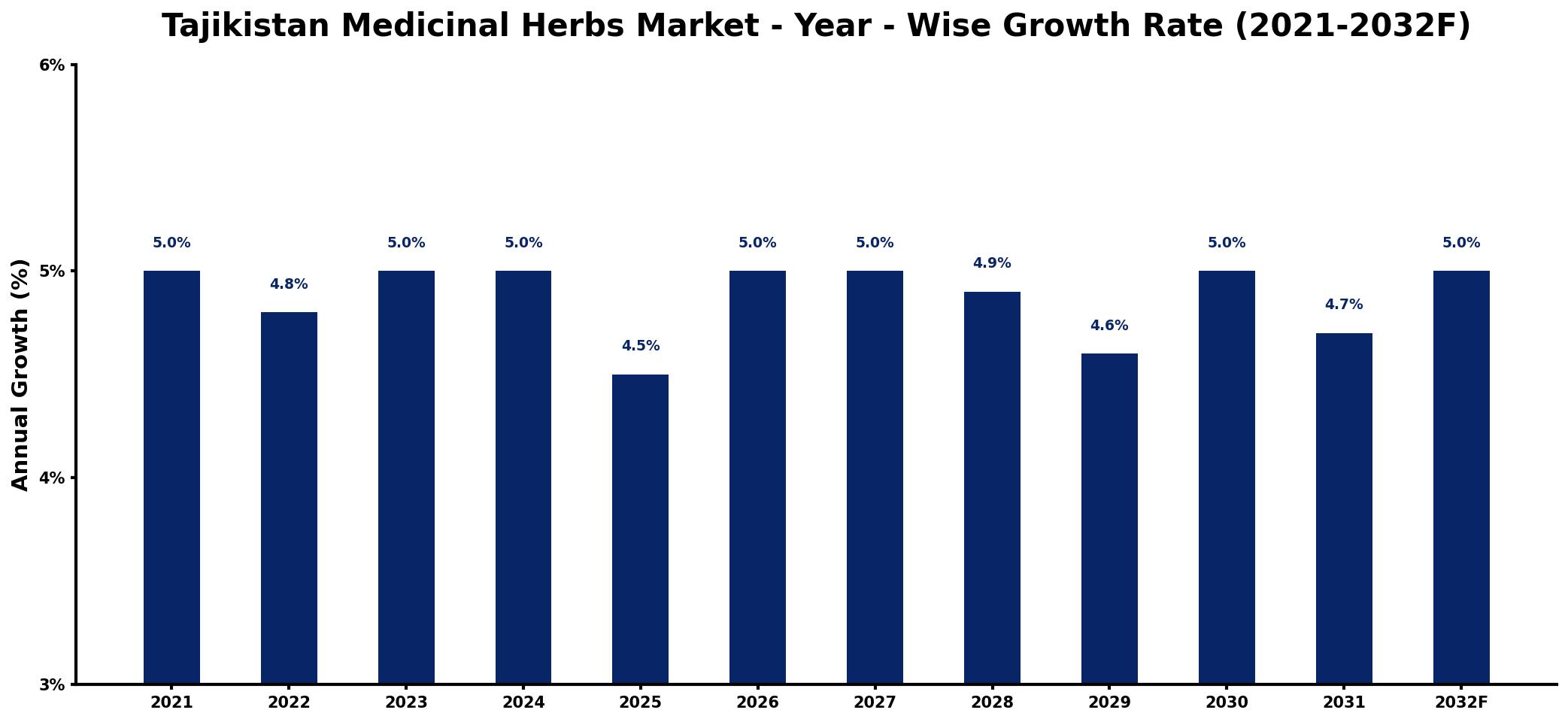
The table below presents the year‑wise growth rates along with the key drivers influencing the market
| Year | Growth Rate | Major Drivers |
| 2021 | 5.0% | Rising consumer health awareness |
| 2022 | 4.8% | Increased herbal product availability |
| 2023 | 5.0% | Growing interest in natural remedies |
| 2024 | 5.0% | Expansion of herbal retail channels |
| 2025 | 4.5% | Emergence of new health trends |
| 2026 | 5.0% | Boost in organic farming initiatives |
| 2027 | 5.0% | Higher investments in wellness tourism |
| 2028 | 4.9% | Strengthening of local supply chains |
| 2029 | 4.6% | Collaboration with wellness influencers |
| 2030 | 5.0% | Increased government support programs |
| 2031 | 4.7% | Adoption of sustainable sourcing practices |
| 2032 | 5.0% | Enhanced consumer education initiatives |
Note: Market size estimations and growth projections presented in this report are based on 6Wresearch's proprietary forecasting methodology, utilizing the latest available industry data, government publications, and primary research inputs.
Tajikistan Medicinal Herbs Market Synopsis
In Tajikistan, the medicinal herbs market is not just a niche; it represents a vital component of traditional health practices. The increasing recognition of herbal treatments as effective alternatives to synthetic medicines is capturing the interest of both consumers and investors alike.
Local farmers and herbalists play an essential role in this market, cultivating a diverse array of indigenous herbs known for their therapeutic properties. With government support for sustainable practices, the sector is poised for further growth and modernization.
Tajikistan Medicinal Herbs Market Key Takeaways
- The market reflects a shift towards natural remedies as consumers increasingly prefer herbal solutions over synthetic options.
- Indigenous plants such as licorice and saffron are gaining prominence, benefiting from both local and export demand.
- Government initiatives are aimed at enhancing cultivation methods and promoting sustainable harvesting practices.
- Challenges related to quality control and market access persist, yet there is a strong push for infrastructure improvements.
- Investors are finding significant opportunities in the development of value-added herbal products.
Evaluation of Restraints in Tajikistan Medicinal Herbs Market
Despite the promising outlook, the Tajikistan Medicinal Herbs Market faces several significant restraints. Limited infrastructure for cultivation and processing undermines the ability to scale production efficiently. Moreover, the absence of modern agricultural technologies hampers efforts to enhance yields and improve quality. Quality inconsistency and lack of standardization further complicate market dynamics, leading to challenges in gaining international credibility. Additionally, issues surrounding unsustainable harvesting practices and the impact of climate change on herb cultivation pose substantial threats to long-term market viability.
Tajikistan Medicinal Herbs Market Trends
Current trends in the Tajikistan Medicinal Herbs Market indicate a growing consumer preference for organic and sustainably sourced herbal products. This shift is being driven by a broader global movement toward natural health solutions, with consumers becoming increasingly aware of the side effects associated with synthetic medications. Moreover, there is a notable increase in the cultivation and exportation of indigenous herbs, further propelled by government-led initiatives that promote sustainable agriculture and provide support to local farmers.
Tajikistan Medicinal Herbs Market Opportunities
The landscape for investment in the Tajikistan Medicinal Herbs Market is highly promising. Opportunities abound in developing value-added products, such as herbal supplements, teas, and essential oils, which cater to the growing global market for natural health and wellness items. Furthermore, with Tajikistan's advantageous geographical location, the potential for exporting high-quality medicinal herbs to neighboring countries adds an attractive dimension for investors. Engaging in sustainable and organic farming practices can also enhance market attractiveness, aligning with rising consumer demand for eco-friendly products.
Government Initiatives in the Tajikistan Medicinal Herbs Market
The government of Tajikistan has undertaken various initiatives aimed at bolstering the Medicinal Herbs Market. By establishing quality standards for cultivation, harvesting, and processing, the government aims to ensure the safety and efficacy of medicinal herbs. Additionally, there are programs designed to support local farmers through training initiatives, subsidies, and enhanced market access. These efforts not only promote sustainable practices but also protect the biodiversity of the country's medicinal plant species.
Future Insights of the Tajikistan Medicinal Herbs Market
Looking ahead to the period from 2026 to 2032, the Tajikistan Medicinal Herbs Market is expected to continue its upward trajectory. As global demand for natural and herbal remedies rises, Tajikistan stands well-positioned to leverage its rich biodiversity and favorable climatic conditions for herb cultivation. Government initiatives promoting sustainable farming and the increasing consumer awareness of herbal medicine's benefits will further drive market growth. This positive outlook provides substantial opportunities for local stakeholders and international investors alike.
Tajikistan Medicinal Herbs Market Latest Developments (2025 - 2026)
In the recent months leading up to mid-2026, there has been a noticeable uptick in local initiatives focusing on the cultivation of high-value indigenous herbs. Enhanced collaboration between governmental bodies and local producers is increasingly evident, aimed at improving processing capabilities and expanding market reach. Furthermore, awareness campaigns targeting consumers about the benefits of medicinal herbs are on the rise, facilitating greater acceptance and demand for herbal products.
Tajikistan Medicinal Herbs Market - Key Attractiveness of the Report
- 10 Years of Market Numbers
- Historical Data Starting from 2022 to 2025
- Base Year: 2025
- Forecast Data until 2032
- Key Performance Indicators Impacting the Market
- Major Upcoming Developments and Projects
Key Highlights of the Report:
- Tajikistan Medicinal Herbs Market Outlook
- Market Size of Tajikistan Medicinal Herbs Market, 2025
- Forecast of Tajikistan Medicinal Herbs Market, 2032
- Historical Data and Forecast of Tajikistan Medicinal Herbs Revenues & Volume for the Period 2022-2032F
- Tajikistan Medicinal Herbs Market Trend Evolution
- Tajikistan Medicinal Herbs Market Drivers and Challenges
- Tajikistan Medicinal Herbs Price Trends
- Tajikistan Medicinal Herbs Porter's Five Forces
- Tajikistan Medicinal Herbs Industry Life Cycle
- Historical Data and Forecast of Tajikistan Medicinal Herbs Market Revenues & Volume By Type for the Period 2022-2032F
- Historical Data and Forecast of Tajikistan Medicinal Herbs Market Revenues & Volume By Horsetail for the Period 2022-2032F
- Historical Data and Forecast of Tajikistan Medicinal Herbs Market Revenues & Volume By Dandelion for the Period 2022-2032F
- Historical Data and Forecast of Tajikistan Medicinal Herbs Market Revenues & Volume By Echinacea for the Period 2022-2032F
- Historical Data and Forecast of Tajikistan Medicinal Herbs Market Revenues & Volume By Valerian for the Period 2022-2032F
- Historical Data and Forecast of Tajikistan Medicinal Herbs Market Revenues & Volume By St. John??s Wort for the Period 2022-2032F
- Historical Data and Forecast of Tajikistan Medicinal Herbs Market Revenues & Volume By Lemon Balm for the Period 2022-2032F
- Historical Data and Forecast of Tajikistan Medicinal Herbs Market Revenues & Volume By Yarrow for the Period 2022-2032F
- Historical Data and Forecast of Tajikistan Horsetail Medicinal Herbs Market Revenues & Volume By Calendula for the Period 2022-2032F
- Historical Data and Forecast of Tajikistan Medicinal Herbs Market Revenues & Volume By Nature for the Period 2022-2032F
- Historical Data and Forecast of Tajikistan Medicinal Herbs Market Revenues & Volume By Organic for the Period 2022-2032F
- Historical Data and Forecast of Tajikistan Medicinal Herbs Market Revenues & Volume By Conventional for the Period 2022-2032F
- Historical Data and Forecast of Tajikistan Medicinal Herbs Market Revenues & Volume By Form for the Period 2022-2032F
- Historical Data and Forecast of Tajikistan Medicinal Herbs Market Revenues & Volume By Whole for the Period 2022-2032F
- Historical Data and Forecast of Tajikistan Medicinal Herbs Market Revenues & Volume By Powder for the Period 2022-2032F
- Historical Data and Forecast of Tajikistan Medicinal Herbs Market Revenues & Volume By Liquid for the Period 2022-2032F
- Historical Data and Forecast of Tajikistan Medicinal Herbs Market Revenues & Volume By End-Use for the Period 2022-2032F
- Historical Data and Forecast of Tajikistan Medicinal Herbs Market Revenues & Volume By Medicinal Tea for the Period 2022-2032F
- Historical Data and Forecast of Tajikistan Medicinal Herbs Market Revenues & Volume By Health Supplement for the Period 2022-2032F
- Historical Data and Forecast of Tajikistan Medicinal Herbs Market Revenues & Volume By Nutritive Jams for the Period 2022-2032F
- Historical Data and Forecast of Tajikistan Medicinal Herbs Market Revenues & Volume By Herbal Medicines for the Period 2022-2032F
- Historical Data and Forecast of Tajikistan Medicinal Herbs Market Revenues & Volume By Cosmeceuticals for the Period 2022-2032F
- Historical Data and Forecast of Tajikistan Medicinal Herbs Market Revenues & Volume By Other Uses for the Period 2022-2032F
- Tajikistan Medicinal Herbs Import Export Trade Statistics
- Market Opportunity Assessment By Type
- Market Opportunity Assessment By Nature
- Market Opportunity Assessment By Form
- Market Opportunity Assessment By End-Use
- Tajikistan Medicinal Herbs Top Companies Market Share
- Tajikistan Medicinal Herbs Competitive Benchmarking By Technical and Operational Parameters
- Tajikistan Medicinal Herbs Company Profiles
- Tajikistan Medicinal Herbs Key Strategic Recommendations






































