Tajikistan Metal Shredder Machine Market Size, Share & Growth Rate
The Tajikistan Metal Shredder Machine Market was estimated at USD 1270 Million in 2025 and is projected to reach USD 1852 Million by 2032, growing at a CAGR of 5.5% from 2026 to 2032. This growth trajectory is primarily driven by the increasing demand from metal recycling industries, spurred by government regulations advocating for enhanced waste management practices. Additionally, the rise in construction and manufacturing activities in Tajikistan is creating a burgeoning need for efficient metal processing solutions, ensuring a robust market outlook.
Tajikistan Metal Shredder Machine Market Year-wise Growth Rate and Key Drivers
This graph highlights how the Tajikistan Metal Shredder Machine Market has steadily grown over the years, supported by major growth factors.
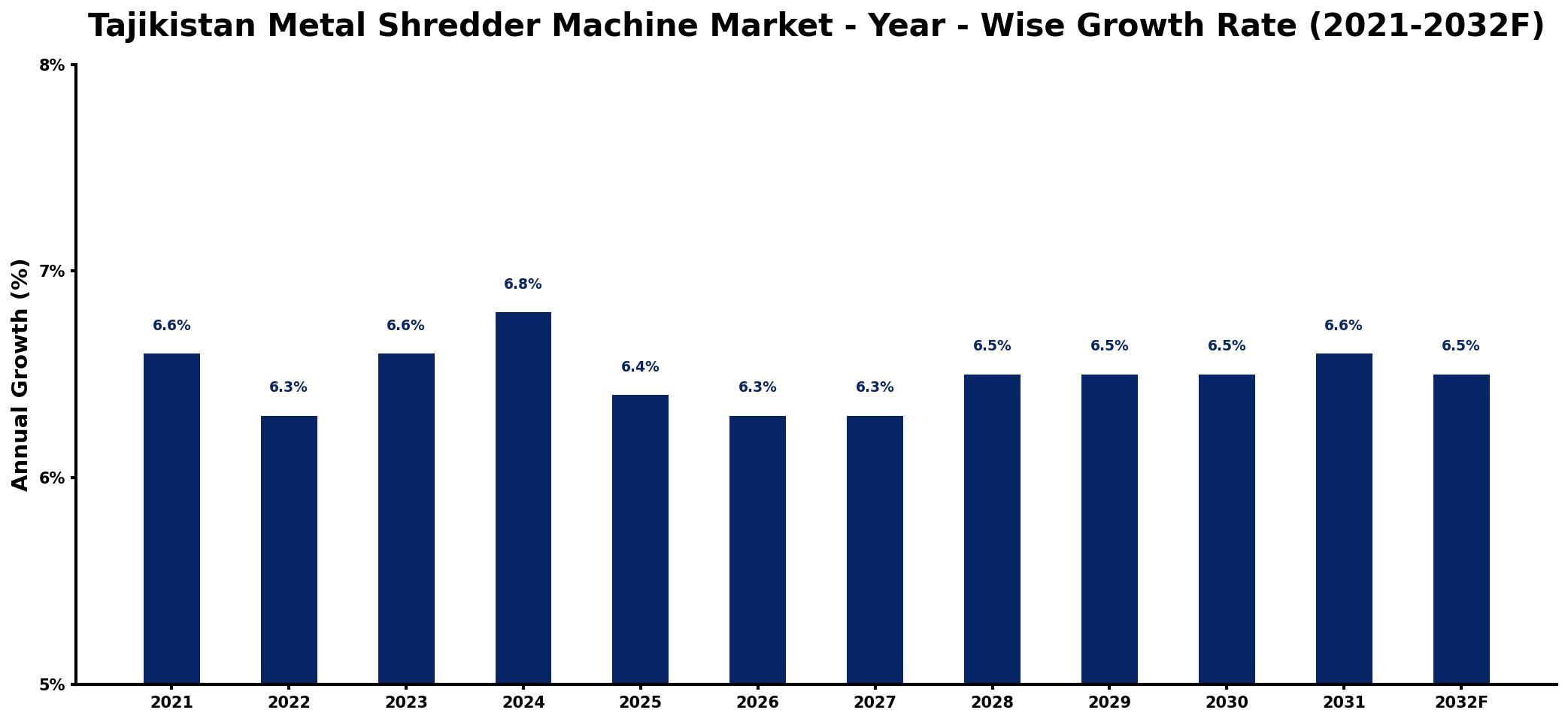
The table below presents the year‑wise growth rates along with the key drivers influencing the market
| Year | Growth Rate | Major Drivers |
| 2021 | 6.6% | Rising recycling industry investments |
| 2022 | 6.3% | Increased urbanization and infrastructure |
| 2023 | 6.6% | Growing demand for raw materials |
| 2024 | 6.8% | Expansion of waste management services |
| 2025 | 6.4% | Higher environmental regulations enforcement |
| 2026 | 6.3% | Technological advancements in processing |
| 2027 | 6.3% | Increased industrial production activities |
| 2028 | 6.5% | Growing export opportunities for resources |
| 2029 | 6.5% | Higher consumer awareness on recycling |
| 2030 | 6.5% | Strengthened local recycling initiatives |
| 2031 | 6.6% | Enhanced government support programs |
| 2032 | 6.5% | Rising global demand for sustainability |
Note: Market size estimations and growth projections presented in this report are based on 6Wresearch's proprietary forecasting methodology, utilizing the latest available industry data, government publications, and primary research inputs.
Tajikistan Metal Shredder Machine Market Synopsis
The demand for advanced metal shredder machines in Tajikistan is significantly influenced by the countrys commitment to sustainable waste management. With industries increasingly recognizing the importance of recycling, the market is seeing a shift towards machines that offer higher efficiency and capacity. This trend is further enhanced by government initiatives promoting recycling, which amplify the adoption of shredding technology.
Amidst this backdrop, companies are focusing on customization to meet specific industrial needs, showcasing innovations that reflect local operational conditions. These developments not only improve machine performance but also align with the evolving standards of environmental sustainability, creating a compelling case for investment in the Tajikistan Metal Shredder Machine Market.
Tajikistan Metal Shredder Machine Market Key Takeaways
- Growing demand for metal shredder machines driven by increasing recycling and waste management efforts.
- Government regulations favoring eco-friendly practices are supporting market expansion.
- Technological advancements are leading to the development of more efficient shredding solutions.
- Customization of machines is becoming crucial for meeting specific industry requirements.
- Investment opportunities abound as local industries expand and seek efficient metal waste management solutions.
Evaluation of Restraints in Tajikistan Metal Shredder Machine Market
Despite the promising outlook, the Tajikistan Metal Shredder Machine Market faces significant barriers. A major constraint is the limited awareness among potential users regarding the benefits of advanced shredding technology. This lack of understanding translates into hesitance to invest in such machinery, stunting overall market growth. Furthermore, the high initial costs associated with these machines deter smaller businesses, while limited financing options present a tangible hurdle. Lastly, the scarcity of skilled technicians for maintenance and repair undermines operational efficiencies, compounding the challenges for stakeholders in the market.
Tajikistan Metal Shredder Machine Market Trends
Several trends are shaping the Tajikistan Metal Shredder Machine Market. Notably, there is a marked shift towards adopting advanced technologies that enhance shredder performance and energy efficiency. The introduction of automated controls is becoming common, allowing for seamless operation and improved productivity. Additionally, industries are increasingly acknowledging the environmental benefits of shredding metal waste, which in turn propels the demand for efficient machines. Innovations focusing on energy-saving designs are also gaining traction as companies strive to meet sustainability goals.
Tajikistan Metal Shredder Machine Market Opportunities
The expanding industrial landscape in Tajikistan unveils numerous investment opportunities in the Metal Shredder Machine Market. As sectors like construction and automotive continue to grow, there will be an increasing need for machines that can efficiently process scrap metal. Investors can find success by introducing technologically advanced shredders that address local market needs while promoting sustainability. Collaborating with regional enterprises and governmental bodies to enhance recycling initiatives and compliance can further solidify market presence and foster lasting relationships.
Government Initiatives in the Tajikistan Metal Shredder Machine Market
The Tajikistan government is actively promoting sustainable industrial growth through various initiatives targeting the Metal Shredder Machine Market. Policies are being implemented to enhance waste management and recycling practices, incentivizing businesses to adopt eco-friendly technologies. Moreover, regulations aimed at limiting emissions and pollutants are encouraging operators to comply with environmental standards, thereby creating a competitive yet responsible market environment that promotes the adoption of shredding technology.
Future Insights of the Tajikistan Metal Shredder Machine Market
Looking ahead to 2026-2032, the Tajikistan Metal Shredder Machine Market is set for steady growth, driven by a confluence of industrial expansion and a rising emphasis on effective waste management. Increased governmental focus on environmental conservation, coupled with greater awareness among industries about recycling practices, is likely to bolster demand. The continuous evolution of shredder technology will further enhance capabilities, enabling operators to meet diverse processing needs efficiently, ultimately driving market growth.
Tajikistan Metal Shredder Machine Market Latest Developments (2025 - 2026)
Recent developments in the Tajikistan Metal Shredder Machine Market indicate a growing trend towards modernization and efficiency. Industry stakeholders are increasingly investing in R&D to innovate and produce machines that align with sustainability targets. Additionally, partnerships between local and foreign manufacturers are on the rise, aimed at fostering technological exchange and enhancing market offerings. Furthermore, the focus on training skilled technicians is gaining traction, addressing the maintenance gap and supporting the longevity of shredding operations.
Tajikistan Metal Shredder Machine Market - Key Attractiveness of the Report
- 10 Years of Market Numbers
- Historical Data Starting from 2022 to 2025
- Base Year: 2025
- Forecast Data until 2032
- Key Performance Indicators Impacting the Market
- Major Upcoming Developments and Projects
Key Highlights of the Report:
- Tajikistan Metal Shredder Machine Market Outlook
- Market Size of Tajikistan Metal Shredder Machine Market, 2025
- Forecast of Tajikistan Metal Shredder Machine Market, 2032
- Historical Data and Forecast of Tajikistan Metal Shredder Machine Revenues & Volume for the Period 2022-2032F
- Tajikistan Metal Shredder Machine Market Trend Evolution
- Tajikistan Metal Shredder Machine Market Drivers and Challenges
- Tajikistan Metal Shredder Machine Price Trends
- Tajikistan Metal Shredder Machine Porter's Five Forces
- Tajikistan Metal Shredder Machine Industry Life Cycle
- Historical Data and Forecast of Tajikistan Metal Shredder Machine Market Revenues & Volume By Type for the Period 2022-2032F
- Historical Data and Forecast of Tajikistan Metal Shredder Machine Market Revenues & Volume By Mechanical Shredder Machine for the Period 2022-2032F
- Historical Data and Forecast of Tajikistan Metal Shredder Machine Market Revenues & Volume By Shock Wave Shredder Machine for the Period 2022-2032F
- Historical Data and Forecast of Tajikistan Metal Shredder Machine Market Revenues & Volume By Application for the Period 2022-2032F
- Historical Data and Forecast of Tajikistan Metal Shredder Machine Market Revenues & Volume By Iron and Steel for the Period 2022-2032F
- Historical Data and Forecast of Tajikistan Metal Shredder Machine Market Revenues & Volume By Aluminum and Copper for the Period 2022-2032F
- Historical Data and Forecast of Tajikistan Metal Shredder Machine Market Revenues & Volume By Non-Ferrous Metals for the Period 2022-2032F
- Tajikistan Metal Shredder Machine Import Export Trade Statistics
- Market Opportunity Assessment By Type
- Market Opportunity Assessment By Application
- Tajikistan Metal Shredder Machine Top Companies Market Share
- Tajikistan Metal Shredder Machine Competitive Benchmarking By Technical and Operational Parameters
- Tajikistan Metal Shredder Machine Company Profiles
- Tajikistan Metal Shredder Machine Key Strategic Recommendations






































