Tajikistan Perchloroethylene Market Size, Share & Growth Rate
The Tajikistan Perchloroethylene Market was estimated at USD 377 Million in 2025 and is projected to reach USD 532 Million by 2032, growing at a CAGR of 5.0% from 2026 to 2032. This upward trajectory is primarily driven by the robust demand from the textile industry, where perchloroethylene is essential for effective dry cleaning processes. Additionally, an increase in consumer awareness regarding cleaning standards and environmental regulations is further stimulating market growth.
Tajikistan Perchloroethylene Market Year-wise Growth Rate and Key Drivers
This graph highlights how the Tajikistan Perchloroethylene Market has steadily grown over the years, supported by major growth factors.
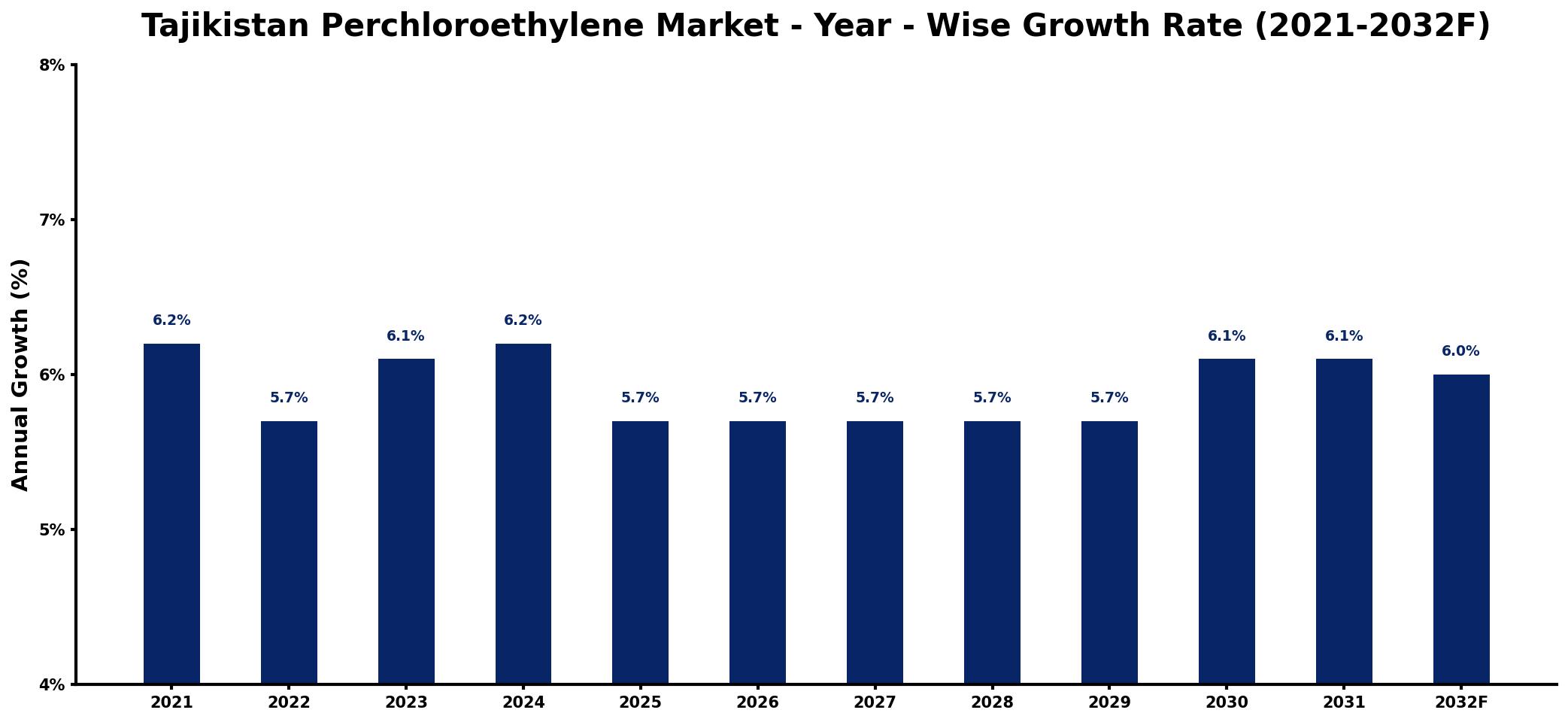
The table below presents the year‑wise growth rates along with the key drivers influencing the market
| Year | Growth Rate | Major Drivers |
| 2021 | 6.2% | Increased demand from dry cleaning |
| 2022 | 5.7% | Growth in textile industry applications |
| 2023 | 6.1% | Expansion of industrial cleaning services |
| 2024 | 6.2% | Rising investments in manufacturing |
| 2025 | 5.7% | Boost in automotive maintenance services |
| 2026 | 5.7% | Growing popularity in electronics sector |
| 2027 | 5.7% | Increased use in metal degreasing |
| 2028 | 5.7% | Surge in chemical processing needs |
| 2029 | 5.7% | Higher demand from healthcare sector |
| 2030 | 6.1% | growing emerging market penetration |
| 2031 | 6.1% | rising demand from electronics |
| 2032 | 6.0% | Increased focus on sustainable practices |
Note: Market size estimations and growth projections presented in this report are based on 6Wresearch's proprietary forecasting methodology, utilizing the latest available industry data, government publications, and primary research inputs.
Tajikistan Perchloroethylene Market Synopsis
The textile industry is currently the strongest force shaping the Tajikistan Perchloroethylene Market. The growing demand for textile cleaning services, both domestically and from neighboring countries, is propelling the need for this versatile solvent. As such, local chemical suppliers and importers play a significant role in ensuring a steady supply to meet this escalating demand.
Regulatory frameworks surrounding environmental and safety standards also heavily influence the market. Companies must navigate these regulations, which are designed to minimize health risks associated with perchloroethylene use. This landscape presents both challenges and opportunities for suppliers and manufacturers looking to innovate and improve sustainability in their practices.
Tajikistan Perchloroethylene Market Key Takeaways
- The market is largely driven by the textile industry's expanding cleaning service requirements.
- Increased regulatory pressure is pushing for more environmentally friendly cleaning solutions.
- Domestic production is limited, leading to a reliance on imports from international manufacturers.
- Technological advancements in recycling systems are emerging as a key trend.
- Investment opportunities exist for establishing new production facilities and enhancing sustainability practices.
Evaluation of Restraints in Tajikistan Perchloroethylene Market
Despite the positive growth indicators, the Tajikistan Perchloroethylene Market faces significant restraints. A primary concern is the limited domestic production capacity, which results in a heavy dependence on imports. This reliance can lead to price fluctuations and supply chain vulnerabilities. Additionally, regulatory barriers may deter some potential entrants, particularly new eco-friendly alternatives that are gaining traction among consumers. There is also a notable lack of awareness regarding the environmental impacts and health risks associated with perchloroethylene, complicating market dynamics.
Tajikistan Perchloroethylene Market Trends
Several trends are currently shaping the Tajikistan Perchloroethylene Market. A notable shift toward more sustainable, eco-friendly cleaning solutions is emerging, driven by heightened consumer awareness and regulatory initiatives. Furthermore, advancements in technology related to solvent recycling are becoming increasingly popular as companies seek to minimize waste and optimize their operations. These trends indicate a pivot towards not just meeting but exceeding compliance standards and consumer expectations.
Tajikistan Perchloroethylene Market Opportunities
Investment opportunities within the Tajikistan Perchloroethylene Market are diverse and promising. There is a significant demand for the chemical, particularly in the dry cleaning and automotive sectors, which suggests that establishing or expanding local production facilities can be lucrative. Additionally, investing in innovative technologies that enhance production efficiency or offer eco-friendly alternatives can yield substantial benefits. Companies focusing on logistics and distribution will also find opportunities to streamline supply chain processes as market demand continues to rise.
Government Initiatives in the Tajikistan Perchloroethylene Market
Government policies in Tajikistan are increasingly aimed at regulating the use of chemicals like perchloroethylene, focusing on environmental protection and worker safety. Authorities have implemented guidelines to ensure companies comply with specific emission standards and waste disposal practices, promoting a healthier ecosystem. Moreover, initiatives encouraging the adoption of eco-friendly alternatives reflect a commitment to sustainable market growth, balancing economic advancement with environmental stewardship.
Future Insights of the Tajikistan Perchloroethylene Market
Looking ahead to 2026-2032, the future outlook for the Tajikistan Perchloroethylene Market is bright. With the textile and dry cleaning industries poised for growth, demand is expected to remain strong. Furthermore, the ongoing emphasis on sustainable practices and regulatory compliance will likely drive innovation, creating a dynamic market environment. As the industry evolves, both domestic players and international entrants will find numerous avenues to capitalize on this emerging growth landscape.
Tajikistan Perchloroethylene Market Latest Developments (2025 - 2026)
Recent developments in the Tajikistan Perchloroethylene Market reflect a growing interest in sustainable practices. Companies are increasingly investing in advanced technologies to reduce waste and enhance the efficiency of solvent use. Additionally, dialogues around alternative solvents are becoming more prevalent as stakeholders recognize the environmental impact of traditional chemicals. Industry players are adapting to these shifts while also adhering to stricter regulations, marking a significant change in the market landscape.
Tajikistan Perchloroethylene Market - Key Attractiveness of the Report
- 10 Years of Market Numbers
- Historical Data Starting from 2022 to 2025
- Base Year: 2025
- Forecast Data until 2032
- Key Performance Indicators Impacting the Market
- Major Upcoming Developments and Projects
Key Highlights of the Report:
- Tajikistan Perchloroethylene Market Outlook
- Market Size of Tajikistan Perchloroethylene Market, 2025
- Forecast of Tajikistan Perchloroethylene Market, 2032
- Historical Data and Forecast of Tajikistan Perchloroethylene Revenues & Volume for the Period 2022-2032F
- Tajikistan Perchloroethylene Market Trend Evolution
- Tajikistan Perchloroethylene Market Drivers and Challenges
- Tajikistan Perchloroethylene Price Trends
- Tajikistan Perchloroethylene Porter's Five Forces
- Tajikistan Perchloroethylene Industry Life Cycle
- Historical Data and Forecast of Tajikistan Perchloroethylene Market Revenues & Volume By Type for the Period 2022-2032F
- Historical Data and Forecast of Tajikistan Perchloroethylene Market Revenues & Volume By Ethylene Oxychlorination for the Period 2022-2032F
- Historical Data and Forecast of Tajikistan Perchloroethylene Market Revenues & Volume By Acetylene Method for the Period 2022-2032F
- Historical Data and Forecast of Tajikistan Perchloroethylene Market Revenues & Volume By Ethylene Direct Chlorination for the Period 2022-2032F
- Historical Data and Forecast of Tajikistan Perchloroethylene Market Revenues & Volume By End-use for the Period 2022-2032F
- Historical Data and Forecast of Tajikistan Perchloroethylene Market Revenues & Volume By Dry Cleaning Agent for the Period 2022-2032F
- Historical Data and Forecast of Tajikistan Perchloroethylene Market Revenues & Volume By Solvent for the Period 2022-2032F
- Historical Data and Forecast of Tajikistan Perchloroethylene Market Revenues & Volume By Others for the Period 2022-2032F
- Tajikistan Perchloroethylene Import Export Trade Statistics
- Market Opportunity Assessment By Type
- Market Opportunity Assessment By End-use
- Tajikistan Perchloroethylene Top Companies Market Share
- Tajikistan Perchloroethylene Competitive Benchmarking By Technical and Operational Parameters
- Tajikistan Perchloroethylene Company Profiles
- Tajikistan Perchloroethylene Key Strategic Recommendations






































