Tajikistan Prom Dresses Market Summary
The tajikistan prom dresses market was estimated at USD 469 Million in 2025 and is projected to reach USD 639 Million by 2032, growing at a CAGR of 4.9% from 2026 to 2032.
Tajikistan Prom Dresses Market Year-wise Growth Rate and Key Drivers
This graph highlights how the Tajikistan Prom Dresses Market has steadily grown over the past five years, supported by major growth factors.
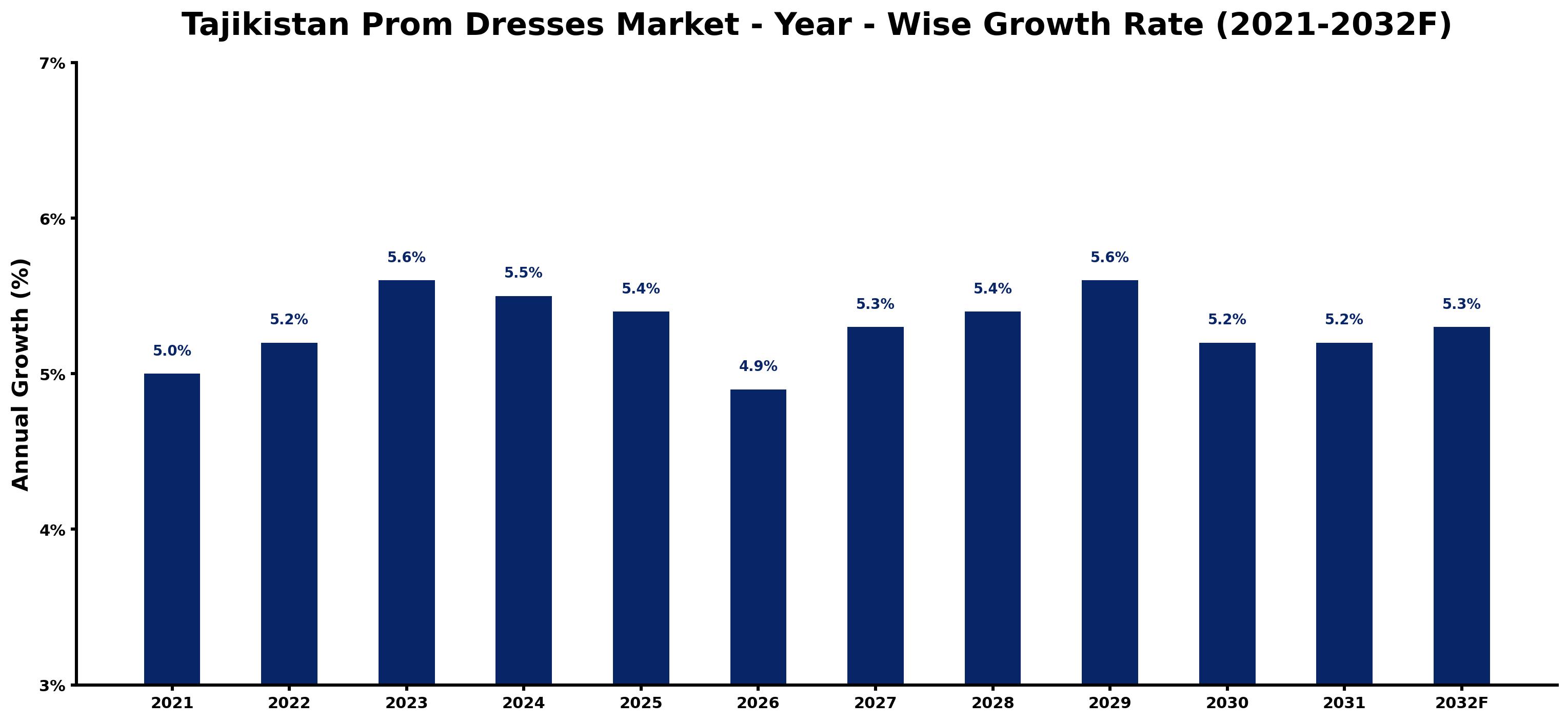
The table below presents the year wise growth rates along with the key drivers influencing the market
| Year | Growth Rate | Major Drivers |
| 2021 | 5.0% | Post-pandemic recovery sparked renewed interest in formal wear among young women. |
| 2022 | 5.2% | Social media influencers in Tajikistan popularized modern styles, boosting market visibility. |
| 2023 | 5.6% | Local fashion designers began incorporating traditional motifs, appealing to cultural sentiments. |
| 2024 | 5.5% | Increased disposable income among urban youth enhanced purchasing power for prom dresses. |
| 2025 | 5.4% | Emerging online shopping platforms facilitated easier access to diverse dress selections. |
| 2026 | 4.9% | Collaborations between local brands and international designers expanded product offerings significantly. |
| 2027 | 5.3% | Seasonal prom events gained popularity, driving higher sales during spring months. |
| 2028 | 5.4% | Growing interest in eco-friendly materials attracted environmentally conscious consumers in Tajikistan. |
| 2029 | 5.6% | The expansion of local manufacturing reduced costs and improved market responsiveness. |
| 2030 | 5.2% | Youth-centric fashion events showcased local talent, creating new promotional opportunities. |
| 2031 | 5.2% | Increased social gatherings post-pandemic led to heightened demand for formal attire. |
| 2032 | 5.3% | Digital marketing campaigns effectively targeted prom attendees, enhancing brand engagement levels. |
Note - Market size estimations and growth projections presented in this report are based on 6Wresearch's advanced forecasting approach, validated with industry datasets as of June 2026.
Tajikistan Prom Dresses Market Synopsis
The Tajikistan Prom Dresses Market is projected to reach 4.9% and witness significant growth during the forecast period (2026-2032). This market is being fueled by an increasing cultural emphasis on prom celebrations among the youth, reflecting broader global trends in formal wear. As young individuals celebrate these milestones, the demand for a diverse array of prom dresses—ranging from traditional styles to modern interpretations—has heightened. The interplay between local fashion sensibilities and international trends is reshaping this market, creating ample opportunities for retailers and designers alike.
Tajikistan Prom Dresses Market Growth Drivers
Several key factors are driving the growth of the Tajikistan Prom Dresses Market. Firstly, the rising popularity of prom nights as a social norm among young people is encouraging greater investment in formal wear. Secondly, local retailers and online platforms are expanding their offerings, providing consumers with a variety of styles that cater to different budgets and preferences. Additionally, the influence of social media is shaping fashion choices, with platforms showcasing trends that resonate with the youth. Thirdly, a demand for unique and eye-catching designs is motivating retailers to innovate and adapt their collections. Lastly, the incorporation of traditional Tajik elements into contemporary prom dress designs creates a fusion that appeals to local sensibilities while still embracing modern aesthetics.
Tajikistan Prom Dresses Market Trends and Opportunities
The current trends in the Tajikistan Prom Dresses Market reflect a significant shift towards modern aesthetics influenced by Western fashion. The following trends are particularly noteworthy:
- A notable increase in demand for sleek silhouettes and bold colors characterizes the evolving tastes of consumers, indicating a shift from traditional styles to more contemporary designs.
- Intricate embellishments, such as embroidery and beading, are being integrated into modern dresses, honoring cultural roots while appealing to modern tastes.
- Online shopping platforms are becoming increasingly popular, offering convenience and a broader selection of options that enhance the shopping experience for consumers.
- Sustainability is emerging as a significant trend, with consumers showing a preference for eco-friendly materials and brands that emphasize ethical fashion practices.
- Customization services are on the rise, allowing consumers to create tailored outfits that reflect their personal style and preferences, further driving market engagement.
Tajikistan Prom Dresses Market Challenges and Restraints
While the Tajikistan Prom Dresses Market exhibits promising growth potential, it is not without its challenges. Key obstacles include:
- The limited availability of high-quality and trendy dresses hampers the market's growth, as many consumers struggle to find desirable options locally.
- High import costs due to the country's landlocked geography pose significant barriers, leading to elevated prices for foreign merchandise.
- Cultural factors contribute to a smaller target market, as preferences for more conservative attire can limit the willingness of some consumers to invest in formal dresses.
- The lack of established retail channels and effective online platforms further restricts consumer access to a diverse range of prom dresses.
- Seasonality associated with prom events may lead to fluctuations in demand, complicating inventory management for businesses in the market.
Tajikistan Prom Dresses Market Investment Opportunities
Investors looking to enter the Tajikistan Prom Dresses Market can find numerous opportunities arising from the increasing demand among the youth for fashionable formal wear. Some areas of potential investment include:
- Establishing retail stores or online platforms dedicated to prom dresses can allow businesses to tap into the growing market, especially if they can provide a diverse range of styles.
- Collaborating with local designers or sourcing unique materials can provide a competitive advantage, enhancing product appeal to consumers seeking distinctive designs.
- Offering customization services can attract customers looking for personalized options, creating a more engaging shopping experience.
- Developing marketing strategies that resonate with young consumers can drive brand loyalty and increase sales within this niche market segment.
- Investing in sustainable practices can differentiate businesses in the market, aligning with the growing trend among consumers who prioritize ethical considerations in their purchasing decisions.
Tajikistan Prom Dresses Market Government Investment and Initiatives
While Tajikistan does not have specific policies directed solely at the prom dresses market, various general regulations pertaining to the clothing industry impact this sector. The government aims to stimulate local production, which can benefit domestic retailers and manufacturers of formal wear. Additionally, ongoing efforts to support small businesses through funding initiatives and training programs indirectly influence the growth of the prom dresses market.
Trade agreements and import tariffs also play a crucial role, as they shape the landscape for businesses operating in the fashion industry. Consumer rights regulations and advertising standards further affect how companies market their products and interact with potential customers. In summary, while direct government investment in the prom dresses market may be limited, broader policies surrounding trade, production, and small business support create an environment that can foster growth in the sector.
Tajikistan Prom Dresses Market Latest Developments (May 2025 - June 2026)
Recent developments in the Tajikistan Prom Dresses Market from May 2025 to June 2026 have showcased a continued emphasis on modern design influences and sustainability. A notable rise in online retail options has made prom dresses more accessible to consumers, providing them with diverse choices at their fingertips. Retailers are increasingly experimenting with styles that merge traditional Tajik elements with contemporary aesthetics, reflecting the market's adaptive nature.
Moreover, businesses have started integrating sustainable practices into their supply chains, resonating with the growing consumer demand for eco-friendly options. The adoption of social media marketing strategies has also become prevalent, enabling brands to engage effectively with the younger demographic and highlight the latest trends. These developments reflect a dynamic and responsive market environment that continues to evolve in tandem with consumer expectations.
Tajikistan Prom Dresses Market - Key Attractiveness of the Report
- 10 Years of Market Numbers
- Historical Data Starting from 2022 to 2025
- Base Year: 2025
- Forecast Data until 2032
- Key Performance Indicators Impacting the Market
- Major Upcoming Developments and Projects
Key Highlights of the Report:
- Tajikistan Prom Dresses Market Outlook
- Market Size of Tajikistan Prom Dresses Market, 2025
- Forecast of Tajikistan Prom Dresses Market, 2032F
- Historical Data and Forecast of Tajikistan Prom Dresses Revenues & Volume for the Period 2022-2032F
- Tajikistan Prom Dresses Market Trend Evolution
- Tajikistan Prom Dresses Market Drivers and Challenges
- Tajikistan Prom Dresses Price Trends
- Tajikistan Prom Dresses Porter's Five Forces
- Tajikistan Prom Dresses Industry Life Cycle
- Historical Data and Forecast of Tajikistan Prom Dresses Market Revenues & Volume By Type for the Period 2022-2032F
- Historical Data and Forecast of Tajikistan Prom Dresses Market Revenues & Volume By Long Dresses for the Period 2022-2032F
- Historical Data and Forecast of Tajikistan Prom Dresses Market Revenues & Volume By Short Dresses for the Period 2022-2032F
- Historical Data and Forecast of Tajikistan Prom Dresses Market Revenues & Volume By Knee-length Dresses for the Period 2022-2032F
- Historical Data and Forecast of Tajikistan Prom Dresses Market Revenues & Volume By Fabric for the Period 2022-2032F
- Historical Data and Forecast of Tajikistan Prom Dresses Market Revenues & Volume By Chiffon for the Period 2022-2032F
- Historical Data and Forecast of Tajikistan Prom Dresses Market Revenues & Volume By Satin for the Period 2022-2032F
- Historical Data and Forecast of Tajikistan Prom Dresses Market Revenues & Volume By Organza for the Period 2022-2032F
- Historical Data and Forecast of Tajikistan Prom Dresses Market Revenues & Volume By Others for the Period 2022-2032F
- Historical Data and Forecast of Tajikistan Prom Dresses Market Revenues & Volume By Distribution Channel for the Period 2022-2032F
- Historical Data and Forecast of Tajikistan Prom Dresses Market Revenues & Volume By Store-Based for the Period 2022-2032F
- Historical Data and Forecast of Tajikistan Prom Dresses Market Revenues & Volume By Non-Store-Based for the Period 2022-2032F
- Tajikistan Prom Dresses Import Export Trade Statistics
- Market Opportunity Assessment By Type
- Market Opportunity Assessment By Fabric
- Market Opportunity Assessment By Distribution Channel
- Tajikistan Prom Dresses Top Companies Market Share
- Tajikistan Prom Dresses Competitive Benchmarking By Technical and Operational Parameters
- Tajikistan Prom Dresses Company Profiles
- Tajikistan Prom Dresses Key Strategic Recommendations






































