Tajikistan Swing Market Size, Share & Growth Rate
The Tajikistan Swing Market was estimated at USD 395 Million in 2025 and is projected to reach USD 523 Million by 2032, growing at a CAGR of 4.1% from 2026 to 2032. This growth trajectory is driven by an increasing middle-class population with higher disposable incomes, combined with a burgeoning interest in recreational activities, especially among families and educational institutions. The evolving urban landscapes are also fostering a demand for aesthetically appealing and versatile swing options, further catalyzing market expansion.
Tajikistan Swing Market Year-wise Growth Rate and Key Drivers
This graph highlights how the Tajikistan Swing Market has steadily grown over the years, supported by major growth factors.
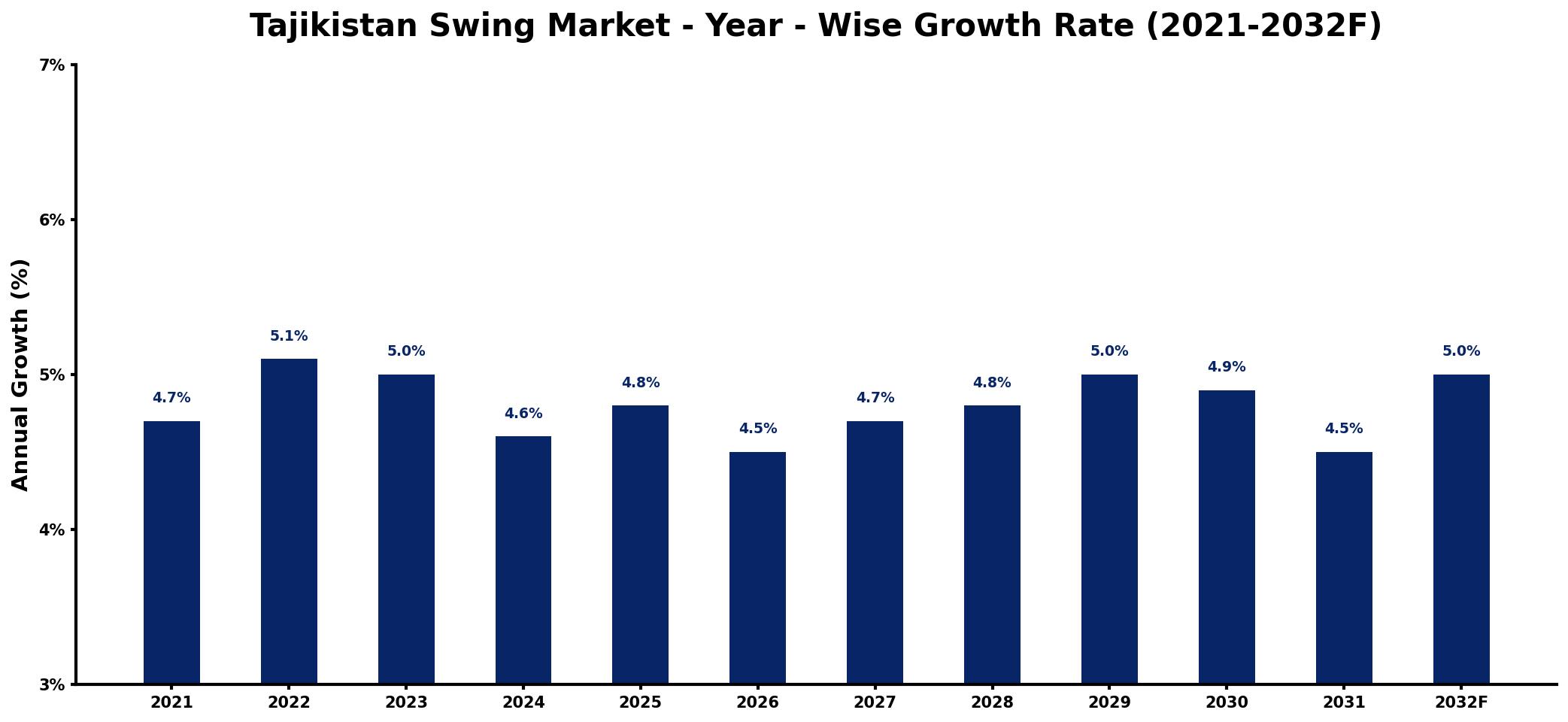
The table below presents the year‑wise growth rates along with the key drivers influencing the market
| Year | Growth Rate | Major Drivers |
| 2021 | 4.7% | Increased infrastructure investment projects |
| 2022 | 5.1% | Rising consumer electronics demand |
| 2023 | 5.0% | Expansion of renewable energy initiatives |
| 2024 | 4.6% | Growth in tourism and hospitality |
| 2025 | 4.8% | Boost in agricultural technology adoption |
| 2026 | 4.5% | Enhancement of digital services infrastructure |
| 2027 | 4.7% | Surge in e-commerce platforms usage |
| 2028 | 4.8% | Development of urban transportation solutions |
| 2029 | 5.0% | Investment in healthcare facilities modernization |
| 2030 | 4.9% | Increase in mobile connectivity services |
| 2031 | 4.5% | expanding healthcare application demand |
| 2032 | 5.0% | growing regional consumption patterns |
Note: Market size estimations and growth projections presented in this report are based on 6Wresearch's proprietary forecasting methodology, utilizing the latest available industry data, government publications, and primary research inputs.
Tajikistan Swing Market Synopsis
A significant force currently shaping the Tajikistan swing market is the consumer shift towards eco-friendly materials. As awareness about environmental sustainability grows, there is a heightened demand for swings made from natural resources such as wood and rattan, aligning with the principles of conscious consumerism.
Additionally, the market is witnessing innovation in design, with consumers increasingly seeking customizable options that cater to various spaces, both indoors and outdoors. This trend is fostering a competitive landscape where quality craftsmanship and safety are paramount, ultimately enhancing user satisfaction.
Tajikistan Swing Market Key Takeaways
- The market is evolving towards sustainable materials, reflecting the growing consumer demand for eco-friendly products.
- Customization and design versatility are becoming key differentiators in the swing market, appealing to a diverse consumer base.
- Safety features and quality craftsmanship are crucial factors influencing purchasing decisions among consumers.
- Rising disposable incomes and urban development are expected to drive significant market growth over the coming years.
- Local manufacturers are pivotal in catering to the unique needs of Tajikistan's diverse consumer base.
Evaluation of Restraints in Tajikistan Swing Market
Despite its promising outlook, the Tajikistan swing market faces notable restraints. A significant barrier is the limited consumer awareness regarding the developmental benefits of quality swings, particularly for children. Additionally, the absence of standardized safety and quality regulations can lead to safety concerns, potentially affecting consumer confidence. Economic fluctuations also pose challenges, particularly concerning raw material prices and currency stability. These issues must be addressed to foster a healthier market environment.
Tajikistan Swing Market Trends
Current trends include a growing preference for swings that are not only functional but also serve as stylish garden or indoor decor. Brightly colored swings that offer aesthetic appeal are on the rise, appealing to families looking to enhance their outdoor spaces. Furthermore, the trend towards sustainable manufacturing processes is pushing manufacturers to innovate, with an increased focus on creating products that minimize environmental impacts without compromising on quality or durability.
Tajikistan Swing Market Opportunities
Investors looking to capitalize on the Tajikistan swing market will find numerous opportunities, particularly in the realms of product development and marketing strategies aimed at educating consumers. Enhanced distribution channels, including online sales platforms, can help broaden market access. Moreover, as local infrastructure improves, manufacturers can explore new segments such as eco-friendly swings tailored for schools and public parks, thus tapping into the educational sector's growing emphasis on active play and child development.
Government Initiatives in the Tajikistan Swing Market
The government of Tajikistan is taking proactive steps to foster a supportive environment for small and medium-sized enterprises, including those in the swing market. Financial assistance programs and tax incentives aimed at local manufacturers are designed to stimulate production and innovation. Additionally, investments in infrastructure and transport improvements facilitate smoother distribution and export opportunities, aiding local companies in reaching broader markets.
Future Insights of the Tajikistan Swing Market
Looking ahead to 2026-2032, the Tajikistan swing market is poised for sustained growth, largely due to an increasing focus on recreational spaces as urbanization continues. The rising awareness of childhood development and the benefits of physical play will further drive demand for quality swing sets in residential and educational environments. By adapting to evolving consumer preferences and leveraging local resources, manufacturers can enhance their market position and profitability in this burgeoning sector.
Tajikistan Swing Market Latest Developments (2025 - 2026)
In recent months, the Tajikistan swing market has seen notable movements towards innovative product offerings and enhanced safety standards. Manufacturers are increasingly adopting eco-friendly materials in their production processes, while collaborations between local manufacturers and international suppliers are expanding. This cooperative approach aims to diversify product lines and meet the rising demand for customizable and durable swings that cater to both aesthetic and functional needs.
Tajikistan Swing Market - Key Attractiveness of the Report
- 10 Years of Market Numbers
- Historical Data Starting from 2022 to 2025
- Base Year: 2025
- Forecast Data until 2032
- Key Performance Indicators Impacting the Market
- Major Upcoming Developments and Projects
Key Highlights of the Report:
- Tajikistan Swing Market Outlook
- Market Size of Tajikistan Swing Market, 2025
- Forecast of Tajikistan Swing Market, 2032
- Historical Data and Forecast of Tajikistan Swing Revenues & Volume for the Period 2022-2032F
- Tajikistan Swing Market Trend Evolution
- Tajikistan Swing Market Drivers and Challenges
- Tajikistan Swing Price Trends
- Tajikistan Swing Porter's Five Forces
- Tajikistan Swing Industry Life Cycle
- Historical Data and Forecast of Tajikistan Swing Market Revenues & Volume By Product Type for the Period 2022-2032F
- Historical Data and Forecast of Tajikistan Swing Market Revenues & Volume By Full-sized swing for the Period 2022-2032F
- Historical Data and Forecast of Tajikistan Swing Market Revenues & Volume By Portable Swing for the Period 2022-2032F
- Historical Data and Forecast of Tajikistan Swing Market Revenues & Volume By Application for the Period 2022-2032F
- Historical Data and Forecast of Tajikistan Swing Market Revenues & Volume By Household for the Period 2022-2032F
- Historical Data and Forecast of Tajikistan Swing Market Revenues & Volume By Nursery for the Period 2022-2032F
- Historical Data and Forecast of Tajikistan Swing Market Revenues & Volume By Hospital for the Period 2022-2032F
- Historical Data and Forecast of Tajikistan Swing Market Revenues & Volume By Garden for the Period 2022-2032F
- Historical Data and Forecast of Tajikistan Swing Market Revenues & Volume By Distribution Channel for the Period 2022-2032F
- Historical Data and Forecast of Tajikistan Swing Market Revenues & Volume By Modern Trade for the Period 2022-2032F
- Historical Data and Forecast of Tajikistan Swing Market Revenues & Volume By Departmental Stores for the Period 2022-2032F
- Historical Data and Forecast of Tajikistan Swing Market Revenues & Volume By Specialty Stores for the Period 2022-2032F
- Historical Data and Forecast of Tajikistan Swing Market Revenues & Volume By Online Stores for the Period 2022-2032F
- Historical Data and Forecast of Tajikistan Swing Market Revenues & Volume By Others for the Period 2022-2032F
- Tajikistan Swing Import Export Trade Statistics
- Market Opportunity Assessment By Product Type
- Market Opportunity Assessment By Application
- Market Opportunity Assessment By Distribution Channel
- Tajikistan Swing Top Companies Market Share
- Tajikistan Swing Competitive Benchmarking By Technical and Operational Parameters
- Tajikistan Swing Company Profiles
- Tajikistan Swing Key Strategic Recommendations






































