Tanzania Cider Market: Top 5 Importing Countries and Market Competition (HHI) Analysis
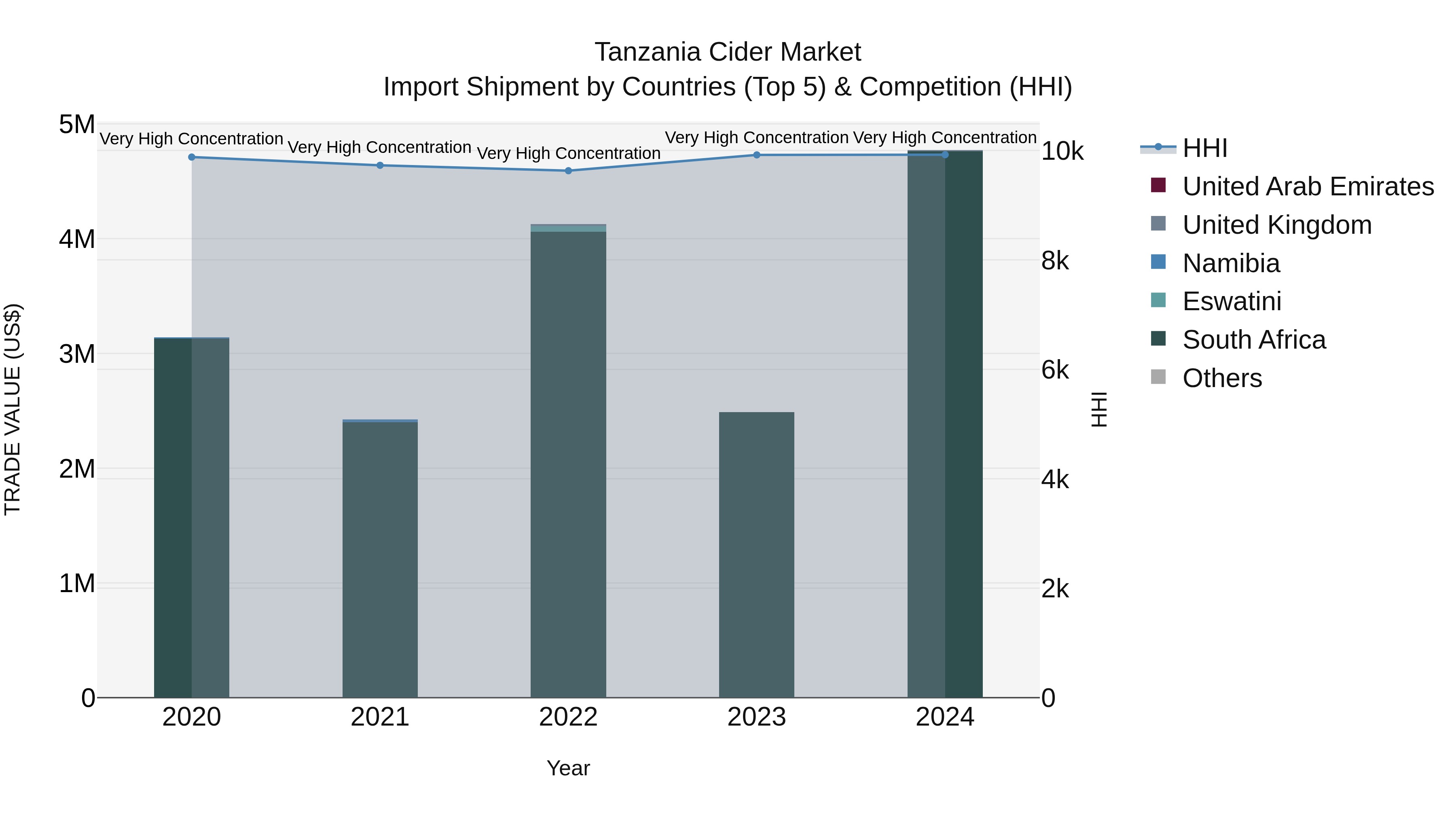
The Tanzania cider import market saw significant growth in 2024, with top exporters being South Africa, United Kingdom, Hong Kong, Eswatini, and Namibia. The high Herfindahl-Hirschman Index (HHI) indicates a concentrated market. The compound annual growth rate (CAGR) from 2020 to 2024 stood at a robust 11.03%, with a remarkable growth rate of 91.86% in 2024 alone. This data suggests a thriving cider import market in Tanzania, driven by strong demand and a diverse range of suppliers.
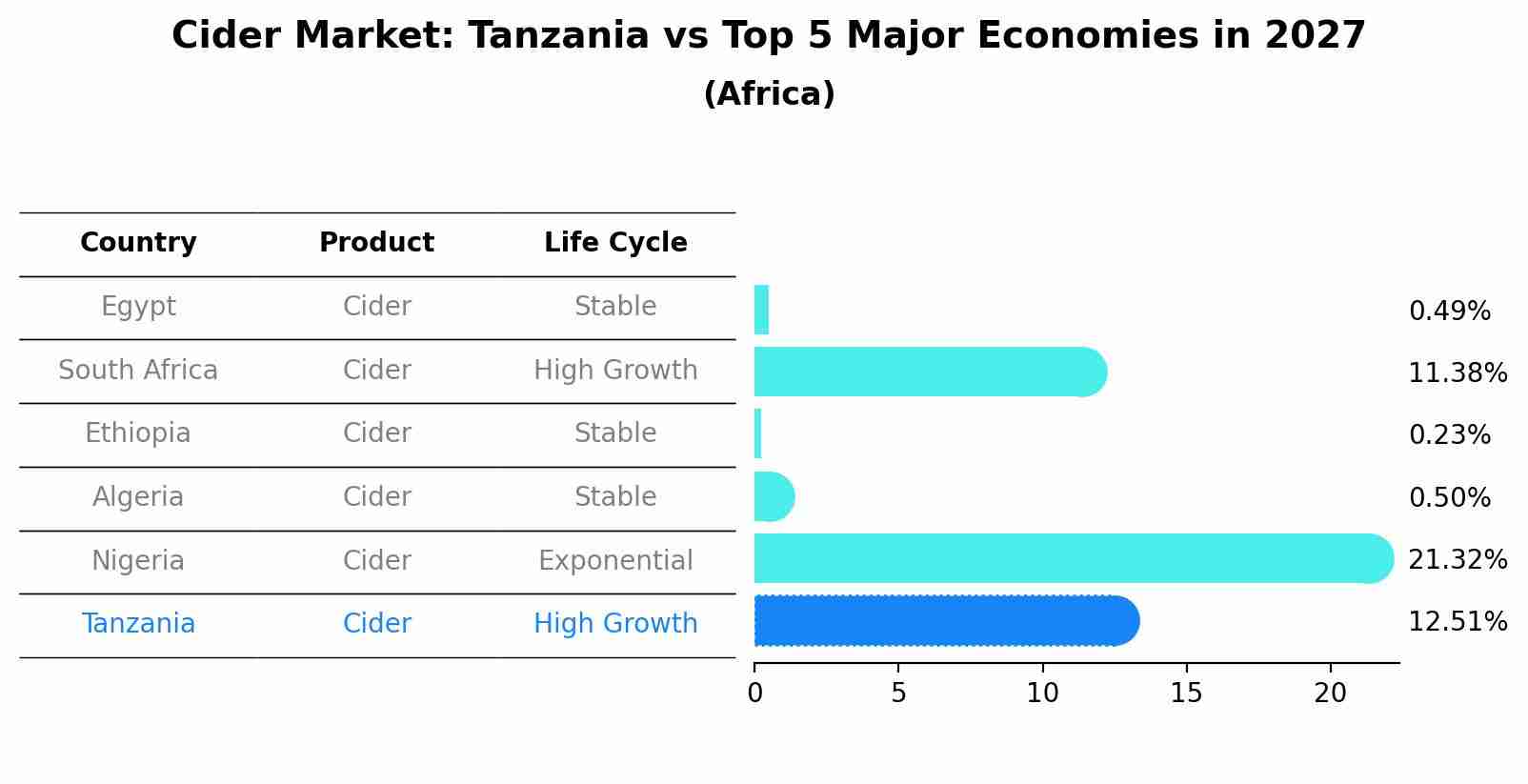
Cider Market: Tanzania vs Top 5 Major Economies in 2027 (Africa)
Tanzania's Cider market is anticipated to experience a high growth rate of 12.51% by 2027, reflecting trends observed in the largest economy Egypt, followed by South Africa, Ethiopia, Algeria and Nigeria.
Tanzania Cider Market Overview
The Tanzania cider market is experiencing steady growth due to increasing urbanization, changing consumer preferences, and a growing middle-class population. Local and international cider brands are gaining popularity among young adults and urban consumers looking for alternative alcoholic beverages. Key players in the market include both global brands like Strongbow and local producers offering a variety of flavors to cater to diverse consumer tastes. The market is also witnessing an increase in cider consumption at social gatherings, bars, and restaurants, contributing to the overall market expansion. However, challenges such as high taxation on alcoholic beverages and limited distribution channels in rural areas could potentially hinder the market`s full potential in Tanzania.Overall, the Tanzania cider market presents opportunities for further growth and innovation in the coming years.
Tanzania Cider Market Trends
The Tanzania cider market is experiencing a shift towards increased demand for craft and premium ciders, driven by a growing consumer interest in unique flavors and high-quality products. Local craft cider producers are gaining popularity among younger consumers looking for alternatives to traditional alcoholic beverages. Additionally, the market is seeing a trend towards healthier cider options, such as low-sugar and organic varieties, as health-conscious consumers seek out more natural and authentic products. The introduction of innovative packaging and marketing strategies by major players in the market is also influencing consumer preferences. Overall, the Tanzania cider market is showing a move towards diversification and premiumization to cater to evolving consumer tastes and preferences.
Tanzania Cider Market Challenges
In the Tanzania cider market, several challenges are faced by both manufacturers and consumers. One of the main challenges is the relatively low awareness and popularity of cider compared to other alcoholic beverages such as beer and spirits. This lack of awareness makes it difficult for cider brands to attract a larger consumer base and compete effectively in the market. Additionally, limited distribution channels and high import costs for cider ingredients can drive up prices, making it less accessible to the general population. Furthermore, cultural preferences and traditional consumption habits in Tanzania may pose a barrier to the widespread adoption of cider among consumers. Overcoming these challenges would require targeted marketing campaigns, improved distribution networks, and possibly the development of locally sourced cider ingredients to make the product more affordable and appealing to Tanzanian consumers.
Tanzania Cider Market Investment Opportunities
The Tanzania cider market presents promising investment opportunities due to the country`s growing young population and increasing disposable income levels. With a rising trend towards premium and craft beverages, there is a demand for innovative and flavorful cider products. Investing in the Tanzania cider market offers the potential for high returns, especially by introducing unique flavors, targeting specific consumer segments, and leveraging effective marketing strategies. Additionally, the relatively untapped nature of the cider market in Tanzania provides room for new entrants to establish a strong presence and capture market share. Collaborating with local apple farmers for sourcing raw materials can also create positive social impact and contribute to the development of the agricultural sector in the country.
Tanzania Cider Market Government Policy
The Tanzanian government has implemented various policies related to the cider market. These include regulations on alcohol production, distribution, and advertising to ensure public health and safety. The government also imposes taxes on alcoholic beverages, including cider, to generate revenue and discourage excessive consumption. Additionally, there are restrictions on the sale of alcohol to minors and regulations on labeling and packaging to provide consumers with accurate information. Overall, the government`s policies aim to balance economic growth in the cider market with public health concerns and social responsibility.
Tanzania Cider Market Future Outlook
The Tanzania cider market is expected to experience steady growth in the coming years, driven by increasing consumer interest in alternative alcoholic beverages and a growing young adult population with disposable income. The market is likely to see a rise in product innovation, with companies introducing new flavors and packaging formats to cater to changing consumer preferences. Additionally, the expanding urbanization and rising trend of socializing in bars and restaurants are expected to further boost the demand for cider in Tanzania. However, challenges such as regulatory restrictions and competition from other alcoholic beverages may pose hurdles for market growth. Overall, the Tanzania cider market presents opportunities for players to capitalize on the growing demand for unique and refreshing alcoholic drinks in the country.
Key Highlights of the Report:
- Tanzania Cider Market Outlook
- Market Size of Tanzania Cider Market, 2021
- Forecast of Tanzania Cider Market, 2027
- Historical Data and Forecast of Tanzania Cider Revenues & Volume for the Period 2018 - 2027
- Tanzania Cider Market Trend Evolution
- Tanzania Cider Market Drivers and Challenges
- Tanzania Cider Price Trends
- Tanzania Cider Porter's Five Forces
- Tanzania Cider Industry Life Cycle
- Historical Data and Forecast of Tanzania Cider Market Revenues & Volume By Type for the Period 2018 - 2027
- Historical Data and Forecast of Tanzania Cider Market Revenues & Volume By Flavored Cider for the Period 2018 - 2027
- Historical Data and Forecast of Tanzania Cider Market Revenues & Volume By Plain Cider for the Period 2018 - 2027
- Historical Data and Forecast of Tanzania Cider Market Revenues & Volume By Distribution Channel for the Period 2018 - 2027
- Historical Data and Forecast of Tanzania Cider Market Revenues & Volume By Speciality Stores for the Period 2018 - 2027
- Historical Data and Forecast of Tanzania Cider Market Revenues & Volume By Supermarket/Hypermarkets for the Period 2018 - 2027
- Historical Data and Forecast of Tanzania Cider Market Revenues & Volume By Online Retail Stores for the Period 2018 - 2027
- Historical Data and Forecast of Tanzania Cider Market Revenues & Volume By Other Channels for the Period 2018 - 2027
- Tanzania Cider Import Export Trade Statistics
- Market Opportunity Assessment By Type
- Market Opportunity Assessment By Distribution Channel
- Tanzania Cider Top Companies Market Share
- Tanzania Cider Competitive Benchmarking By Technical and Operational Parameters
- Tanzania Cider Company Profiles
- Tanzania Cider Key Strategic Recommendations






































