Tanzania Database Security Market Size & Growth Rate (2026-2032)
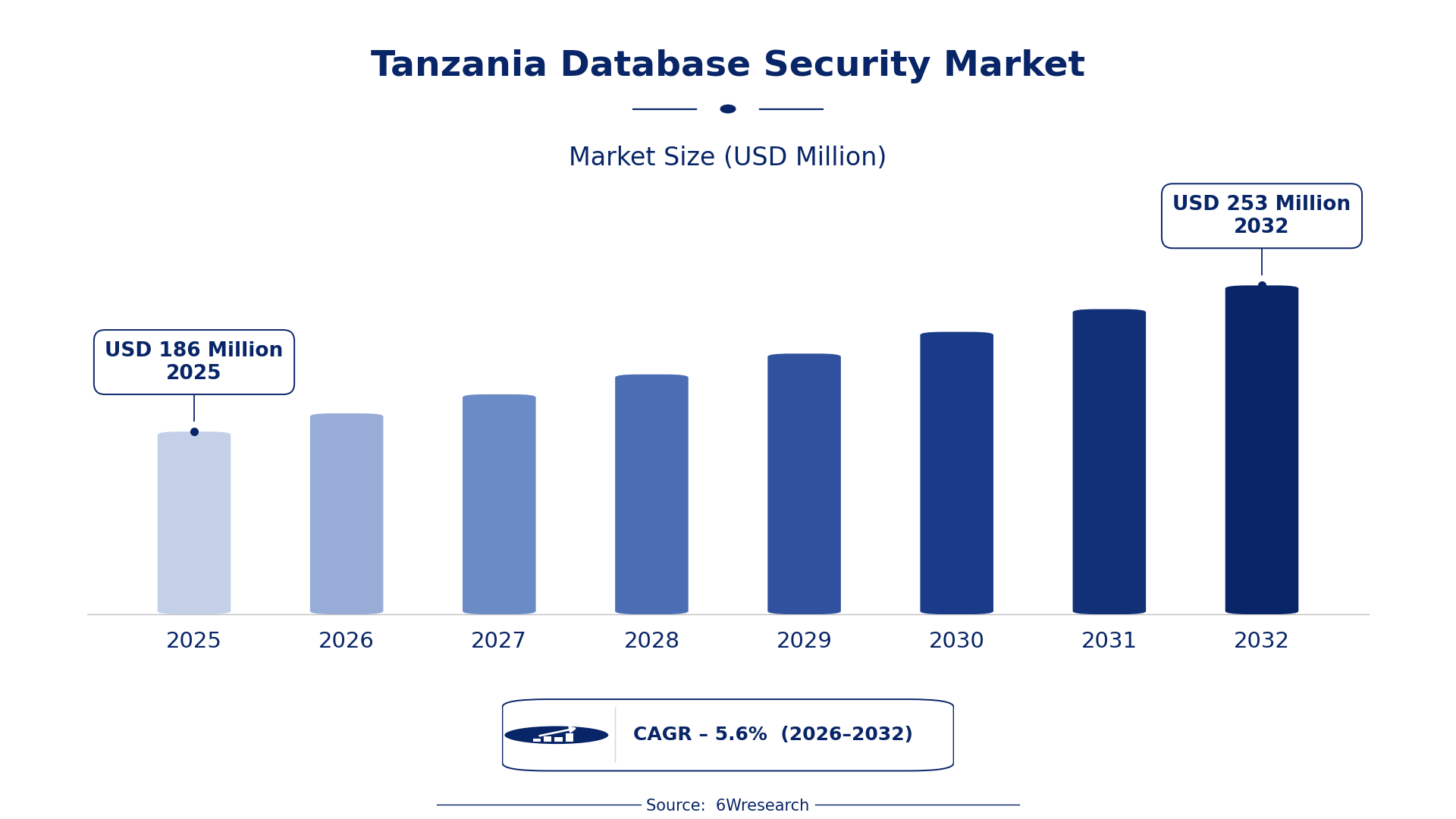
The Tanzania Database Security Market was estimated at USD 186 Million in 2025 and is projected to reach USD 253 Million by 2032, growing at a CAGR of 5.6% from 2026 to 2032.
Tanzania Database Security Market Synopsis
With the rise of digital technologies in Tanzania, organizations are increasingly seeking to protect their sensitive data from cyber threats. A notable spike in data breaches has prompted a shift in priorities for many businesses, with database security becoming a focal point for operational integrity.
Government agencies and enterprises alike are recognizing the critical need for comprehensive database security solutions. As the market continues to evolve, both local and international vendors are stepping up to offer tailored solutions that address specific challenges faced by Tanzanian companies.
Tanzania Database Security Market Year-wise Growth Rate and Key Drivers
This graph illustrates the annual growth rates of the Tanzania Database Security Market from 2021 to 2032, highlighting a steady upward trajectory and projected expansion over the forecast period.
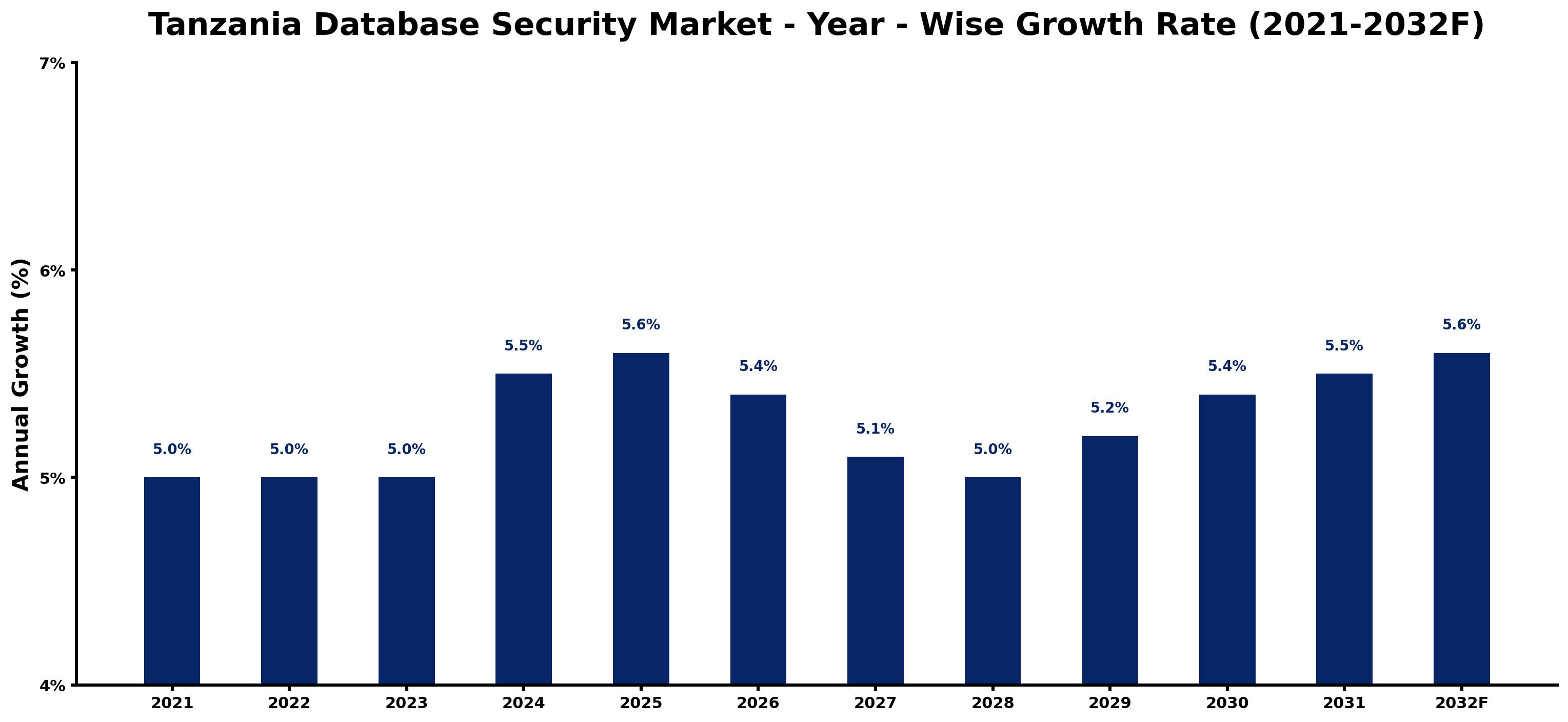
The table below presents the year‑wise growth rates along with the key drivers influencing the market
| Year | Growth Rate | Major Drivers |
| 2021 | 5.0% | Implementation of new data protection regulations by TCRA |
| 2022 | 5.0% | Increased investment in cybersecurity training programs nationwide |
| 2023 | 5.0% | Growing awareness of data privacy among Tanzanian businesses |
| 2024 | 5.5% | Launch of national cybersecurity strategy by the government |
| 2025 | 5.6% | Rise in mobile banking security concerns among consumers |
| 2026 | 5.4% | Partnerships between local firms and international security providers |
| 2027 | 5.1% | Surge in digital transformation projects across various sectors |
| 2028 | 5.0% | Adoption of cloud computing solutions by local enterprises |
| 2029 | 5.2% | Strengthened KYC regulations driving demand for database security |
| 2030 | 5.4% | Increasing incidents of data breaches prompting urgency for solutions |
| 2031 | 5.5% | Enhanced focus on securing personal data among NGOs |
| 2032 | 5.6% | Growth of tech startups necessitating robust database security measures |
Note: Market size estimations and growth projections presented in this report are based on 6Wresearch's proprietary forecasting methodology, utilizing the latest available industry data, government publications, and primary research inputs.
Tanzania Database Security Market Key Takeaways
Below are some of the specific key takeaways from the market, including:
- The growing digitization of business processes is escalating the demand for advanced database security solutions.
- Regulatory frameworks are increasingly mandating compliance with data protection laws, driving investment in security technologies.
- Organizations are investing significantly in encryption, access control, and intrusion detection systems.
- The prevalence of outdated systems remains a concern, emphasizing the urgency for modernization in cybersecurity practices.
- Investment opportunities are ripe for vendors who can address the unique security challenges faced in the Tanzanian context.
Evaluation of Restraints in Tanzania Database Security Market
Despite the growing awareness of database security needs, Tanzania faces significant hurdles. Many organizations still lack basic understanding of cybersecurity principles, which hinders effective risk management. There's also a critical shortage of skilled cybersecurity professionals, complicating efforts to implement advanced security measures. Financial constraints often lead to insufficient investments in necessary technologies, leaving numerous companies vulnerable to attacks. on top of that, outdated IT infrastructure hampers the ability to adopt newer security solutions, creating an environment ripe for breaches.
Tanzania Database Security Market Trends
Current trends indicate a shift toward implementing cutting-edge security solutions designed to counter increasing cyber threats. More businesses are recognizing the importance of compliance with data protection regulations, notably the Tanzania Data Protection Act, which is encouraging investment in security protocols. Encryption technologies and access control mechanisms are becoming standard practice, as companies look to safeguard their databases. The need for real-time monitoring and threat detection is also gaining traction, reflecting a proactive approach to data protection.
Tanzania Database Security Market Opportunities
The growing emphasis on cybersecurity presents fertile ground for investment. Companies can capitalize on the rising demand for tailored database security solutions that address specific local challenges. There is also an opportunity for organizations to provide consulting services aimed at helping businesses enhance their security posture. Strategic partnerships with governmental bodies and local enterprises can foster growth and align security solutions with national priorities, further solidifying the market's foundation.
Government Initiatives in the Tanzania Database Security Market
Government involvement is crucial for shaping the cybersecurity framework in Tanzania. Several policies have been introduced to ensure data protection and bolster national security initiatives. These efforts underscore the commitment to creating a secure digital environment for all stakeholders within the country.
- A recently completed initiative is the Cybercrimes Act of 2015, which establishes a legal framework to combat unauthorized data access and promote cybersecurity awareness.
- The Tanzania Communications Regulatory Authority (TCRA) is currently overseeing the implementation of cybersecurity measures for telecommunications providers to safeguard consumer data.
- A national digital infrastructure upgrade programme is underway, aimed at enhancing cybersecurity resilience across governmental organizations and service providers.
- The National Information and Communication Technology (ICT) Policy of 2016 emphasizes the importance of data protection, with ongoing training programs aimed at increasing cybersecurity literacy among businesses.
- Planned initiatives include the introduction of stricter data privacy regulations that are expected to be rolled out in the next few years, aiming to align with international standards.
Future Insights of the Tanzania Database Security Market
Looking ahead to 2026-2032, the Tanzania Database Security Market is expected to experience considerable growth. As organizations continue to digitalize operations, the urgency to protect sensitive information will escalate. Heightened awareness around data protection laws will drive demand for advanced security technologies. Key players in the market will focus on innovation to stay ahead of emerging threats, ensuring businesses can safeguard their digital assets in a rapidly changing environment.
Tanzania Database Security Market Latest Developments
In recent months, the Tanzania Database Security Market has seen notable developments reflecting both challenges and advancements. Organizations are rapidly adapting to the increasing threat landscape, prompting many to seek advanced solutions tailored to local demands.
- A major technology vendor announced a new encryption tool designed specifically for local businesses, which was launched in early 2025 and received positive feedback.
- An initiative to upgrade existing cybersecurity infrastructures is currently underway, aimed at enhancing threat detection capabilities across government agencies.
- A collaborative project between several local firms aims to develop a comprehensive training program for cybersecurity professionals, with a pilot expected to begin in Q3 2025.
- A product rollout of a new access control system tailored for SMEs is planned for late 2026, focusing on user-friendly interfaces to improve adoption rates.
- A partnership established between a cybersecurity consultancy and a university to foster research in cybersecurity innovations is ongoing and seeks to address specific local security challenges.
Tanzania Database Security Market - Key Attractiveness of the Report
- 10 Years of Market Numbers
- Historical Data Starting from 2022 to 2025
- Base Year: 2025
- Forecast Data until 2032
- Key Performance Indicators Impacting the Market
- Major Upcoming Developments and Projects
Key Highlights of the Report:
- Tanzania Database Security Market Outlook
- Market Size of Tanzania Database Security Market, 2025
- Forecast of Tanzania Database Security Market, 2032
- Historical Data and Forecast of Tanzania Database Security Revenues & Volume for the Period 2022-2032F
- Tanzania Database Security Market Trend Evolution
- Tanzania Database Security Market Drivers and Challenges
- Tanzania Database Security Price Trends
- Tanzania Database Security Porter's Five Forces
- Tanzania Database Security Industry Life Cycle
- Historical Data and Forecast of Tanzania Database Security Market Revenues & Volume By Component for the Period 2022-2032F
- Historical Data and Forecast of Tanzania Database Security Market Revenues & Volume By Solution for the Period 2022-2032F
- Historical Data and Forecast of Tanzania Database Security Market Revenues & Volume By Services for the Period 2022-2032F
- Historical Data and Forecast of Tanzania Database Security Market Revenues & Volume By Business function for the Period 2022-2032F
- Historical Data and Forecast of Tanzania Database Security Market Revenues & Volume By Marketing for the Period 2022-2032F
- Historical Data and Forecast of Tanzania Database Security Market Revenues & Volume By sales for the Period 2022-2032F
- Historical Data and Forecast of Tanzania Database Security Market Revenues & Volume By finance for the Period 2022-2032F
- Historical Data and Forecast of Tanzania Database Security Market Revenues & Volume By operations for the Period 2022-2032F
- Historical Data and Forecast of Tanzania Database Security Market Revenues & Volume By Organization Size for the Period 2022-2032F
- Historical Data and Forecast of Tanzania Database Security Market Revenues & Volume By Large Enterprises for the Period 2022-2032F
- Historical Data and Forecast of Tanzania Database Security Market Revenues & Volume By SMEs for the Period 2022-2032F
- Historical Data and Forecast of Tanzania Database Security Market Revenues & Volume By Deployment Mode for the Period 2022-2032F
- Historical Data and Forecast of Tanzania Database Security Market Revenues & Volume By Cloud for the Period 2022-2032F
- Historical Data and Forecast of Tanzania Database Security Market Revenues & Volume By On-premises for the Period 2022-2032F
- Historical Data and Forecast of Tanzania Database Security Market Revenues & Volume By Vertical for the Period 2022-2032F
- Historical Data and Forecast of Tanzania Database Security Market Revenues & Volume By Banking, Financial Services, And Insurance for the Period 2022-2032F
- Historical Data and Forecast of Tanzania Database Security Market Revenues & Volume By Telecommunication and IT for the Period 2022-2032F
- Historical Data and Forecast of Tanzania Database Security Market Revenues & Volume By Government and Defense for the Period 2022-2032F
- Historical Data and Forecast of Tanzania Database Security Market Revenues & Volume By Manufacturing for the Period 2022-2032F
- Historical Data and Forecast of Tanzania Database Security Market Revenues & Volume By Healthcare and life sciences for the Period 2022-2032F
- Historical Data and Forecast of Tanzania Database Security Market Revenues & Volume By Retail and Ecommerce for the Period 2022-2032F
- Historical Data and Forecast of Tanzania Database Security Market Revenues & Volume By Energy and Utilities for the Period 2022-2032F
- Tanzania Database Security Import Export Trade Statistics
- Market Opportunity Assessment By Component
- Market Opportunity Assessment By Business function
- Market Opportunity Assessment By Organization Size
- Market Opportunity Assessment By Deployment Mode
- Market Opportunity Assessment By Vertical
- Tanzania Database Security Top Companies Market Share
- Tanzania Database Security Competitive Benchmarking By Technical and Operational Parameters
- Tanzania Database Security Company Profiles
- Tanzania Database Security Key Strategic Recommendations






































