Ethyl Alcohol Market: Tanzania vs Top 5 Major Economies in 2027 (Africa)
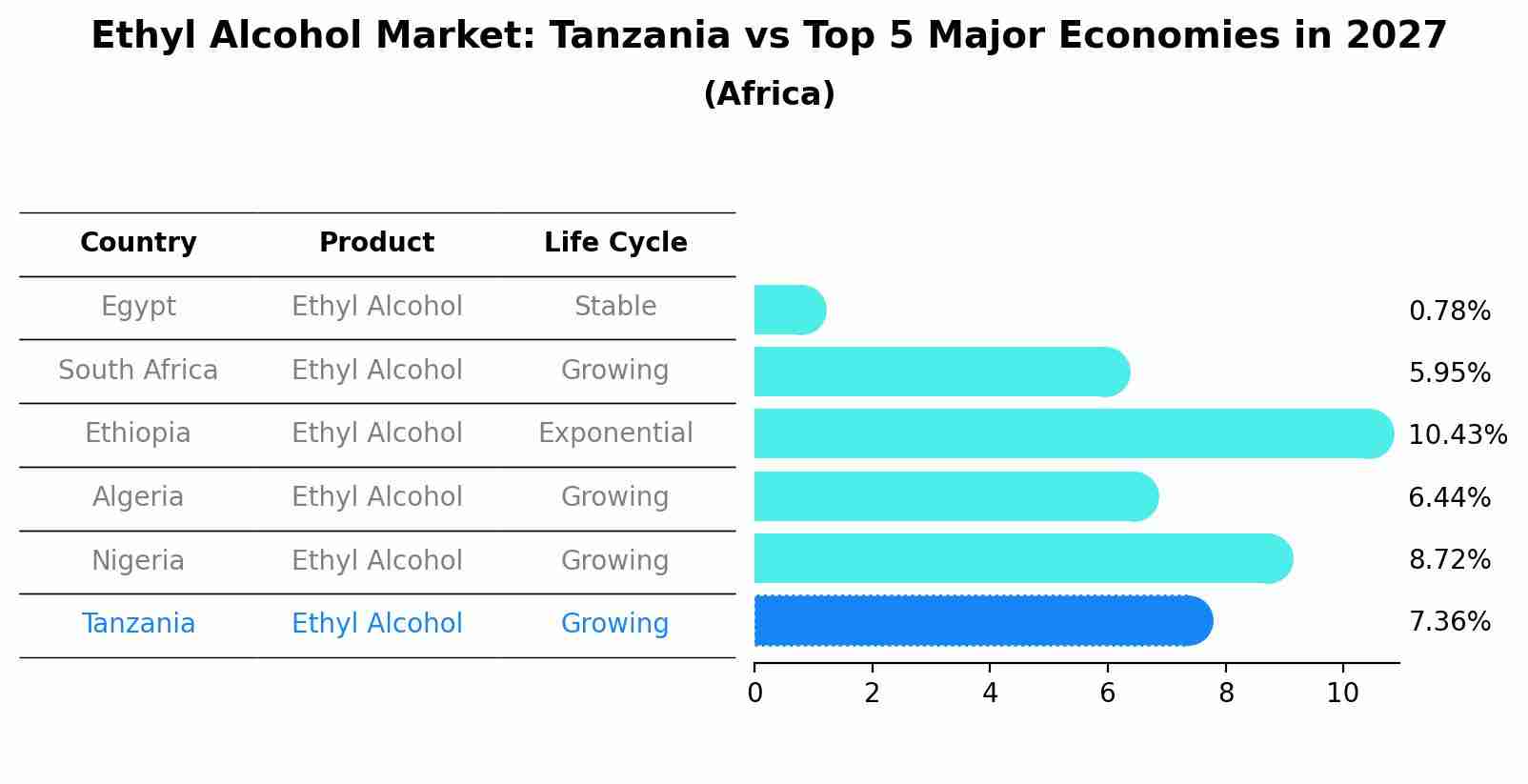
The Ethyl Alcohol market in Tanzania is projected to grow at a growing growth rate of 7.36% by 2027, within the Africa region led by Egypt, along with other countries like South Africa, Ethiopia, Algeria and Nigeria, collectively shaping a dynamic and evolving market environment driven by innovation and increasing adoption of emerging technologies.
Tanzania Ethyl Alcohol Market Overview
The Tanzania Ethyl Alcohol Market is witnessing steady growth driven by increasing demand from various industries such as pharmaceuticals, cosmetics, and food & beverage. The market is primarily dominated by industrial-grade ethyl alcohol used for manufacturing hand sanitizers, disinfectants, and other cleaning products. The rise in awareness about the importance of hygiene and sanitation due to the COVID-19 pandemic has further boosted the demand for ethyl alcohol in Tanzania. Additionally, the growing population and changing consumer preferences towards natural and organic products are driving the demand for ethyl alcohol in cosmetics and personal care products. Key players in the Tanzania Ethyl Alcohol Market include local manufacturers as well as international companies, all striving to meet the increasing demand and capitalize on the market opportunities.
Tanzania Ethyl Alcohol Market Trends
The Tanzania Ethyl Alcohol Market is experiencing steady growth, driven by various factors such as the increasing demand for alcohol-based sanitizers and disinfectants due to the ongoing COVID-19 pandemic. Additionally, the rise in disposable income among consumers has led to an uptick in the consumption of alcoholic beverages, further boosting the market. The government`s efforts to promote local production of ethyl alcohol are also contributing to the market`s growth. However, challenges such as strict regulations on alcohol production and distribution, as well as the presence of counterfeit products, pose a threat to market expansion. Overall, the Tanzania Ethyl Alcohol Market is expected to continue its growth trajectory in the coming years, with a focus on quality products and regulatory compliance being key areas of importance for industry players.
Tanzania Ethyl Alcohol Market Challenges
In the Tanzania Ethyl Alcohol Market, challenges include inconsistent government policies and regulations impacting production and distribution, lack of modern infrastructure hindering efficient supply chain management, competition from illicit alcohol producers leading to price fluctuations, and limited awareness among consumers about the quality and benefits of legally-produced ethyl alcohol. Additionally, the market faces obstacles such as fluctuating raw material prices, inadequate investment in technology and innovation, and limited access to finance for small and medium-sized enterprises in the sector. Addressing these challenges will require collaboration between industry stakeholders, government bodies, and financial institutions to create a conducive environment for sustainable growth and development in the Tanzania Ethyl Alcohol Market.
Tanzania Ethyl Alcohol Market Investment Opportunities
The Tanzania ethyl alcohol market presents promising investment opportunities due to increasing demand from various sectors such as pharmaceuticals, beverages, and industrial applications. With a growing population and rising disposable income levels, the consumption of ethyl alcohol for hand sanitizers, disinfectants, alcoholic beverages, and industrial solvents is expected to rise. Investing in the production and distribution of ethyl alcohol in Tanzania can be lucrative, especially with the government`s initiatives to promote local manufacturing and reduce imports. Additionally, the potential for exports to neighboring countries further enhances the market outlook. Investors can consider establishing ethanol production plants, partnering with local suppliers, or exploring opportunities in the distribution and marketing of ethyl alcohol to capitalize on this growing market demand.
Tanzania Ethyl Alcohol Market Government Policy
Government policies in Tanzania related to the ethyl alcohol market include regulations on production, distribution, and sale of alcohol. The government has set minimum age requirements for purchasing alcohol and restricts the advertising and promotion of alcoholic beverages. Additionally, there are specific taxation policies in place to control the consumption of alcohol, including excise duties and other levies. The government also regulates the quality and safety standards of ethyl alcohol to ensure consumer protection. Overall, these policies aim to manage the consumption of alcohol, promote responsible drinking, and protect public health and safety in Tanzania.
Tanzania Ethyl Alcohol Market Future Outlook
The Tanzania Ethyl Alcohol Market is expected to witness steady growth in the coming years due to the increasing demand for alcohol-based products in various industries such as pharmaceuticals, cosmetics, and beverages. The market is likely to benefit from the rising disposable income of consumers and the expanding industrial sector in the country. Additionally, the government`s efforts to promote local production and reduce import dependency are anticipated to further boost the market. However, challenges such as fluctuating raw material prices and regulatory constraints may impact market growth. Overall, with the growing demand for ethyl alcohol across multiple sectors, the Tanzania Ethyl Alcohol Market is projected to show positive growth prospects in the foreseeable future.
Key Highlights of the Report:
- Tanzania Ethyl Alcohol Market Outlook
- Market Size of Tanzania Ethyl Alcohol Market, 2021
- Forecast of Tanzania Ethyl Alcohol Market, 2031
- Historical Data and Forecast of Tanzania Ethyl Alcohol Revenues & Volume for the Period 2018 - 2031
- Tanzania Ethyl Alcohol Market Trend Evolution
- Tanzania Ethyl Alcohol Market Drivers and Challenges
- Tanzania Ethyl Alcohol Price Trends
- Tanzania Ethyl Alcohol Porter's Five Forces
- Tanzania Ethyl Alcohol Industry Life Cycle
- Historical Data and Forecast of Tanzania Ethyl Alcohol Market Revenues & Volume By Grade for the Period 2018 - 2031
- Historical Data and Forecast of Tanzania Ethyl Alcohol Market Revenues & Volume By Food Grade for the Period 2018 - 2031
- Historical Data and Forecast of Tanzania Ethyl Alcohol Market Revenues & Volume By Industrial Grade for the Period 2018 - 2031
- Historical Data and Forecast of Tanzania Ethyl Alcohol Market Revenues & Volume By Pharmaceutical Grade for the Period 2018 - 2031
- Historical Data and Forecast of Tanzania Ethyl Alcohol Market Revenues & Volume By Lab Grade for the Period 2018 - 2031
- Historical Data and Forecast of Tanzania Ethyl Alcohol Market Revenues & Volume By End-user Industry for the Period 2018 - 2031
- Historical Data and Forecast of Tanzania Ethyl Alcohol Market Revenues & Volume By Automotive and Transportation for the Period 2018 - 2031
- Historical Data and Forecast of Tanzania Ethyl Alcohol Market Revenues & Volume By Food and Beverage for the Period 2018 - 2031
- Historical Data and Forecast of Tanzania Ethyl Alcohol Market Revenues & Volume By Pharmaceutical for the Period 2018 - 2031
- Historical Data and Forecast of Tanzania Ethyl Alcohol Market Revenues & Volume By Cosmetics and Personal Care (Includes hand-Sanitizer) for the Period 2018 - 2031
- Historical Data and Forecast of Tanzania Ethyl Alcohol Market Revenues & Volume By Other End-user Industries for the Period 2018 - 2031
- Tanzania Ethyl Alcohol Import Export Trade Statistics
- Market Opportunity Assessment By Grade
- Market Opportunity Assessment By End-user Industry
- Tanzania Ethyl Alcohol Top Companies Market Share
- Tanzania Ethyl Alcohol Competitive Benchmarking By Technical and Operational Parameters
- Tanzania Ethyl Alcohol Company Profiles
- Tanzania Ethyl Alcohol Key Strategic Recommendations






































