Tanzania Golf Clubs Market Size, Share & Growth Rate
The Tanzania Golf Clubs Market was estimated at USD 347 Million in 2025 and is projected to reach USD 476 Million by 2032, growing at a CAGR of 4.6% from 2026 to 2032. This growth trajectory is primarily driven by an increasing interest in golf among the local population, along with rising disposable incomes and a burgeoning middle class. Additionally, the influx of golf tourism is expanding the markets reach, drawing attention from international golfers eager to explore Tanzania's beautiful courses.
Tanzania Golf Clubs Market Year-wise Growth Rate and Key Drivers
This graph highlights how the Tanzania Golf Clubs Market has steadily grown over the years, supported by major growth factors.
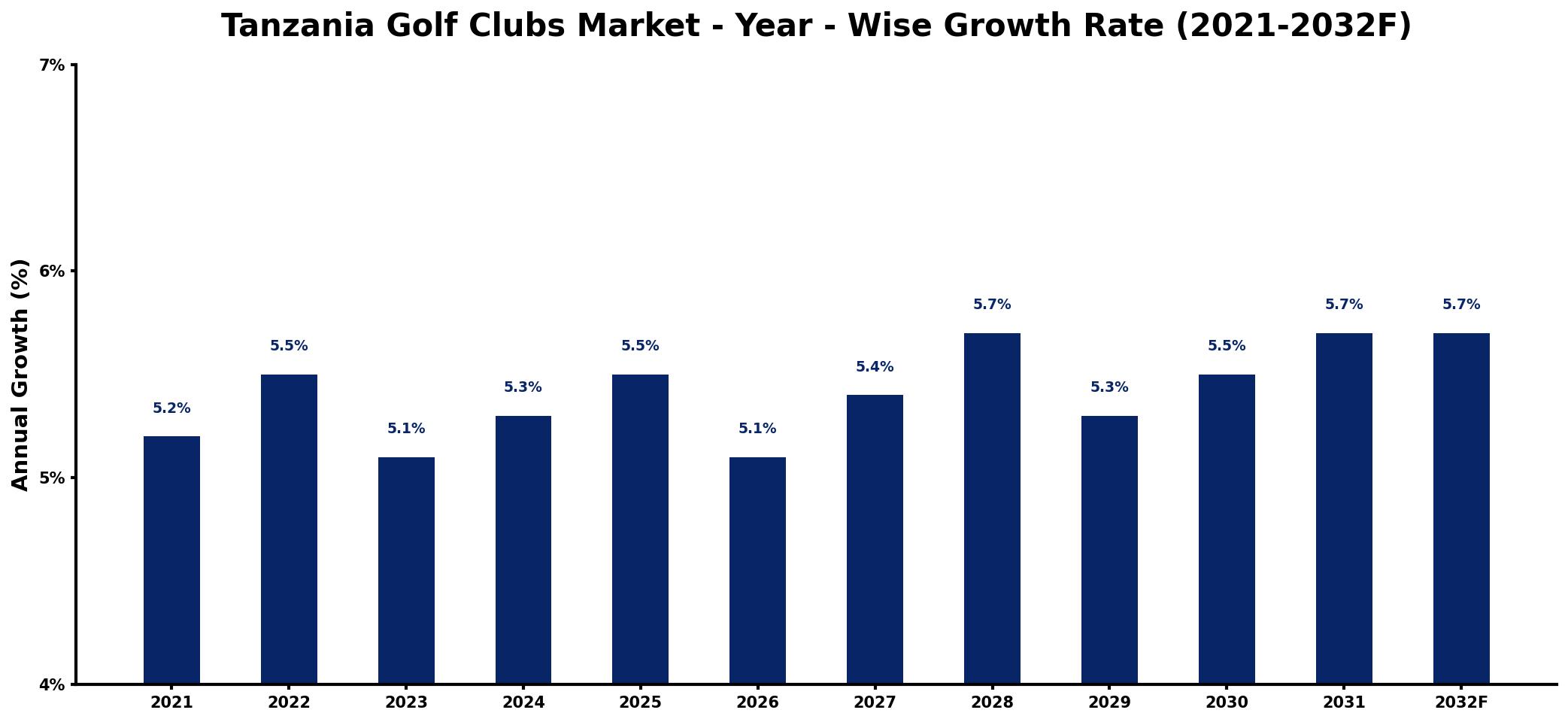
The table below presents the year‑wise growth rates along with the key drivers influencing the market
| Year | Growth Rate | Major Drivers |
| 2021 | 5.2% | rising interest in recreational activities |
| 2022 | 5.5% | increased tourism and travel opportunities |
| 2023 | 5.1% | growing sponsorship in sports events |
| 2024 | 5.3% | expansion of leisure facilities |
| 2025 | 5.5% | enhanced corporate partnerships emerging |
| 2026 | 5.1% | improved infrastructure for accessibility |
| 2027 | 5.4% | greater community engagement initiatives |
| 2028 | 5.7% | influx of international tournaments |
| 2029 | 5.3% | strengthened local sporting organizations |
| 2030 | 5.5% | development of youth programs |
| 2031 | 5.7% | increased media coverage and visibility |
| 2032 | 5.7% | growing health and wellness trends |
Note: Market size estimations and growth projections presented in this report are based on 6Wresearch's proprietary forecasting methodology, utilizing the latest available industry data, government publications, and primary research inputs.
Tanzania Golf Clubs Market Synopsis
The primary force shaping the Tanzania Golf Clubs Market today is the rising interest in golf, which is becoming more prominent among Tanzanians. This newfound enthusiasm, coupled with economic growth, is fostering a supportive environment for golf clubs, paving the way for enhanced facilities and services.
Moreover, the market is witnessing increased investment aimed at improving infrastructure, which in turn enriches the overall golfing experience. This proactive approach not only attracts local players but also appeals to international tourists seeking picturesque golf settings.
Tanzania Golf Clubs Market Key Takeaways
- The market is on an upward trajectory due to rising disposable incomes and increased participation in golf.
- Golf tourism is an emerging trend, enhancing the appeal of Tanzania's golf clubs to international players.
- Investments in infrastructure and facilities are crucial for improving the golfing experience.
- Clubs are adopting sustainability practices to align with global environmental standards.
- The government's supportive policies aim to stimulate growth in golf and sports tourism.
Evaluation of Restraints in Tanzania Golf Clubs Market
Despite the positive outlook, the Tanzania Golf Clubs Market grapples with significant restraints. A considerable portion of the population remains unaware of golf, limiting its growth potential. The high costs associated with memberships and equipment further deter participation. Additionally, infrastructure challenges, such as subpar maintenance and limited facilities, hinder the experience of both local players and tourists. Without concerted efforts to overcome these barriers, the market may struggle to reach its full potential.
Tanzania Golf Clubs Market Trends
Several trends are currently shaping the Tanzania Golf Clubs Market. A notable increase in golf tournaments and events is fostering greater interest in the sport, promoting a culture of competitive play. Additionally, golf clubs are investing in enhancing their facilities, offering state-of-the-art amenities to meet evolving consumer demands. The shift towards sustainability is also prominent, with clubs integrating eco-friendly practices to minimize their environmental footprint and appeal to a more conscious clientele.
Tanzania Golf Clubs Market Opportunities
The Tanzania Golf Clubs Market holds several lucrative investment opportunities. Potential areas for growth include the development of new golf courses and the upgrading of existing facilities to meet modern standards. There is also significant potential in providing ancillary services, such as golf equipment retail and training programs for enthusiasts. By collaborating with local tourism agencies and hotels to create attractive golf packages, investors can capitalize on the growing influx of international tourists eager to experience Tanzanias unique golfing landscape.
Government Initiatives in the Tanzania Golf Clubs Market
The Tanzanian government has recognized the importance of the golf clubs market and is implementing supportive policies to foster its growth. These initiatives include tax incentives aimed at encouraging investments in golf clubs and related businesses. Furthermore, the government is focused on infrastructure development to improve access to golf courses, as well as promoting sports tourism to draw visitors to Tanzania. Such measures are designed to boost economic activity, create job opportunities, and enhance the overall tourism sector.
Future Insights of the Tanzania Golf Clubs Market
Looking ahead to 2026-2032, the Tanzania Golf Clubs Market is poised for steady growth, driven by escalating local interest and an expanding number of upgraded golf courses. The rise of golf tourism will continue to attract both local and international golfers, presenting unique opportunities for clubs. Moreover, advancements in technology are likely to influence product offerings, leading to innovative and high-performance golf equipment that caters to the evolving preferences of players.
Tanzania Golf Clubs Market Latest Developments (2025 - 2026)
Recent developments in the Tanzania Golf Clubs Market indicate a strong movement toward modernization. Many clubs are engaging in facility upgrades to provide better services and attract new members. Additionally, there has been a noticeable increase in the number of local and international golf tournaments, enhancing the sport's profile in the region. This growing excitement around golf is expected to further stimulate interest and investment in the market.
Tanzania Golf Clubs Market - Key Attractiveness of the Report
- 10 Years of Market Numbers
- Historical Data Starting from 2022 to 2025
- Base Year: 2025
- Forecast Data until 2032
- Key Performance Indicators Impacting the Market
- Major Upcoming Developments and Projects
Key Highlights of the Report:
- Tanzania Golf Clubs Market Outlook
- Market Size of Tanzania Golf Clubs Market, 2025
- Forecast of Tanzania Golf Clubs Market, 2032
- Historical Data and Forecast of Tanzania Golf Clubs Revenues & Volume for the Period 2022-2032F
- Tanzania Golf Clubs Market Trend Evolution
- Tanzania Golf Clubs Market Drivers and Challenges
- Tanzania Golf Clubs Price Trends
- Tanzania Golf Clubs Porter's Five Forces
- Tanzania Golf Clubs Industry Life Cycle
- Historical Data and Forecast of Tanzania Golf Clubs Market Revenues & Volume By Product Type for the Period 2022-2032F
- Historical Data and Forecast of Tanzania Golf Clubs Market Revenues & Volume By Woods for the Period 2022-2032F
- Historical Data and Forecast of Tanzania Golf Clubs Market Revenues & Volume By Iron for the Period 2022-2032F
- Historical Data and Forecast of Tanzania Golf Clubs Market Revenues & Volume By Wedges for the Period 2022-2032F
- Historical Data and Forecast of Tanzania Golf Clubs Market Revenues & Volume By Putters for the Period 2022-2032F
- Tanzania Golf Clubs Import Export Trade Statistics
- Market Opportunity Assessment By Product Type
- Tanzania Golf Clubs Top Companies Market Share
- Tanzania Golf Clubs Competitive Benchmarking By Technical and Operational Parameters
- Tanzania Golf Clubs Company Profiles
- Tanzania Golf Clubs Key Strategic Recommendations






































