Methionine Market: Tanzania vs Top 5 Major Economies in 2027 (Africa)
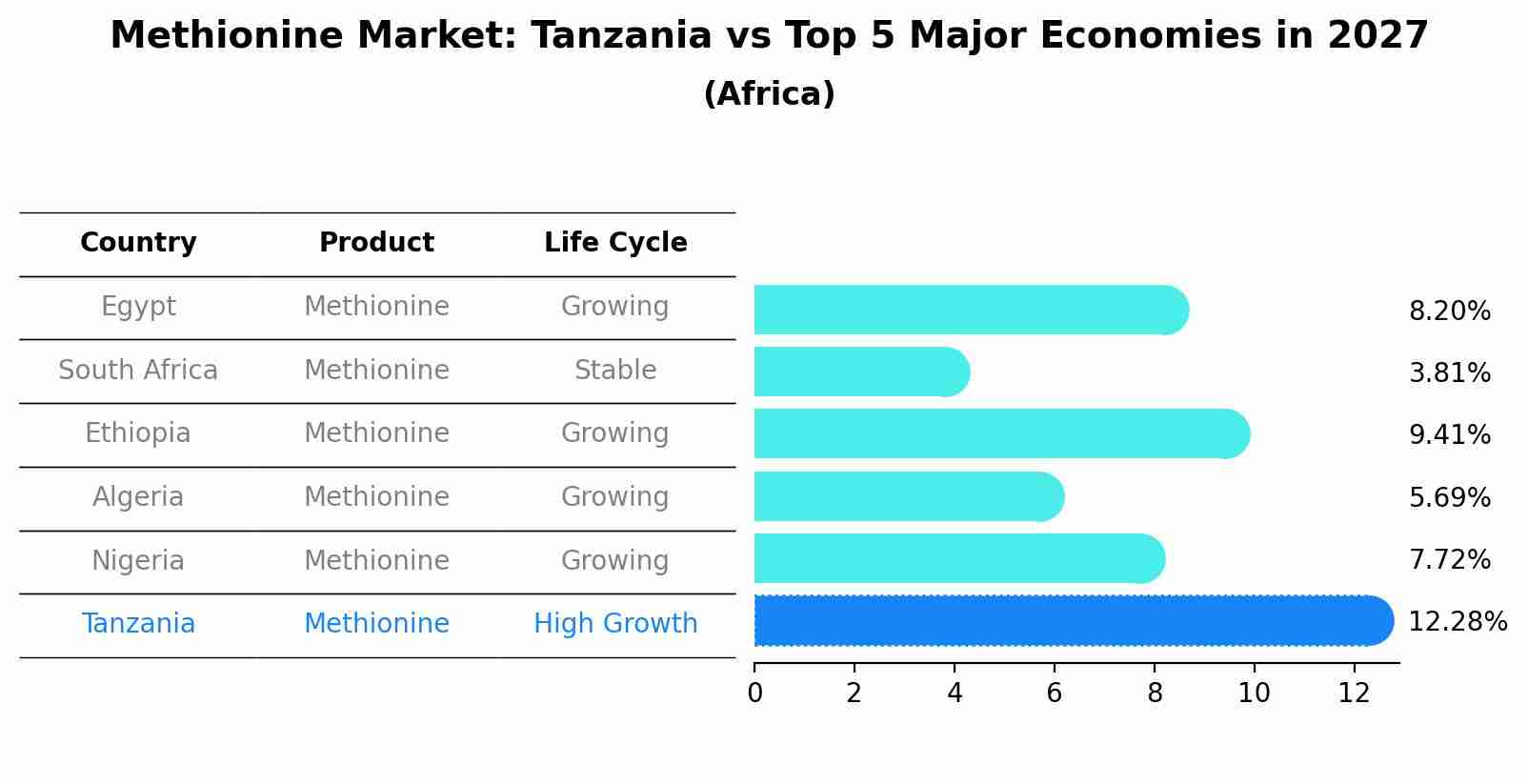
Tanzania's Methionine market is anticipated to experience a high growth rate of 12.28% by 2027, reflecting trends observed in the largest economy Egypt, followed by South Africa, Ethiopia, Algeria and Nigeria.
Tanzania Methionine Market Overview
The Tanzania methionine market is driven by the growing demand for animal feed additives to enhance livestock health and productivity. Methionine is essential for protein synthesis and animal growth, supporting its use in poultry and livestock nutrition.
Drivers of the market
In Tanzania, the methionine market is primarily driven by the expanding poultry and aquaculture sectors. Methionine, an essential amino acid, is crucial for animal nutrition to enhance growth performance and protein synthesis. Rising meat consumption, increasing livestock production, and advancements in feed formulations are key drivers. Moreover, government initiatives to improve animal health and productivity are contributing to market expansion.
Challenges of the market
In Tanzania, challenges in the methionine market include dependency on imports for supply, price sensitivity due to global market fluctuations, and quality control issues affecting product consistency.
Government Policy of the market
In Tanzania, policies governing the methionine market focus on enhancing livestock nutrition and agricultural productivity. The government encourages research and development in animal feed formulations containing methionine to improve livestock health and yield. Regulatory frameworks ensure compliance with international standards for feed additives, fostering market competitiveness and sustainable agricultural practices.
Key Highlights of the Report:
- Tanzania Methionine Market Outlook
- Market Size of Tanzania Methionine Market, 2024
- Forecast of Tanzania Methionine Market, 2031
- Historical Data and Forecast of Tanzania Methionine Revenues & Volume for the Period 2021-2031
- Tanzania Methionine Market Trend Evolution
- Tanzania Methionine Market Drivers and Challenges
- Tanzania Methionine Price Trends
- Tanzania Methionine Porter's Five Forces
- Tanzania Methionine Industry Life Cycle
- Historical Data and Forecast of Tanzania Methionine Market Revenues & Volume By Raw Material for the Period 2021-2031
- Historical Data and Forecast of Tanzania Methionine Market Revenues & Volume By Plant-based for the Period 2021-2031
- Historical Data and Forecast of Tanzania Methionine Market Revenues & Volume By Animal-based for the Period 2021-2031
- Historical Data and Forecast of Tanzania Methionine Market Revenues & Volume By Application for the Period 2021-2031
- Historical Data and Forecast of Tanzania Methionine Market Revenues & Volume By Animal Feed for the Period 2021-2031
- Historical Data and Forecast of Tanzania Methionine Market Revenues & Volume By Food & Dietary Supplements for the Period 2021-2031
- Historical Data and Forecast of Tanzania Methionine Market Revenues & Volume By Pharmaceuticals for the Period 2021-2031
- Tanzania Methionine Import Export Trade Statistics
- Market Opportunity Assessment By Raw Material
- Market Opportunity Assessment By Application
- Tanzania Methionine Top Companies Market Share
- Tanzania Methionine Competitive Benchmarking By Technical and Operational Parameters
- Tanzania Methionine Company Profiles
- Tanzania Methionine Key Strategic Recommendations






































