Tanzania Nail Polish Market Size, Share & Growth Rate
The Tanzania Nail Polish Market was estimated at USD 751 Million in 2025 and is projected to reach USD 1273 Million by 2032, growing at a CAGR of 7.8% from 2026 to 2032. This growth trajectory is propelled by rising disposable incomes, which have led to increased spending on personal grooming products. Additionally, the ongoing influence of fashion trends and social media continues to shape consumer preferences, driving demand for diverse nail aesthetics and innovative formulations.
Tanzania Nail Polish Market Year-wise Growth Rate and Key Drivers
This graph highlights how the Tanzania Nail Polish Market has steadily grown over the years, supported by major growth factors.
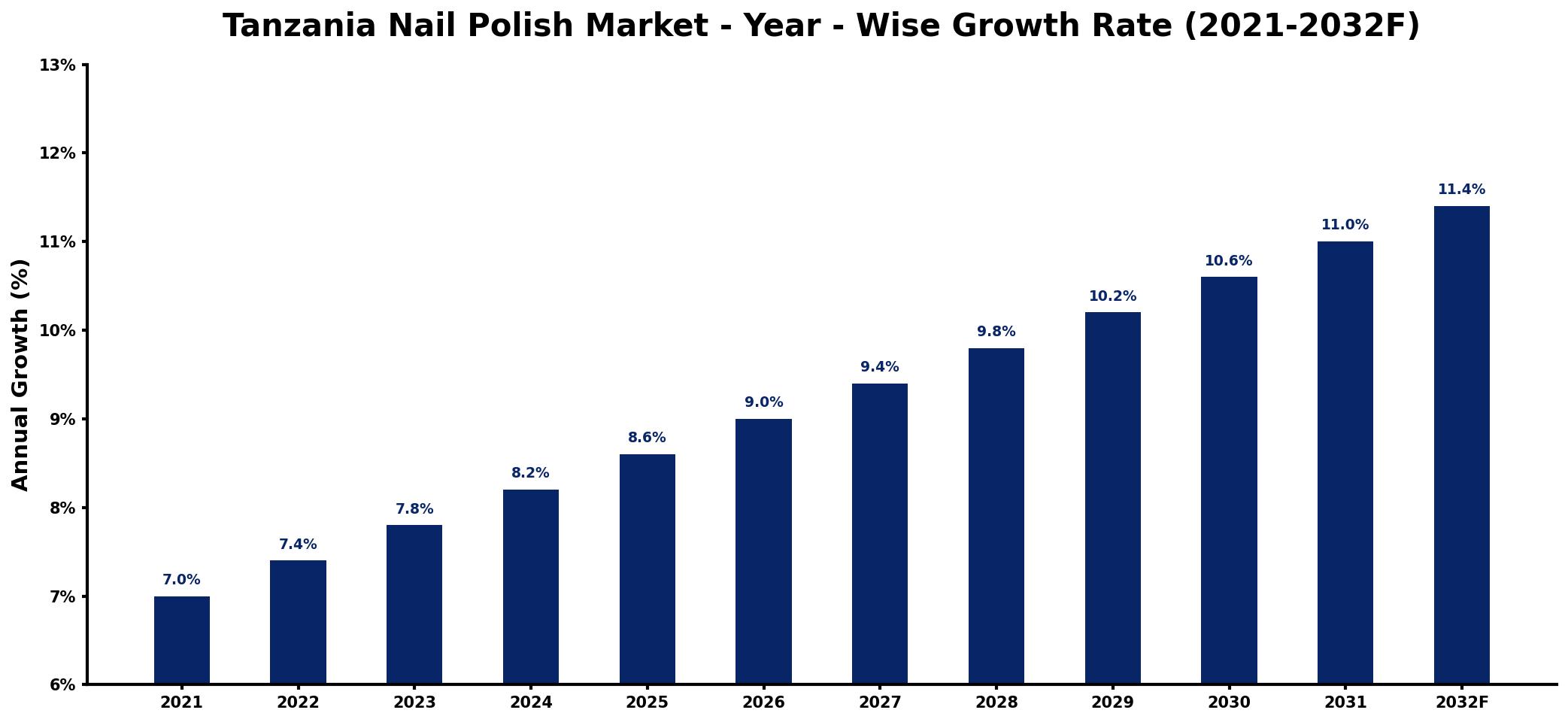
The table below presents the year‑wise growth rates along with the key drivers influencing the market
| Year | Growth Rate | Major Drivers |
| 2021 | 7.0% | Increase in disposable incomes |
| 2022 | 7.4% | Rise in beauty consciousness |
| 2023 | 7.8% | Growth of online retail platforms |
| 2024 | 8.2% | Expansion of beauty salons |
| 2025 | 8.6% | Surge in fashion events |
| 2026 | 9.0% | Emergence of local brands |
| 2027 | 9.4% | enhanced product quality standards |
| 2028 | 9.8% | Development of eco-friendly options |
| 2029 | 10.2% | rising infrastructure development spending |
| 2030 | 10.6% | rising export shipment volumes |
| 2031 | 11.0% | increased domestic production output |
| 2032 | 11.4% | rising end-use demand growth |
Note: Market size estimations and growth projections presented in this report are based on 6Wresearch's proprietary forecasting methodology, utilizing the latest available industry data, government publications, and primary research inputs.
Tanzania Nail Polish Market Synopsis
Recent momentum in the Tanzania Nail Polish Market showcases a vibrant landscape characterized by an expanding array of colors and formulations. As consumer preferences evolve, the market is shifting towards longer-lasting and quick-drying nail polish options, indicating a dynamic and competitive environment.
Looking ahead, the market is expected to further capitalize on emerging beauty trends, driven by social media's influence and the continuous innovation from manufacturers. The expansion of the beauty industry coupled with heightened consumer interest in personal care products suggests a promising horizon for the Tanzania nail polish sector.
Tanzania Nail Polish Market Key Takeaways
- The market is poised for significant growth, driven by fashion trends and increased disposable incomes.
- Innovations in nail polish formulations, including quick-drying and long-lasting options, are gaining traction.
- The influence of social media is profoundly impacting consumer choices and shaping product development.
- Market saturation and competition with established brands present ongoing challenges for local manufacturers.
- Government policies are increasingly focused on product safety and sustainability in the cosmetics sector.
Evaluation of Restraints in Tanzania Nail Polish Market
The Tanzania Nail Polish Market faces a few notable restraints that could hinder its potential. A primary concern is market saturation, with numerous brands competing for consumer attention, making product differentiation essential. Furthermore, local manufacturers must navigate the complexities of competing against established international brands. The need to comply with cosmetic regulations and ensure product safety is another pressing challenge, as it requires significant investments in quality control and innovation. Additionally, the price sensitivity of consumers may limit the growth of premium products, necessitating strategic pricing and marketing efforts.
Tanzania Nail Polish Market Trends
Several current and emerging trends are shaping the Tanzania Nail Polish Market. The rise of eco-friendly and sustainable nail polish formulations reflects a growing consumer awareness of environmental issues. Moreover, the demand for unique finishes, such as matte and gel-like effects, is on the rise, pushing manufacturers to explore new innovations. Social media platforms are increasingly serving as promotional avenues, significantly influencing color trends and brand visibility. Additionally, consumers are leaning towards personalized and custom nail art, which has become a popular trend, especially among younger demographics.
Tanzania Nail Polish Market Opportunities
Genuine growth and investment opportunities within the Tanzania Nail Polish Market lie primarily in innovation and adaptation to consumer preferences. Manufacturers can capitalize on the rising demand for eco-friendly products by developing sustainable packaging and formulations. Additionally, expanding distribution channels, including online platforms, can increase product accessibility. Furthermore, collaborations with local beauty influencers and social media campaigns can help brands tap into the evolving beauty landscape effectively. As consumers increasingly seek out diverse color palettes and unique finishes, there exists a lucrative opportunity for brands willing to experiment and innovate.
Government Initiatives in the Tanzania Nail Polish Market
Government policies regarding the Tanzania Nail Polish Market focus on enhancing product safety, ensuring ingredient transparency, and promoting compliance with cosmetic manufacturing standards. There are initiatives that support local production, providing manufacturers with the resources to improve quality control measures and adhere to environmental sustainability practices. This regulatory landscape encourages the development of safe and effective cosmetic products, ensuring consumer trust and market credibility.
Future Insights of the Tanzania Nail Polish Market
Looking forward to 2026-2032, the Tanzania Nail Polish Market is likely to see robust growth as the beauty sector continues to expand. The increasing influence of digital marketing and social media will further drive consumer engagement and brand awareness. Manufacturers that emphasize innovation, sustainability, and adaptability will position themselves favorably in this competitive landscape. Additionally, as consumer preferences evolve, the demand for diverse, trendy nail polish options will likely create new avenues for growth, making it essential for brands to stay ahead of trends.
Tanzania Nail Polish Market Latest Developments (2025 - 2026)
Recent developments in the Tanzania Nail Polish Market have showcased a notable shift towards sustainable practices and innovative product offerings. Many manufacturers are investing in research and development to create eco-friendly formulations that appeal to environmentally-conscious consumers. Additionally, there has been a rise in collaborations between brands and local influencers to harness social media's power in promoting new products. This trend not only enhances brand visibility but also fosters a deeper connection with the target audience, driving demand in the process.
Tanzania Nail Polish Market - Key Attractiveness of the Report
- 10 Years of Market Numbers
- Historical Data Starting from 2022 to 2025
- Base Year: 2025
- Forecast Data until 2032
- Key Performance Indicators Impacting the Market
- Major Upcoming Developments and Projects
Key Highlights of the Report:
- Tanzania Nail Polish Market Outlook
- Market Size of Tanzania Nail Polish Market, 2025
- Forecast of Tanzania Nail Polish Market, 2032
- Historical Data and Forecast of Tanzania Nail Polish Revenues & Volume for the Period 2022-2032F
- Tanzania Nail Polish Market Trend Evolution
- Tanzania Nail Polish Market Drivers and Challenges
- Tanzania Nail Polish Price Trends
- Tanzania Nail Polish Porter's Five Forces
- Tanzania Nail Polish Industry Life Cycle
- Historical Data and Forecast of Tanzania Nail Polish Market Revenues & Volume By Product for the Period 2022-2032F
- Historical Data and Forecast of Tanzania Nail Polish Market Revenues & Volume By Regular Nail Polish for the Period 2022-2032F
- Historical Data and Forecast of Tanzania Nail Polish Market Revenues & Volume By Gel Nail Polish for the Period 2022-2032F
- Historical Data and Forecast of Tanzania Nail Polish Market Revenues & Volume By Others for the Period 2022-2032F
- Historical Data and Forecast of Tanzania Nail Polish Market Revenues & Volume By Distribution Channel for the Period 2022-2032F
- Historical Data and Forecast of Tanzania Nail Polish Market Revenues & Volume By Hypermarkets & Supermarkets for the Period 2022-2032F
- Historical Data and Forecast of Tanzania Nail Polish Market Revenues & Volume By Specialty Stores for the Period 2022-2032F
- Historical Data and Forecast of Tanzania Nail Polish Market Revenues & Volume By E-commerce for the Period 2022-2032F
- Historical Data and Forecast of Tanzania Nail Polish Market Revenues & Volume By Others for the Period 2022-2032F
- Tanzania Nail Polish Import Export Trade Statistics
- Market Opportunity Assessment By Product
- Market Opportunity Assessment By Distribution Channel
- Tanzania Nail Polish Top Companies Market Share
- Tanzania Nail Polish Competitive Benchmarking By Technical and Operational Parameters
- Tanzania Nail Polish Company Profiles
- Tanzania Nail Polish Key Strategic Recommendations






































