Tanzania Naphtha Market: Top 5 Importing Countries and Market Competition (HHI) Analysis
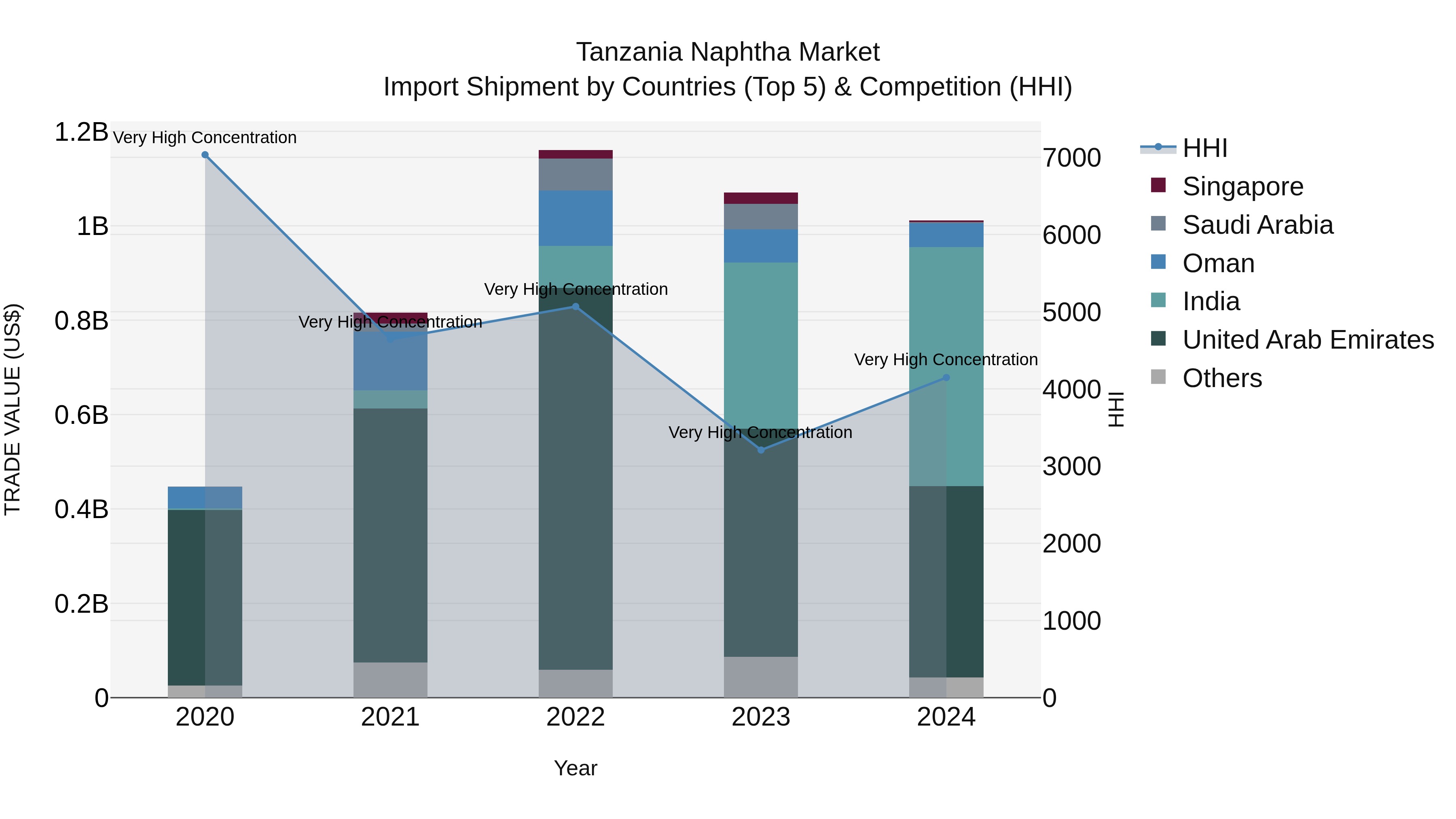
Tanzania`s naphtha import market in 2024 saw a continued high concentration with top exporters being India, United Arab Emirates, Oman, Marshall Islands, and Denmark. Despite a slight decline in growth rate from 2023, the compound annual growth rate (CAGR) for 2020-2024 remained strong at 22.62%. This indicates a resilient demand for naphtha in Tanzania, with key players maintaining their positions in the market. The dominance of these top exporting countries suggests stable trade relations and reliable sources of naphtha supply for Tanzania.
Tanzania Naphtha Market Synopsis
The Tanzania Naphtha Market is characterized by steady growth driven primarily by increasing demand from the petrochemical industry. Naphtha is a key feedstock for the production of various chemicals and plastics, making it a vital component in the manufacturing sector. The market is influenced by global oil prices, refinery capacities, and government regulations. Despite facing challenges such as fluctuating crude oil prices and competition from alternative feedstocks, the Tanzania Naphtha Market is expected to maintain a positive outlook due to the country`s growing industrial sector and infrastructure development. Key players in the market include major oil companies and refineries supplying naphtha to domestic industries. Continuous monitoring of market trends and developments is essential for stakeholders to make informed decisions and capitalize on opportunities in the Tanzania Naphtha Market.
Tanzania Naphtha Market Trends
The Tanzania naphtha market is experiencing growth due to the increasing demand for petrochemical feedstock and the expanding refining industry in the region. One of the key trends in the market is the shift towards cleaner and more sustainable fuel options, which is driving investments in naphtha reforming technologies. Additionally, the growing population and urbanization are boosting the demand for consumer goods and plastics, further fueling the demand for naphtha. Opportunities in the Tanzania naphtha market include collaborations with international companies for technology transfer and capacity expansion, as well as investments in infrastructure to support the growing refining and petrochemical industries. Overall, the market presents promising prospects for growth and development in the coming years.
Tanzania Naphtha Market Challenges
In the Tanzania Naphtha Market, several challenges are faced, including fluctuations in global oil prices impacting naphtha costs, limited availability of domestic naphtha production facilities leading to dependency on imports, infrastructure constraints hindering efficient distribution, and regulatory uncertainties affecting market dynamics. Additionally, competition from alternative energy sources and volatile market conditions pose further challenges for players in the Tanzania Naphtha Market. Addressing these challenges requires strategic planning, investment in infrastructure development, fostering partnerships with key stakeholders, and diversifying energy sources to enhance market resilience and competitiveness.
Tanzania Naphtha Market Investment Opportunities
The Tanzania Naphtha Market is primarily driven by the increasing demand for petrochemical products, particularly in the plastics and chemical industries. The growth of these industries is fueling the need for naphtha as a key feedstock for producing a wide range of products. Additionally, the expansion of infrastructure projects and construction activities in Tanzania is boosting the demand for naphtha for use in asphalt production. Furthermore, the growing population and urbanization in the country are driving the consumption of consumer goods and packaging materials, further driving the demand for naphtha-based products. Overall, these factors are key drivers shaping the Tanzania Naphtha Market and are expected to continue propelling its growth in the foreseeable future.
Tanzania Naphtha Market Government Polices
The Tanzanian government has implemented various policies related to the naphtha market to promote economic growth and stability in the country. These policies include regulations on the importation and distribution of naphtha to ensure quality and safety standards are met. The government also sets guidelines on pricing and taxation to control the market and prevent price manipulation. Additionally, there are environmental policies in place to monitor and regulate the emissions and environmental impact of naphtha production and usage. Overall, the government`s policies aim to create a fair and competitive market environment while prioritizing the safety of consumers and the protection of the environment.
Tanzania Naphtha Market Future Outlook
The Tanzania Naphtha Market is expected to witness steady growth in the coming years, driven by increasing industrial activities, infrastructural developments, and growing demand for petrochemical products. The country`s strategic location and favorable government policies are attracting foreign investments in the oil and gas sector, further boosting the naphtha market. Additionally, the rising disposable income and urbanization trends are likely to drive the demand for consumer goods and transportation fuels, leading to an increased consumption of naphtha as a feedstock. However, challenges such as fluctuating crude oil prices, environmental concerns, and competition from alternative energy sources may impact market growth. Overall, the Tanzania Naphtha Market is poised for expansion, offering opportunities for market players to innovate and capitalize on the growing demand.
Key Highlights of the Report:
- Tanzania Naphtha Market Outlook
- Market Size of Tanzania Naphtha Market, 2024
- Forecast of Tanzania Naphtha Market, 2031
- Historical Data and Forecast of Tanzania Naphtha Revenues & Volume for the Period 2021- 2031
- Tanzania Naphtha Market Trend Evolution
- Tanzania Naphtha Market Drivers and Challenges
- Tanzania Naphtha Price Trends
- Tanzania Naphtha Porter's Five Forces
- Tanzania Naphtha Industry Life Cycle
- Historical Data and Forecast of Tanzania Naphtha Market Revenues & Volume By Application for the Period 2021- 2031
- Historical Data and Forecast of Tanzania Naphtha Market Revenues & Volume By Chemicals for the Period 2021- 2031
- Historical Data and Forecast of Tanzania Naphtha Market Revenues & Volume By Energy/Fuel for the Period 2021- 2031
- Historical Data and Forecast of Tanzania Naphtha Market Revenues & Volume By Others for the Period 2021- 2031
- Tanzania Naphtha Import Export Trade Statistics
- Market Opportunity Assessment By Application
- Tanzania Naphtha Top Companies Market Share
- Tanzania Naphtha Competitive Benchmarking By Technical and Operational Parameters
- Tanzania Naphtha Company Profiles
- Tanzania Naphtha Key Strategic Recommendations






































