Nylon Market: Tanzania vs Top 5 Major Economies in 2027 (Africa)
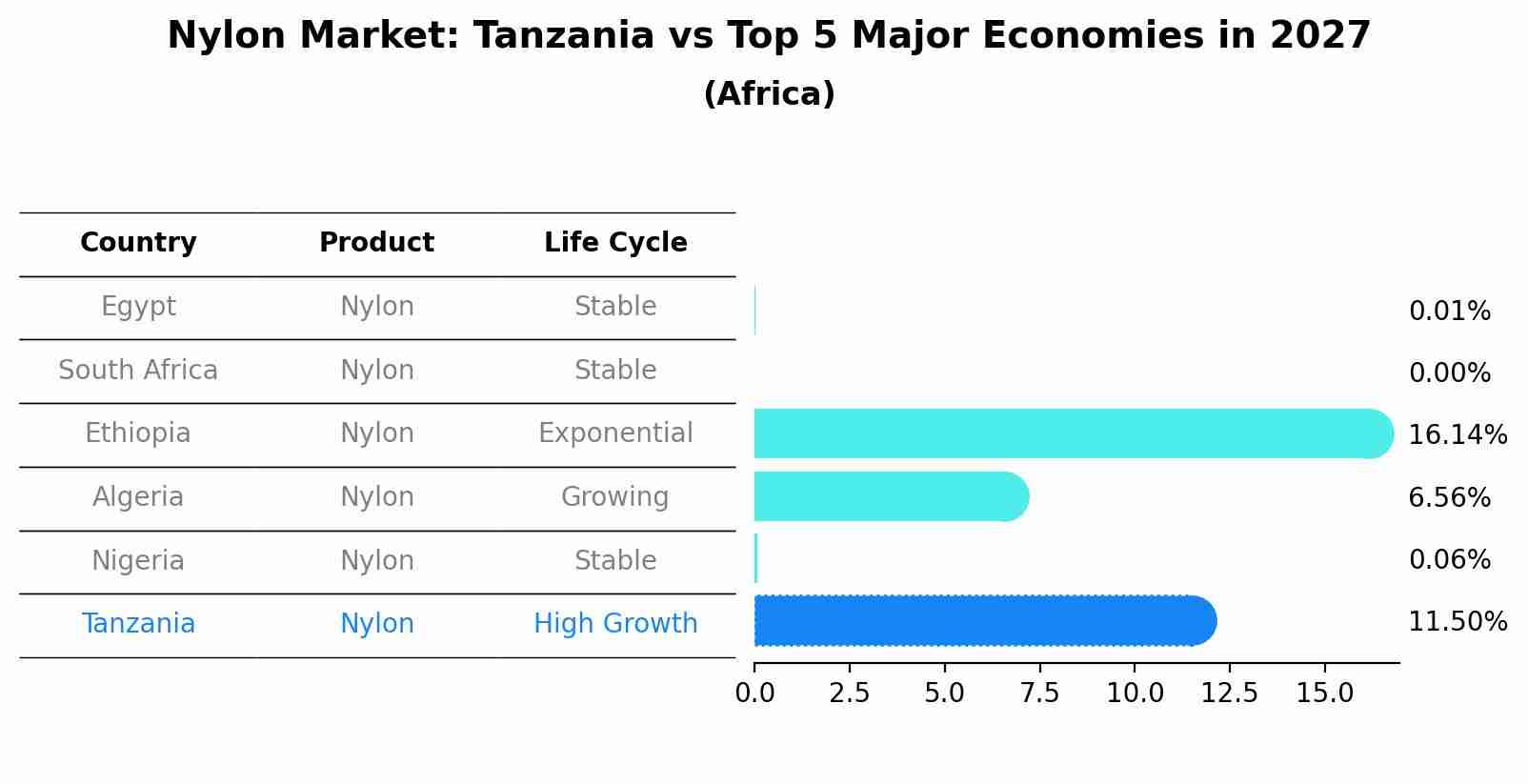
Tanzania's Nylon market is anticipated to experience a high growth rate of 11.50% by 2027, reflecting trends observed in the largest economy Egypt, followed by South Africa, Ethiopia, Algeria and Nigeria.
Tanzania Nylon Market Overview
The Tanzania nylon market is driven by various factors including the growth of the textile industry, increasing demand for packaging materials, and the expanding construction sector. The market offers a wide range of nylon products such as nylon fibers, yarns, and fabrics, catering to diverse end-user industries including apparel, automotive, packaging, and construction. The demand for nylon in Tanzania is expected to grow steadily due to its durability, strength, and versatility, making it a popular choice for various applications. Key players in the Tanzania nylon market focus on product innovation, sustainability, and expanding their distribution networks to meet the evolving needs of customers. Overall, the market presents opportunities for growth and investment, especially with the country`s increasing focus on industrialization and economic development.
Tanzania Nylon Market Trends
The Tanzania Nylon Market is currently experiencing growth driven by increasing demand in various sectors such as packaging, textiles, and automotive industries. There is a rising trend towards the adoption of eco-friendly and sustainable nylon materials, in line with global environmental concerns. Manufacturers are focusing on developing bio-based nylon products to cater to this demand. Additionally, advancements in technology have led to the production of high-performance nylon materials with enhanced durability and strength, attracting consumers looking for long-lasting and quality products. The market is also witnessing a shift towards innovation in nylon blends, offering improved functionality and versatility for different applications. Overall, the Tanzania Nylon Market is poised for continued expansion and diversification in response to evolving consumer preferences and industry requirements.
Tanzania Nylon Market Challenges
In the Tanzania Nylon Market, there are several challenges faced by industry players. These include fluctuating raw material prices, which can impact production costs and profit margins. Additionally, competition from imported nylon products presents a challenge for local manufacturers in terms of pricing and market share. Quality control and consistency in production standards are also key challenges, as maintaining a high standard of product quality is essential for meeting customer expectations and competing in the market. Furthermore, inadequate infrastructure and logistical issues can result in delays and inefficiencies in the supply chain, affecting overall operations. Addressing these challenges will be crucial for the growth and sustainability of the Tanzania Nylon Market.
Tanzania Nylon Market Investment Opportunities
The Tanzania Nylon Market presents promising investment opportunities due to the country`s growing industrial sector and increasing demand for nylon products in various applications such as textiles, automotive, packaging, and construction. Investors can consider opportunities in nylon manufacturing plants to cater to the local market and potentially expand to regional markets. Additionally, investing in distribution networks and partnerships with local businesses can help capture a larger market share. With the government`s focus on industrialization and infrastructure development, the demand for nylon products is expected to rise, making it a lucrative sector for investors seeking long-term growth prospects in Tanzania. Conducting thorough market research and understanding the regulatory environment will be key to successful investment in the Tanzania Nylon Market.
Tanzania Nylon Market Government Policy
The Tanzanian government has implemented policies to regulate the nylon market, aiming to promote domestic production, ensure quality standards, and protect consumers. The government has imposed tariffs on imported nylon products to encourage local manufacturing and reduce dependency on foreign suppliers. Additionally, regulations are in place to monitor the quality of nylon products to meet international standards and safeguard consumer interests. The government also supports initiatives to promote sustainable practices in the nylon industry, such as recycling programs to minimize environmental impact. Overall, government policies in Tanzania`s nylon market focus on fostering domestic production, ensuring quality control, and promoting sustainability in line with global standards.
Tanzania Nylon Market Future Outlook
The Tanzania nylon market is expected to witness steady growth in the coming years due to increasing demand from various industries such as textiles, packaging, and automotive. The growth of end-use industries in the country, coupled with the rising disposable income of consumers, is likely to drive the demand for nylon products. Additionally, government initiatives to promote industrial growth and investment in infrastructure development are expected to further boost the market. However, challenges such as fluctuating raw material prices and increasing competition from alternative materials may hinder the market growth to some extent. Overall, the Tanzania nylon market is poised for expansion, with opportunities for manufacturers to innovate and diversify their product offerings to meet the evolving needs of the market.
Key Highlights of the Report:
- Tanzania Nylon Market Outlook
- Market Size of Tanzania Nylon Market, 2021
- Forecast of Tanzania Nylon Market, 2031
- Historical Data and Forecast of Tanzania Nylon Revenues & Volume for the Period 2018 - 2031
- Tanzania Nylon Market Trend Evolution
- Tanzania Nylon Market Drivers and Challenges
- Tanzania Nylon Price Trends
- Tanzania Nylon Porter's Five Forces
- Tanzania Nylon Industry Life Cycle
- Historical Data and Forecast of Tanzania Nylon Market Revenues & Volume By Product for the Period 2018 - 2031
- Historical Data and Forecast of Tanzania Nylon Market Revenues & Volume By Nylon 6 for the Period 2018 - 2031
- Historical Data and Forecast of Tanzania Nylon Market Revenues & Volume By Nylon 66 for the Period 2018 - 2031
- Historical Data and Forecast of Tanzania Nylon Market Revenues & Volume By Application for the Period 2018 - 2031
- Historical Data and Forecast of Tanzania Nylon Market Revenues & Volume By Automobile for the Period 2018 - 2031
- Historical Data and Forecast of Tanzania Nylon Market Revenues & Volume By Electrical & Electronics for the Period 2018 - 2031
- Historical Data and Forecast of Tanzania Nylon Market Revenues & Volume By Engineering Plastics for the Period 2018 - 2031
- Historical Data and Forecast of Tanzania Nylon Market Revenues & Volume By Textiles for the Period 2018 - 2031
- Historical Data and Forecast of Tanzania Nylon Market Revenues & Volume By Others for the Period 2018 - 2031
- Tanzania Nylon Import Export Trade Statistics
- Market Opportunity Assessment By Product
- Market Opportunity Assessment By Application
- Tanzania Nylon Top Companies Market Share
- Tanzania Nylon Competitive Benchmarking By Technical and Operational Parameters
- Tanzania Nylon Company Profiles
- Tanzania Nylon Key Strategic Recommendations






































