Tanzania Pearl Jewelry Market Size, Share & Growth Rate
The Tanzania Pearl Jewelry Market was estimated at USD 432 Million in 2025 and is projected to reach USD 626 Million by 2032, growing at a CAGR of 5.4% from 2026 to 2032. This promising growth trajectory is largely fueled by increasing global consumer interest in ethically sourced and handcrafted pearl jewelry, as well as a burgeoning local tourism industry that highlights Tanzanian craftsmanship. Additionally, rising disposable incomes among domestic consumers are bolstering demand for luxury items, creating further opportunities for market expansion.
Tanzania Pearl Jewelry Market Year-wise Growth Rate and Key Drivers
This graph highlights how the Tanzania Pearl Jewelry Market has steadily grown over the years, supported by major growth factors.
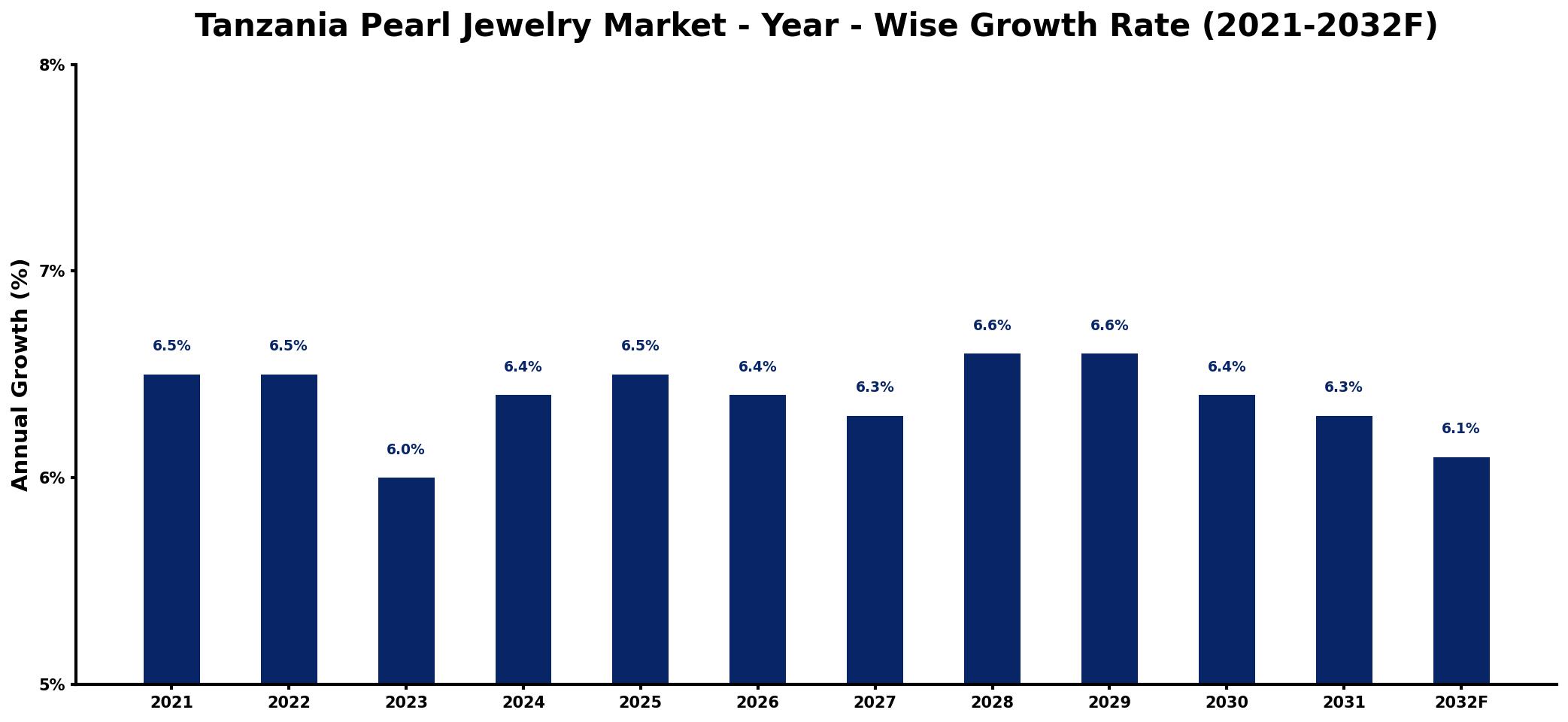
The table below presents the year‑wise growth rates along with the key drivers influencing the market
| Year | Growth Rate | Major Drivers |
| 2021 | 6.5% | Rising consumer spending power |
| 2022 | 6.5% | Increased tourism and events |
| 2023 | 6.0% | Growing online retail platforms |
| 2024 | 6.4% | Expansion of local artisans |
| 2025 | 6.5% | Higher disposable income trends |
| 2026 | 6.4% | Emerging fashion trends influence |
| 2027 | 6.3% | Increased exports to markets |
| 2028 | 6.6% | Strengthened cultural appreciation initiatives |
| 2029 | 6.6% | Collaborations with luxury brands |
| 2030 | 6.4% | Investment in sustainable sourcing |
| 2031 | 6.3% | Enhanced marketing strategies adopted |
| 2032 | 6.1% | Broader distribution network established |
Note: Market size estimations and growth projections presented in this report are based on 6Wresearch's proprietary forecasting methodology, utilizing the latest available industry data, government publications, and primary research inputs.
Tanzania Pearl Jewelry Market Synopsis
The Tanzania Pearl Jewelry Market showcases unique pearls, particularly from Zanzibar, which are renowned for their exceptional luster and diverse colors. These qualities make Tanzanian pearls highly coveted, especially among tourists looking for authentic, local souvenirs that reflect the nations rich cultural heritage.
Local artisans play a vital role in this market, creating beautifully intricate pieces that merge traditional designs with contemporary styles. As sustainability becomes increasingly important to consumers, there is a marked trend towards supporting local pearl farming and promoting fair trade, which is elevating the market's ethical profile.
Tanzania Pearl Jewelry Market Key Takeaways
- The market is expected to see a CAGR of 5.4% from 2026 to 2032, driven by increased demand for ethically sourced products.
- Tanzanian pearls are distinctively noted for their high quality and unique aesthetics, catering primarily to both local and international markets.
- The influence of local artisans is pivotal, as they create culturally inspired designs that resonate with consumers.
- Growing tourism in Tanzania contributes significantly to the market by attracting international buyers interested in local craftsmanship.
- Collaborations between designers and pearl farmers are expected to bring innovative and exclusive jewelry options to the market.
Evaluation of Restraints in Tanzania Pearl Jewelry Market
Despite its growth potential, the Tanzania Pearl Jewelry Market faces significant hurdles. Limited global awareness about Tanzanian pearls can restrict market expansion, as many consumers remain unaware of their quality and uniqueness. Additionally, infrastructure challenges hinder efficient production and distribution, impacting overall market accessibility. The fluctuating prices due to external competition and global economic variables also pose a threat, making it crucial for local producers to adapt and innovate to maintain relevance in an increasingly competitive landscape.
Tanzania Pearl Jewelry Market Trends
Recent trends indicate a strong consumer preference for locally sourced and handcrafted pearl jewelry. Shoppers are increasingly prioritizing unique, authentic pieces that reflect Tanzanian heritage. The shift towards sustainability continues to grow, influencing consumer decisions and spurring demand for ethically produced jewelry. Notably, traditional Tanzanian motifs are gaining traction among those searching for jewelry with cultural significance, creating a vibrant fusion of heritage and modern design.
Tanzania Pearl Jewelry Market Opportunities
The Tanzania Pearl Jewelry Market presents several avenues for investment and growth. Partnering with local pearl farmers offers investors a chance to create exclusive collections that meet the rising demand for ethically sourced jewelry. E-commerce platforms are also playing a pivotal role in expanding market reach, providing artisans and designers with a global audience. Engaging in international jewelry exhibitions can help establish a robust presence in the global market, allowing Tanzanian pearls to shine and attract discerning collectors and enthusiasts.
Government Initiatives in the Tanzania Pearl Jewelry Market
The Tanzanian government has enacted various policies to support the pearl jewelry market, focusing on sustainability and quality control. Regulations on pearl harvesting are in place to protect natural resources while ensuring that production meets high standards. Additionally, initiatives aimed at promoting local craftsmanship and supporting small-scale producers through training programs enhance the skills of artisans. By encouraging local value addition, these policies aim to boost the export potential of Tanzanian pearl products, thus promoting economic growth.
Future Insights of the Tanzania Pearl Jewelry Market
Looking forward to 2026-2032, the Tanzania Pearl Jewelry Market is set for robust growth, buoyed by a rising interest in ethically sourced luxury items. As consumer consciousness regarding sustainability continues to evolve, Tanzanian pearls will likely attract more attention from both local and international markets. With increased disposable income and the ongoing allure of Tanzania as a tourism destination, the market stands to benefit significantly from the influx of international customers seeking authentic and unique jewelry experiences.
Tanzania Pearl Jewelry Market Latest Developments (2025 - 2026)
Recent developments within the Tanzania Pearl Jewelry Market indicate a growing collaboration between artisans and local pearl farmers, enhancing the product offerings available to consumers. Increased participation in international trade shows has allowed local designs to gain visibility and appreciation in broader markets. Furthermore, ongoing governmental support for sustainable practices is expected to foster further innovation, ensuring that the industry remains competitive and environmentally conscious.
Tanzania Pearl Jewelry Market - Key Attractiveness of the Report
- 10 Years of Market Numbers
- Historical Data Starting from 2022 to 2025
- Base Year: 2025
- Forecast Data until 2032
- Key Performance Indicators Impacting the Market
- Major Upcoming Developments and Projects
Key Highlights of the Report:
- Tanzania Pearl Jewelry Market Outlook
- Market Size of Tanzania Pearl Jewelry Market, 2025
- Forecast of Tanzania Pearl Jewelry Market, 2032
- Historical Data and Forecast of Tanzania Pearl Jewelry Revenues & Volume for the Period 2022-2032F
- Tanzania Pearl Jewelry Market Trend Evolution
- Tanzania Pearl Jewelry Market Drivers and Challenges
- Tanzania Pearl Jewelry Price Trends
- Tanzania Pearl Jewelry Porter's Five Forces
- Tanzania Pearl Jewelry Industry Life Cycle
- Historical Data and Forecast of Tanzania Pearl Jewelry Market Revenues & Volume By Pearl Type for the Period 2022-2032F
- Historical Data and Forecast of Tanzania Pearl Jewelry Market Revenues & Volume By Freshwater for the Period 2022-2032F
- Historical Data and Forecast of Tanzania Pearl Jewelry Market Revenues & Volume By Saltwater for the Period 2022-2032F
- Historical Data and Forecast of Tanzania Pearl Jewelry Market Revenues & Volume By Material Type for the Period 2022-2032F
- Historical Data and Forecast of Tanzania Pearl Jewelry Market Revenues & Volume By Gold for the Period 2022-2032F
- Historical Data and Forecast of Tanzania Pearl Jewelry Market Revenues & Volume By Silver for the Period 2022-2032F
- Historical Data and Forecast of Tanzania Pearl Jewelry Market Revenues & Volume By Others for the Period 2022-2032F
- Historical Data and Forecast of Tanzania Pearl Jewelry Market Revenues & Volume By Jewelry Type for the Period 2022-2032F
- Historical Data and Forecast of Tanzania Pearl Jewelry Market Revenues & Volume By Necklace for the Period 2022-2032F
- Historical Data and Forecast of Tanzania Pearl Jewelry Market Revenues & Volume By Earrings for the Period 2022-2032F
- Historical Data and Forecast of Tanzania Pearl Jewelry Market Revenues & Volume By Rings for the Period 2022-2032F
- Historical Data and Forecast of Tanzania Pearl Jewelry Market Revenues & Volume By Others for the Period 2022-2032F
- Tanzania Pearl Jewelry Import Export Trade Statistics
- Market Opportunity Assessment By Pearl Type
- Market Opportunity Assessment By Material Type
- Market Opportunity Assessment By Jewelry Type
- Tanzania Pearl Jewelry Top Companies Market Share
- Tanzania Pearl Jewelry Competitive Benchmarking By Technical and Operational Parameters
- Tanzania Pearl Jewelry Company Profiles
- Tanzania Pearl Jewelry Key Strategic Recommendations






































