Phenol Market: Tanzania vs Top 5 Major Economies in 2027 (Africa)
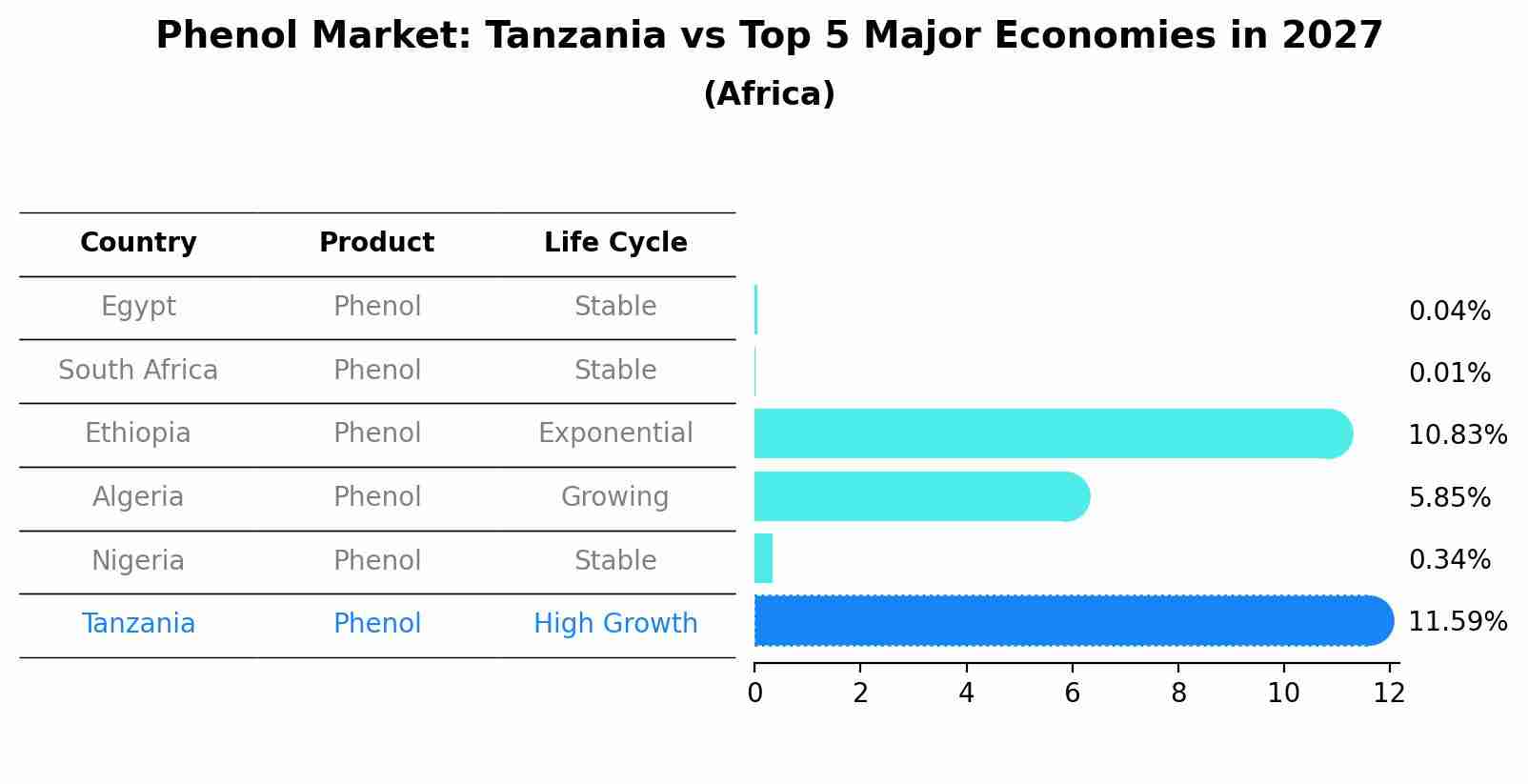
By 2027, the Phenol market in Tanzania is anticipated to reach a growth rate of 11.59%, as part of an increasingly competitive Africa region, where Egypt remains at the forefront, supported by South Africa, Ethiopia, Algeria and Nigeria, driving innovations and market adoption across sectors.
Tanzania Phenol Market Overview
The Tanzania Phenol Market is witnessing steady growth driven by the increasing demand from various industries such as automotive, construction, and electronics. Phenol, a key chemical compound used in the production of plastics, resins, and pharmaceuticals, is experiencing rising consumption due to the expanding industrial sector in Tanzania. The market is characterized by key players operating in the region, supplying phenol to meet the growing demand. Additionally, government initiatives promoting industrial growth and foreign investments in the country are further fueling the market expansion. However, challenges such as fluctuating raw material prices and environmental concerns regarding phenol production processes are factors that could impact the market dynamics in Tanzania. Overall, the Tanzania Phenol Market is poised for continued growth in the foreseeable future.
Tanzania Phenol Market Trends
The Tanzania Phenol Market is experiencing steady growth driven by increasing demand from various industries such as pharmaceuticals, plastics, and construction. The growing awareness about the benefits of phenol as a key ingredient in the production of resins, adhesives, and pharmaceuticals is fueling market expansion. Additionally, the rising investments in infrastructure projects and the construction sector in Tanzania are further boosting the demand for phenol-based products. Companies in the market are focusing on research and development activities to introduce innovative products and enhance their market presence. However, challenges such as fluctuating raw material prices and stringent regulations on chemical production are impacting market growth. Overall, the Tanzania Phenol Market is expected to continue growing at a moderate pace in the coming years.
Tanzania Phenol Market Challenges
In the Tanzania Phenol Market, some key challenges include limited domestic production capacity, dependence on imports, fluctuating global prices affecting import costs, inadequate infrastructure for storage and transportation, lack of awareness about the benefits and applications of phenol among end-users, and competition from cheaper alternatives. Additionally, regulatory hurdles and bureaucratic processes for importing phenol can also hinder market growth. Addressing these challenges will require investments in domestic production facilities, improved logistics infrastructure, targeted marketing efforts to increase awareness, and streamlining import processes to ensure a stable and competitive market environment for phenol in Tanzania.
Tanzania Phenol Market Investment Opportunities
The Tanzania Phenol Market offers promising investment opportunities due to the growing demand for phenol in various industries such as pharmaceuticals, plastics, and personal care products. With the increasing focus on sustainable and eco-friendly products, there is a rising need for bio-based phenol derived from renewable sources like biomass or agricultural waste in Tanzania. Investing in the production and supply chain of bio-based phenol could be a lucrative opportunity in the market. Additionally, technological advancements in phenol production processes, coupled with favorable government policies promoting industrial growth, further enhance the investment potential in the Tanzania Phenol Market. Collaborating with local manufacturers or setting up a production facility to cater to the domestic and potentially regional demand for phenol presents a viable investment option in the Tanzanian market.
Tanzania Phenol Market Government Policy
In Tanzania, government policies related to the phenol market are primarily centered around promoting domestic production and ensuring environmental sustainability. The government has implemented regulations to encourage local production of phenol and reduce dependency on imports. Additionally, there are strict guidelines in place to monitor the environmental impact of phenol production processes to protect ecosystems and public health. The government also focuses on fostering innovation and research in the phenol industry to enhance competitiveness and drive economic growth. Overall, Tanzania`s policies aim to support a sustainable and self-sufficient phenol market while safeguarding the environment and promoting economic development.
Tanzania Phenol Market Future Outlook
The future outlook for the Tanzania Phenol Market appears promising, driven by increasing industrial activities, growing demand for phenol-based products in various sectors such as healthcare, construction, automotive, and electronics, and the country`s efforts to attract foreign investments. The expanding manufacturing sector, coupled with government initiatives to promote local production and value addition, is expected to further boost the demand for phenol in Tanzania. Additionally, the rising awareness regarding the benefits of phenol in various applications, such as adhesives, coatings, and resins, is likely to contribute to market growth. However, challenges related to raw material availability, infrastructure development, and global market dynamics may pose some constraints. Overall, with the right strategies and investments, the Tanzania Phenol Market is poised for steady growth in the foreseeable future.
Key Highlights of the Report:
- Tanzania Phenol Market Outlook
- Market Size of Tanzania Phenol Market, 2021
- Forecast of Tanzania Phenol Market, 2031
- Historical Data and Forecast of Tanzania Phenol Revenues & Volume for the Period 2021 - 2031
- Tanzania Phenol Market Trend Evolution
- Tanzania Phenol Market Drivers and Challenges
- Tanzania Phenol Price Trends
- Tanzania Phenol Porter's Five Forces
- Tanzania Phenol Industry Life Cycle
- Historical Data and Forecast of Tanzania Phenol Market Revenues & Volume By End-users for the Period 2021 - 2031
- Historical Data and Forecast of Tanzania Phenol Market Revenues & Volume By Bisphenol A for the Period 2021 - 2031
- Historical Data and Forecast of Tanzania Phenol Market Revenues & Volume By Phenolic Resins for the Period 2021 - 2031
- Historical Data and Forecast of Tanzania Phenol Market Revenues & Volume By Caprolactam for the Period 2021 - 2031
- Historical Data and Forecast of Tanzania Phenol Market Revenues & Volume By Alkyl Phenyls for the Period 2021 - 2031
- Historical Data and Forecast of Tanzania Phenol Market Revenues & Volume By Others for the Period 2021 - 2031
- Tanzania Phenol Import Export Trade Statistics
- Market Opportunity Assessment By End-users
- Tanzania Phenol Top Companies Market Share
- Tanzania Phenol Competitive Benchmarking By Technical and Operational Parameters
- Tanzania Phenol Company Profiles
- Tanzania Phenol Key Strategic Recommendations






































