Tanzania Sports Apparel Market Summary
The tanzania sports apparel market was estimated at USD 1195 Million in 2025 and is projected to reach USD 1744 Million by 2032, growing at a CAGR of 6.7% from 2026 to 2032.
Tanzania Sports Apparel Market Year-wise Growth Rate and Key Drivers
This graph highlights how the Tanzania Sports Apparel Market has steadily grown over the past five years, supported by major growth factors.
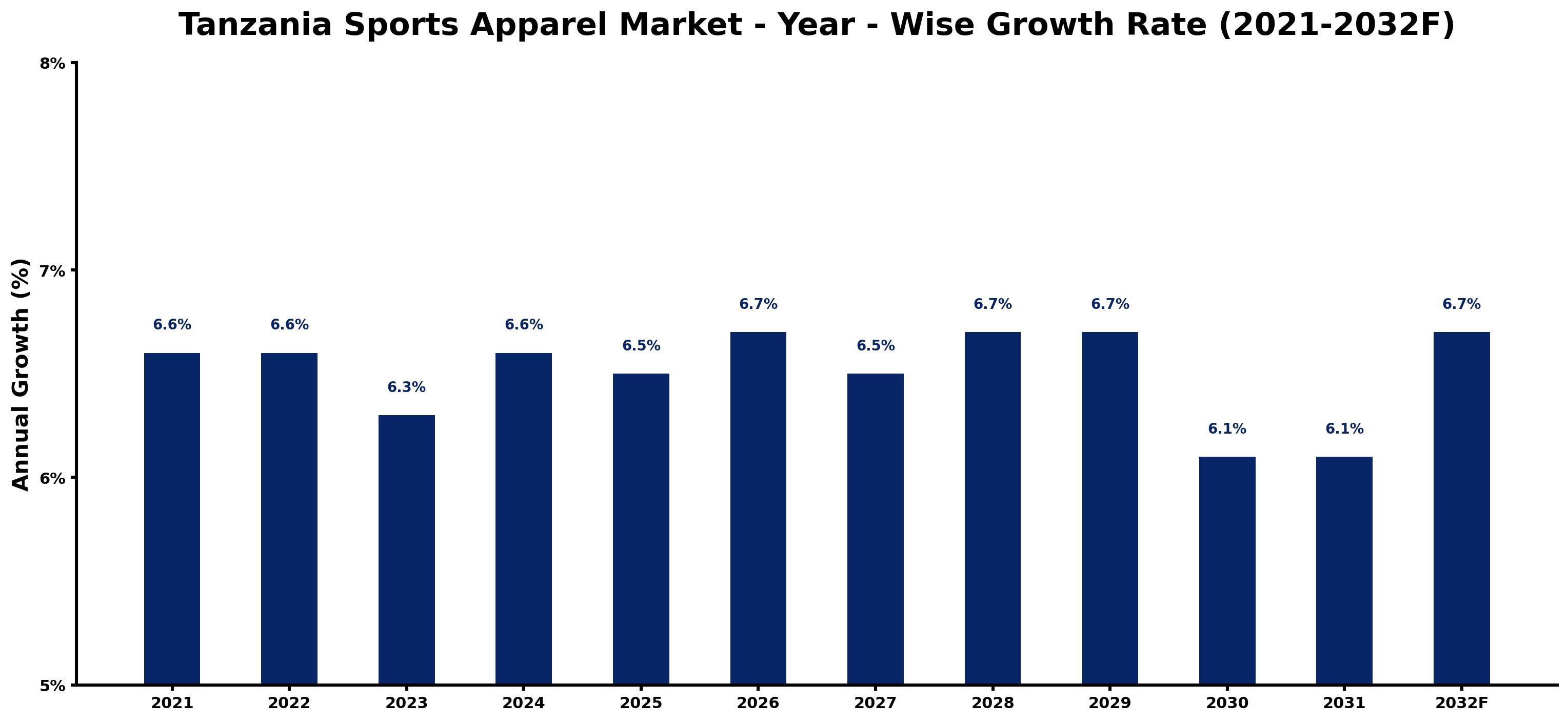
The table below presents the year wise growth rates along with the key drivers influencing the market
| Year | Growth Rate | Major Drivers |
| 2021 | 6.6% | Local sports leagues and community events sparked interest in sports apparel purchases. |
| 2022 | 6.6% | Youth engagement in sports surged, boosting demand for athletic clothing significantly. |
| 2023 | 6.3% | Increased participation in international sports events raised visibility of local brands. |
| 2024 | 6.6% | E-commerce platforms expanded, providing wider access to diverse sports apparel options. |
| 2025 | 6.5% | Health and fitness awareness campaigns encouraged consumers to invest in high-quality gear. |
| 2026 | 6.7% | Influencer marketing began shaping consumer preferences for trendy sportswear collections. |
| 2027 | 6.5% | Local manufacturing initiatives reduced costs, enhancing affordability of sports apparel. |
| 2028 | 6.7% | Partnerships with global brands elevated local designs and improved quality standards. |
| 2029 | 6.7% | The urban middle class grew, increasing disposable income for discretionary spending. |
| 2030 | 6.1% | Emerging fitness trends prompted new categories of apparel tailored for various activities. |
| 2031 | 6.1% | Sustainability trends emerged, influencing consumer choices toward eco-friendly sportswear. |
| 2032 | 6.7% | Technological innovations enabled the production of advanced, performance-enhancing materials. |
Note - Market size estimations and growth projections presented in this report are based on 6Wresearch's advanced forecasting approach, validated with industry datasets as of June 2026.
Tanzania Sports Apparel Market Synopsis
The Tanzania Sports Apparel Market is projected to reach 6.7% and witness significant growth during the forecast period (2026-2032). This growth is anticipated due to a combination of rising disposable incomes and evolving consumer preferences towards sports and branded apparel. As Western fashion trends gain popularity, an increasing number of Tanzanians are opting for sports apparel that aligns with international styles, further enhancing market demand. Additionally, the influx of tourists attracted by Tanzania's favorable climate has contributed to a heightened interest in sports and outdoor activities, thereby boosting sales in this sector. The substantial inflow of foreign direct investments (FDI) is also playing a crucial role in the expansion of the Tanzania sports apparel market, providing opportunities for local retailers to enhance their product offerings and infrastructure.
Tanzania Sports Apparel Market Growth Drivers
Several key factors are propelling the growth of the Tanzania sports apparel market. First, the rise in disposable incomes among the Tanzanian population has enabled more consumers to purchase higher quality and branded apparel. Second, the growing trend of health and fitness consciousness is encouraging more individuals to engage in sports activities and thereby invest in appropriate apparel. Third, enhanced accessibility to loans and financial products has facilitated investments in sports-related businesses, supporting the growth of the apparel market. Fourth, government initiatives aimed at promoting local manufacturing are expected to provide a boost, as local brands gain traction among consumers seeking to support domestic products. Lastly, the diversification of product launches, catering to various sports and activities, is also anticipated to drive market growth as options expand for consumers.
Tanzania Sports Apparel Market Trends and Opportunities
The Tanzania sports apparel market is witnessing various trends that present significant opportunities for expansion. One prominent trend is the increasing inclination towards sustainable and eco-friendly apparel, as consumers become more environmentally conscious. This shift towards sustainability opens up avenues for brands to innovate with eco-friendly materials and production processes. Another trend is the growing demand for athleisure wear, which merges comfort with style, appealing to a broader demographic beyond athletes. The rise in digital shopping platforms is also reshaping the retail landscape, making sports apparel more accessible to consumers across different regions of Tanzania. Furthermore, as local manufacturers focus on quality assurance and brand building, there is a growing opportunity for them to compete effectively in both local and international markets, capitalizing on their unique offerings and cultural heritage.
Tanzania Sports Apparel Market Challenges and Restraints
Despite the promising growth, the Tanzania sports apparel market faces several challenges. A major concern is the prevalence of counterfeit products, which are often sold at lower prices and undermine the brand value of legitimate manufacturers. This presents a significant challenge for players in the market, as they struggle to maintain consumer trust and loyalty. In addition, infrastructural challenges, including inadequate distribution networks and retail spaces in rural areas, can hinder market penetration and product availability. Moreover, fluctuations in foreign exchange rates can impact the pricing of imported sports apparel, making it less competitive against local alternatives. Lastly, economic uncertainties or fluctuations in consumer spending could pose risks to sustaining the growth momentum of the market.
Tanzania Sports Apparel Market Government Investment and Initiatives
The Tanzanian government is actively promoting the development of the sports apparel market through various investments and policy initiatives. There is an increasing focus on encouraging local production through favorable trade policies and incentives for domestic manufacturers. This includes tax relief measures and grants aimed at enhancing the competitiveness of Tanzanian brands in both local and international markets. Additionally, government-sponsored campaigns promoting sports participation among the youth are fostering a culture of fitness and activity, which is naturally leading to higher demand for sports apparel. Moreover, the government is taking steps to strengthen regulations that combat counterfeit goods, protecting legitimate brands and ensuring consumer trust in the marketplace. By creating an enabling environment for investment and growth, these initiatives are likely to contribute significantly to the expansion of the Tanzania sports apparel market.
Tanzania Sports Apparel Market Latest Developments (May 2025 - June 2026)
During the period from May 2025 to June 2026, the Tanzania sports apparel market has experienced notable developments that reflect shifting dynamics in the industry. Increased focus on collaboration between local manufacturers and international design firms has resulted in innovative product lines that resonate with consumer preferences. The rise of e-commerce platforms has also set the stage for enhanced distribution and accessibility of sports apparel, allowing consumers across urban and remote areas to engage with brands more effectively. Additionally, local brands have begun to adopt advanced marketing strategies, leveraging social media to attract a younger demographic interested in sports and wellness. This period has also been marked by a heightened emphasis on quality and sustainability, with increasing consumer demand prompting brands to adopt environmentally friendly practices.
Tanzania Sports Apparel Market - Key Attractiveness of the Report
- 10 Years of Market Numbers
- Historical Data Starting from 2022 to 2025
- Base Year: 2025
- Forecast Data until 2032
- Key Performance Indicators Impacting the Market
- Major Upcoming Developments and Projects
Key Highlights of the Report:
- Tanzania Sports Apparel Market Outlook
- Market Size of Tanzania Sports Apparel Market, 2025
- Forecast of Tanzania Sports Apparel Market, 2032F
- Historical Data and Forecast of Tanzania Sports Apparel Revenues & Volume for the Period 2022-2032F
- Tanzania Sports Apparel Market Trend Evolution
- Tanzania Sports Apparel Market Drivers and Challenges
- Tanzania Sports Apparel Price Trends
- Tanzania Sports Apparel Porter's Five Forces
- Tanzania Sports Apparel Industry Life Cycle
- Historical Data and Forecast of Tanzania Sports Apparel Market Revenues & Volume By End-users for the Period 2022-2032F
- Historical Data and Forecast of Tanzania Sports Apparel Market Revenues & Volume By Children for the Period 2022-2032F
- Historical Data and Forecast of Tanzania Sports Apparel Market Revenues & Volume By Men for the Period 2022-2032F
- Historical Data and Forecast of Tanzania Sports Apparel Market Revenues & Volume By Women for the Period 2022-2032F
- Historical Data and Forecast of Tanzania Sports Apparel Market Revenues & Volume By Distribution Channel for the Period 2022-2032F
- Historical Data and Forecast of Tanzania Sports Apparel Market Revenues & Volume By E-commerce for the Period 2022-2032F
- Historical Data and Forecast of Tanzania Sports Apparel Market Revenues & Volume By Supermarket/Hypermarket for the Period 2022-2032F
- Historical Data and Forecast of Tanzania Sports Apparel Market Revenues & Volume By Brand Outlets for the Period 2022-2032F
- Historical Data and Forecast of Tanzania Sports Apparel Market Revenues & Volume By Discount Stores for the Period 2022-2032F
- Tanzania Sports Apparel Import Export Trade Statistics
- Market Opportunity Assessment By End-users
- Market Opportunity Assessment By Distribution Channel
- Tanzania Sports Apparel Top Companies Market Share
- Tanzania Sports Apparel Competitive Benchmarking By Technical and Operational Parameters
- Tanzania Sports Apparel Company Profiles
- Tanzania Sports Apparel Key Strategic Recommendations






































