Tanzania Truck Market: Top 5 Importing Countries and Market Competition (HHI) Analysis
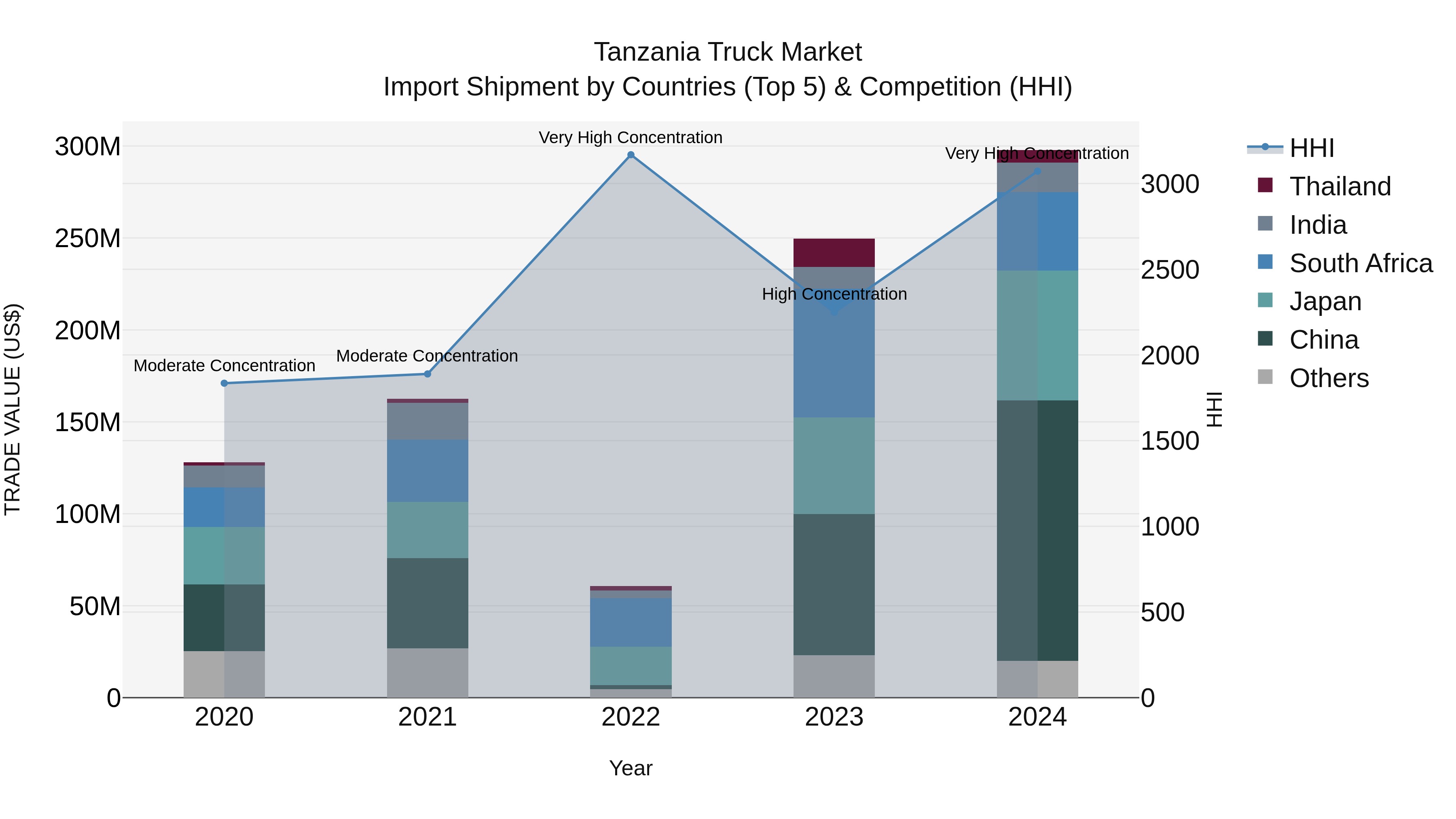
The Tanzania truck import market continues to see strong growth, with top exporters in 2024 being China, Japan, South Africa, India, and Thailand. The market concentration, as measured by the HHI, has significantly increased from high to very high in 2024, indicating a more consolidated market landscape. The impressive compound annual growth rate (CAGR) of 23.51% from 2020 to 2024 highlights the increasing demand for trucks in Tanzania. The growth rate of 19.3% from 2023 to 2024 demonstrates sustained momentum and opportunities for both exporters and importers in the market.
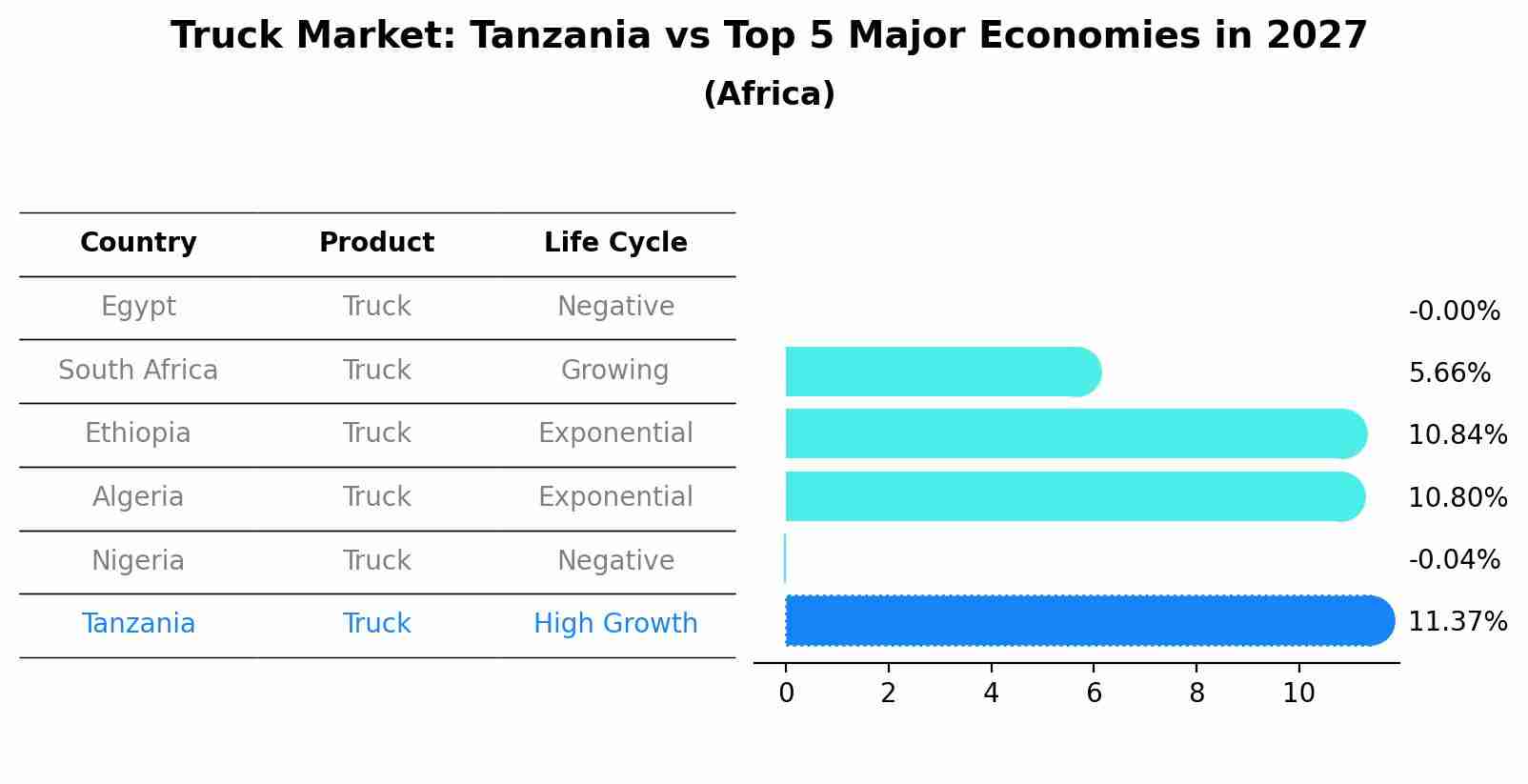
Truck Market: Tanzania vs Top 5 Major Economies in 2027 (Africa)
Tanzania's Truck market is anticipated to experience a high growth rate of 11.37% by 2027, reflecting trends observed in the largest economy Egypt, followed by South Africa, Ethiopia, Algeria and Nigeria.
Key Highlights of the Report:
- Tanzania Truck Market Outlook
- Market Size of Tanzania Truck Market, 2025
- Forecast of Tanzania Truck Market, 2032
- Historical Data and Forecast of Tanzania Truck Revenues & Volume for the Period 2022 - 2032F
- Tanzania Truck Market Trend Evolution
- Tanzania Truck Market Drivers and Challenges
- Tanzania Truck Price Trends
- Tanzania Truck Porter`s Five Forces
- Tanzania Truck Industry Life Cycle
- Historical Data and Forecast of Tanzania Truck Market Revenues & Volume By Vehicle Type for the Period 2022 - 2032F
- Historical Data and Forecast of Tanzania Truck Market Revenues & Volume By Heavy Duty Truck for the Period 2022 - 2032F
- Historical Data and Forecast of Tanzania Truck Market Revenues & Volume By Medium Duty Truck for the Period 2022 - 2032F
- Historical Data and Forecast of Tanzania Truck Market Revenues & Volume By Light Duty Truck for the Period 2022 - 2032F
- Historical Data and Forecast of Tanzania Truck Market Revenues & Volume By Tonnage Capacity for the Period 2022 - 2032F
- Historical Data and Forecast of Tanzania Truck Market Revenues & Volume By 3.5 7.5 Tons for the Period 2022 - 2032F
- Historical Data and Forecast of Tanzania Truck Market Revenues & Volume By 7.5 16 Tons for the Period 2022 - 2032F
- Historical Data and Forecast of Tanzania Truck Market Revenues & Volume By 16 30 Tons for the Period 2022 - 2032F
- Historical Data and Forecast of Tanzania Truck Market Revenues & Volume By Above 30 Tons for the Period 2022 - 2032F
- Historical Data and Forecast of Tanzania Truck Market Revenues & Volume By Fuel Type for the Period 2022 - 2032F
- Historical Data and Forecast of Tanzania Truck Market Revenues & Volume By Diesel for the Period 2022 - 2032F
- Historical Data and Forecast of Tanzania Truck Market Revenues & Volume By Petrol for the Period 2022 - 2032F
- Historical Data and Forecast of Tanzania Truck Market Revenues & Volume By CNG & LNG for the Period 2022 - 2032F
- Historical Data and Forecast of Tanzania Truck Market Revenues & Volume By Application for the Period 2022 - 2032F
- Historical Data and Forecast of Tanzania Truck Market Revenues & Volume By Construction for the Period 2022 - 2032F
- Historical Data and Forecast of Tanzania Truck Market Revenues & Volume By Logistics for the Period 2022 - 2032F
- Historical Data and Forecast of Tanzania Truck Market Revenues & Volume By Others for the Period 2022 - 2032F
- Tanzania Truck Import Export Trade Statistics
- Market Opportunity Assessment By Vehicle Type
- Market Opportunity Assessment By Tonnage Capacity
- Market Opportunity Assessment By Fuel Type
- Market Opportunity Assessment By Application
- Tanzania Truck Top Companies Market Share
- Tanzania Truck Competitive Benchmarking By Technical and Operational Parameters
- Tanzania Truck Company Profiles
- Tanzania Truck Key Strategic Recommendations






































