Thailand Alginate Market: Import Trend Analysis
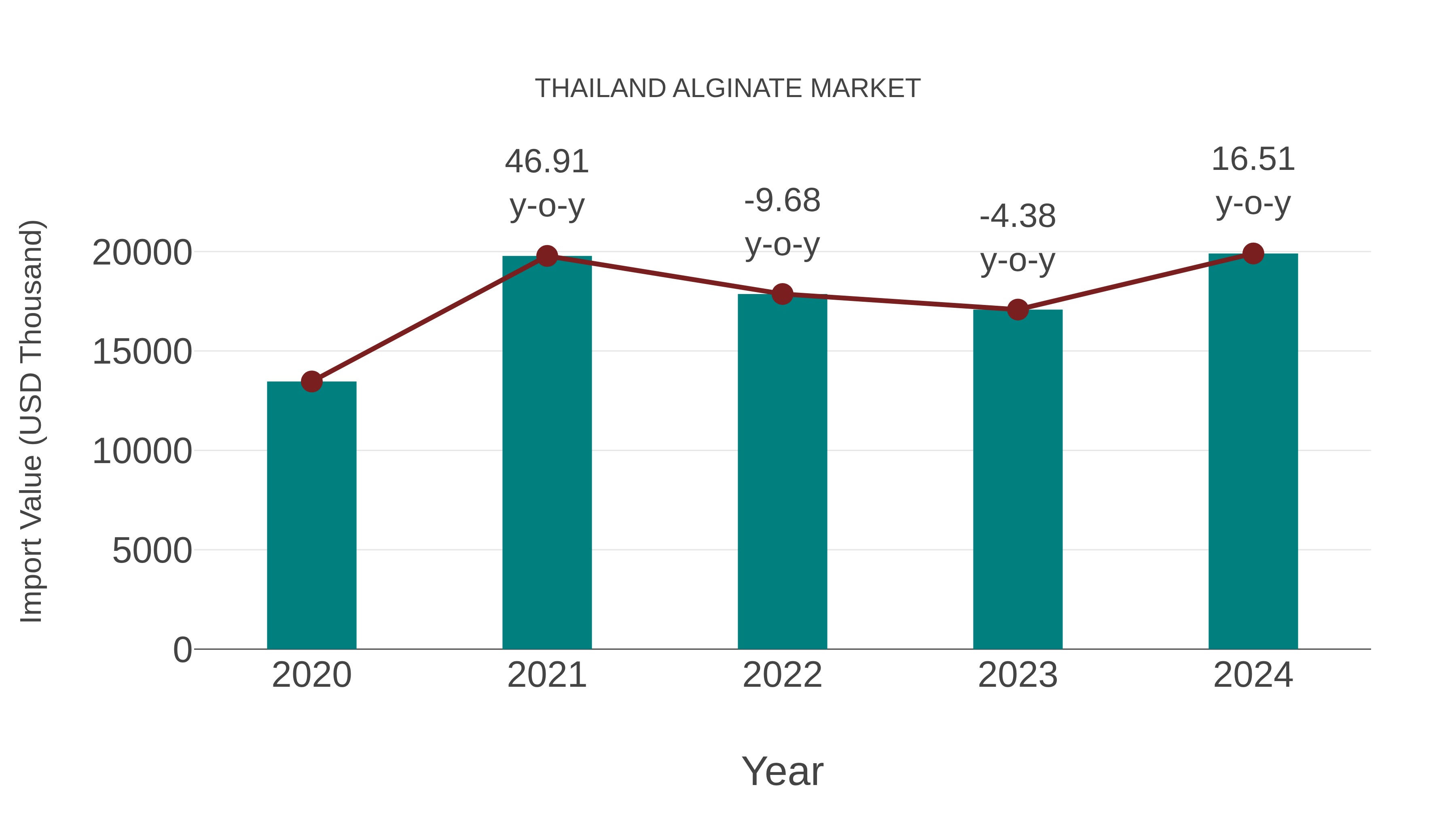
Thailand import trend for the alginate market showed a notable growth rate of 16.51% from 2023 to 2024, with a compound annual growth rate (CAGR) of 10.27% for the period 2020-2024. This import momentum can be attributed to the increasing demand for alginate products in various industries, indicating a stable market outlook driven by sustained demand.
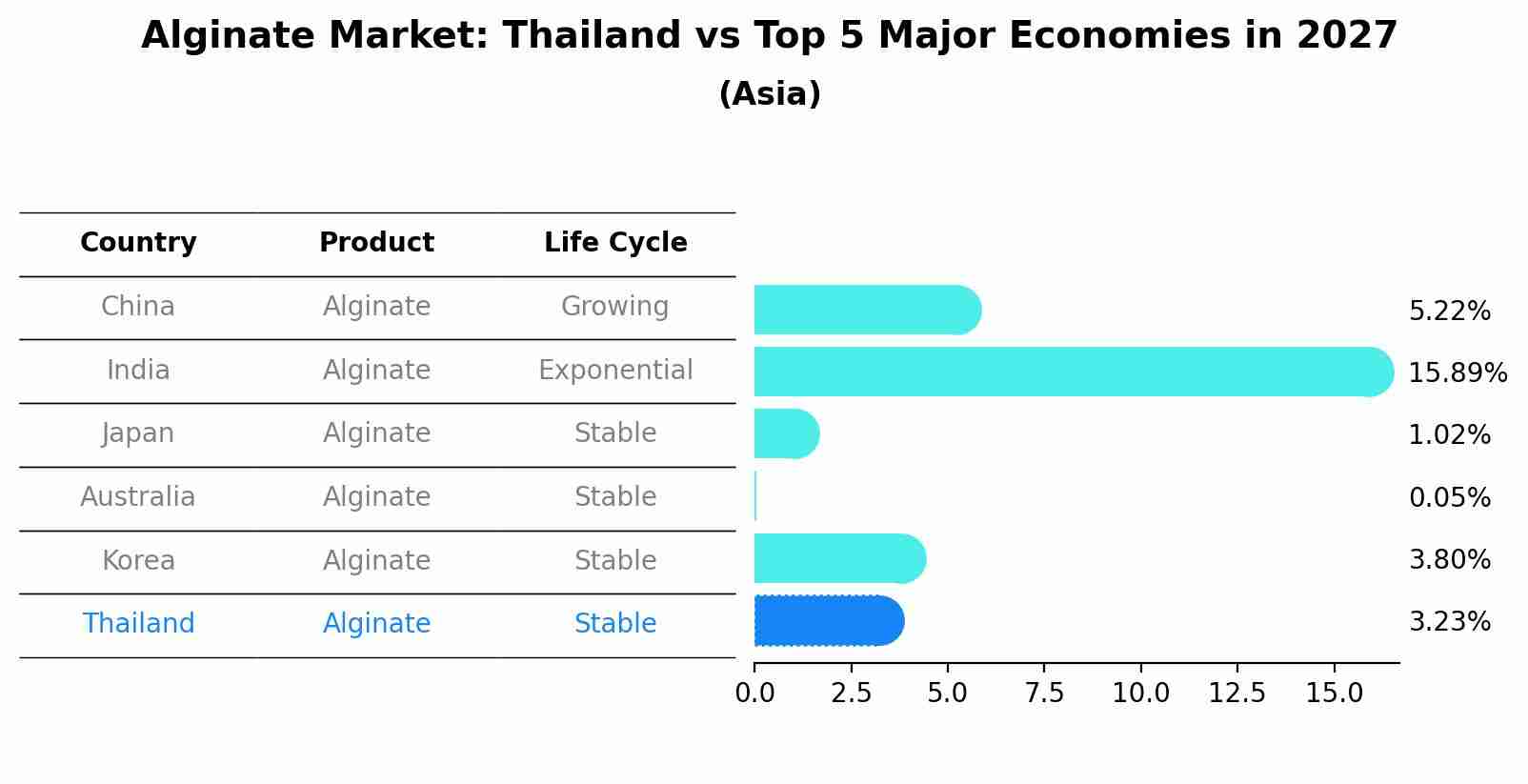
Alginate Market: Thailand vs Top 5 Major Economies in 2027 (Asia)
The Alginate market in Thailand is projected to grow at a stable growth rate of 3.23% by 2027, within the Asia region led by China, along with other countries like India, Japan, Australia and South Korea, collectively shaping a dynamic and evolving market environment driven by innovation and increasing adoption of emerging technologies.
Thailand Alginate Market Synopsis
The alginate market in Thailand was valued at about US$ 7.4 million in 2025 and is expected to grow at a compound annual growth rate (CAGR) of 7.4% over the forecast period. The primary drivers for the growth of the industry are an increase in demand from food processing industries and increasing health consciousness among consumers regarding food safety standards due to COVID-19 pandemic conditions. Moreover, technological advancements have enabled Thai manufacturers to produce innovative products that are suitable for various applications such as cosmetics, pharmaceuticals, food ingredients, and others.
Drivers of the Market
The growth of the Thailand alginate market is driven by its applications in the food, pharmaceutical, and textile industries. Alginate is used as a gelling, thickening, and stabilizing agent in various products. The increasing demand for convenience foods, pharmaceutical formulations, and eco-friendly textiles contributes to the utilization of alginate, supporting the market`s expansion.
Challenges of the Market
Challenges in the Thailand alginate market include maintaining a stable supply of seaweed, the primary source of alginate. Seaweed cultivation can be influenced by ocean conditions, climate change, and pollution. Ensuring sustainable sourcing practices that do not harm marine ecosystems is crucial. Additionally, meeting food and pharmaceutical industry standards for purity and safety poses challenges. Market players must address these concerns to ensure the long-term viability of the alginate market.
COVID-19 Impact on the Market
The Covid-19 pandemic impacted the Thailand alginate market. The reduced demand for products in sectors like food, pharmaceuticals, and textiles led to a decline in the use of alginate as a stabilizer, thickener, and gelling agent. However, as consumer preferences for convenience foods and functional ingredients persist, the market is likely to recover, driven by the growing demand for processed and packaged foods.
Key Players in the Market
Key players in the Thailand alginate market include AlginateIndustries, ThaiAlginate Ltd., and SeaweedHarvest Co. These companies focus on the production of alginate, a natural polysaccharide derived from seaweed and used in various industries including food, pharmaceuticals, and textiles. Their commitment to sustainable sourcing and product quality positions them as key contributors to the market.
Key Highlights of the Report:
- Thailand Alginate Market Outlook
- Market Size of Thailand Alginate Market, 2025
- Forecast of Thailand Alginate Market, 2032
- Historical Data and Forecast of Thailand Alginate Revenues & Volume for the Period 2022-2032F
- Thailand Alginate Market Trend Evolution
- Thailand Alginate Market Drivers and Challenges
- Thailand Alginate Price Trends
- Thailand Alginate Porter's Five Forces
- Thailand Alginate Industry Life Cycle
- Historical Data and Forecast of Thailand Alginate Market Revenues & Volume By Type for the Period 2022-2032F
- Historical Data and Forecast of Thailand Alginate Market Revenues & Volume By Sodium Alginate for the Period 2022-2032F
- Historical Data and Forecast of Thailand Alginate Market Revenues & Volume By Calcium Alginate for the Period 2022-2032F
- Historical Data and Forecast of Thailand Alginate Market Revenues & Volume By Potassium Alginate for the Period 2022-2032F
- Historical Data and Forecast of Thailand Alginate Market Revenues & Volume By PGA for the Period 2022-2032F
- Historical Data and Forecast of Thailand Alginate Market Revenues & Volume By Others for the Period 2022-2032F
- Historical Data and Forecast of Thailand Alginate Market Revenues & Volume By Application for the Period 2022-2032F
- Historical Data and Forecast of Thailand Alginate Market Revenues & Volume By Food & Beverage for the Period 2022-2032F
- Historical Data and Forecast of Thailand Alginate Market Revenues & Volume By Industrial for the Period 2022-2032F
- Historical Data and Forecast of Thailand Alginate Market Revenues & Volume By Pharmaceutical for the Period 2022-2032F
- Historical Data and Forecast of Thailand Alginate Market Revenues & Volume By Others for the Period 2022-2032F
- Thailand Alginate Import Export Trade Statistics
- Market Opportunity Assessment By Type
- Market Opportunity Assessment By Application
- Thailand Alginate Top Companies Market Share
- Thailand Alginate Competitive Benchmarking By Technical and Operational Parameters
- Thailand Alginate Company Profiles
- Thailand Alginate Key Strategic Recommendations






































