Thailand Apiculture Market: Import Trend Analysis
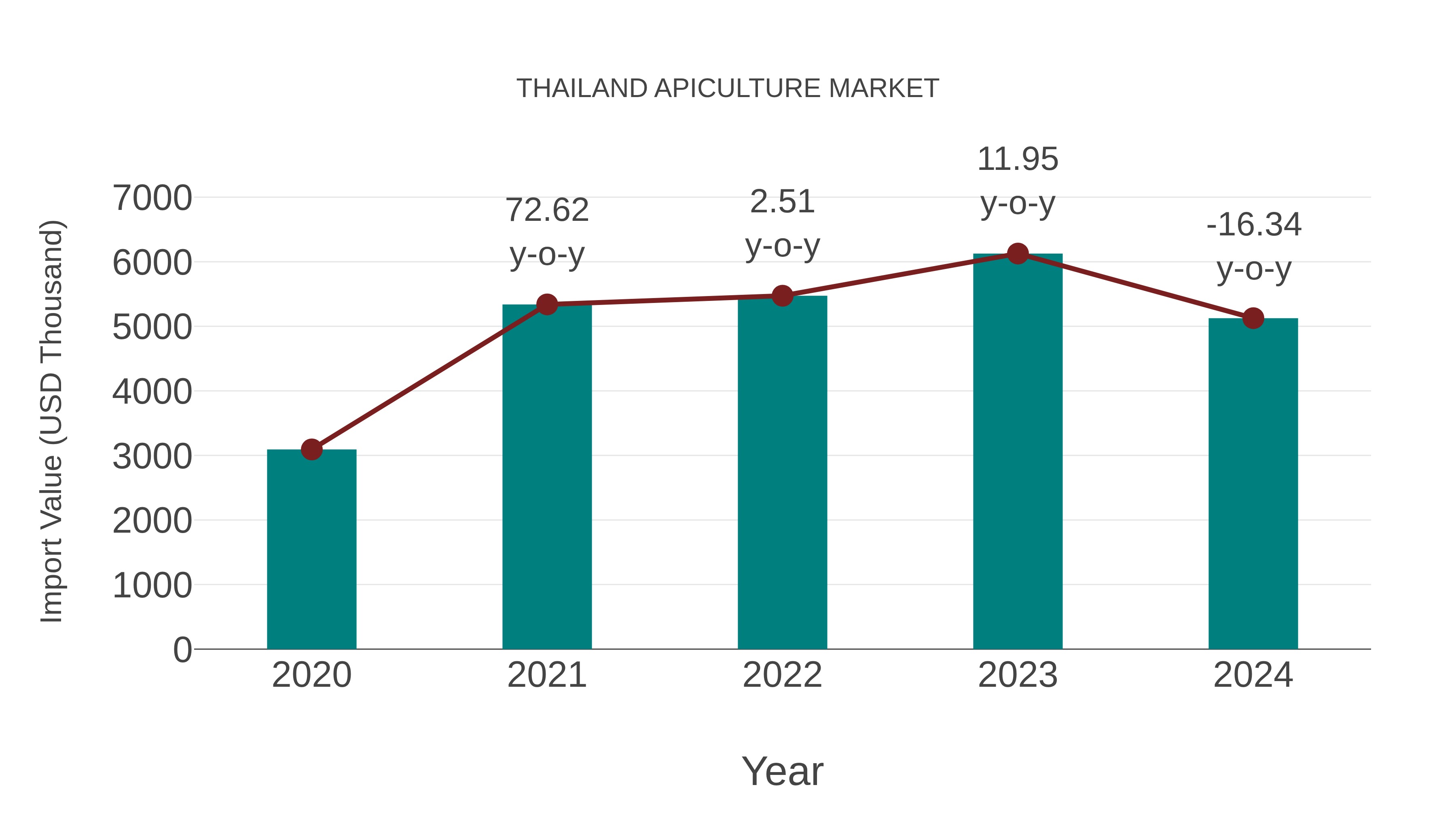
Thailand import trend in the apiculture market experienced a notable decline from 2023 to 2024, with a growth rate of -16.34%. However, the compound annual growth rate (CAGR) for the period from 2020 to 2024 stood at a healthy 13.46%. This dip in 2024 could be attributed to shifts in demand dynamics or changes in trade policies impacting market stability.
Thailand Apiculture Market Synopsis
The apiculture market in Thailand has experienced notable growth in recent years. Apiculture, or beekeeping, has gained popularity as a viable agricultural activity due to the increasing demand for honey and other bee-related products. The country boasts a diverse range of floral resources, which has contributed to a thriving beekeeping industry. Thai beekeepers produce high-quality honey, beeswax, royal jelly, and bee venom, which are not only consumed domestically but also exported to international markets. The government has implemented supportive policies and initiatives to encourage beekeeping, fostering the growth of the industry. Additionally, the rise in awareness of the importance of bees in pollination has further boosted the apiculture market in Thailand.
Drivers of the Market
The apiculture market in Thailand is flourishing due to several factors. One of the primary drivers is the increasing consumer awareness of the health benefits of honey and bee-related products. Thai honey is highly regarded for its quality and unique flavors, contributing to both domestic consumption and export opportunities. Moreover, government support in terms of training and modern beekeeping techniques has encouraged the growth of the local beekeeping industry, further fueling the market`s expansion.
Challenges of the Market
The Thailand apiculture market confronts challenges associated with bee health and habitat loss. Pesticide use and habitat degradation can harm bee populations, affecting honey production and beekeeping businesses. Competition from imported honey products can also squeeze local producers, as consumers may prefer lower-priced options. Ensuring the quality and safety of honey products, as well as promoting bee-friendly practices and habitat conservation, are essential challenges for the market`s sustainability.
COVID-19 Impact on the Market
The Thailand apiculture market faced various challenges during the COVID-19 pandemic. Disruptions in the supply chain, including difficulties in sourcing beekeeping equipment and supplies, hindered the industry`s growth. Additionally, restrictions on movement affected beekeepers` ability to maintain and manage their hives effectively. As tourism declined, honey sales to the hospitality sector were negatively impacted. However, there was a renewed interest in beekeeping among some individuals, leading to increased hobbyist beekeeping activities. The market showed resilience, with opportunities for growth as awareness of the importance of honeybee populations increased.
Key Players in the Market
In the Thai apiculture market, leading players include Honey World Co., Ltd. and Thai Royal Honey. These companies have a significant presence in honey production and beekeeping operations, contributing to the country`s thriving apiculture sector.
Key Highlights of the Report:
- Thailand Apiculture Market Outlook
- Market Size of Thailand Apiculture Market, 2025
- Forecast of Thailand Apiculture Market, 2032
- Historical Data and Forecast of Thailand Apiculture Revenues & Volume for the Period 2022-2032F
- Thailand Apiculture Market Trend Evolution
- Thailand Apiculture Market Drivers and Challenges
- Thailand Apiculture Price Trends
- Thailand Apiculture Porter's Five Forces
- Thailand Apiculture Industry Life Cycle
- Historical Data and Forecast of Thailand Apiculture Market Revenues & Volume By Product Type for the Period 2022-2032F
- Historical Data and Forecast of Thailand Apiculture Market Revenues & Volume By Honey for the Period 2022-2032F
- Historical Data and Forecast of Thailand Apiculture Market Revenues & Volume By Beeswax for the Period 2022-2032F
- Historical Data and Forecast of Thailand Apiculture Market Revenues & Volume By Live-bees for the Period 2022-2032F
- Historical Data and Forecast of Thailand Apiculture Market Revenues & Volume By Others for the Period 2022-2032F
- Historical Data and Forecast of Thailand Apiculture Market Revenues & Volume By Application for the Period 2022-2032F
- Historical Data and Forecast of Thailand Apiculture Market Revenues & Volume By Medical for the Period 2022-2032F
- Historical Data and Forecast of Thailand Apiculture Market Revenues & Volume By Food Beverages for the Period 2022-2032F
- Historical Data and Forecast of Thailand Apiculture Market Revenues & Volume By Cosmetics for the Period 2022-2032F
- Historical Data and Forecast of Thailand Apiculture Market Revenues & Volume By Others for the Period 2022-2032F
- Thailand Apiculture Import Export Trade Statistics
- Market Opportunity Assessment By Product Type
- Market Opportunity Assessment By Application
- Thailand Apiculture Top Companies Market Share
- Thailand Apiculture Competitive Benchmarking By Technical and Operational Parameters
- Thailand Apiculture Company Profiles
- Thailand Apiculture Key Strategic Recommendations






































