Thailand Artificial Flowers Market: Import Trend Analysis
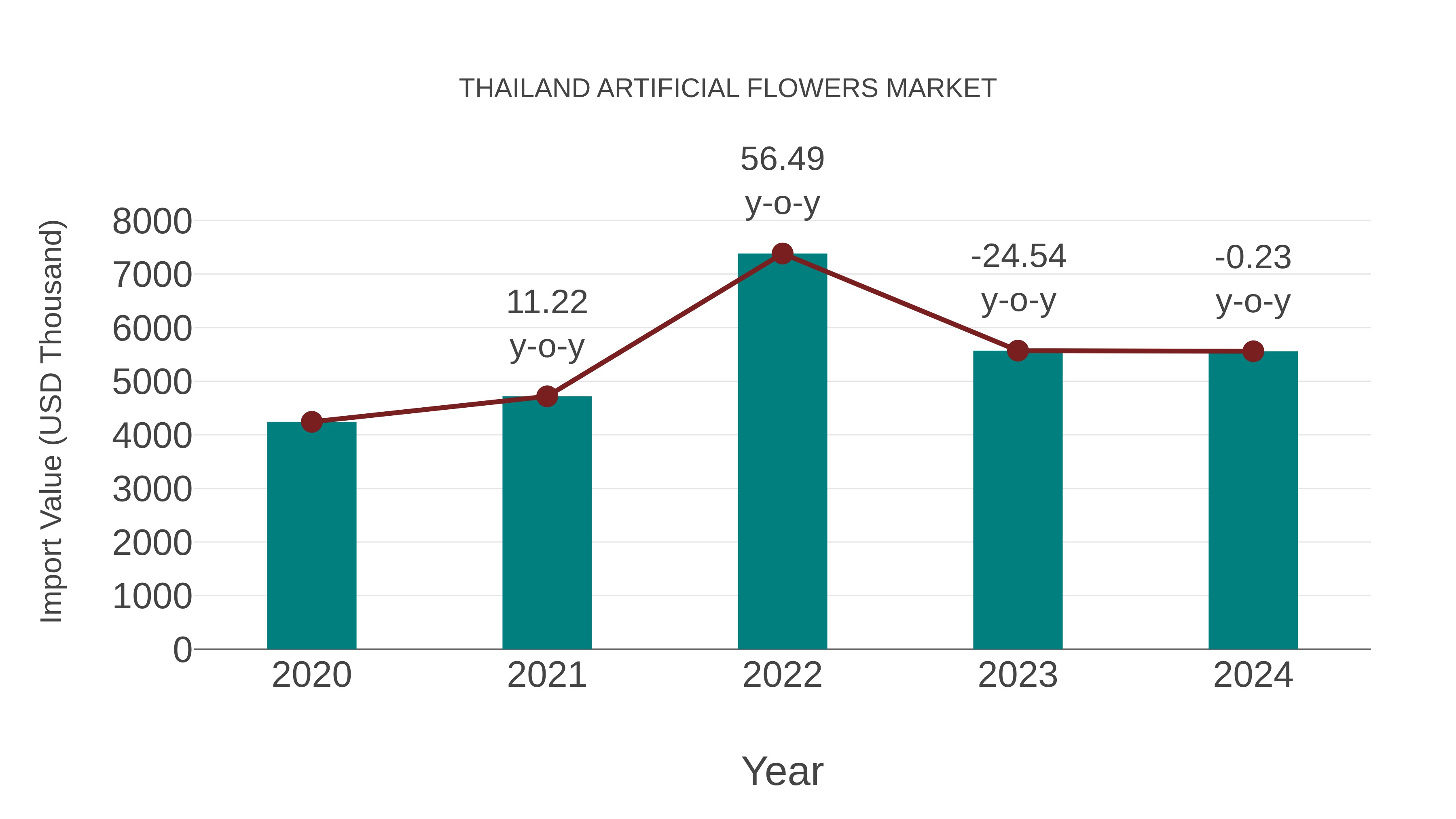
Thailand import trend for the artificial flowers market showed a slight decline from 2023 to 2024, with a growth rate of -0.23%. Despite this, the compound annual growth rate (CAGR) from 2020 to 2024 stood at a healthy 6.99%. This dip in import momentum may be attributed to shifting consumer preferences or changes in global trade dynamics affecting the market stability.
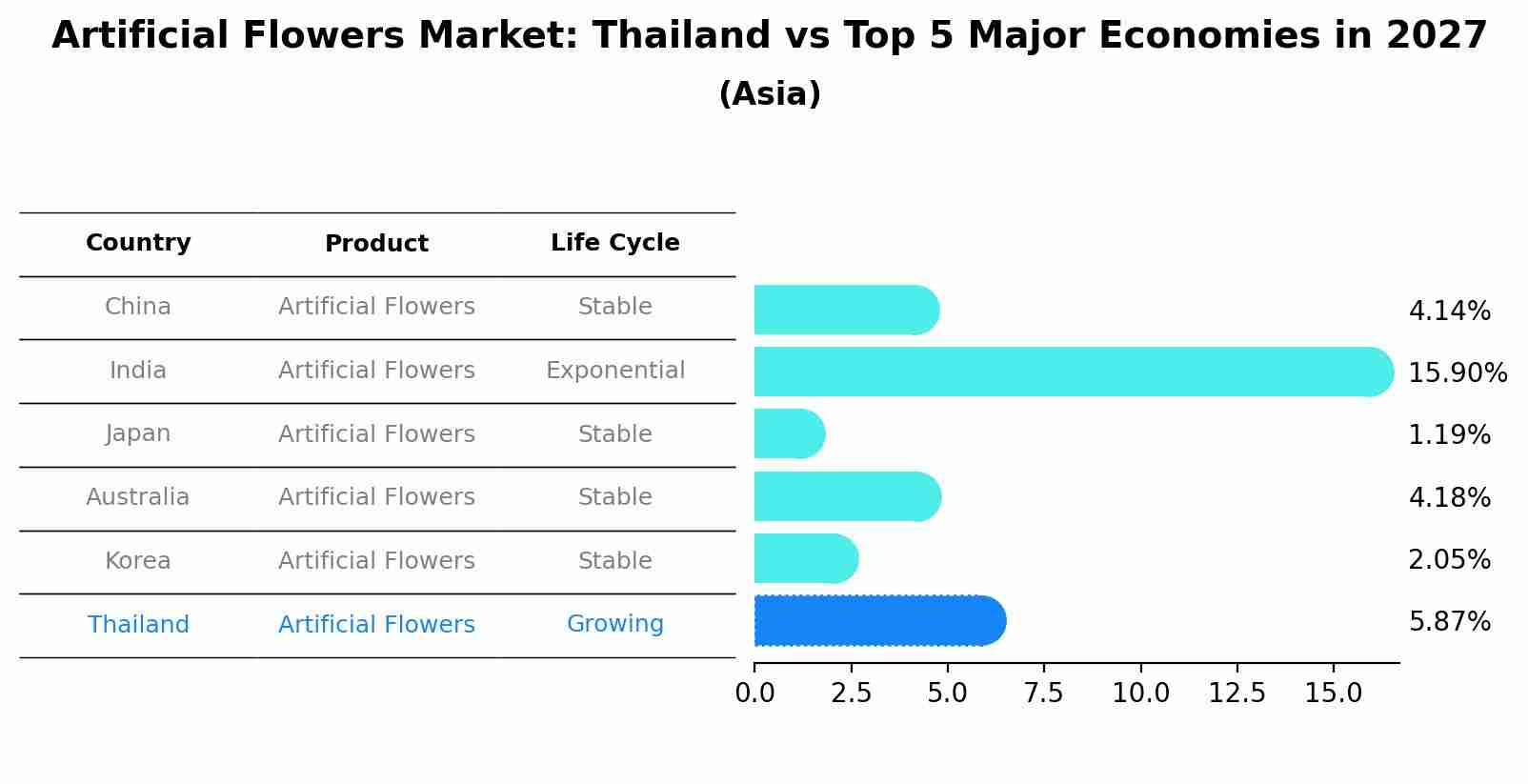
Artificial Flowers Market: Thailand vs Top 5 Major Economies in 2027 (Asia)
Thailand's Artificial Flowers market is anticipated to experience a growing growth rate of 5.87% by 2027, reflecting trends observed in the largest economy China, followed by India, Japan, Australia and South Korea.
Thailand Artificial Flowers Market Synopsis
In Thailand, the artificial flowers and plants market caters to a range of consumer and commercial needs. Artificial flowers and plants are used for interior decoration, event planning, and landscaping. They provide a cost-effective and low-maintenance alternative to natural plants, making them a popular choice in both residential and commercial settings. The market is characterized by a wide variety of artificial flora, including silk flowers, plastic plants, and decorative foliage.
Drivers of the Market
The artificial flowers market in Thailand is flourishing due to changing consumer preferences and lifestyle trends. The key driver here is the increasing demand for long-lasting and low-maintenance decorative items. Artificial flowers offer a practical and aesthetically pleasing alternative to real flowers, especially in urban environments where space and time for gardening may be limited. Additionally, the availability of a wide variety of artificial flower designs and the ability to customize arrangements are driving consumer interest and market growth.
Challenges of the Market
The artificial flowers market in Thailand encounters several challenges, including the competition from fresh flowers, which are preferred for various cultural and religious occasions. Seasonal fluctuations in demand and changing consumer preferences pose additional challenges. Maintaining product quality and aesthetics to mimic real flowers is another constant challenge for manufacturers in this market.
COVID-19 Impact on the Market
The artificial flowers market in Thailand saw a decline in demand during the pandemic as consumer spending on non-essential items decreased. Wedding and event industry restrictions also affected demand for artificial flowers. However, the market showed resilience as it adapted to online sales and explored new niches like home decor and DIY projects.
Key Players in the Market
In the Thailand artificial flowers market, prominent companies have made a mark with their innovative and high-quality artificial floral products. Leading players include Thai Silk and SCG Packaging Public Company Limited. They offer a wide range of artificial flowers catering to various consumer and decorative needs.
Key Highlights of the Report:
- Thailand Artificial Flowers Market Outlook
- Market Size of Thailand Artificial Flowers Market, 2025
- Forecast of Thailand Artificial Flowers Market, 2032
- Historical Data and Forecast of Thailand Artificial Flowers Revenues & Volume for the Period 2022-2032F
- Thailand Artificial Flowers Market Trend Evolution
- Thailand Artificial Flowers Market Drivers and Challenges
- Thailand Artificial Flowers Price Trends
- Thailand Artificial Flowers Porter's Five Forces
- Thailand Artificial Flowers Industry Life Cycle
- Historical Data and Forecast of Thailand Artificial Flowers Market Revenues & Volume By Material Type for the Period 2022-2032F
- Historical Data and Forecast of Thailand Artificial Flowers Market Revenues & Volume By Clay & Porcelain for the Period 2022-2032F
- Historical Data and Forecast of Thailand Artificial Flowers Market Revenues & Volume By Cotton & Silk for the Period 2022-2032F
- Historical Data and Forecast of Thailand Artificial Flowers Market Revenues & Volume By Leather & Nylon for the Period 2022-2032F
- Historical Data and Forecast of Thailand Artificial Flowers Market Revenues & Volume By Paper & Wax for the Period 2022-2032F
- Historical Data and Forecast of Thailand Artificial Flowers Market Revenues & Volume By Plastic & Polyester for the Period 2022-2032F
- Historical Data and Forecast of Thailand Artificial Flowers Market Revenues & Volume By Application for the Period 2022-2032F
- Historical Data and Forecast of Thailand Artificial Flowers Market Revenues & Volume By Commercial for the Period 2022-2032F
- Historical Data and Forecast of Thailand Artificial Flowers Market Revenues & Volume By Residential for the Period 2022-2032F
- Thailand Artificial Flowers Import Export Trade Statistics
- Market Opportunity Assessment By Material Type
- Market Opportunity Assessment By Application
- Thailand Artificial Flowers Top Companies Market Share
- Thailand Artificial Flowers Competitive Benchmarking By Technical and Operational Parameters
- Thailand Artificial Flowers Company Profiles
- Thailand Artificial Flowers Key Strategic Recommendations






































