Thailand Baby Apparel Market: Import Trend Analysis
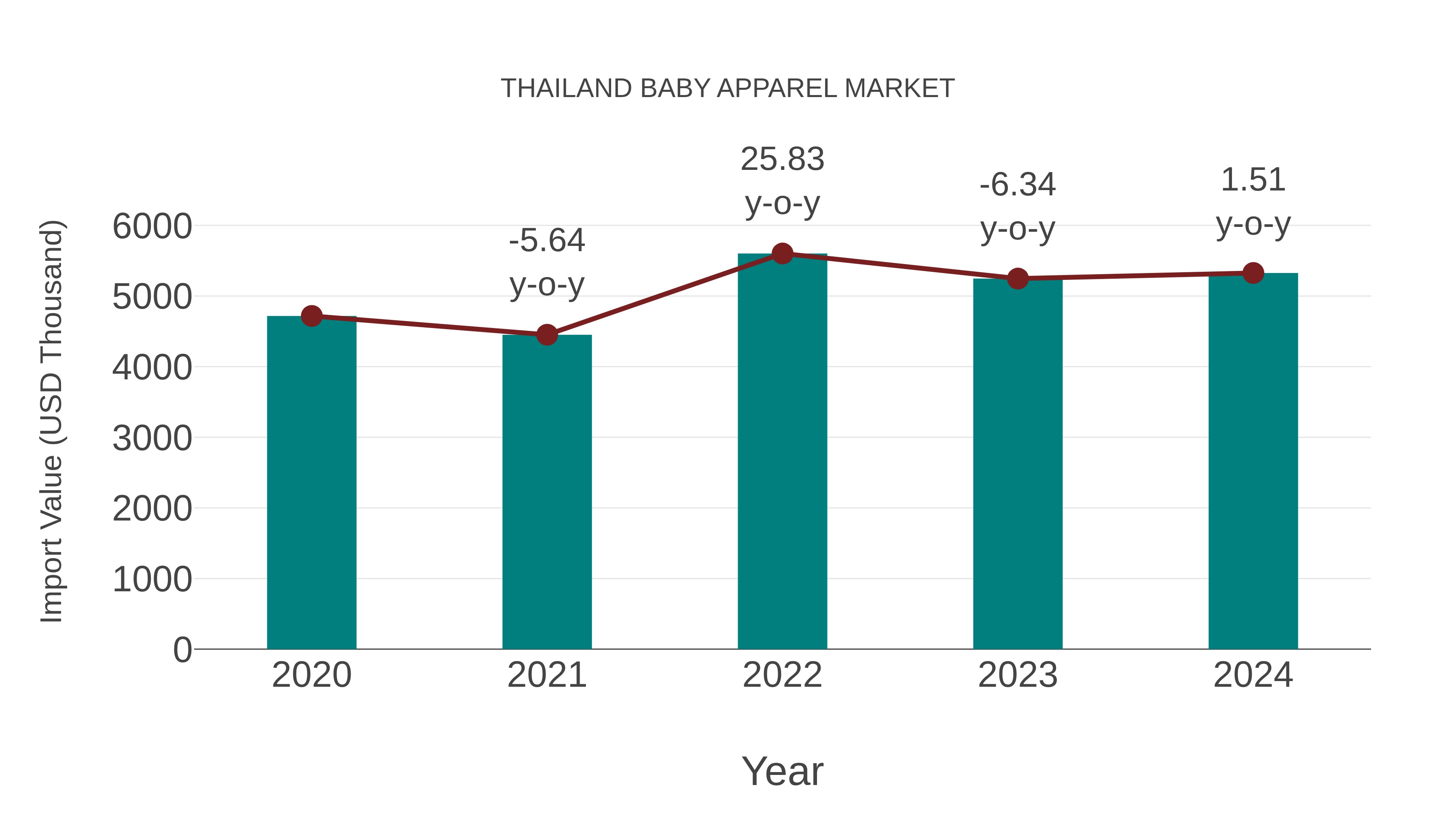
In the Thailand baby apparel market, import trends showed a growth rate of 1.51% from 2023 to 2024, with a compound annual growth rate (CAGR) of 3.08% from 2020 to 2024. This increase in import momentum may be attributed to shifting consumer preferences towards quality international baby clothing brands, indicating a demand shift towards higher-end products in the market.
Thailand Baby Apparel Market Synopsis
The Thailand baby apparel market is expected to grow at a CAGR of 5.6% during the forecast period 2020-2026. Growing demand for comfortable and stylish baby clothes, increasing disposable incomes, rising awareness about fashion trends in babies among parents, are some of the factors driving the growth in this market. Moreover, favorable government initiatives towards child healthcare and health insurance policies have also contributed significantly to the growth of this market. The growing online retail channel and emergence of ecommerce websites are further adding traction to this market. Key players operating in the Thailand baby apparel industry include GAP Inc., Carter`s Inc., Inditex SA, H&M Hennes & Mauritz AB (H&M), Walmart Stores Inc., Target Corp., Amazon Inc., Tesco Plc., Fast Retailing Co Ltd (Uniqlo) Lazada Group Sdn Bhd (Lazada), etc
Key Highlights of the Report:
- Thailand Baby Apparel Market Outlook
- Market Size of Thailand Baby Apparel Market, 2019
- Forecast of Thailand Baby Apparel Market, 2026
- Historical Data and Forecast of Thailand Baby Apparel Revenues & Volume for the Period 2016 - 2026
- Thailand Baby Apparel Market Trend Evolution
- Thailand Baby Apparel Market Drivers and Challenges
- Thailand Baby Apparel Price Trends
- Thailand Baby Apparel Porter's Five Forces
- Thailand Baby Apparel Industry Life Cycle
- Historical Data and Forecast of Thailand Baby Apparel Market Revenues & Volume By Product for the Period 2016 - 2026
- Historical Data and Forecast of Thailand Baby Apparel Market Revenues & Volume By Outerwear for the Period 2016 - 2026
- Historical Data and Forecast of Thailand Baby Apparel Market Revenues & Volume By Underwear for the Period 2016 - 2026
- Historical Data and Forecast of Thailand Baby Apparel Market Revenues & Volume By Distribution Channel for the Period 2016 - 2026
- Historical Data and Forecast of Thailand Baby Apparel Market Revenues & Volume By Online for the Period 2016 - 2026
- Historical Data and Forecast of Thailand Baby Apparel Market Revenues & Volume By Offline for the Period 2016 - 2026
- Thailand Baby Apparel Import Export Trade Statistics
- Market Opportunity Assessment By Product
- Market Opportunity Assessment By Distribution Channel
- Thailand Baby Apparel Top Companies Market Share
- Thailand Baby Apparel Competitive Benchmarking By Technical and Operational Parameters
- Thailand Baby Apparel Company Profiles
- Thailand Baby Apparel Key Strategic Recommendations






































