Thailand Bakeware Market Summary
The thailand bakeware market was estimated at USD 200 Million in 2025 and is projected to reach USD 229 Million by 2032, growing at a CAGR of 2.8% from 2026 to 2032.
Thailand Bakeware Market Year-wise Growth Rate and Key Drivers
This graph highlights how the Thailand Bakeware Market has steadily grown over the past five years, supported by major growth factors.
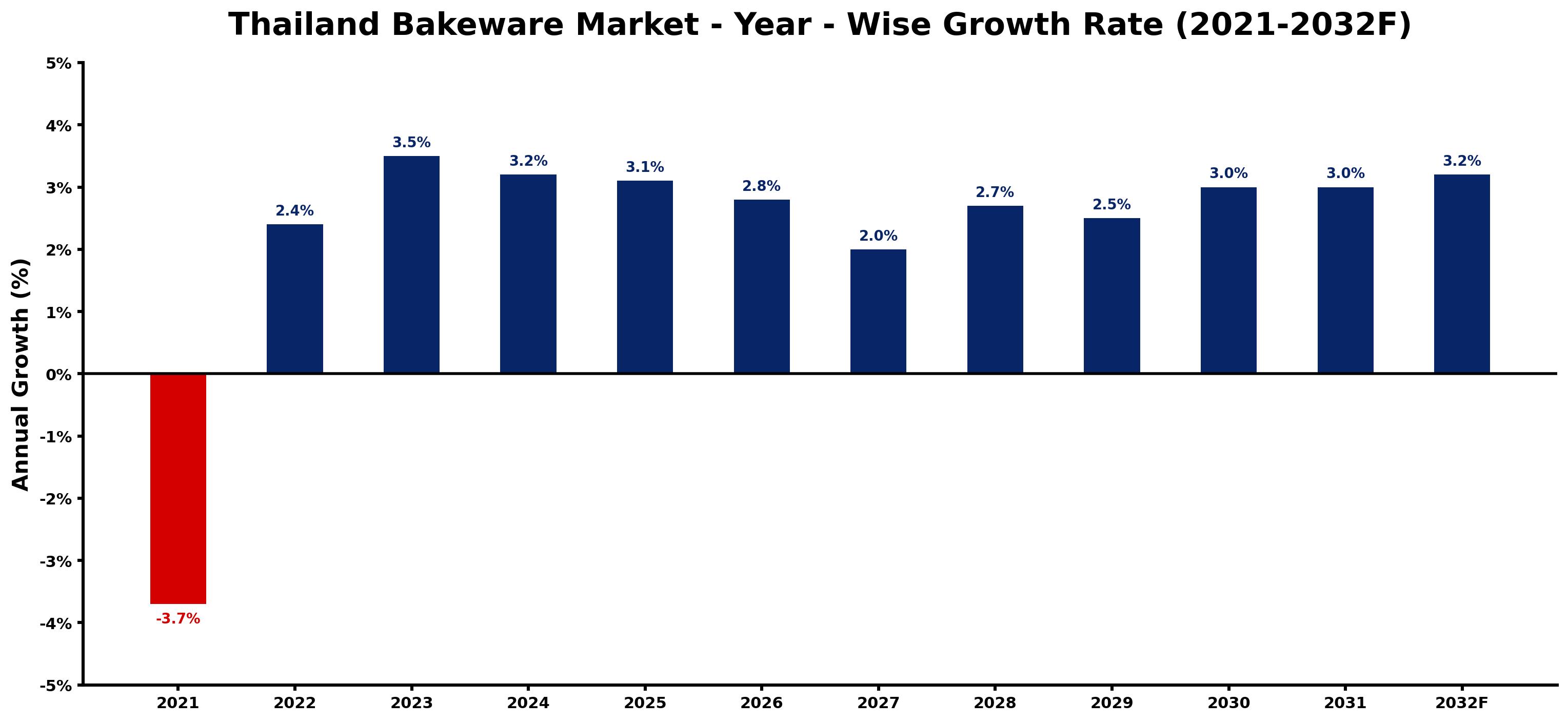
The table below presents the year wise growth rates along with the key drivers influencing the market
| Year | Growth Rate | Major Drivers |
| 2021 | -3.7% | Pandemicrelated supply chain disruptions led to heightened costs and limited availability of essential bakeware products. |
| 2022 | 2.4% | Local bakeries began collaborating with influencers to promote baking at home. |
| 2023 | 3.5% | Sustainable materials gained traction, aligning with eco-conscious consumer preferences. |
| 2024 | 3.2% | Online retail channels expanded, offering convenience and variety for customers. |
| 2025 | 3.1% | Cooking shows featuring Thai desserts sparked interest in specialty bakeware products. |
| 2026 | 2.8% | Rising disposable incomes allowed families to invest in high-quality bakeware items. |
| 2027 | 2.0% | Home baking workshops emerged, fostering community engagement and skill development. |
| 2028 | 2.7% | Innovative designs in bakeware attracted younger demographics seeking modern aesthetics. |
| 2029 | 2.5% | Increased tourism influenced demand for unique Thai-themed bakeware souvenirs. |
| 2030 | 3.0% | Health-conscious trends prompted the creation of bakeware for gluten-free baking. |
| 2031 | 3.0% | Collaborations with chefs promoted premium bakeware brands in the local market. |
| 2032 | 3.2% | E-commerce platforms integrated AI, enhancing personalized shopping experiences for consumers. |
Note - Market size estimations and growth projections presented in this report are based on 6Wresearch's advanced forecasting approach, validated with industry datasets as of June 2026.
Thailand Bakeware Market Synopsis
The Thailand Bakeware Market is projected to reach 2.8% and witness significant growth during the forecast period (2026-2032). The anticipated growth is underpinned by several factors, including escalating consumer demand for advanced baking tools, rising disposable income, and a notable increase in online retailing, especially among the millennial demographic. These elements collectively contribute to a robust market landscape, presenting new opportunities for industry stakeholders.
Thailand Bakeware Market Growth Drivers
The drive for innovation within the Thailand bakeware market is primarily led by the following factors:
- Consumer Demand for Advanced Baking Tools: A significant trend is emerging among home bakers, who increasingly seek professional-grade tools to enhance their baking experiences. The demand for high-quality equipment, such as specialized cake pans and measuring tools, is steadily increasing.
- Introduction of Innovative Products: The market has witnessed the introduction of modern baking items, notably silicone molds. These products not only cater to a diverse consumer base but also promote healthier baking options, driving further sales growth.
- Rising Disposable Income: As disposable income levels in Thailand continue to climb, consumers are more inclined to invest in premium bakeware products. This shift allows them to explore new baking techniques and experiment with intricate recipes in the comfort of their homes.
- Influence of Social Media: The proliferation of social media platforms has played a pivotal role in popularizing baking as a lifestyle choice. As a result, more individuals are motivated to invest in quality bakeware to create visually appealing baked goods.
- Growing Online Retail Landscape: Millennials, in particular, are increasingly shopping online, leading to a surge in e-commerce opportunities within the bakeware sector. This trend is further augmented by user-friendly interfaces and attractive online promotions that enhance consumer engagement.
Thailand Bakeware Market Challenges and Restraints
Despite its promising growth trajectory, the Thailand bakeware market faces several challenges that could impact its overall performance:
- Intense Price Competition: The entry of foreign brands that benefit from economies of scale poses a significant challenge to local manufacturers. These companies often have lower production costs, leading to aggressive pricing strategies that pressure profit margins within the domestic market.
- Lack of Consumer Awareness: Many consumers may not fully understand the differences in quality between local and imported bakeware, potentially leading to unintentional purchase decisions that favor lower-priced options over superior quality products.
- Manufacturing Costs: Rising costs associated with raw materials and production processes can affect the profitability of local manufacturers. Companies must find ways to optimize their operations to maintain competitive pricing without compromising quality.
- Market Saturation: With an influx of various brands and products, the market is becoming increasingly crowded. This saturation can lead to diminished brand loyalty and increased difficulty in capturing market share.
- Economic Fluctuations: Economic uncertainties can impact consumer spending patterns, particularly for non-essential goods such as bakeware. A slowdown in the economy may force consumers to prioritize basic necessities over specialty baking items.
Thailand Bakeware Market Covid-19 Impact
The Covid-19 pandemic has reshaped consumer behavior, leading to a resurgence in home baking activities. Lockdown measures initiated globally prompted many individuals to turn to baking as a means of coping with stress and isolation. This shift resulted in heightened demand for essential bakers' utensils, including bakeware items such as silicone molds. The trend highlighted a new appreciation for home cooking and baking, which is expected to have lasting effects on the market beyond the pandemic.
Thailand Bakeware Market Government Investment and Initiatives
The Thai government has recognized the significance of the food and beverage sector, which includes the bakeware industry, as a vital component of economic growth. Initiatives aimed at boosting local production capabilities and encouraging innovation are being implemented:
- Support for Small and Medium Enterprises: The government is actively promoting small and medium enterprises (SMEs) in the baking sector through grants, subsidies, and training programs to help them enhance their production capabilities.
- Development of E-commerce Infrastructure: Policies aimed at improving the logistics and infrastructure for online commerce are being prioritized, which directly benefits the bakeware market, enabling better access for consumers.
- Investment in Research and Development: Government incentives for R&D in materials and baking technologies are encouraging local manufacturers to innovate and improve their product offerings, thereby increasing competitiveness.
- Promotion of Culinary Tourism: By promoting Thailand as a culinary tourism destination, the government indirectly supports the bakeware market, as increased tourism can lead to greater demand for baking-related products.
- Regulatory Support: Streamlined regulations and quality standards set by the government aim to improve product quality across the industry, fostering consumer trust in local brands.
Thailand Bakeware Market Latest Developments (May 2025 - June 2026)
In the period from May 2025 to June 2026, the Thailand bakeware market has experienced several notable developments. There has been a marked increase in product diversification, with manufacturers introducing eco-friendly bakeware options to appeal to environmentally-conscious consumers. Online sales channels have expanded significantly, reflecting a shift in consumer preference towards digital purchasing. Furthermore, collaboration with local culinary schools has intensified as companies seek to engage aspiring bakers and promote their products effectively. Enhanced marketing strategies emphasizing product quality and unique features have also gained traction, aligning with the growing consumer focus on premium baking tools.
Thailand Bakeware Market - Key Attractiveness of the Report
- 10 Years of Market Numbers
- Historical Data Starting from 2022 to 2025
- Base Year: 2025
- Forecast Data until 2032
- Key Performance Indicators Impacting the Market
- Major Upcoming Developments and Projects
Key Highlights of the Report:
- Thailand Bakeware Market Outlook
- Market Size of Thailand Bakeware Market, 2025
- Forecast of Thailand Bakeware Market, 2032
- Historical Data and Forecast of Thailand Bakeware Revenues & Volume for the Period 2022-2032F
- Thailand Bakeware Market Trend Evolution
- Thailand Bakeware Market Drivers and Challenges
- Thailand Bakeware Price Trends
- Thailand Bakeware Porter's Five Forces
- Thailand Bakeware Industry Life Cycle
- Historical Data and Forecast of Thailand Bakeware Market Revenues & Volume By Product Type for the Period 2022-2032F
- Historical Data and Forecast of Thailand Bakeware Market Revenues & Volume By Ceramic for the Period 2022-2032F
- Historical Data and Forecast of Thailand Bakeware Market Revenues & Volume By Aluminium for the Period 2022-2032F
- Historical Data and Forecast of Thailand Bakeware Market Revenues & Volume By Cast Iron for the Period 2022-2032F
- Historical Data and Forecast of Thailand Bakeware Market Revenues & Volume By Stainless Steel for the Period 2022-2032F
- Historical Data and Forecast of Thailand Bakeware Market Revenues & Volume By Glass for the Period 2022-2032F
- Historical Data and Forecast of Thailand Bakeware Market Revenues & Volume By Others for the Period 2022-2032F
- Historical Data and Forecast of Thailand Bakeware Market Revenues & Volume By Applications for the Period 2022-2032F
- Historical Data and Forecast of Thailand Bakeware Market Revenues & Volume By Commercial for the Period 2022-2032F
- Historical Data and Forecast of Thailand Bakeware Market Revenues & Volume By Household for the Period 2022-2032F
- Thailand Bakeware Import Export Trade Statistics
- Market Opportunity Assessment By Product Type
- Market Opportunity Assessment By Applications
- Thailand Bakeware Top Companies Market Share
- Thailand Bakeware Competitive Benchmarking By Technical and Operational Parameters
- Thailand Bakeware Company Profiles
- Thailand Bakeware Key Strategic Recommendations






































