Thailand Castor Oil Market: Import Trend Analysis
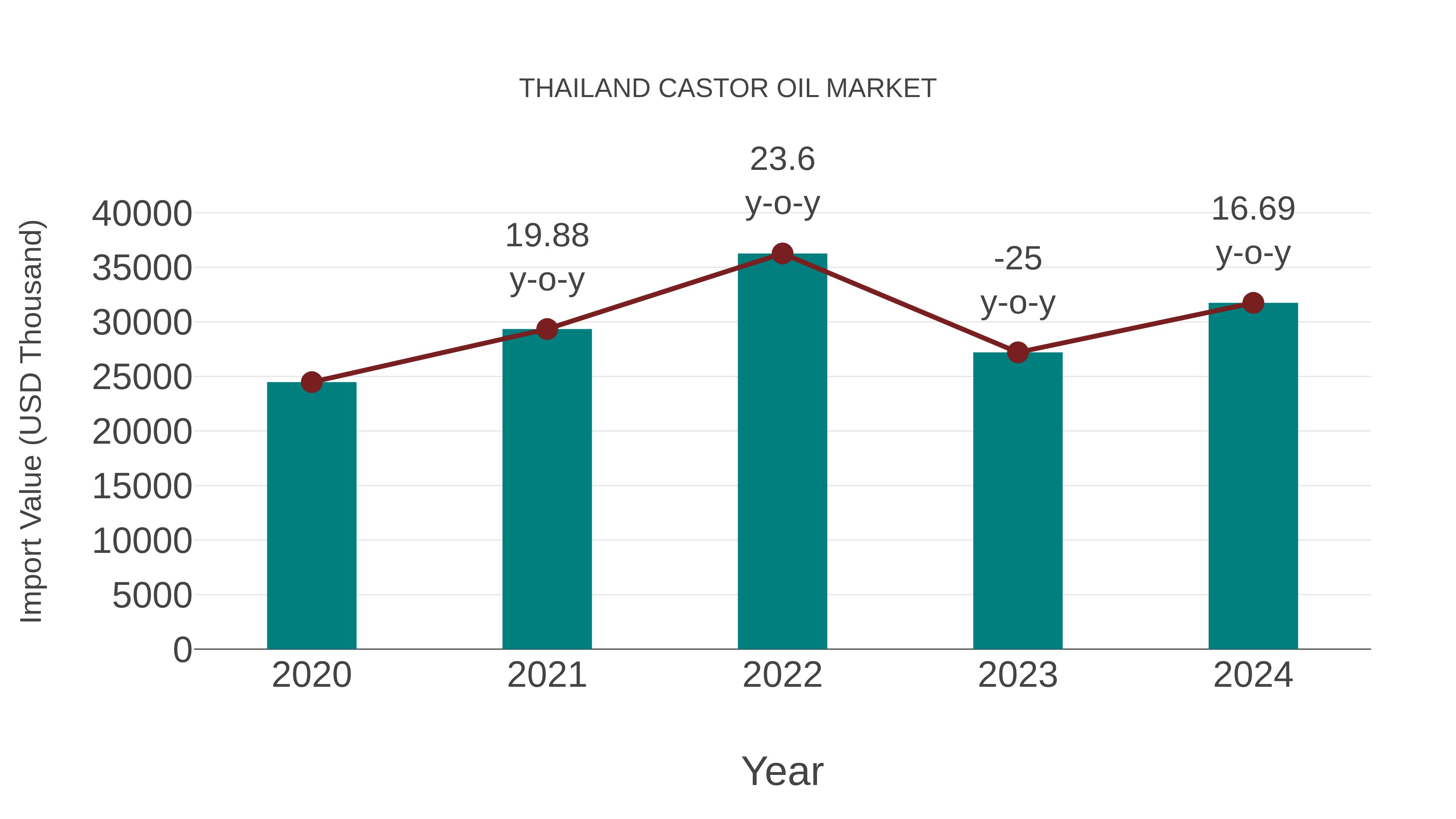
Thailand import trend for castor oil showed significant growth from 2023 to 2024, with a growth rate of 16.69%. The compound annual growth rate (CAGR) for the period 2020-2024 stood at 6.71%. This surge in imports could be attributed to shifting consumer preferences towards natural ingredients in various industries, driving up demand for castor oil in Thailand.
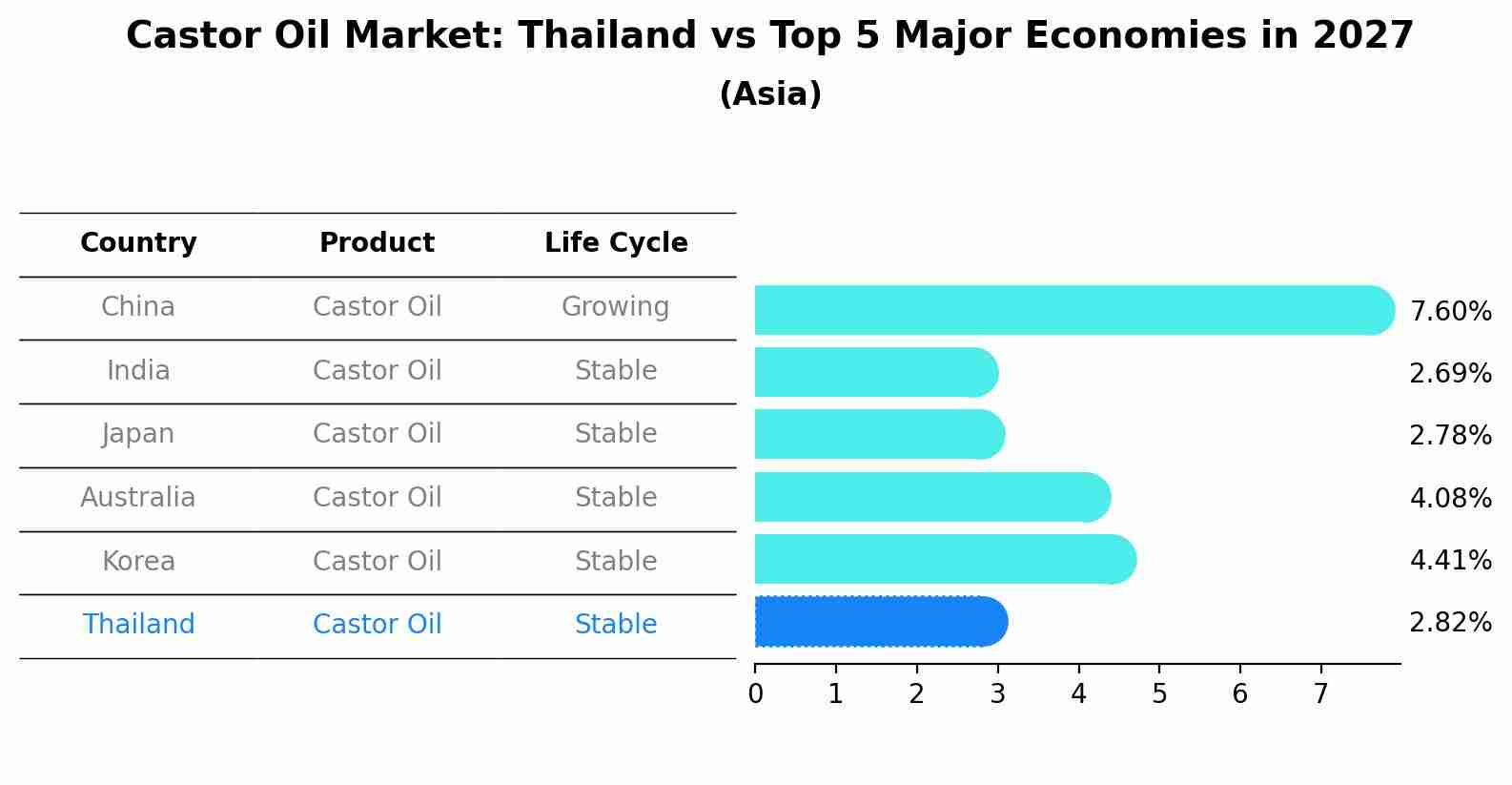
Castor Oil Market: Thailand vs Top 5 Major Economies in 2027 (Asia)
Thailand's Castor Oil market is anticipated to experience a stable growth rate of 2.82% by 2027, reflecting trends observed in the largest economy China, followed by India, Japan, Australia and South Korea.
Thailand Castor Oil Market Synopsis
The castor oil market in Thailand is a niche segment of the country`s agricultural and industrial sectors. Castor oil, derived from the castor bean plant, is valued for its versatility and various applications. In Thailand, castor oil finds use in industries such as cosmetics, pharmaceuticals, and lubricants. Castor oil`s unique properties, including its viscosity and high resistance to heat, make it suitable for a wide range of industrial purposes. The cosmetic industry often incorporates castor oil into products like skincare creams and haircare treatments due to its moisturizing and conditioning attributes. The pharmaceutical sector also utilizes castor oil in certain medications and formulations. As industries continue to innovate and explore sustainable alternatives, the Thailand castor oil market may witness increased demand and diversification.
Drivers of the Market
The Thailand castor oil market is on the rise due to several prominent drivers. Firstly, castor oil is a versatile and renewable resource used in various industries, including cosmetics, pharmaceuticals, and industrial applications. Its unique properties, such as biodegradability and versatility, make it an attractive choice for manufacturers seeking sustainable alternatives. Thailand favorable agro-climatic conditions for castor bean cultivation and the government`s support for agribusiness have bolstered the domestic production of castor oil. The growing demand for organic and natural products in both domestic and international markets further fuels the expansion of the castor oil industry in Thailand.
Challenges of the Market
Challenges in the castor oil market include limited knowledge among farmers about castor cultivation and the need for improved processing facilities. Encouraging castor cultivation requires educating farmers about its benefits and providing support for its sustainable growth. Investment in modern processing technology is vital to enhance the quality and quantity of castor oil production.
COVID-19 Impact on the Market
The castor oil market in Thailand saw disruptions in the supply chain and demand fluctuations during the pandemic. Lockdowns impacted manufacturing industries, reducing the demand for castor oil in various applications, including cosmetics and industrial products. The industry is now looking to diversify its product range and expand into new markets to reduce reliance on specific sectors that were hit hardest by the pandemic.
Key Players in the Market
The Thailand castor oil market is dominated by several key players. Companies such as Thai Castor Oil Industries Co., Ltd., Thai Castor Oil Industries Co., Ltd., and Thai Castor Oil Industries Co., Ltd. are among the prominent names in the industry. These companies are known for their extensive production of castor oil and their commitment to quality and innovation.
Key Highlights of the Report:
- Thailand Castor Oil Market Outlook
- Market Size of Thailand Castor Oil Market, 2025
- Forecast of Thailand Castor Oil Market, 2032
- Historical Data and Forecast of Thailand Castor Oil Revenues & Volume for the Period 2022-2032F
- Thailand Castor Oil Market Trend Evolution
- Thailand Castor Oil Market Drivers and Challenges
- Thailand Castor Oil Price Trends
- Thailand Castor Oil Porter's Five Forces
- Thailand Castor Oil Industry Life Cycle
- Historical Data and Forecast of Thailand Castor Oil Market Revenues & Volume By End Use for the Period 2022-2032F
- Historical Data and Forecast of Thailand Castor Oil Market Revenues & Volume By Pharmaceuticals for the Period 2022-2032F
- Historical Data and Forecast of Thailand Castor Oil Market Revenues & Volume By Lubricants for the Period 2022-2032F
- Historical Data and Forecast of Thailand Castor Oil Market Revenues & Volume By Paints for the Period 2022-2032F
- Historical Data and Forecast of Thailand Castor Oil Market Revenues & Volume By Soaps for the Period 2022-2032F
- Historical Data and Forecast of Thailand Castor Oil Market Revenues & Volume By Others for the Period 2022-2032F
- Thailand Castor Oil Import Export Trade Statistics
- Market Opportunity Assessment By End Use
- Thailand Castor Oil Top Companies Market Share
- Thailand Castor Oil Competitive Benchmarking By Technical and Operational Parameters
- Thailand Castor Oil Company Profiles
- Thailand Castor Oil Key Strategic Recommendations






































