Thailand Crab Market: Import Trend Analysis
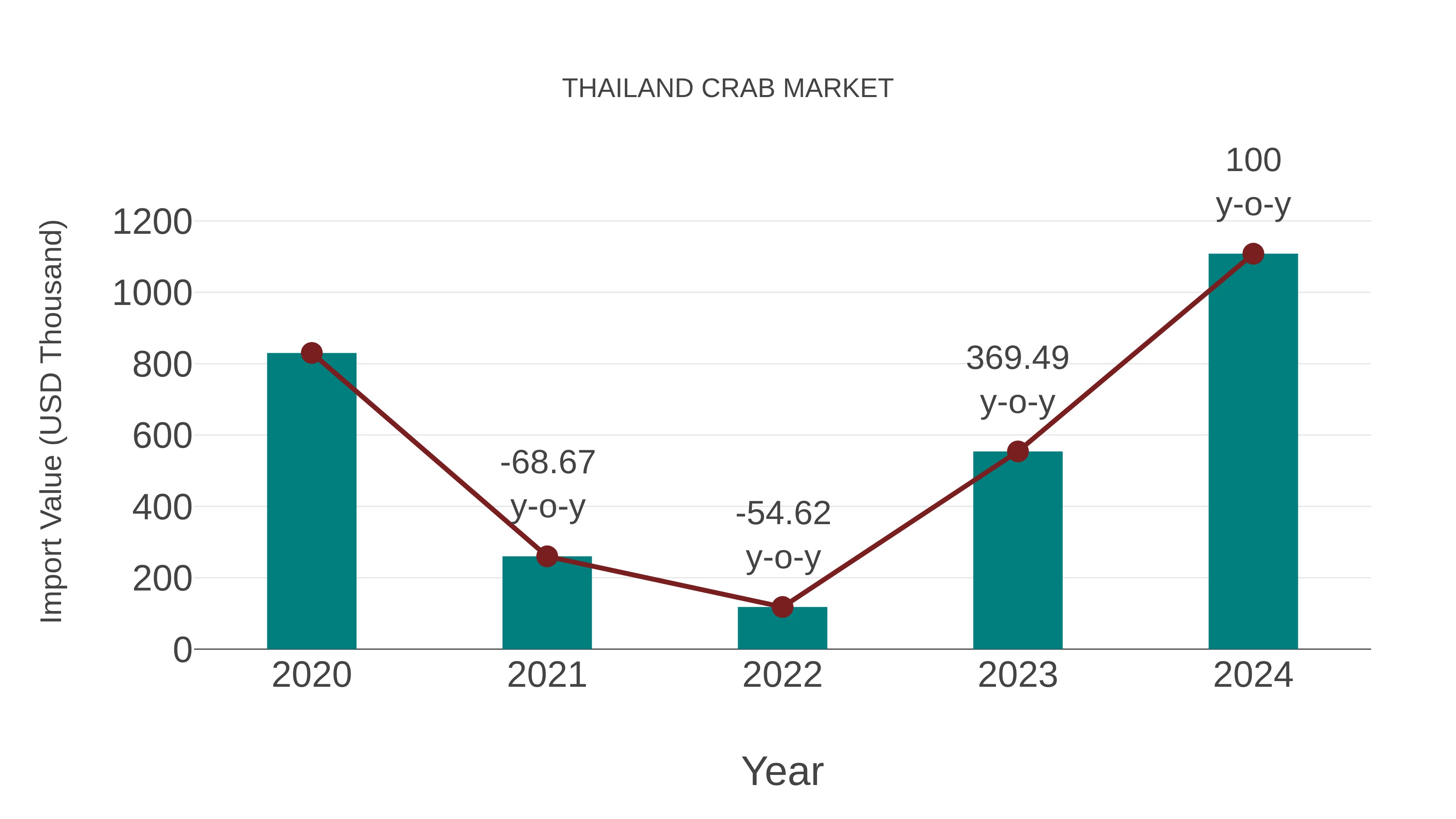
Thailand import trend for the Thailand crab market showed significant growth from 2023 to 2024, with a remarkable 100.0% increase. The compound annual growth rate (CAGR) from 2020 to 2024 stood at 7.49%. This surge in import momentum can be attributed to shifting consumer preferences towards seafood delicacies and increased international demand for Thailand crab products.
Crab Market: Thailand vs Top 5 Major Economies in 2027 (Asia)
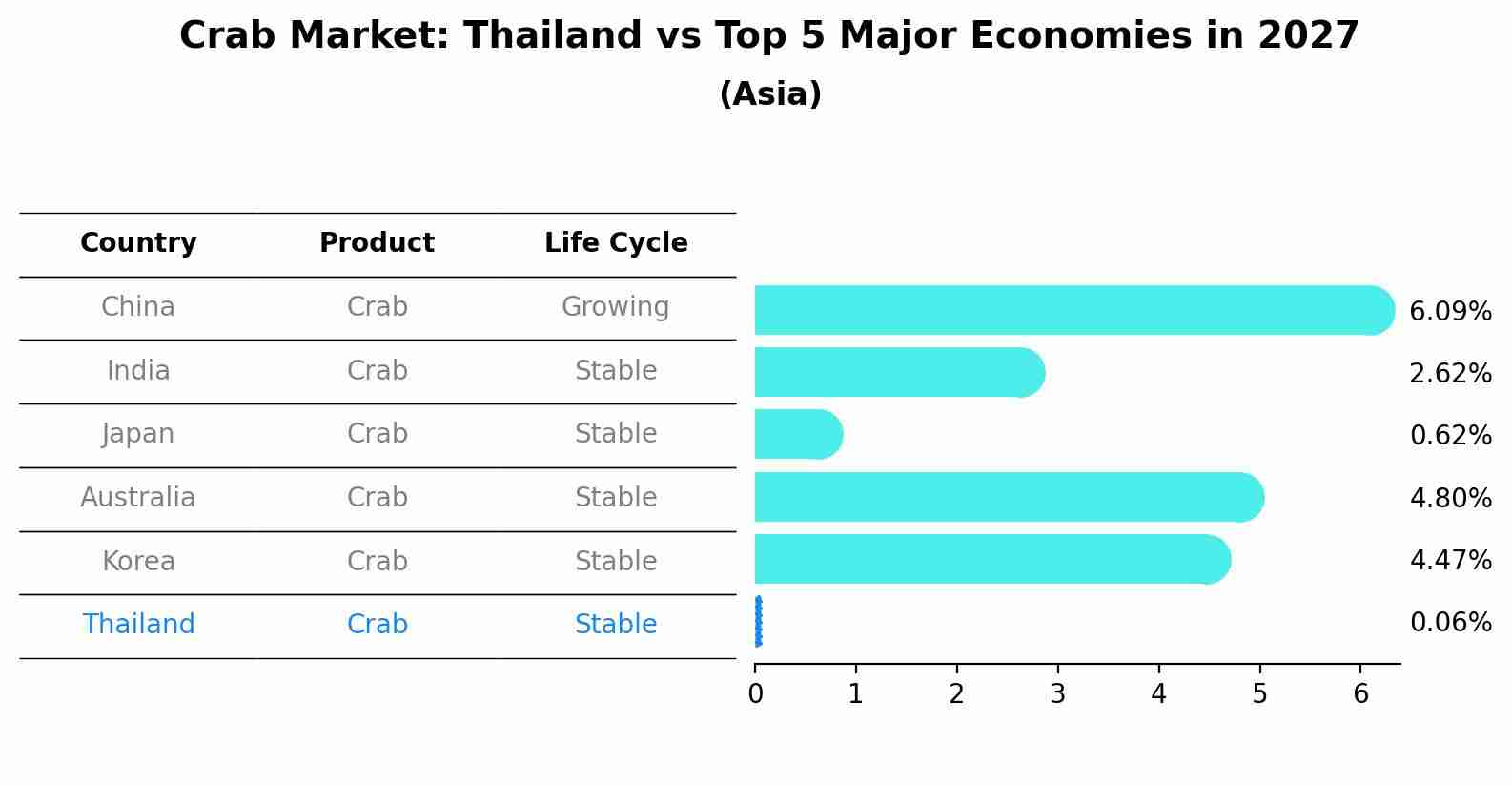
By 2027, Thailand's Crab market is forecasted to achieve a stable growth rate of 0.06%, with China leading the Asia region, followed by India, Japan, Australia and South Korea.
Thailand Crab Market Synopsis
The crab market size in Thailand was worth more than US$ 700 million in 2018 and is expected to grow significantly at a CAGR over 11.6% over the forecast period driven mainly by increasing exports with countries like Japan being major importers along with surge in domestic consumption owing to rising disposable income among consumers. Additionally factors such as availability through modern retail stores across cities including Bangkok & Chiang Mai etc., innovative product offerings like frozen packaged crabs or ready-to-eat marinades will fuel growth opportunities within this segment.
Drivers of the Market
The crab market in Thailand benefits from the country`s coastal location and rich marine resources. The demand for crab is driven by domestic consumption, as well as international export markets. As Thai cuisine gains popularity globally, the export of crab products, both live and processed, contributes to the growth of the market.
Challenges of the Market
Sustainability and overfishing are challenges in the crab market. Unsustainable fishing practices can lead to the depletion of crab populations and disrupt marine ecosystems. Implementing responsible fishing practices and ensuring the long-term health of crab populations is a challenge to maintain a balanced ecosystem.
COVID-19 Impact on the Market
The crab market experienced disruptions in both domestic consumption and exports due to the closure of restaurants and disruptions in international trade. The reduced demand impacted crab fisheries and related industries.
Key Players in the Market
The crab market in Thailand involves both small-scale fishermen and seafood processing companies. Local suppliers like Blue Star Seafood Co., Ltd. and Thai Foods Group offer a variety of crab products for domestic and export markets.
Key Highlights of the Report:
- Thailand Crab Market Outlook
- Market Size of Thailand Crab Market, 2025
- Forecast of Thailand Crab Market, 2032
- Historical Data and Forecast of Thailand Crab Revenues & Volume for the Period 2022-2032F
- Thailand Crab Market Trend Evolution
- Thailand Crab Market Drivers and Challenges
- Thailand Crab Price Trends
- Thailand Crab Porter's Five Forces
- Thailand Crab Industry Life Cycle
- Historical Data and Forecast of Thailand Crab Market Revenues & Volume By Type for the Period 2022-2032F
- Historical Data and Forecast of Thailand Crab Market Revenues & Volume By Blue Crab for the Period 2022-2032F
- Historical Data and Forecast of Thailand Crab Market Revenues & Volume By Chinese Mitten Crab for the Period 2022-2032F
- Historical Data and Forecast of Thailand Crab Market Revenues & Volume By Gazami Crab for the Period 2022-2032F
- Historical Data and Forecast of Thailand Crab Market Revenues & Volume By Others for the Period 2022-2032F
- Historical Data and Forecast of Thailand Crab Market Revenues & Volume By Form for the Period 2022-2032F
- Historical Data and Forecast of Thailand Crab Market Revenues & Volume By Frozen for the Period 2022-2032F
- Historical Data and Forecast of Thailand Crab Market Revenues & Volume By Canned for the Period 2022-2032F
- Historical Data and Forecast of Thailand Crab Market Revenues & Volume By Others for the Period 2022-2032F
- Thailand Crab Import Export Trade Statistics
- Market Opportunity Assessment By Type
- Market Opportunity Assessment By Form
- Thailand Crab Top Companies Market Share
- Thailand Crab Competitive Benchmarking By Technical and Operational Parameters
- Thailand Crab Company Profiles
- Thailand Crab Key Strategic Recommendations






































