Thailand Digital Signature Market Size & Growth Rate (2026-2032)
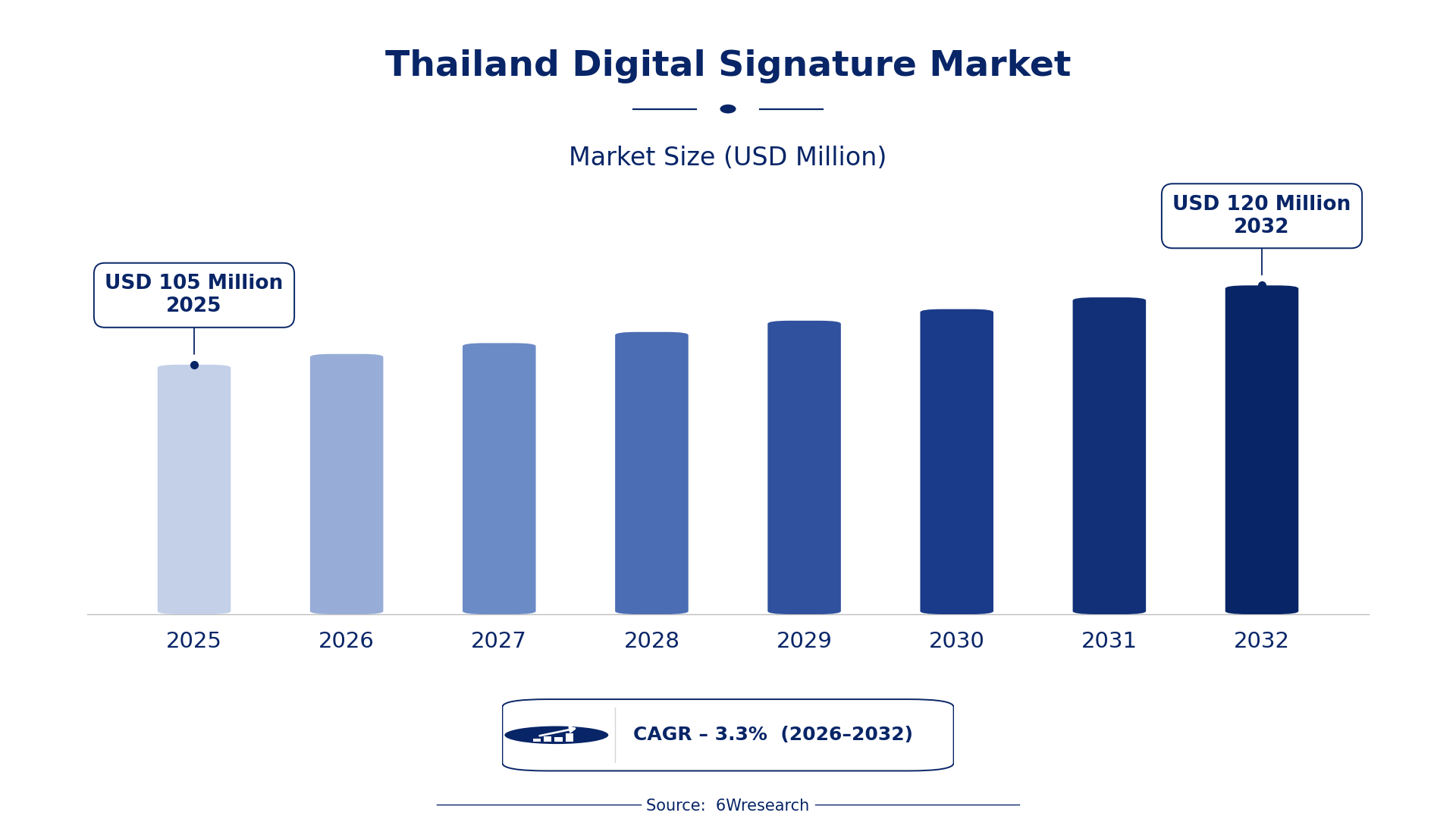
The Thailand Digital Signature Market was estimated at USD 105 Million in 2025 and is projected to reach USD 120 Million by 2032, growing at a CAGR of 3.3% from 2026 to 2032.
Thailand Digital Signature Market Synopsis
The strongest force currently shaping the Thailand Digital Signature Market is the burgeoning demand for secure electronic transactions. As businesses adapt to digital workflows, the necessity for legally binding signatures has surged, marking a critical turning point for various industries.
Organizations are increasingly aware that digital signatures not only streamline processes but also bolster security and compliance. As Thailand enhances its digital economy initiatives, the digital signature sector emerges as an essential component in driving efficiency in transactions.
Thailand Digital Signature Market Year-wise Growth Rate and Key Drivers
This graph illustrates the annual growth rates of the Thailand Digital Signature Market from 2021 to 2032, highlighting a steady upward trajectory and projected expansion over the forecast period.
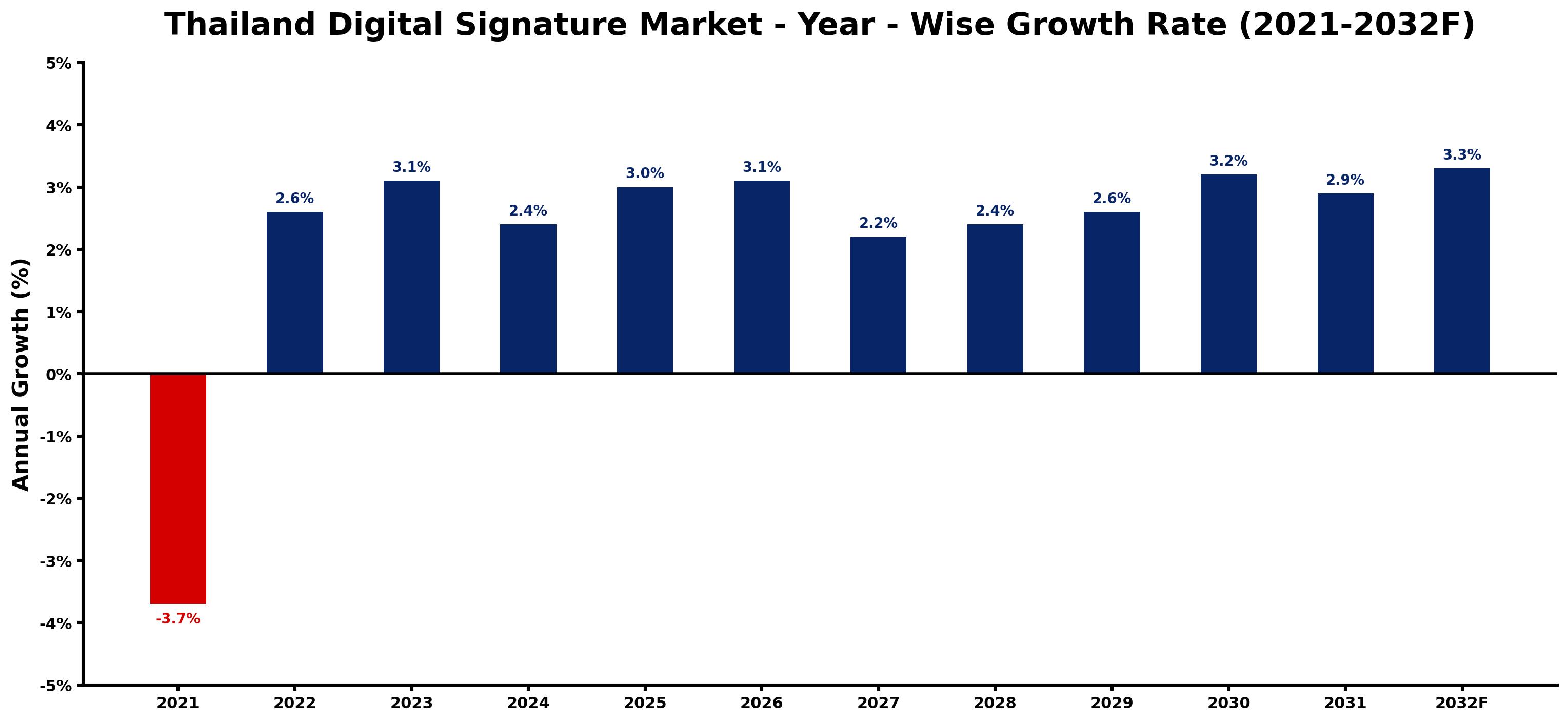
The table below presents the year‑wise growth rates along with the key drivers influencing the market
| Year | Growth Rate | Major Drivers |
| 2021 | -3.7% | Government delays in digital signature adoption initiatives. |
| 2022 | 2.6% | Thai government promotes e-Government initiatives with digital signatures. |
| 2023 | 3.1% | Increased demand for secure online transactions in commerce. |
| 2024 | 2.4% | National Cybersecurity Policy mandates stronger digital security measures. |
| 2025 | 3.0% | Growth of remote work boosts electronic contract adoption. |
| 2026 | 3.1% | Legal reforms support electronic signatures in various sectors. |
| 2027 | 2.2% | Rising consumer awareness of digital identity verification needs. |
| 2028 | 2.4% | Partnerships with tech firms enhance digital signature solutions. |
| 2029 | 2.6% | Increased integration of digital signatures in legal processes. |
| 2030 | 3.2% | Thai banks promote digital signatures for secure banking. |
| 2031 | 2.9% | E-commerce expansion leads to higher digital authentication needs. |
| 2032 | 3.3% | Regulatory frameworks encourage investment in digital security technologies. |
Note: Market size estimations and growth projections presented in this report are based on 6Wresearch's proprietary forecasting methodology, utilizing the latest available industry data, government publications, and primary research inputs.
Thailand Digital Signature Market Key Takeaways
Below are some of the specific key takeaways from the market, including:
- Rapid adoption of digital signatures across various sectors in Thailand.
- Increasing focus on security and compliance in electronic transactions.
- Government initiatives are fostering a supportive regulatory framework.
- The COVID-19 pandemic significantly accelerated market growth.
- Continuous technological advancements enhance digital signature solutions.
Evaluation of Restraints in Thailand Digital Signature Market
Despite the promising growth, the Thailand Digital Signature Market faces notable restraints. Traditional preferences for physical signatures linger, creating barriers to widespread acceptance. Additionally, there is a trust deficit concerning the security of digital signatures, which hinders adoption. Building a cohesive ecosystem that aligns with legal frameworks and industry standards requires collaborative efforts among technology providers, regulatory bodies, and businesses.
Thailand Digital Signature Market Trends
The market is witnessing various trends that influence demand and technology. For one, the rise of remote work has led to an increased reliance on digital signatures for document verification. Furthermore, businesses are gravitating towards comprehensive platforms that integrate various digital signature solutions, enhancing workflow efficiency. The focus on sustainability is also pushing companies to opt for paperless transactions, driving the digital signature adoption rate.
Thailand Digital Signature Market Opportunities
Significant growth and investment opportunities are present in the Thailand Digital Signature Market. As regulatory frameworks mature, businesses that innovate in secure digital transactions will likely capture a considerable market share. There's also an opening for customized digital signature solutions tailored to specific industries, which could serve unmet needs. Additionally, partnerships with technology providers can create synergies that further enhance market potential.
Government Initiatives in the Thailand Digital Signature Market
The Thai government is actively working to create a favorable regulatory environment for the Digital Signature Market. By prioritizing digital transformation and enhancing public-sector technology frameworks, these initiatives are essential in building trust and encouraging adoption among businesses and individuals.
- A national regulatory framework established in 2025, mandating secure digital signatures for e-commerce transactions.
- Currently ongoing initiatives include an upgrade to national digital infrastructure, facilitating access to secure digital signature solutions.
- Planned workshops and seminars aimed at educating businesses about the benefits of digital signatures, set to roll out in late 2026.
- A recently completed pilot program for government institutions to test and implement digital signatures in public service delivery.
- A future initiative to integrate digital signature capabilities within mobile applications for improved accessibility.
Future Insights of the Thailand Digital Signature Market
Looking ahead to 2026-2032, the Thailand Digital Signature Market is expected to evolve with technological advancements and regulatory refinements. The shift towards a fully digital economy will likely spur demand for versatile and compliant digital signature solutions. Companies that adapt to these changes and embrace innovation will play a crucial role in shaping the future of secure electronic transactions in Thailand.
Thailand Digital Signature Market Latest Developments
In the past 12-14 months, the Thailand Digital Signature Market has witnessed a flurry of activity, reflecting the sector’s urgent response to growing digital transaction needs. The pandemic prompted many organizations to adopt digital signatures to maintain operational continuity, setting the stage for ongoing development and enhancement of available solutions.
- A major technology vendor launched a comprehensive digital signature platform in early 2025, designed for small and medium enterprises.
- An initiative that began in mid-2025 focuses on integrating blockchain technology to enhance the security of digital signatures, currently underway.
- A partnership established in Q1 2026 between local firms to co-develop educational resources for businesses on digital signature best practices.
- An upcoming regulatory review expected to take place in late 2026 aims to streamline compliance requirements for digital transactions.
- A digital signature awareness campaign launched in early 2025, targeting various sectors to enhance understanding and utilization of electronic signatures.
Thailand Digital Signature Market - Key Attractiveness of the Report
- 10 Years of Market Numbers
- Historical Data Starting from 2022 to 2025
- Base Year: 2025
- Forecast Data until 2032
- Key Performance Indicators Impacting the Market
- Major Upcoming Developments and Projects
Key Highlights of the Report:
- Thailand Digital Signature Market Outlook
- Market Size of Thailand Digital Signature Market, 2025
- Forecast of Thailand Digital Signature Market, 2032
- Historical Data and Forecast of Thailand Digital Signature Revenues & Volume for the Period 2022-2032F
- Thailand Digital Signature Market Trend Evolution
- Thailand Digital Signature Market Drivers and Challenges
- Thailand Digital Signature Price Trends
- Thailand Digital Signature Porter's Five Forces
- Thailand Digital Signature Industry Life Cycle
- Historical Data and Forecast of Thailand Digital Signature Market Revenues & Volume By Component for the Period 2022-2032F
- Historical Data and Forecast of Thailand Digital Signature Market Revenues & Volume By Solutions for the Period 2022-2032F
- Historical Data and Forecast of Thailand Digital Signature Market Revenues & Volume By Services for the Period 2022-2032F
- Historical Data and Forecast of Thailand Digital Signature Market Revenues & Volume By Solution for the Period 2022-2032F
- Historical Data and Forecast of Thailand Digital Signature Market Revenues & Volume By Software for the Period 2022-2032F
- Historical Data and Forecast of Thailand Digital Signature Market Revenues & Volume By Hardware for the Period 2022-2032F
- Historical Data and Forecast of Thailand Digital Signature Market Revenues & Volume By Vertical for the Period 2022-2032F
- Historical Data and Forecast of Thailand Digital Signature Market Revenues & Volume By BFSI for the Period 2022-2032F
- Historical Data and Forecast of Thailand Digital Signature Market Revenues & Volume By Government for the Period 2022-2032F
- Historical Data and Forecast of Thailand Digital Signature Market Revenues & Volume By Defense for the Period 2022-2032F
- Historical Data and Forecast of Thailand Digital Signature Market Revenues & Volume By Legal for the Period 2022-2032F
- Historical Data and Forecast of Thailand Digital Signature Market Revenues & Volume By Real Estate for the Period 2022-2032F
- Historical Data and Forecast of Thailand Digital Signature Market Revenues & Volume By Organization Size for the Period 2022-2032F
- Historical Data and Forecast of Thailand Digital Signature Market Revenues & Volume By Large Enterprises for the Period 2022-2032F
- Historical Data and Forecast of Thailand Digital Signature Market Revenues & Volume By Small and Medium-Sized Enterprises (SMEs) for the Period 2022-2032F
- Historical Data and Forecast of Thailand Digital Signature Market Revenues & Volume By Deployment Mode for the Period 2022-2032F
- Historical Data and Forecast of Thailand Digital Signature Market Revenues & Volume By Cloud for the Period 2022-2032F
- Historical Data and Forecast of Thailand Digital Signature Market Revenues & Volume By On-Premises for the Period 2022-2032F
- Thailand Digital Signature Import Export Trade Statistics
- Market Opportunity Assessment By Component
- Market Opportunity Assessment By Solution
- Market Opportunity Assessment By Vertical
- Market Opportunity Assessment By Organization Size
- Market Opportunity Assessment By Deployment Mode
- Thailand Digital Signature Top Companies Market Share
- Thailand Digital Signature Competitive Benchmarking By Technical and Operational Parameters
- Thailand Digital Signature Company Profiles
- Thailand Digital Signature Key Strategic Recommendations






































