Thailand Electrical Equipment Market Summary
The thailand electrical equipment market was estimated at USD 196 Million in 2025 and is projected to reach USD 222 Million by 2032, growing at a CAGR of 2.7% from 2026 to 2032.
Thailand Electrical Equipment Market Year-wise Growth Rate and Key Drivers
This graph highlights how the Thailand Electrical Equipment Market has steadily grown over the past five years, supported by major growth factors.
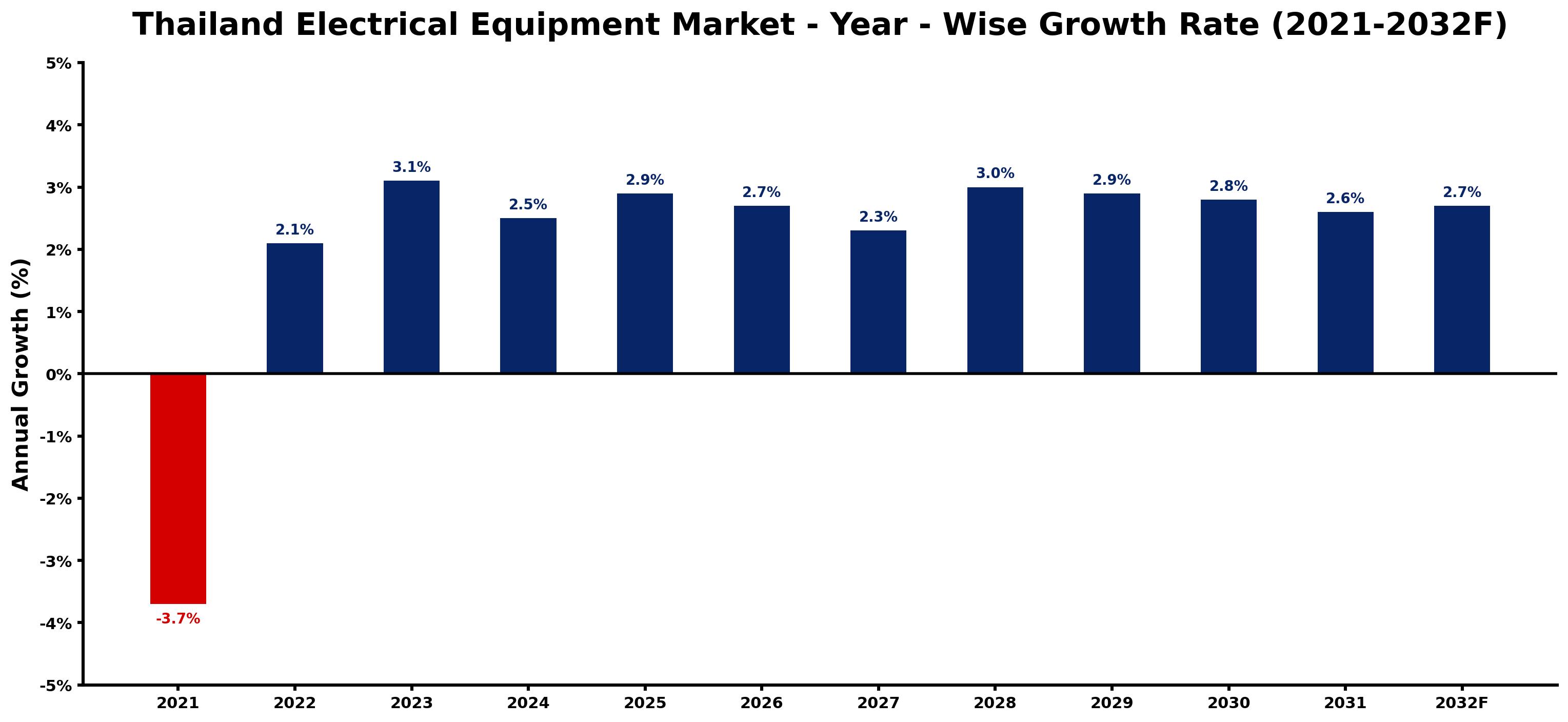
The table below presents the year wise growth rates along with the key drivers influencing the market
| Year | Growth Rate | Major Drivers |
| 2021 | -3.7% | Supply chain disruptions hindered manufacturing capabilities, leading to delays and increased costs in electrical equipment. |
| 2022 | 2.1% | Legacy copper grid failures prioritize upgrades to modern electrical infrastructure and smart solutions. |
| 2023 | 3.1% | Corporate shifts toward sustainability lead businesses to prioritize energy-efficient equipment purchases. |
| 2024 | 2.5% | Thailand's construction sector expands, driving demand for heavy-duty electrical equipment installations. |
| 2025 | 2.9% | Increased urbanization results in greater reliance on advanced electrical systems for smart cities. |
| 2026 | 2.7% | Technological innovation fosters the development of disruptive electrical solutions and smarter devices. |
| 2027 | 2.3% | Emerging e-commerce platforms require robust electrical infrastructures for enhanced logistical operations. |
| 2028 | 3.0% | Investment in renewable energy projects necessitates new electrical equipment for grid integration. |
| 2029 | 2.9% | Rural electrification efforts promote widespread distribution of affordable and efficient electrical products. |
| 2030 | 2.8% | The hospitality sector rebounds, demanding upgraded electrical systems for enhanced guest experiences. |
| 2031 | 2.6% | Rising consumer awareness around energy efficiency influences purchasing decisions for electrical goods. |
| 2032 | 2.7% | Integration of AI technologies in electrical equipment enhances functionality, attracting tech-savvy consumers. |
Note - Market size estimations and growth projections presented in this report are based on 6Wresearch's advanced forecasting approach, validated with industry datasets as of June 2026.
Thailand Electrical Equipment Market Synopsis
The Thailand Electrical Equipment Market is projected to reach 2.7% and witness significant growth during the forecast period (2026-2032). This growth is fueled by several intersecting factors, including the expansion of the electricity sector, increased investments in renewable energy sources such as solar and wind, and the ongoing trends in industrialization. Moreover, governmental initiatives aimed at fostering advancements in automation and digitization are expected to create favorable conditions for industry participants throughout the forecast period. However, challenges posed by rising competition from imported electrical goods, driven by lower labor costs and a price-sensitive consumer base, might hinder the market's expansion.
Thailand Electrical Equipment Market Growth Drivers
The demand for electrical equipment in Thailand is being primarily driven by the country's rising power generation capacity, which has been consistently improving over the years. The following factors highlight the key drivers of growth in this market:
- Investment in renewable energy is a significant contributor to market growth, as Thailand focuses on decreasing its dependence on fossil fuels and emphasizes solar and wind energy projects.
- Growing industrialization in Thailand is leading to increased demand for essential electrical components such as transformers, circuit breakers, and insulators, providing revenue growth opportunities for local manufacturers.
- Government policies aimed at enhancing the quality and reliability of electricity services are propelling the demand for advanced electrical equipment across various sectors.
- Technological advancements in automation and digitization are creating new demand for smart electrical solutions, enhancing operational efficiencies and optimizing energy usage.
- Urbanization and population growth are placing additional pressure on the existing electrical infrastructure, stimulating the need for timely upgrades and installation of new electrical equipment.
Thailand Electrical Equipment Market Challenges and Restraints
Despite the promising outlook, the Thailand Electrical Equipment Market faces several challenges that could restrain its growth. Some of these challenges include:
- Intense competition from low-cost imported products poses a significant threat to local manufacturers, potentially undermining their market positions and profitability.
- The presence of numerous unorganized players in the market has resulted in a lack of regulatory oversight, which can adversely affect the quality and safety standards of electrical equipment.
- Economic fluctuations and global market volatility can impact investment levels and consumer spending, thereby affecting overall demand for electrical equipment.
- Import dependencies for specific components may lead to supply chain vulnerabilities, particularly in times of international disruptions, impacting the availability of electrical products.
- Technological disparities between local manufacturers and their international counterparts can hinder competitiveness, making it challenging to keep pace with innovations in electrical technology.
Thailand Electrical Equipment Market Government Investment and Initiatives
The Thai government has recognized the necessity to enhance the electrical equipment sector through strategic investments and initiatives aimed at fostering growth and sustainability. Several initiatives include:
- Investment in infrastructure improvements, ensuring the expansion and modernization of the electricity supply network, which is critical for supporting industrial growth and urban development.
- Policy frameworks promoting renewable energy sources are expected to encourage additional investments in solar and wind power, ultimately increasing the demand for related electrical equipment.
- Government-led research and development initiatives are designed to spur innovation, particularly in smart grid technologies and energy-efficient solutions.
- Implementation of standards and certifications aimed at ensuring quality and safety in electrical equipment is being prioritized, thereby enhancing consumer confidence and market integrity.
- Public-private partnerships are being pursued to leverage resources and expertise in expanding the electrical infrastructure, facilitating a collaborative approach towards national energy goals.
Thailand Electrical Equipment Market Latest Developments (May 2025 - June 2026)
Recent developments in the Thailand Electrical Equipment Market indicate a growing commitment to innovation and sustainability. During the period from May 2025 to June 2026, there has been a noticeable shift towards the adoption of advanced technologies, especially in automation and smart electrical systems. Additionally, increased government focus on renewable energy projects has led to a surge in investments aimed at setting up solar and wind facilities, directly impacting the demand for electrical components. Industry stakeholders have also been working on partnerships to enhance their capabilities in producing energy-efficient equipment, in line with global environmental goals. Furthermore, initiatives aimed at improving supply chain resilience in response to past disruptions have gained momentum, ensuring a more reliable availability of electrical equipment in the local market.
Thailand Electrical Equipment Market - Key Attractiveness of the Report
- 10 Years of Market Numbers
- Historical Data Starting from 2022 to 2025
- Base Year: 2025
- Forecast Data until 2032
- Key Performance Indicators Impacting the Market
- Major Upcoming Developments and Projects
Key Highlights of the Report:
- Thailand Electrical Equipment Market Outlook
- Market Size of Thailand Electrical Equipment Market, 2025
- Forecast of Thailand Electrical Equipment Market, 2032
- Historical Data and Forecast of Thailand Electrical Equipment Revenues & Volume for the Period 2022-2032F
- Thailand Electrical Equipment Market Trend Evolution
- Thailand Electrical Equipment Market Drivers and Challenges
- Thailand Electrical Equipment Price Trends
- Thailand Electrical Equipment Porter's Five Forces
- Thailand Electrical Equipment Industry Life Cycle
- Historical Data and Forecast of Thailand Electrical Equipment Market Revenues & Volume By Types for the Period 2022-2032F
- Historical Data and Forecast of Thailand Electrical Equipment Market Revenues & Volume By Electronic and electrical wires and cables for the Period 2022-2032F
- Historical Data and Forecast of Thailand Electrical Equipment Market Revenues & Volume By Batteries and accumulators for the Period 2022-2032F
- Historical Data and Forecast of Thailand Electrical Equipment Market Revenues & Volume By Wiring devices for the Period 2022-2032F
- Historical Data and Forecast of Thailand Electrical Equipment Market Revenues & Volume By Electric lighting equipment for the Period 2022-2032F
- Historical Data and Forecast of Thailand Electrical Equipment Market Revenues & Volume By Others for the Period 2022-2032F
- Historical Data and Forecast of Thailand Electrical Equipment Market Revenues & Volume By Applications for the Period 2022-2032F
- Historical Data and Forecast of Thailand Electrical Equipment Market Revenues & Volume By Residential end-users for the Period 2022-2032F
- Historical Data and Forecast of Thailand Electrical Equipment Market Revenues & Volume By Non-residential end-users for the Period 2022-2032F
- Thailand Electrical Equipment Import Export Trade Statistics
- Market Opportunity Assessment By Types
- Market Opportunity Assessment By Applications
- Thailand Electrical Equipment Top Companies Market Share
- Thailand Electrical Equipment Competitive Benchmarking By Technical and Operational Parameters
- Thailand Electrical Equipment Company Profiles
- Thailand Electrical Equipment Key Strategic Recommendations






































