Thailand Fish Powder Market: Import Trend Analysis
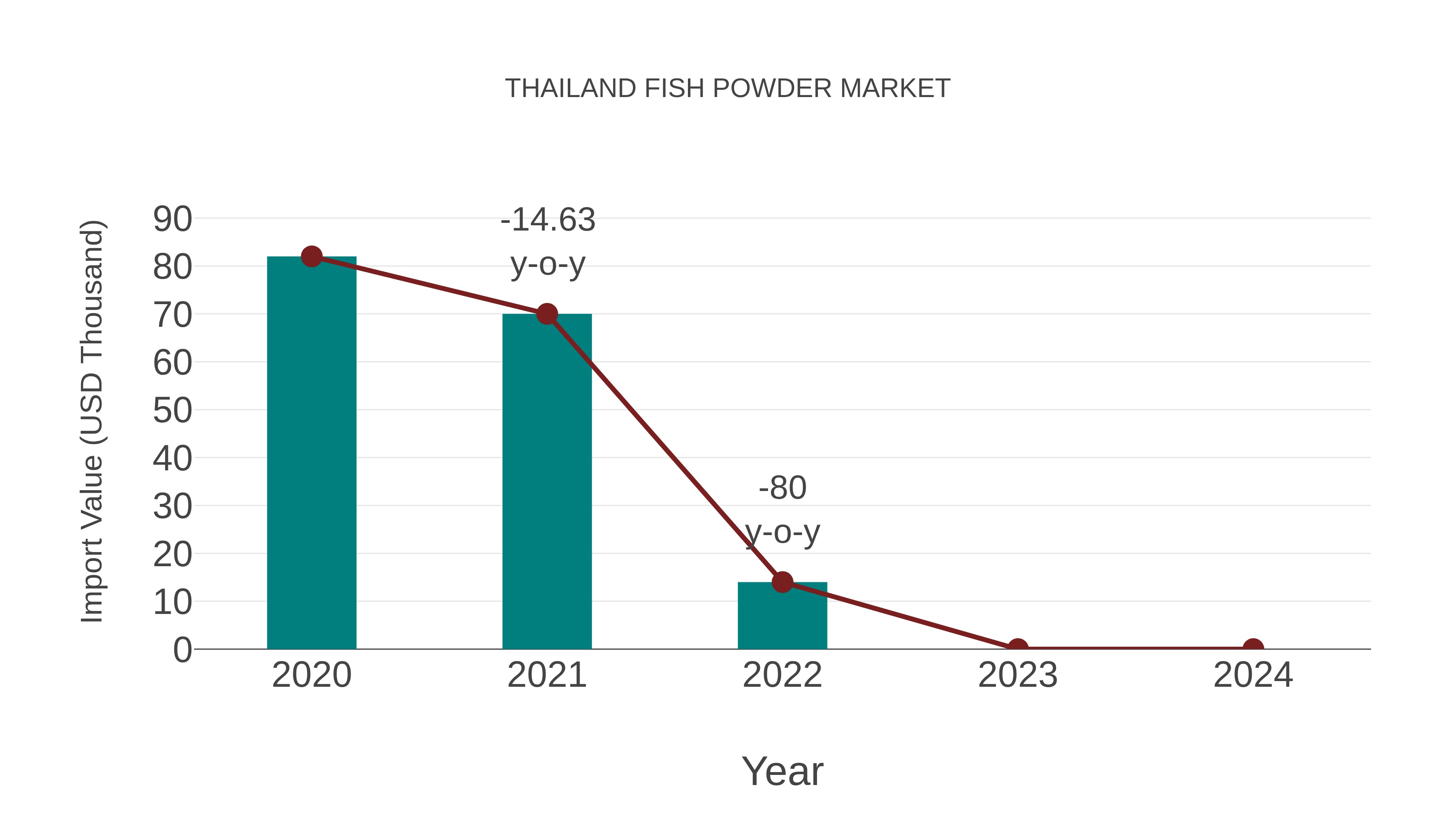
Thailand import trend for fish powder from 2020 to 2024 experienced a negative Compound Annual Growth Rate (CAGR) of -58.68%. This steep decline suggests a significant drop in import momentum, possibly indicating a shift in demand dynamics or market instability affecting trade performance.
Thailand Fish Powder Market Overview
The Thailand Fish Powder Market is experiencing steady growth driven by the increasing demand for high-quality fish-based protein sources in various industries such as aquaculture, animal feed, and food processing. Fish powder, derived from fish processing waste or whole fish, is rich in nutrients like protein, omega-3 fatty acids, and minerals, making it a popular ingredient. The market is also benefiting from the rising awareness of the health benefits associated with fish consumption and the sustainable utilization of fish resources. Key players in the Thailand Fish Powder Market include Thai Union Group, Thai Union Ingredients, and other local and international manufacturers. The market is expected to continue its growth trajectory due to the expanding applications of fish powder in pet food, cosmetics, and pharmaceuticals industries.
Thailand Fish Powder Market Trends and Opportunities
The Thailand Fish Powder Market is experiencing growth due to increasing consumer awareness of the health benefits associated with fish-based products. The market is witnessing a trend towards the use of fish powder as a versatile ingredient in various food applications, including snacks, seasonings, and functional beverages. Opportunities lie in the rising demand for natural and sustainable ingredients, driving the popularity of fish powder as a clean-label, high-protein option. Additionally, the growing focus on aquaculture in Thailand presents opportunities for fish powder manufacturers to source quality raw materials locally, reducing costs and ensuring product traceability. Collaborations with food manufacturers and retailers to develop innovative fish powder-based products could further drive market expansion and differentiation in the competitive landscape.
Thailand Fish Powder Market Challenges
In the Thailand Fish Powder Market, some of the key challenges include fluctuating raw material prices, competition from alternative protein sources, and concerns about sustainability and overfishing. The volatility of fish prices can impact the cost of production and profit margins for fish powder manufacturers. Additionally, the market faces competition from plant-based protein sources, which are gaining popularity among health-conscious consumers. Sustainability is a growing concern as the demand for fish powder continues to rise, leading to potential issues with overfishing and environmental impact. To address these challenges, companies in the Thailand Fish Powder Market may need to focus on diversifying their product offerings, implementing sustainable sourcing practices, and educating consumers about the benefits of fish powder as a protein source.
Thailand Fish Powder Market Drivers
The Thailand Fish Powder Market is primarily driven by the increasing demand for high-quality animal feed ingredients due to the growing aquaculture industry in the region. Fish powder is valued for its nutritional content, including proteins, vitamins, and minerals, making it a popular choice for feed manufacturers looking to enhance the health and growth of aquatic animals. Additionally, the rising awareness among farmers about the benefits of using fish powder in feed formulations for improved animal performance and overall farm productivity is boosting market growth. Moreover, the sustainable sourcing of fish by-products for producing fish powder aligns with the industry`s focus on environmental sustainability, further driving market expansion in Thailand.
Thailand Fish Powder Market Government Policies
In Thailand, the Fish Powder Market is regulated by the Department of Fisheries under the Ministry of Agriculture and Cooperatives. The government has implemented policies to ensure the sustainability of fish stocks, promote responsible fishing practices, and maintain quality standards in fish powder production. These policies include licensing requirements for fish powder manufacturers, monitoring of fishing activities to prevent overfishing, and regular inspections of processing facilities to uphold food safety and hygiene standards. Additionally, the government provides support for research and development initiatives aimed at enhancing the competitiveness of the fish powder industry, as well as promoting international trade agreements to expand market access for Thai fish powder products.
Thailand Fish Powder Market Future Outlook
The future outlook for the Thailand Fish Powder Market appears promising, driven by factors such as the increasing demand for high-protein animal feed, rising awareness about the benefits of fish-based products, and the growth of the aquaculture industry in the region. The market is expected to witness steady growth due to the versatility and nutritional value of fish powder, which is widely used in aquafeed, pet food, and fertilizer production. Additionally, technological advancements in fish processing methods and the emphasis on sustainable sourcing practices are likely to further boost market growth. Overall, the Thailand Fish Powder Market is anticipated to expand as consumers increasingly prioritize healthy and sustainable food options, presenting opportunities for manufacturers and suppliers in the coming years.
Key Highlights of the Report:
- Thailand Fish Powder Market Outlook
- Market Size of Thailand Fish Powder Market, 2025
- Forecast of Thailand Fish Powder Market, 2032
- Historical Data and Forecast of Thailand Fish Powder Revenues & Volume for the Period 2022 - 2032F
- Thailand Fish Powder Market Trend Evolution
- Thailand Fish Powder Market Drivers and Challenges
- Thailand Fish Powder Price Trends
- Thailand Fish Powder Porter's Five Forces
- Thailand Fish Powder Industry Life Cycle
- Historical Data and Forecast of Thailand Fish Powder Market Revenues & Volume By Source for the Period 2022 - 2032F
- Historical Data and Forecast of Thailand Fish Powder Market Revenues & Volume By Whole Fish for the Period 2022 - 2032F
- Historical Data and Forecast of Thailand Fish Powder Market Revenues & Volume By By-Product for the Period 2022 - 2032F
- Historical Data and Forecast of Thailand Fish Powder Market Revenues & Volume By Application for the Period 2022 - 2032F
- Historical Data and Forecast of Thailand Fish Powder Market Revenues & Volume By Swine for the Period 2022 - 2032F
- Historical Data and Forecast of Thailand Fish Powder Market Revenues & Volume By Aquaculture for the Period 2022 - 2032F
- Historical Data and Forecast of Thailand Fish Powder Market Revenues & Volume By Poultry for the Period 2022 - 2032F
- Historical Data and Forecast of Thailand Fish Powder Market Revenues & Volume By Others for the Period 2022 - 2032F
- Thailand Fish Powder Import Export Trade Statistics
- Market Opportunity Assessment By Source
- Market Opportunity Assessment By Application
- Thailand Fish Powder Top Companies Market Share
- Thailand Fish Powder Competitive Benchmarking By Technical and Operational Parameters
- Thailand Fish Powder Company Profiles
- Thailand Fish Powder Key Strategic Recommendations






































