Thailand Insurance Telematics Market Size & Growth Rate (2026-2032)
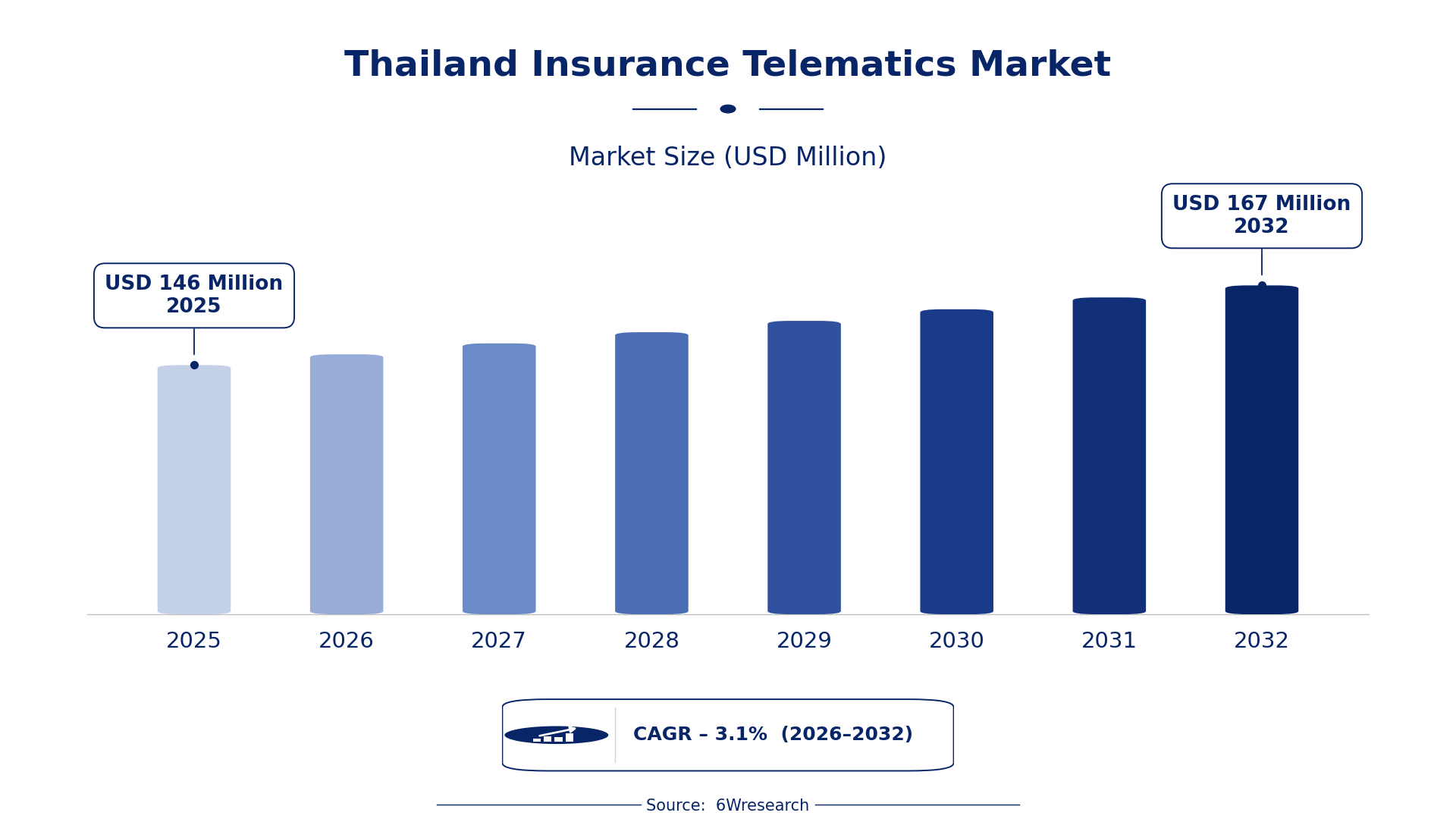
The Thailand Insurance Telematics Market was estimated at USD 146 Million in 2025 and is projected to reach USD 167 Million by 2032, growing at a CAGR of 3.1% from 2026 to 2032.
Thailand Insurance Telematics Market Synopsis
The rapid integration of telematics in the insurance sector is redefining how insurers assess risk and tailor policies in Thailand. Telematics data provides critical insights into driving behavior, enabling insurance companies to craft personalized coverage options that reflect individual risk profiles.
As consumers increasingly gravitate towards usage-based insurance models, the demand for telematics solutions continues to rise. This shift is not just about adopting new technology; it’s about reshaping customer expectations and fostering a more engaged relationship between insurers and policyholders.
Thailand Insurance Telematics Market Year-wise Growth Rate and Key Drivers
This graph illustrates the annual growth rates of the Thailand Insurance Telematics Market from 2021 to 2032, highlighting a steady upward trajectory and projected expansion over the forecast period.
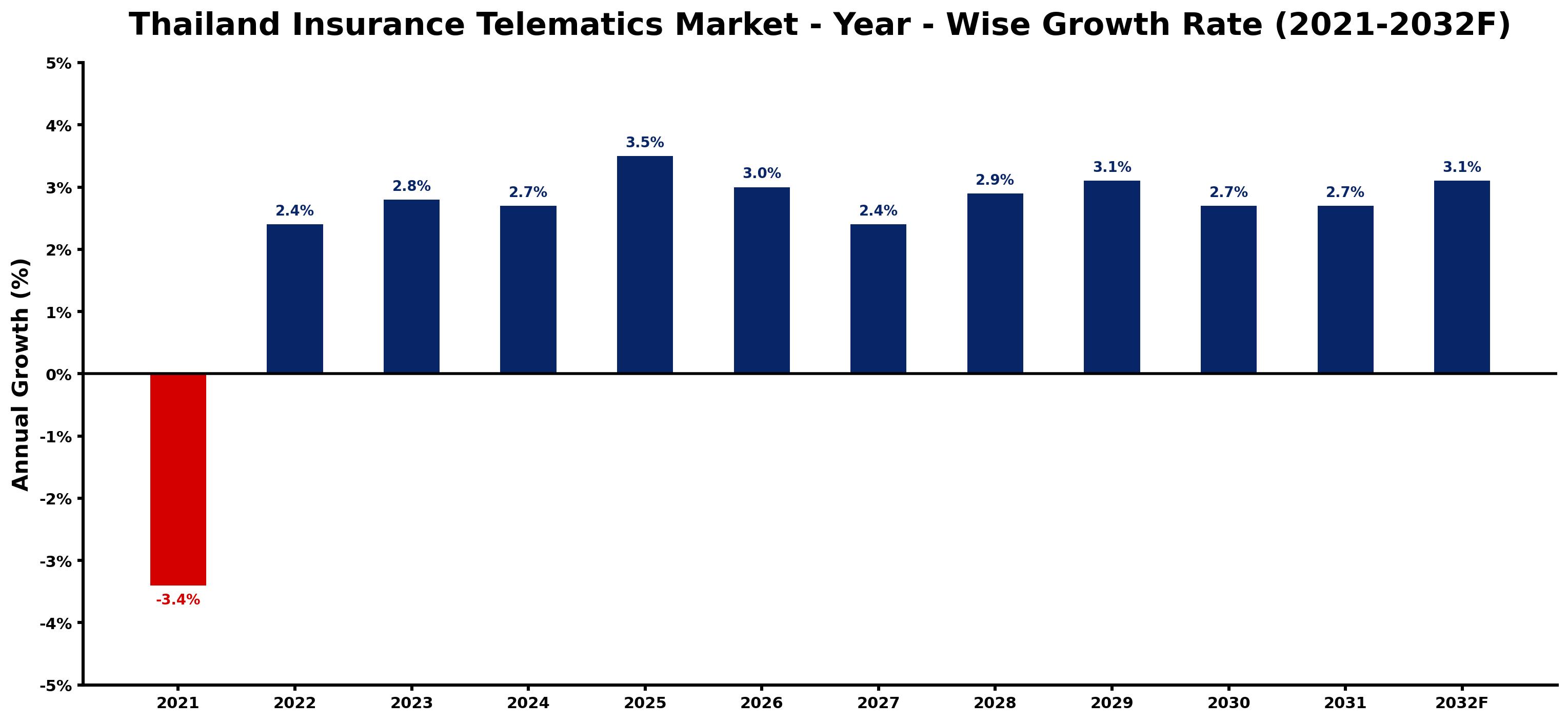
The table below presents the year‑wise growth rates along with the key drivers influencing the market
| Year | Growth Rate | Major Drivers |
| 2021 | -3.4% | Limited regulatory framework from the Office of Insurance Commission |
| 2022 | 2.4% | Thai government incentives for eco-friendly driving behaviors. |
| 2023 | 2.8% | Rising smartphone penetration enhancing telematics adoption. |
| 2024 | 2.7% | Increased road safety regulations driving telematics integration. |
| 2025 | 3.5% | Growth in ride-sharing services boosting insurance telematics demand. |
| 2026 | 3.0% | Surge in usage-based insurance policies among drivers. |
| 2027 | 2.4% | Local telematics firms developing innovative tracking technologies. |
| 2028 | 2.9% | Expanding automotive sector leading to telematics investments. |
| 2029 | 3.1% | Focus on reducing traffic accidents through telematics data. |
| 2030 | 2.7% | Consumer awareness of telematics benefits rising in Thailand. |
| 2031 | 2.7% | Insurance regulatory support for telematics standardization efforts. |
| 2032 | 3.1% | Emerging partnerships between insurers and telematics technology providers. |
Note: Market size estimations and growth projections presented in this report are based on 6Wresearch's proprietary forecasting methodology, utilizing the latest available industry data, government publications, and primary research inputs.
Thailand Insurance Telematics Market Key Takeaways
Below are some of the specific key takeaways from the market, including:
- The market is leveraging telematics to enhance risk assessment capabilities.
- Consumer demand for personalized insurance products is on the rise.
- Data privacy concerns are a significant hurdle for broader telematics adoption.
- COVID-19 accelerated the shift towards usage-based insurance models.
- Key technological advancements are driving innovation in telematics solutions.
Evaluation of Restraints in Thailand Insurance Telematics Market
Despite its potential, the Thailand Insurance Telematics market faces notable restraints. Customer acceptance remains a key barrier, primarily due to concerns around data privacy and how driving data will influence insurance premiums. Many drivers are apprehensive about sharing personal driving information, fearing that it could lead to higher costs rather than benefits. This hesitance can stifle growth unless insurers can effectively communicate the advantages of telematics and ensure robust data protection measures are in place.
Thailand Insurance Telematics Market Trends
Several trends are currently shaping the Thailand Insurance Telematics market. The movement towards increased customization in insurance offerings is driving insurers to adopt telematics solutions. As technology becomes more accessible, insurers are investing in data analytics to better understand customer behavior and preferences. Additionally, the push for eco-friendly driving habits has spurred interest in telematics systems that monitor fuel efficiency and carbon emissions, aligning insurance products with sustainability goals.
Thailand Insurance Telematics Market Opportunities
There are significant opportunities for growth within the Thailand Insurance Telematics market. The rising trend of electric vehicles (EVs) offers insurers a unique avenue to develop tailored insurance products that cater specifically to EV owners. on top of that, partnerships between insurance companies and technology providers can enhance the development of innovative telematics solutions. The ongoing digital transformation in the insurance sector presents a fertile ground for new entrants and established players alike to capitalize on evolving consumer needs.
Government Initiatives in the Thailand Insurance Telematics Market
Government policy plays a crucial role in shaping the Thailand Insurance Telematics market. As regulatory frameworks evolve to accommodate technological advancements, the government is focused on enhancing digital infrastructure and ensuring consumer protection. This regulatory backing is vital for fostering trust and encouraging widespread adoption of telematics solutions within the insurance sector.
- A regulatory framework introduced in 2025 mandating data transparency for telematics devices.
- A national digital infrastructure upgrade programme currently underway to enhance connectivity for telematics applications.
- A public-private initiative planned for 2027 aimed at promoting telematics adoption among commercial fleet operators.
- Recently completed workshops to educate insurers on best practices for data privacy and consumer engagement.
Future Insights of the Thailand Insurance Telematics Market
Looking ahead to 2026-2032, the Thailand Insurance Telematics market is set to evolve rapidly. The integration of artificial intelligence and machine learning into telematics solutions will likely enhance risk assessment accuracy and customer experience. As insurers continue to adopt more sophisticated data analytics, the ability to tailor insurance products to individual needs will improve, driving customer loyalty and market growth. The push for digital transformation within the insurance industry will further solidify telematics as a cornerstone of modern insurance practices.
Thailand Insurance Telematics Market Latest Developments
In the past year, the Thailand Insurance Telematics market has witnessed several key developments. Insurers are increasingly recognizing the value of telematics data in refining their offerings and enhancing customer engagement. As more players enter the field, competition is driving innovation and improving service delivery.
- A major technology vendor launched a new telematics platform in Q1 2025, designed to integrate seamlessly with existing insurance systems.
- An initiative that began in mid-2025 and remains underway focuses on developing user-friendly mobile applications for policyholders to access telematics data.
- A partnership between a leading regional operator and an insurance firm was announced in late 2025 to co-develop telematics solutions for fleet management.
- A rollout expected to begin in the second half of 2026 will introduce telematics-based discounts for safe driving practices among policyholders.
Thailand Insurance Telematics Market - Key Attractiveness of the Report
- 10 Years of Market Numbers
- Historical Data Starting from 2022 to 2025
- Base Year: 2025
- Forecast Data until 2032
- Key Performance Indicators Impacting the Market
- Major Upcoming Developments and Projects
Key Highlights of the Report:
- Thailand Insurance Telematics Market Outlook
- Market Size of Thailand Insurance Telematics Market, 2025
- Forecast of Thailand Insurance Telematics Market, 2032
- Historical Data and Forecast of Thailand Insurance Telematics Revenues & Volume for the Period 2022-2032F
- Thailand Insurance Telematics Market Trend Evolution
- Thailand Insurance Telematics Market Drivers and Challenges
- Thailand Insurance Telematics Price Trends
- Thailand Insurance Telematics Porter's Five Forces
- Thailand Insurance Telematics Industry Life Cycle
- Historical Data and Forecast of Thailand Insurance Telematics Market Revenues & Volume By End User for the Period 2022-2032F
- Historical Data and Forecast of Thailand Insurance Telematics Market Revenues & Volume By Small for the Period 2022-2032F
- Historical Data and Forecast of Thailand Insurance Telematics Market Revenues & Volume By Medium Enterprises for the Period 2022-2032F
- Historical Data and Forecast of Thailand Insurance Telematics Market Revenues & Volume By Large Enterprises for the Period 2022-2032F
- Historical Data and Forecast of Thailand Insurance Telematics Market Revenues & Volume By Deployment Type for the Period 2022-2032F
- Historical Data and Forecast of Thailand Insurance Telematics Market Revenues & Volume By Cloud for the Period 2022-2032F
- Historical Data and Forecast of Thailand Insurance Telematics Market Revenues & Volume By On-Premises for the Period 2022-2032F
- Historical Data and Forecast of Thailand Insurance Telematics Market Revenues & Volume By Organization Size for the Period 2022-2032F
- Historical Data and Forecast of Thailand Insurance Telematics Market Revenues & Volume By Small and Medium Enterprises (SMEs) for the Period 2022-2032F
- Historical Data and Forecast of Thailand Insurance Telematics Market Revenues & Volume By Large Enterprises for the Period 2022-2032F
- Thailand Insurance Telematics Import Export Trade Statistics
- Market Opportunity Assessment By End User
- Market Opportunity Assessment By Deployment Type
- Market Opportunity Assessment By Organization Size
- Thailand Insurance Telematics Top Companies Market Share
- Thailand Insurance Telematics Competitive Benchmarking By Technical and Operational Parameters
- Thailand Insurance Telematics Company Profiles
- Thailand Insurance Telematics Key Strategic Recommendations






































