Thailand Licensed Merchandise Market Size, Share & Growth Rate
The Thailand Licensed Merchandise Market was estimated at USD 92 Million in 2025 and is projected to reach USD 105 Million by 2032, growing at a CAGR of 1.9% from 2026 to 2032. This growth trajectory is fueled by the increasing popularity of licensed brands, particularly from the entertainment and sports sectors, as well as a growing consumer base eager to embrace products that showcase their favorite characters and franchises. Additionally, the rise of e-commerce platforms has made it easier for consumers to access a diverse range of licensed merchandise, supporting continued market expansion.
Thailand Licensed Merchandise Market Year-wise Growth Rate and Key Drivers
This graph highlights how the Thailand Licensed Merchandise Market has steadily grown over the years, supported by major growth factors.
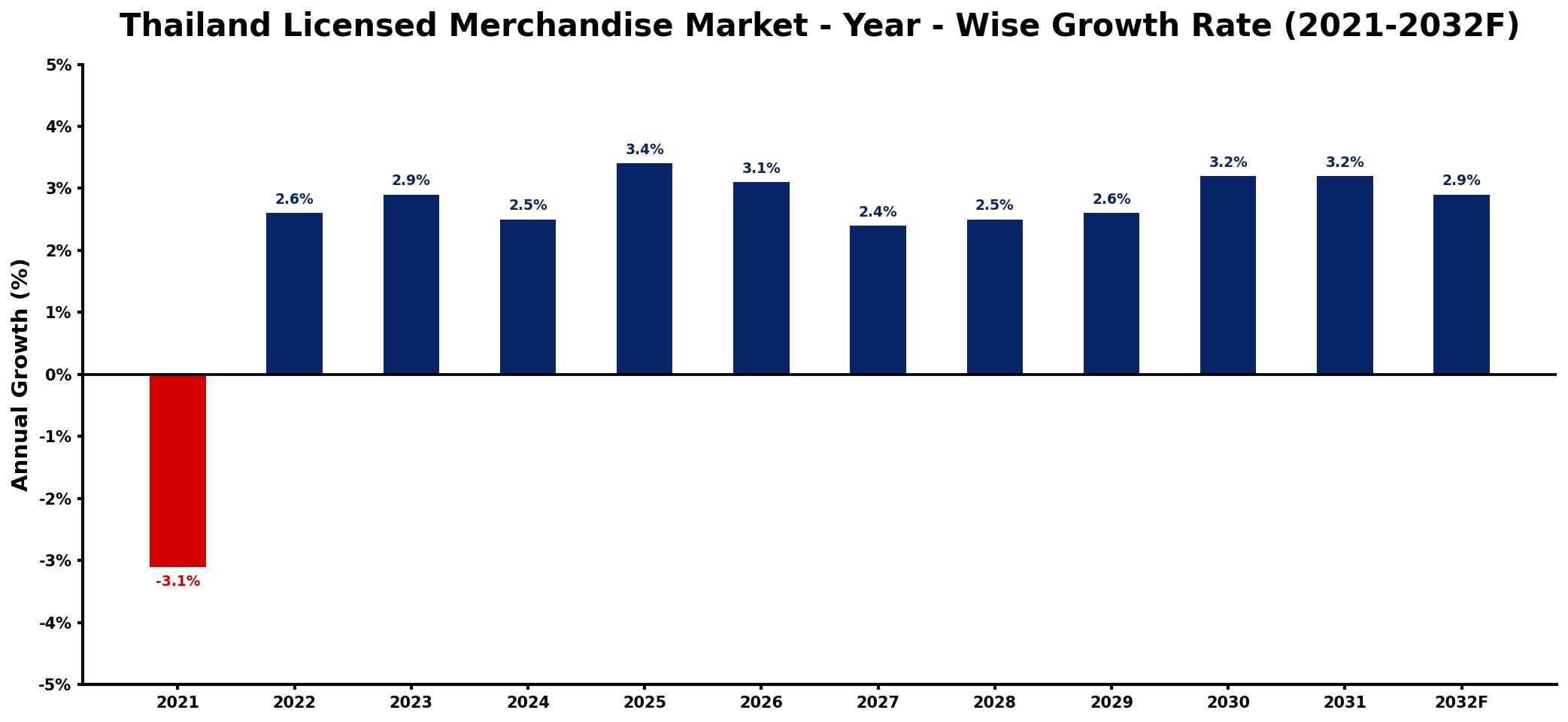
The table below presents the year‑wise growth rates along with the key drivers influencing the market
| Year | Growth Rate | Major Drivers |
| 2021 | -3.1% | decrease in consumer spending habits |
| 2022 | 2.6% | rising popularity of collectibles |
| 2023 | 2.9% | increased brand collaborations emerging |
| 2024 | 2.5% | expansion of retail distribution channels |
| 2025 | 3.4% | growing interest in pop culture |
| 2026 | 3.1% | enhanced online shopping experiences |
| 2027 | 2.4% | increased engagement through social media |
| 2028 | 2.5% | diversification of product offerings |
| 2029 | 2.6% | strengthened partnerships with influencers |
| 2030 | 3.2% | growing trends in nostalgia marketing |
| 2031 | 3.2% | rising demand for unique items |
| 2032 | 2.9% | expansion into new demographics |
Note: Market size estimations and growth projections presented in this report are based on 6Wresearch's proprietary forecasting methodology, utilizing the latest available industry data, government publications, and primary research inputs.
Thailand Licensed Merchandise Market Synopsis
The most significant force shaping the Thailand Licensed Merchandise Market today is the evolving landscape of consumer preferences that favor branded products tied to popular culture. Consumers are increasingly drawn to merchandise that reflects their personal identities and affiliations, driving demand across categories from apparel to collectibles.
As the market expands, the emergence of new licensing agreements and the influence of pop culture phenomena, including movie releases and themed events, keep consumer interest at an all-time high. This dynamic nature encourages manufacturers and retailers to innovate continuously, offering fresh and engaging products that resonate with consumers.
Thailand Licensed Merchandise Market Key Takeaways
- Strong growth is expected due to rising interest in licensed brands across various consumer segments.
- The shift towards e-commerce has significantly changed the shopping habits of consumers, enhancing product accessibility.
- New licensing agreements and collaborations frequently emerge, keeping the market vibrant and competitive.
- Consumer preferences increasingly lean towards products that showcase popular franchises from entertainment and sports.
- The impact of pop culture events is vital, with conventions and expos driving demand for collectible items.
Evaluation of Restraints in Thailand Licensed Merchandise Market
While the Thailand Licensed Merchandise Market is growing, it faces certain restraints that can hinder its overall potential. Licensing agreements often come with complexities that can limit the scope for some manufacturers, as navigating intellectual property rights requires careful legal considerations. Additionally, fluctuations in consumer economic sentiment can lead to shifts in spending patterns, impacting the sales of discretionary items like licensed merchandise. As companies adapt to these constraints, ensuring a balance between legal compliance and consumer engagement will be crucial for sustained market growth.
Thailand Licensed Merchandise Market Trends
Current trends in the Thailand Licensed Merchandise Market include a pronounced shift towards sustainable and ethically produced merchandise. Consumers are increasingly aware of the environmental impact of their purchases, prompting brands to adopt more responsible practices. Furthermore, the integration of digital and interactive technologies in merchandise—such as augmented reality experiences tied to products—has begun to reshape the way consumers engage with licensed items. This trend not only enhances the appeal of products but also deepens consumer loyalty.
Thailand Licensed Merchandise Market Opportunities
Opportunities for growth within the Thailand Licensed Merchandise Market lie primarily in expanding e-commerce capabilities and targeting niche markets. As the online shopping landscape continues to evolve, brands that invest in robust digital marketing strategies and enhance their online storefronts will likely see substantial benefits. Additionally, tapping into local cultural influences and popular regional franchises can attract a dedicated consumer base eager for unique licensed merchandise. Leveraging themed events, including virtual and in-person conventions, also presents a significant opportunity for brands to engage directly with consumers and elevate their presence in the market.
Government Initiatives in the Thailand Licensed Merchandise Market
The Thai government recognizes the importance of intellectual property rights in fostering a thriving licensed merchandise market. Initiatives aimed at promoting local talent and brands are being rolled out, alongside programs that support compliance with licensing regulations. Efforts to enhance the digital economy also benefit e-commerce platforms, providing a more favorable environment for online sales of licensed products. These government actions are crucial in creating a robust framework that supports both local and international players in the licensed merchandise sector.
Future Insights of the Thailand Licensed Merchandise Market
Looking ahead to 2026-2032, the Thailand Licensed Merchandise Market is poised for steady growth. With an increasingly tech-savvy consumer base and the continuous expansion of digital channels, brands that leverage technology to engage with consumers are likely to thrive. Additionally, as pop culture phenomena evolve, so too will the opportunities for innovative licensing agreements that appeal to both new and established fan bases. The emphasis on sustainability will also shape product development and marketing strategies in the coming years, ensuring that the market remains responsive to consumer values.
Thailand Licensed Merchandise Market Latest Developments (2025 - 2026)
In recent months, the Thailand Licensed Merchandise Market has seen a surge in collaborations between local brands and global franchises, expanding the diversity of products available to consumers. E-commerce platforms have reported increased sales as brands enhance their digital marketing strategies to reach targeted audiences. Additionally, pop culture events, both virtual and physical, have resumed, significantly boosting engagement and the demand for collectible items. This revitalization of events is key to rekindling consumer enthusiasm for licensed merchandise.
Thailand Licensed Merchandise Market - Key Attractiveness of the Report
- 10 Years of Market Numbers
- Historical Data Starting from 2022 to 2025
- Base Year: 2025
- Forecast Data until 2032
- Key Performance Indicators Impacting the Market
- Major Upcoming Developments and Projects
Key Highlights of the Report:
- Thailand Licensed Merchandise Market Outlook
- Market Size of Thailand Licensed Merchandise Market, 2025
- Forecast of Thailand Licensed Merchandise Market, 2032
- Historical Data and Forecast of Thailand Licensed Merchandise Revenues & Volume for the Period 2022-2032F
- Thailand Licensed Merchandise Market Trend Evolution
- Thailand Licensed Merchandise Market Drivers and Challenges
- Thailand Licensed Merchandise Price Trends
- Thailand Licensed Merchandise Porter's Five Forces
- Thailand Licensed Merchandise Industry Life Cycle
- Historical Data and Forecast of Thailand Licensed Merchandise Market Revenues & Volume By Product Type for the Period 2022-2032F
- Historical Data and Forecast of Thailand Licensed Merchandise Market Revenues & Volume By Apparel and Footwear for the Period 2022-2032F
- Historical Data and Forecast of Thailand Licensed Merchandise Market Revenues & Volume By Accessories and Gifts for the Period 2022-2032F
- Historical Data and Forecast of Thailand Licensed Merchandise Market Revenues & Volume By Toys and Games for the Period 2022-2032F
- Historical Data and Forecast of Thailand Licensed Merchandise Market Revenues & Volume By Others for the Period 2022-2032F
- Historical Data and Forecast of Thailand Licensed Merchandise Market Revenues & Volume By for the Period 2022-2032F
- Historical Data and Forecast of Thailand Licensed Merchandise Market Revenues & Volume By Distribution Channel for the Period 2022-2032F
- Historical Data and Forecast of Thailand Licensed Merchandise Market Revenues & Volume By Online Stores for the Period 2022-2032F
- Historical Data and Forecast of Thailand Licensed Merchandise Market Revenues & Volume By Supermarkets and Hypermarkets for the Period 2022-2032F
- Historical Data and Forecast of Thailand Licensed Merchandise Market Revenues & Volume By Departmental Stores for the Period 2022-2032F
- Historical Data and Forecast of Thailand Licensed Merchandise Market Revenues & Volume By Specialty Stores for the Period 2022-2032F
- Historical Data and Forecast of Thailand Licensed Merchandise Market Revenues & Volume By Others for the Period 2022-2032F
- Historical Data and Forecast of Thailand Licensed Merchandise Market Revenues & Volume By for the Period 2022-2032F
- Historical Data and Forecast of Thailand Licensed Merchandise Market Revenues & Volume By Price Range for the Period 2022-2032F
- Historical Data and Forecast of Thailand Licensed Merchandise Market Revenues & Volume By Premium for the Period 2022-2032F
- Historical Data and Forecast of Thailand Licensed Merchandise Market Revenues & Volume By Economic for the Period 2022-2032F
- Historical Data and Forecast of Thailand Licensed Merchandise Market Revenues & Volume By for the Period 2022-2032F
- Historical Data and Forecast of Thailand Licensed Merchandise Market Revenues & Volume By End-User for the Period 2022-2032F
- Historical Data and Forecast of Thailand Licensed Merchandise Market Revenues & Volume By Men for the Period 2022-2032F
- Historical Data and Forecast of Thailand Licensed Merchandise Market Revenues & Volume By Women for the Period 2022-2032F
- Historical Data and Forecast of Thailand Licensed Merchandise Market Revenues & Volume By Children for the Period 2022-2032F
- Thailand Licensed Merchandise Import Export Trade Statistics
- Market Opportunity Assessment By Product Type
- Market Opportunity Assessment By Distribution Channel
- Market Opportunity Assessment By Price Range
- Market Opportunity Assessment By End-User
- Thailand Licensed Merchandise Top Companies Market Share
- Thailand Licensed Merchandise Competitive Benchmarking By Technical and Operational Parameters
- Thailand Licensed Merchandise Company Profiles
- Thailand Licensed Merchandise Key Strategic Recommendations






































