Thailand Luxury Leather Goods Market: Import Trend Analysis
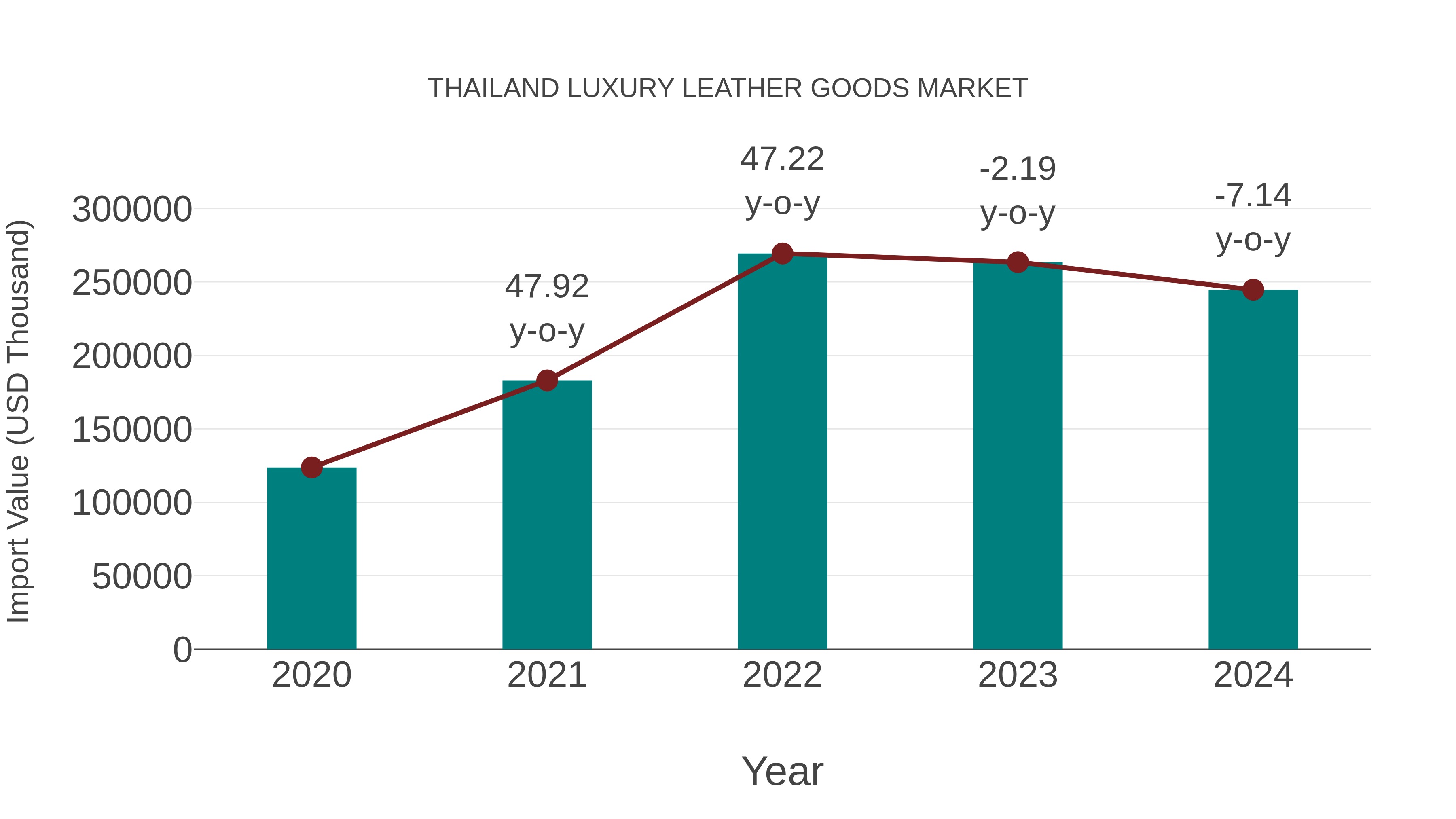
Thailand luxury leather goods market experienced a -7.14% import trend from 2023 to 2024, contrasting with the 18.59% compound annual growth rate (CAGR) observed during 2020-2024. This decline may reflect shifting consumer preferences, changes in trade policies, or a temporary market correction following previous rapid expansion.
Thailand Luxury Leather Goods Market Synopsis
The luxury leather goods market in Thailand has experienced steady growth in recent years, driven by increasing disposable incomes and a growing appreciation for high-quality products. Key players in the market offer a wide range of luxury leather goods including handbags, wallets, belts, and accessories, catering to both local consumers and tourists. The market is characterized by a mix of international luxury brands and local artisans, each bringing their unique designs and craftsmanship to the forefront. With a strong emphasis on quality and craftsmanship, consumers in Thailand are increasingly willing to invest in luxury leather goods as a symbol of status and style. As the market continues to evolve, there is a growing trend towards sustainable and ethical production practices, reflecting changing consumer preferences towards environmentally conscious products.
Thailand Luxury Leather Goods Market Trends
The Thailand Luxury Leather Goods Market is experiencing growth driven by rising disposable incomes and a growing preference for luxury products among consumers. Key trends include a shift towards sustainable and ethically sourced materials, personalized and bespoke offerings, and a focus on craftsmanship and heritage. Opportunities lie in expanding product lines to include tech accessories, experiential retail concepts, and online sales channels to reach a wider customer base. Collaborations with local artisans and designers can help differentiate brands in a competitive market. With the increasing demand for luxury goods in Thailand, there is potential for brands to leverage digital marketing strategies and social media influencers to engage with younger consumers and drive sales.
Thailand Luxury Leather Goods Market Challenges
In the Thailand Luxury Leather Goods Market, there are several challenges that industry players face. One of the key challenges is the presence of counterfeit products, which not only dilute the brand value of genuine luxury leather goods but also pose a threat to consumer trust and loyalty. Another challenge is the high competition from both domestic and international luxury brands, leading to pricing pressures and the need for continuous innovation to stand out in a crowded market. Additionally, fluctuating consumer preferences and economic conditions can impact the demand for luxury goods, requiring companies to stay agile and adapt quickly. Lastly, issues related to sustainability and ethical sourcing are becoming increasingly important for consumers, pushing luxury leather goods brands to ensure transparency and responsible practices throughout their supply chains.
Thailand Luxury Leather Goods Market Investment Opportunities
The Thailand Luxury Leather Goods Market is primarily driven by a growing middle class with increasing disposable income, leading to greater spending on luxury goods. The rise of social media and influencer marketing has also played a significant role in driving demand for luxury leather goods, as consumers are increasingly influenced by trends and fashion statements. Furthermore, the perception of luxury leather goods as a status symbol and a form of self-expression has fueled the market growth in Thailand. The country`s strong tourism industry, particularly in popular shopping destinations like Bangkok, has also contributed to the demand for luxury leather goods among both domestic and international tourists. Overall, a combination of economic factors, changing consumer preferences, and marketing strategies are key drivers propelling the Thailand Luxury Leather Goods Market forward.
Thailand Luxury Leather Goods Market Government Polices
The Thailand government has implemented various policies related to the luxury leather goods market to support the industry`s growth and development. These policies include reducing import tariffs on raw materials used in leather goods production to lower production costs for manufacturers. Additionally, the government has focused on promoting Thai craftsmanship and design through initiatives such as funding programs and training opportunities for local artisans. Furthermore, there are regulations in place to ensure the authenticity and quality of luxury leather goods produced in Thailand, aimed at protecting consumers and maintaining the country`s reputation as a reliable source of premium leather products. Overall, these government policies aim to strengthen the competitiveness of the Thailand luxury leather goods market both domestically and internationally.
Thailand Luxury Leather Goods Market Future Outlook
The future outlook for the Thailand Luxury Leather Goods Market appears promising, with a projected growth fueled by increasing disposable incomes, a growing middle class, and a rising demand for high-quality and stylish accessories. The market is expected to benefit from the country`s thriving tourism industry, which attracts affluent visitors looking to purchase luxury goods. Additionally, the shift towards online shopping and the growing popularity of e-commerce platforms are likely to further boost sales of luxury leather goods in Thailand. As consumers become more discerning and seek products that reflect their status and lifestyle, luxury brands will need to focus on innovation, sustainability, and personalized experiences to maintain a competitive edge in the market. Overall, the Thailand Luxury Leather Goods Market is poised for steady growth in the coming years.
Key Highlights of the Report:
- Thailand Luxury Leather Goods Market Outlook
- Market Size of Thailand Luxury Leather Goods Market, 2025
- Forecast of Thailand Luxury Leather Goods Market, 2032
- Historical Data and Forecast of Thailand Luxury Leather Goods Revenues & Volume for the Period 2022 - 2032F
- Thailand Luxury Leather Goods Market Trend Evolution
- Thailand Luxury Leather Goods Market Drivers and Challenges
- Thailand Luxury Leather Goods Price Trends
- Thailand Luxury Leather Goods Porter's Five Forces
- Thailand Luxury Leather Goods Industry Life Cycle
- Historical Data and Forecast of Thailand Luxury Leather Goods Market Revenues & Volume By Product for the Period 2022 - 2032F
- Historical Data and Forecast of Thailand Luxury Leather Goods Market Revenues & Volume By High- Grade for the Period 2022 - 2032F
- Historical Data and Forecast of Thailand Luxury Leather Goods Market Revenues & Volume By Low-Grade for the Period 2022 - 2032F
- Historical Data and Forecast of Thailand Luxury Leather Goods Market Revenues & Volume By Mid-Grade for the Period 2022 - 2032F
- Historical Data and Forecast of Thailand Luxury Leather Goods Market Revenues & Volume By Application for the Period 2022 - 2032F
- Historical Data and Forecast of Thailand Luxury Leather Goods Market Revenues & Volume By Men for the Period 2022 - 2032F
- Historical Data and Forecast of Thailand Luxury Leather Goods Market Revenues & Volume By Women for the Period 2022 - 2032F
- Historical Data and Forecast of Thailand Luxury Leather Goods Market Revenues & Volume By Distribution Channel for the Period 2022 - 2032F
- Historical Data and Forecast of Thailand Luxury Leather Goods Market Revenues & Volume By Offline Retail Stores for the Period 2022 - 2032F
- Historical Data and Forecast of Thailand Luxury Leather Goods Market Revenues & Volume By Online Retail Stores for the Period 2022 - 2032F
- Thailand Luxury Leather Goods Import Export Trade Statistics
- Market Opportunity Assessment By Product
- Market Opportunity Assessment By Application
- Market Opportunity Assessment By Distribution Channel
- Thailand Luxury Leather Goods Top Companies Market Share
- Thailand Luxury Leather Goods Competitive Benchmarking By Technical and Operational Parameters
- Thailand Luxury Leather Goods Company Profiles
- Thailand Luxury Leather Goods Key Strategic Recommendations






































