Thailand Nylon Market: Import Trend Analysis
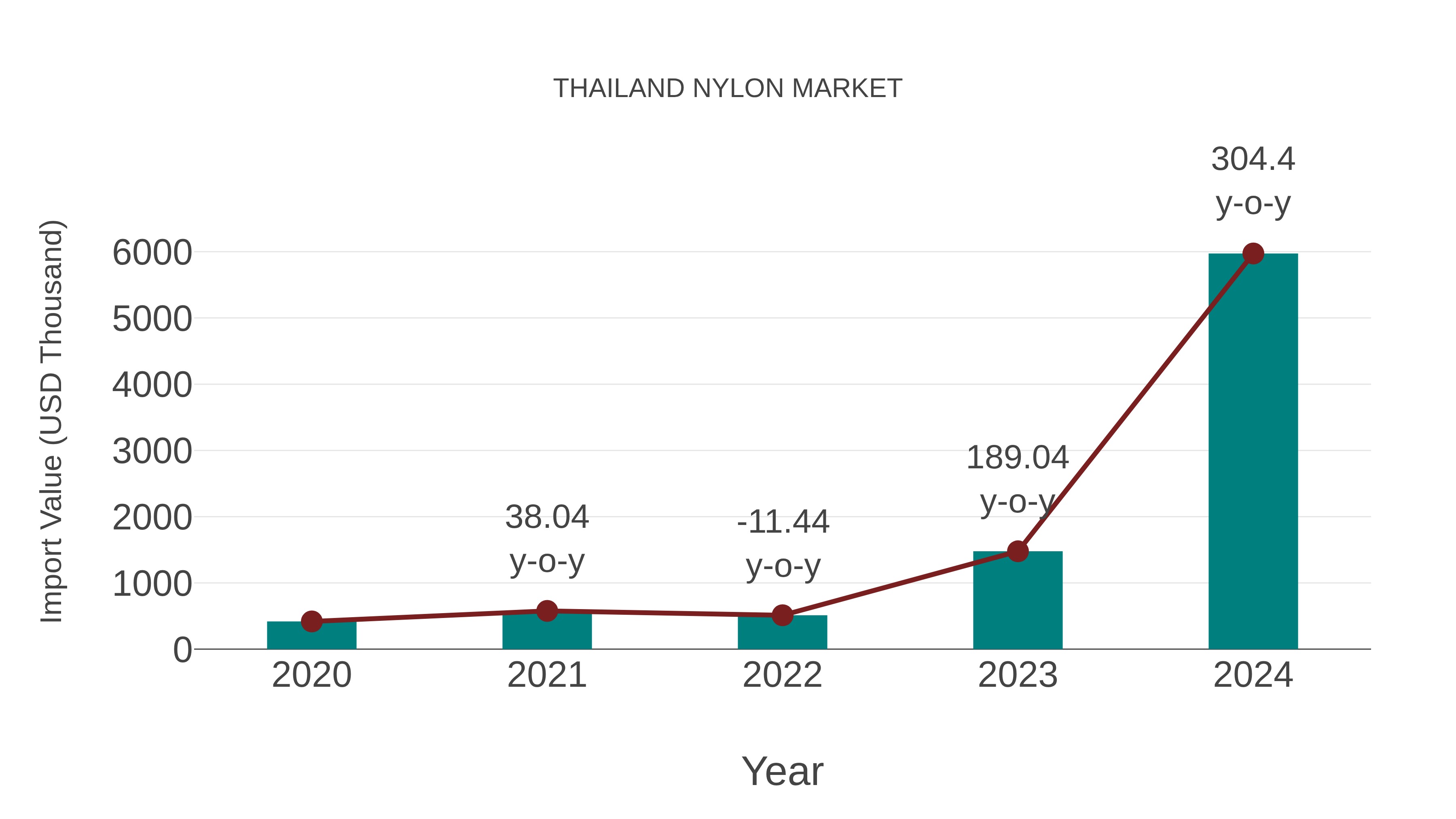
Thailand nylon market experienced a significant import momentum from 2023 to 2024, with a growth rate of 304.4%. The compound annual growth rate (CAGR) for imports from 2020 to 2024 stood at 94.43%. This surge can be attributed to a notable demand shift towards nylon products, possibly driven by changing consumer preferences or industrial needs.
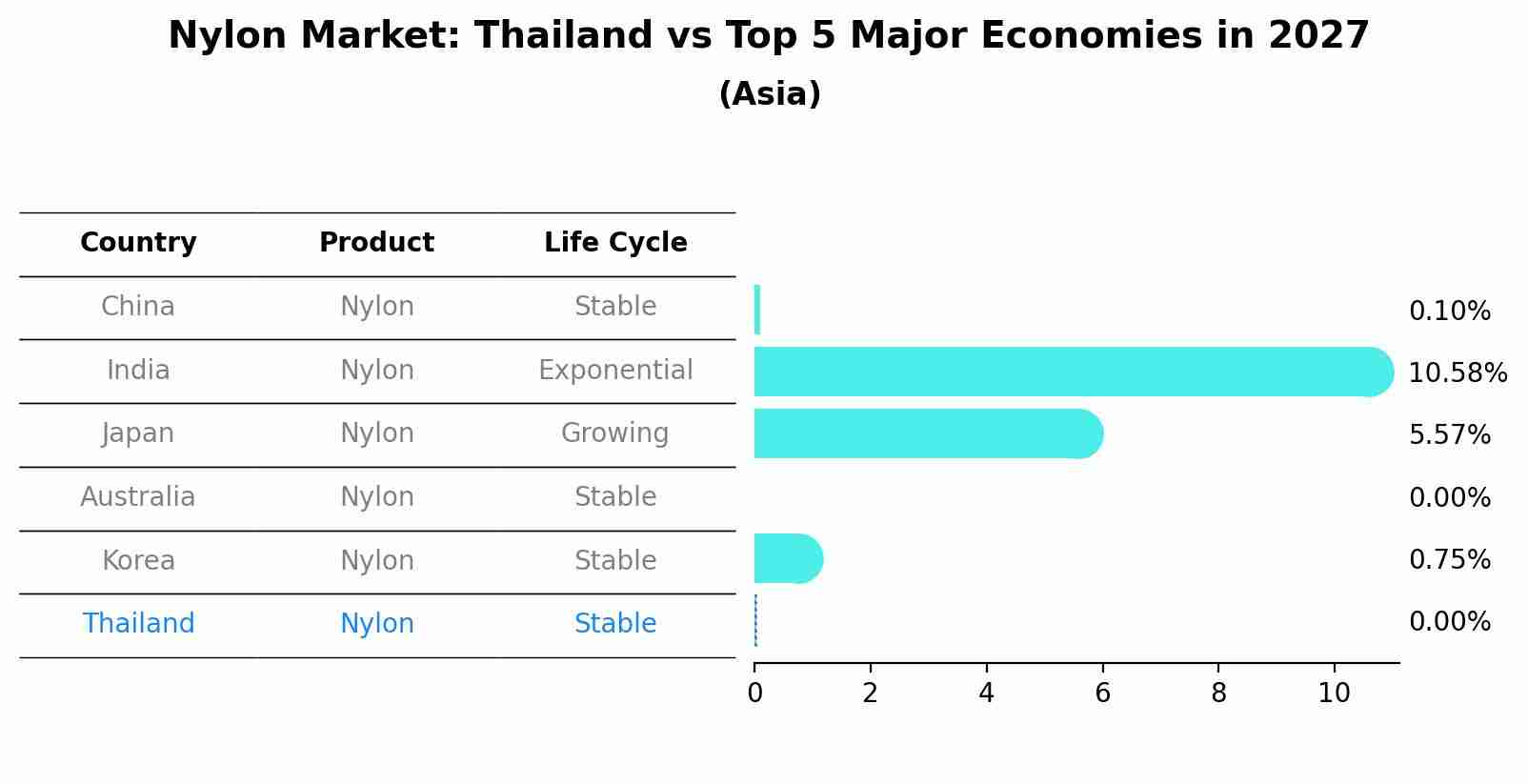
Nylon Market: Thailand vs Top 5 Major Economies in 2027 (Asia)
The Nylon market in Thailand is projected to grow at a stable growth rate of 0.00% by 2027, within the Asia region led by China, along with other countries like India, Japan, Australia and South Korea, collectively shaping a dynamic and evolving market environment driven by innovation and increasing adoption of emerging technologies.
Thailand Nylon Market Synopsis
The Thailand Nylon market is characterized by a growing demand for nylon-based materials in various industries, including textiles, automotive, and packaging. Nylon`s durability, strength, and versatility have made it a popular choice for manufacturing a wide range of products.
Drivers of the Market
The Thailand Nylon market`s growth is closely tied to the manufacturing sector, particularly in industries that require strong and durable materials. This includes automotive, aerospace, and industrial equipment manufacturing. Additionally, the versatility of nylon in various forms, such as resins and fibers, contributes to its demand.
Challenges of the Market
In the Thailand Nylon Market, competition from alternative materials like polyester and polypropylene poses a significant challenge. Manufacturers need to continuously invest in research and development to enhance the properties of nylon and differentiate it from competing materials. Market players also need to address concerns related to sustainability and recycling to meet changing consumer preferences.
COVID-19 Impact on the Market
The Thailand nylon market faced a challenging period during the COVID-19 pandemic. Lockdowns and restrictions disrupted the supply chain, affecting both the production and distribution of nylon products. Reduced consumer spending on non-essential items further dampened the market. However, the demand for nylon in essential applications like medical equipment and personal protective gear experienced a surge. As restrictions eased, the market gradually recovered, with an increased focus on innovation to adapt to changing consumer preferences and safety requirements.
Key Players in the Market
The Thailand nylon market also features the presence of Indorama Ventures Public Company Limited as a key player. They produce a range of nylon products, including fibers and resins, known for their durability and versatility. Indorama Ventures Public Company Limited has consistently met the demand for nylon materials in various industries, reaffirming their role as a leading supplier in the market.
Key Highlights of the Report:
- Thailand Nylon Market Outlook
- Market Size of Thailand Nylon Market, 2025
- Forecast of Thailand Nylon Market, 2032
- Historical Data and Forecast of Thailand Nylon Revenues & Volume for the Period 2022-2032F
- Thailand Nylon Market Trend Evolution
- Thailand Nylon Market Drivers and Challenges
- Thailand Nylon Price Trends
- Thailand Nylon Porter's Five Forces
- Thailand Nylon Industry Life Cycle
- Historical Data and Forecast of Thailand Nylon Market Revenues & Volume By Product for the Period 2022-2032F
- Historical Data and Forecast of Thailand Nylon Market Revenues & Volume By Nylon 6 for the Period 2022-2032F
- Historical Data and Forecast of Thailand Nylon Market Revenues & Volume By Nylon 66 for the Period 2022-2032F
- Historical Data and Forecast of Thailand Nylon Market Revenues & Volume By Application for the Period 2022-2032F
- Historical Data and Forecast of Thailand Nylon Market Revenues & Volume By Automobile for the Period 2022-2032F
- Historical Data and Forecast of Thailand Nylon Market Revenues & Volume By Electrical & Electronics for the Period 2022-2032F
- Historical Data and Forecast of Thailand Nylon Market Revenues & Volume By Engineering Plastics for the Period 2022-2032F
- Historical Data and Forecast of Thailand Nylon Market Revenues & Volume By Textiles for the Period 2022-2032F
- Historical Data and Forecast of Thailand Nylon Market Revenues & Volume By Others for the Period 2022-2032F
- Thailand Nylon Import Export Trade Statistics
- Market Opportunity Assessment By Product
- Market Opportunity Assessment By Application
- Thailand Nylon Top Companies Market Share
- Thailand Nylon Competitive Benchmarking By Technical and Operational Parameters
- Thailand Nylon Company Profiles
- Thailand Nylon Key Strategic Recommendations






































