Thailand Pasta and Noodles Market: Import Trend Analysis
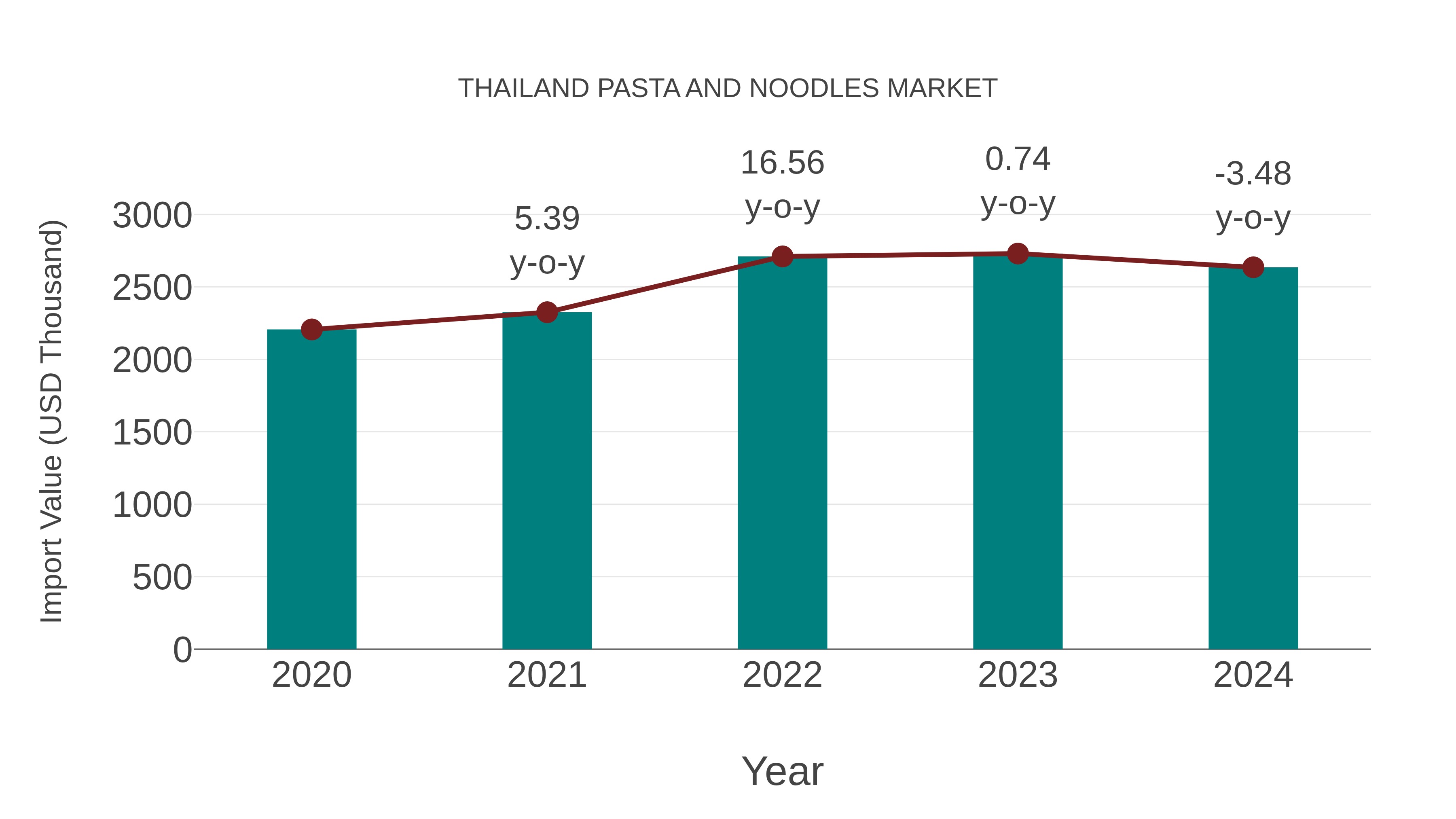
In the Thailand pasta and noodles market, the import trend experienced a decline with a growth rate of -3.48% from 2023 to 2024. However, the compound annual growth rate (CAGR) for the period 2020-2024 stood at 4.54%. This negative growth in 2024 could be attributed to shifts in consumer preferences or changes in trade policies affecting import momentum.
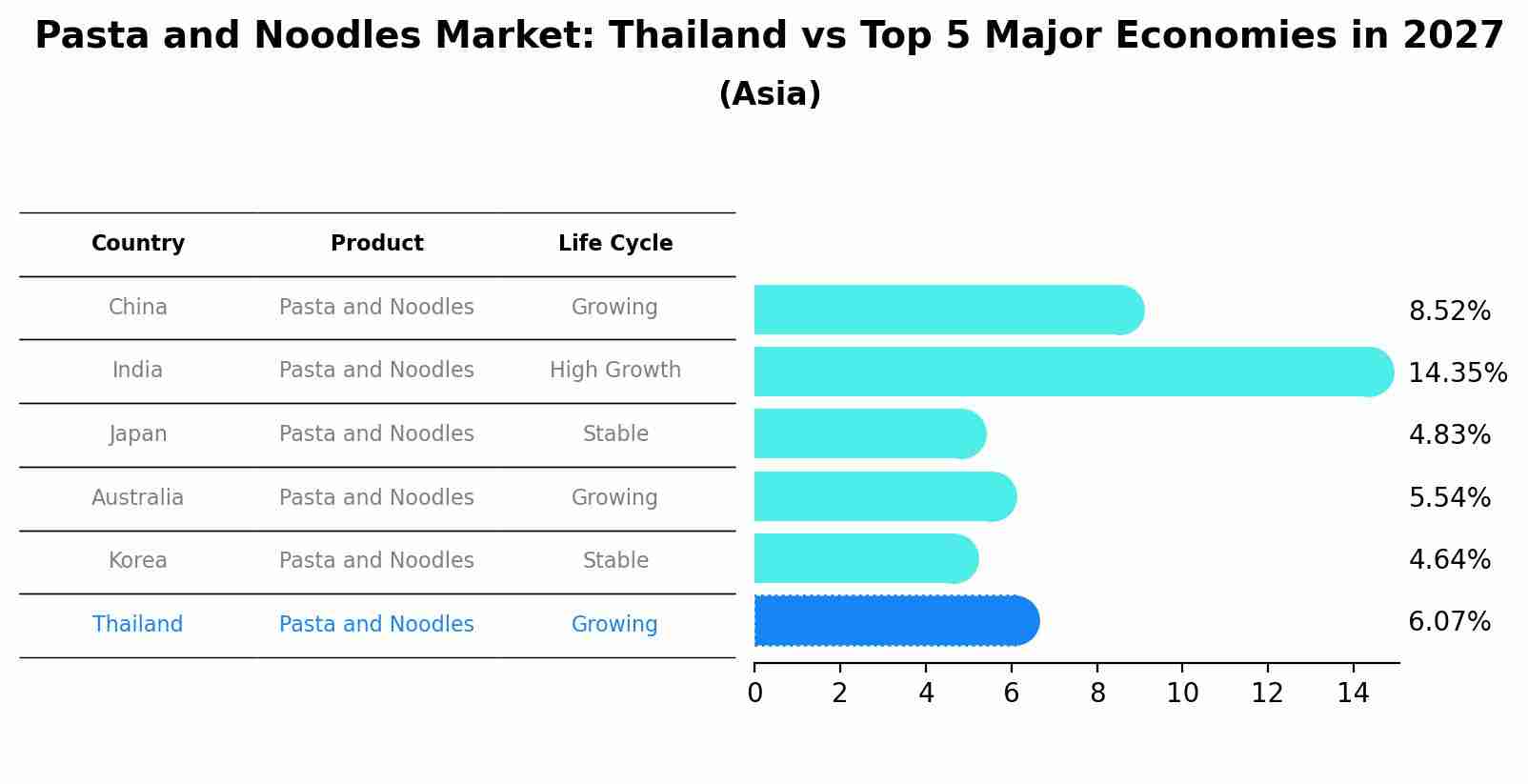
Pasta and Noodles Market: Thailand vs Top 5 Major Economies in 2027 (Asia)
The Pasta and Noodles market in Thailand is projected to grow at a growing growth rate of 6.07% by 2027, within the Asia region led by China, along with other countries like India, Japan, Australia and South Korea, collectively shaping a dynamic and evolving market environment driven by innovation and increasing adoption of emerging technologies.
Thailand Pasta and Noodles Market Synopsis
The Thailand Pasta and Noodles Market is a vibrant and dynamic segment of the country`s food industry. With its rich culinary heritage, Thailand has embraced various types of pasta and noodles, catering to both traditional and modern tastes. From the ever-popular Thai rice noodles used in dishes like Pad Thai to imported spaghetti varieties, the market offers a diverse range of options. Consumers in Thailand appreciate the convenience and versatility of pasta and noodles, which can be found in both local street food stalls and high-end restaurants.
Drivers of the Market
One of the primary drivers of the pasta and noodles market in Thailand is the evolving consumer preferences. Thai consumers are increasingly adopting Western dietary habits, including a higher consumption of pasta and noodles. This shift is driven by factors like urbanization, exposure to global cuisines, and a desire for convenience in meal preparation. As health-consciousness continues to rise globally, Thai consumers are also becoming more mindful of their dietary choices. Consequently, there is a growing demand for healthier pasta and noodle options made from whole grains or alternative flours like rice, buckwheat, or lentils. Manufacturers are responding to this trend by offering healthier product variants.
Challenges of the Market
In the Thailand Pasta and Noodles Market, competition from both local and international brands is intense. Price sensitivity among consumers can be a challenge, especially as they seek value-for-money options. Adapting to changing dietary trends, such as the demand for whole wheat or gluten-free products, can also be a challenge in this market.
COVID-19 Impact on the Market
The Pasta and Noodles market in Thailand experienced varying effects during the pandemic. While sales of packaged pasta and noodles surged due to their long shelf life and affordability, the foodservice segment suffered due to restrictions on dining out. Manufacturers adapted by focusing more on retail channels and introducing new product variants to meet evolving consumer preferences.
Key Players in the Market
In the pasta and noodles segment, Thai President Foods Public Company Limited is a key player, with its "Mama" brand being a household name for both instant noodles and pasta products. Another notable player in this segment is Thai Chef Food Public Company Limited, offering a diverse range of pasta and noodle products under various brand names, including "Thai Chef."
Key Highlights of the Report:
- Thailand Pasta and Noodles Market Outlook
- Market Size of Thailand Pasta and Noodles Market, 2025
- Forecast of Thailand Pasta and Noodles Market, 2032
- Historical Data and Forecast of Thailand Pasta and Noodles Revenues & Volume for the Period 2022-2032F
- Thailand Pasta and Noodles Market Trend Evolution
- Thailand Pasta and Noodles Market Drivers and Challenges
- Thailand Pasta and Noodles Price Trends
- Thailand Pasta and Noodles Porter's Five Forces
- Thailand Pasta and Noodles Industry Life Cycle
- Historical Data and Forecast of Thailand Pasta and Noodles Market Revenues & Volume By Product for the Period 2022-2032F
- Historical Data and Forecast of Thailand Pasta and Noodles Market Revenues & Volume By Ambient for the Period 2022-2032F
- Historical Data and Forecast of Thailand Pasta and Noodles Market Revenues & Volume By Dried for the Period 2022-2032F
- Historical Data and Forecast of Thailand Pasta and Noodles Market Revenues & Volume By Chilled for the Period 2022-2032F
- Thailand Pasta and Noodles Import Export Trade Statistics
- Market Opportunity Assessment By Product
- Thailand Pasta and Noodles Top Companies Market Share
- Thailand Pasta and Noodles Competitive Benchmarking By Technical and Operational Parameters
- Thailand Pasta and Noodles Company Profiles
- Thailand Pasta and Noodles Key Strategic Recommendations






































