Thailand Pasta Market: Import Trend Analysis
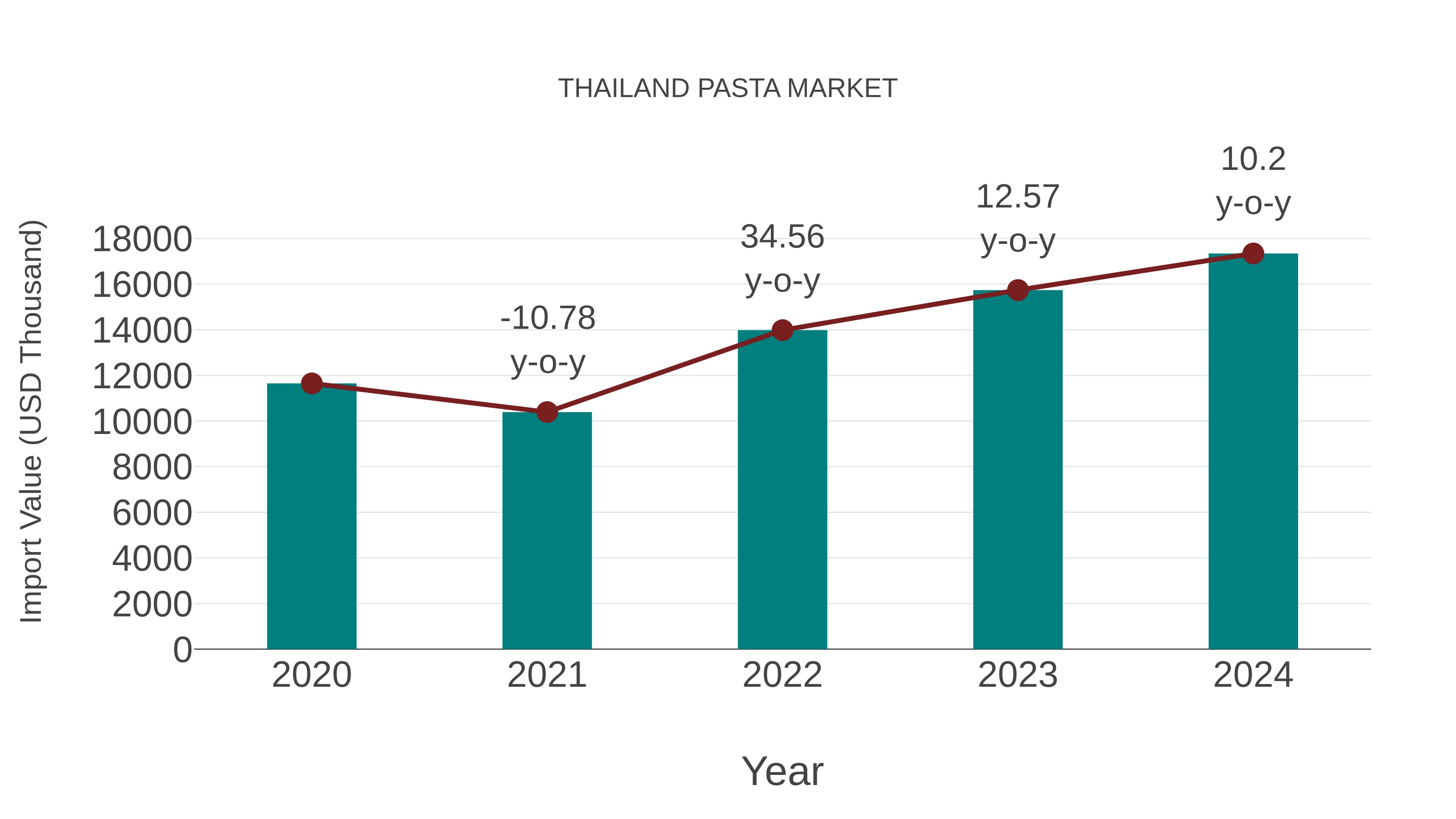
Thailand import trend in the pasta market showed a growth rate of 10.2% from 2023 to 2024, with a compound annual growth rate (CAGR) of 10.47% for the period 2020-2024. This robust import momentum can be attributed to increasing consumer demand for diverse pasta varieties and the country`s stable trade policies that facilitated market expansion.
Topics Covered in the Thailand Pasta Market Report
Thailand Pasta Market report thoroughly covers the raw material, product raw material and distribution channel. The market report provides an unbiased and detailed analysis of the ongoing market trends, opportunities/high growth areas, and market drivers which would help the stakeholders to devise and align their market strategies according to the current and future market dynamics.
Thailand Pasta Market Synopsis
The pasta market in Thailand has experienced notable growth in recent years, driven by several key factors. An increasing consumer preference for Italian cuisine has led to greater demand for pasta dishes. Additionally, there is a growing awareness among Thai consumers about the variety of pasta available, coupled with rising disposable incomes, allowing more people to explore and enjoy these culinary options.
According to 6Wresearch, the Thailand Pasta Market revenue is expected to reach at a significant CAGR of 4% during the forecast period 2025-2031. This growth can be primarily attributed to the increasing demand for convenience food options and changing eating habits of consumers. Moreover, with the rise in health-consciousness among people, there has been a surge in demand for healthier alternatives to traditional wheat-based pasta. This has led to the introduction of gluten-free, vegetable-based, and protein-enriched pasta options in the market. The growing popularity of Italian cuisine and the increasing number of restaurants offering a variety of pasta dishes have been major drivers for the Thailand Pasta Market growth. Additionally, busier lifestyles and changing dietary habits have also contributed to the demand for fast and easy-to-prepare meals such as instant noodles and microwaveable pasta options. Despite its growth potential, the pasta market in Thailand faces some challenges such as high competition from other convenience food products like instant noodles, rice dishes, and Thai street food. Furthermore, fluctuations in raw material prices and concerns regarding the healthiness of certain types of pasta may also hinder market growth.
Thailand Pasta Market Trends
A prominent trend in the Thailand pasta market is the rising demand for traditional, handmade pasta. As consumers develop a deeper appreciation for authentic Italian cuisine, they are increasingly willing to pay a premium for high-quality, artisanal products. This interest in craftsmanship and authenticity is driving local producers to create specialty pasta that meets these expectations. Furthermore, the growth of private-label offerings reflects a shift toward gourmet options, enabling consumers to explore diverse flavors and styles. This combination of trends indicates a vibrant market where quality and authenticity are becoming essential factors in purchasing decisions.
Investment Opportunities in the Thailand Pasta Market
The growing demand for innovative and healthy pasta options presents lucrative investment opportunities in Thailand's pasta market. Companies can invest in research and development to introduce new products that cater to changing consumer preferences. Additionally, investing in digital marketing strategies and expanding distribution channels can also lead to enhanced market share marketing strategies to promote the health benefits and versatility of pasta can also help in expanding market reach.
Leading Players of the Thailand Pasta Market
The pasta market in Thailand is highly fragmented, with the presence of both international and domestic players. Some of the prominent leading players in the market include Nestle, Unilever, Italian-Thai Development Public Company Limited, Thai Foods Group, and President Rice Products Public Company Limited.
Government Regulations Introduced in the Thailand Pasta Market
The government has put in place a range of regulations aimed at ensuring food safety and maintaining quality standards across the food industry. These regulations encompass several critical aspects, including labeling requirements that mandate clear and accurate product information, manufacturing processes that must adhere to hygiene and safety protocols, and specific product specifications that define quality benchmarks. For companies operating in the pasta market, compliance with these regulations is essential not only for legal adherence but also for building consumer trust. Meeting these standards helps ensure that pasta products are safe, high-quality, and appealing to the growing base of health-conscious consumers in Thailand.
Future Insights of the Thailand Pasta Market
With the increasing demand for healthier food options and the growing popularity of Italian cuisine, the pasta market in Thailand is expected to continue its growth trajectory. Companies are likely to focus on product innovation and expanding their distribution networks to tap into untapped markets. Moreover, strategic partnerships and collaborations with local businesses can also provide opportunities for growth in the future. In conclusion, the Thai pasta market has a promising outlook, driven by various factors such as changing consumer preferences, rising disposable income, and increasing health consciousness.
Market Segmentation Analysis
The report offers a comprehensive study of the subsequent market segments and their leading categories.
Durum Wheat Semolina to Dominate the Market - By Raw Material
According to Ravi Bhandari, Research Head, 6wresearch, Durum wheat semolina has emerged as the leading segment. This type of wheat is highly regarded for its superior quality, providing the high protein content and gluten strength essential for crafting premium pasta.
Dried Pasta to dominate the market - By Product Raw Material
Dried pasta has seen the most substantial growth. Its long shelf life, convenience, and versatility make it a popular choice for consumers, particularly as they look for quick meal solutions. Dried pasta’s ability to be used in a wide array of dishes has further fueled its popularity, establishing it as a staple in many Thai households.
E-commerce Stores to Dominate the Market – By Distribution Channel
In terms of distribution channels, e-commerce has experienced remarkable growth. The shift toward online shopping, accelerated by changing consumer habits, has resulted in increased pasta sales through digital platforms.
Key Attractivenes of the report:
- 10 Years of Market Numbers.
- Historical Data Starting from 2021 to 2024.
- Base Year 2024
- Forecast Data until 2031.
- Key Performance Indicators Impacting the Market.
- Major Upcoming Developments and Projects.






































