Thailand Patchouli oil Market Size Growth Rate
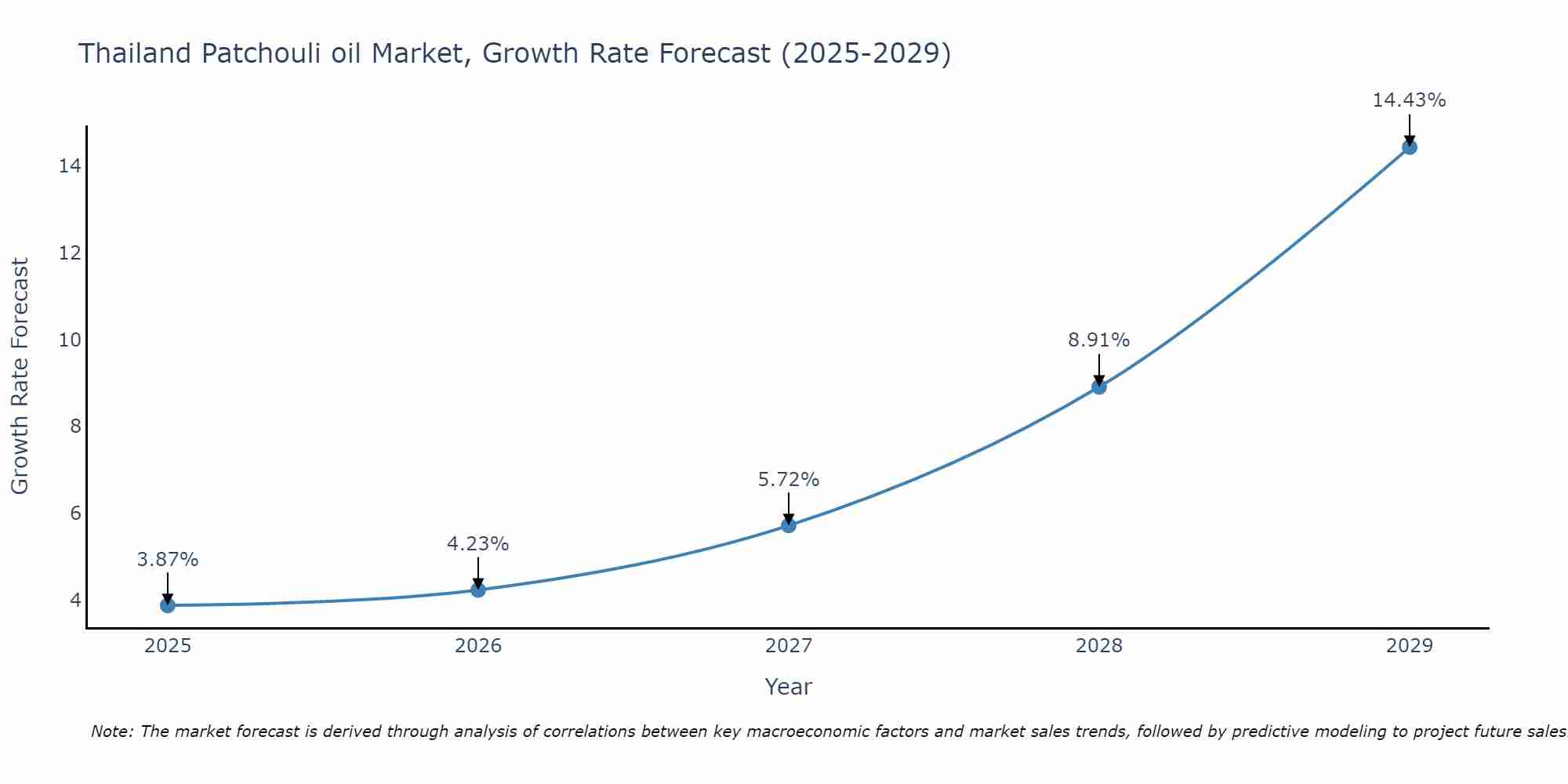
The Thailand Patchouli oil Market is likely to experience consistent growth rate gains over the period 2025 to 2029. From 3.87% in 2025, the growth rate steadily ascends to 14.43% in 2029.
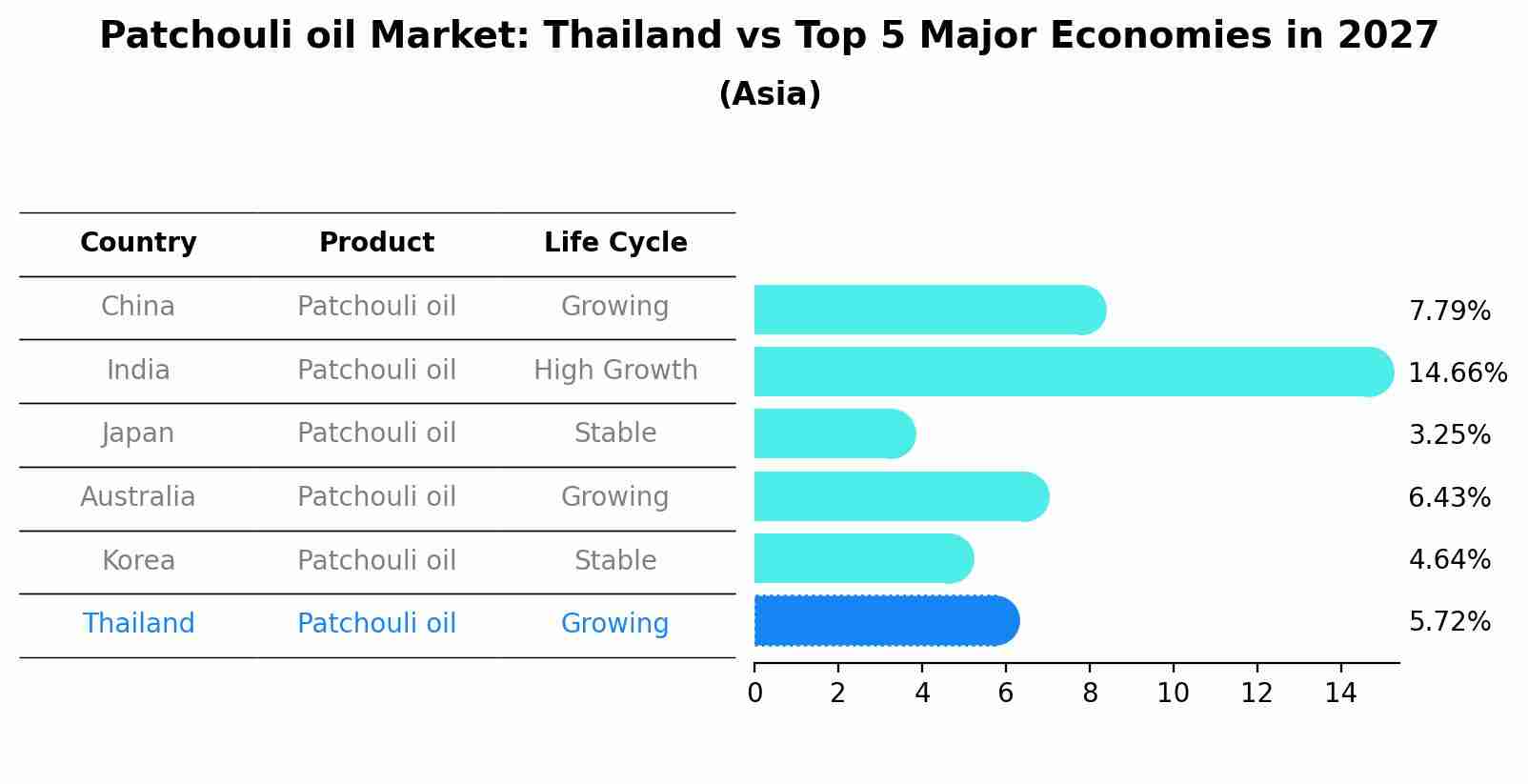
Patchouli oil Market: Thailand vs Top 5 Major Economies in 2027 (Asia)
By 2027, Thailand's Patchouli oil market is forecasted to achieve a growing growth rate of 5.72%, with China leading the Asia region, followed by India, Japan, Australia and South Korea.
Thailand Patchouli Oil Market Synopsis
The Thailand patchouli oil market was valued at USD 590 thousand in 2025 and is anticipated to expand at a CAGR of 4.11% over the forecast period owing to increasing demand for natural fragrances such as patchouli oil among consumers across industries such as cosmetics & personal care, pharmaceuticals and food & beverages sectors. Moreover, surging use of patchouli oil in aromatherapy treatments due to its medicinal properties including antidepressant effects has been contributing towards growth of this segment over recent years. Additionally, rising disposable income coupled with changing lifestyle preferences have led people towards using more herbal remedies which has been resulting into increased usage and therefore boosting sales volumes significantly throughout country. These factors are expected drive overall industry revenue during forecast timeframe.
Drivers of the Market
The patchouli oil market in Thailand is driven by its versatile applications in the fragrance, cosmetics, and aromatherapy industries. Patchouli oil`s distinctive and earthy scent makes it a valuable ingredient in perfumes, scented candles, and other aromatic products. Moreover, its potential therapeutic properties, such as relaxation and stress relief, contribute to its popularity in the wellness sector, boosting market growth.
Challenges of the Market
In the Thailand patchouli oil market, challenges arise from sustainability concerns and market competition. Patchouli plants require specific growing conditions and careful cultivation to produce high-quality oil. Unsustainable harvesting practices and overexploitation can threaten patchouli plant populations. Moreover, the global demand for patchouli oil has led to price fluctuations and increased competition. Market participants need to focus on sustainable sourcing, quality control, and differentiation strategies to navigate these challenges.
COVID-19 Impact on the Market
The Covid-19 pandemic had implications for the Thailand patchouli oil market. The closure of international borders and disruptions in the global supply chain impacted the availability of patchouli oil, used in perfumery, aromatherapy, and cosmetics. The market experienced a slowdown as the demand for luxury and non-essential products declined. As the situation improves and the beauty and wellness industry recovers, the patchouli oil market is expected to witness a gradual resurgence.
Key Players in the Market
Prominent players in the Thailand patchouli oil market encompass PatchouliAromas Co., ThaiPatchouli Essence, and EarthyScents Oils. These companies specialize in the production of patchouli essential oil, renowned for its earthy and grounding fragrance. Their expertise in cultivation and distillation techniques establishes them as significant contributors to the aromatic industry.
Key Highlights of the Report:
- Thailand Patchouli oil Market Outlook
- Market Size of Thailand Patchouli oil Market, 2024
- Forecast of Thailand Patchouli oil Market, 2031
- Historical Data and Forecast of Thailand Patchouli oil Revenues & Volume for the Period 2021-2031
- Thailand Patchouli oil Market Trend Evolution
- Thailand Patchouli oil Market Drivers and Challenges
- Thailand Patchouli oil Price Trends
- Thailand Patchouli oil Porter's Five Forces
- Thailand Patchouli oil Industry Life Cycle
- Historical Data and Forecast of Thailand Patchouli oil Market Revenues & Volume By Type for the Period 2021-2031
- Historical Data and Forecast of Thailand Patchouli oil Market Revenues & Volume By Dark Patchouli Oil for the Period 2021-2031
- Historical Data and Forecast of Thailand Patchouli oil Market Revenues & Volume By Light Patchouli Oil for the Period 2021-2031
- Historical Data and Forecast of Thailand Patchouli oil Market Revenues & Volume By Application for the Period 2021-2031
- Historical Data and Forecast of Thailand Patchouli oil Market Revenues & Volume By Perfumery for the Period 2021-2031
- Historical Data and Forecast of Thailand Patchouli oil Market Revenues & Volume By Medicine for the Period 2021-2031
- Historical Data and Forecast of Thailand Patchouli oil Market Revenues & Volume By Flavorings for the Period 2021-2031
- Historical Data and Forecast of Thailand Patchouli oil Market Revenues & Volume By Others for the Period 2021-2031
- Thailand Patchouli oil Import Export Trade Statistics
- Market Opportunity Assessment By Type
- Market Opportunity Assessment By Application
- Thailand Patchouli oil Top Companies Market Share
- Thailand Patchouli oil Competitive Benchmarking By Technical and Operational Parameters
- Thailand Patchouli oil Company Profiles
- Thailand Patchouli oil Key Strategic Recommendations






































