Thailand Petroleum Jelly Market: Import Trend Analysis
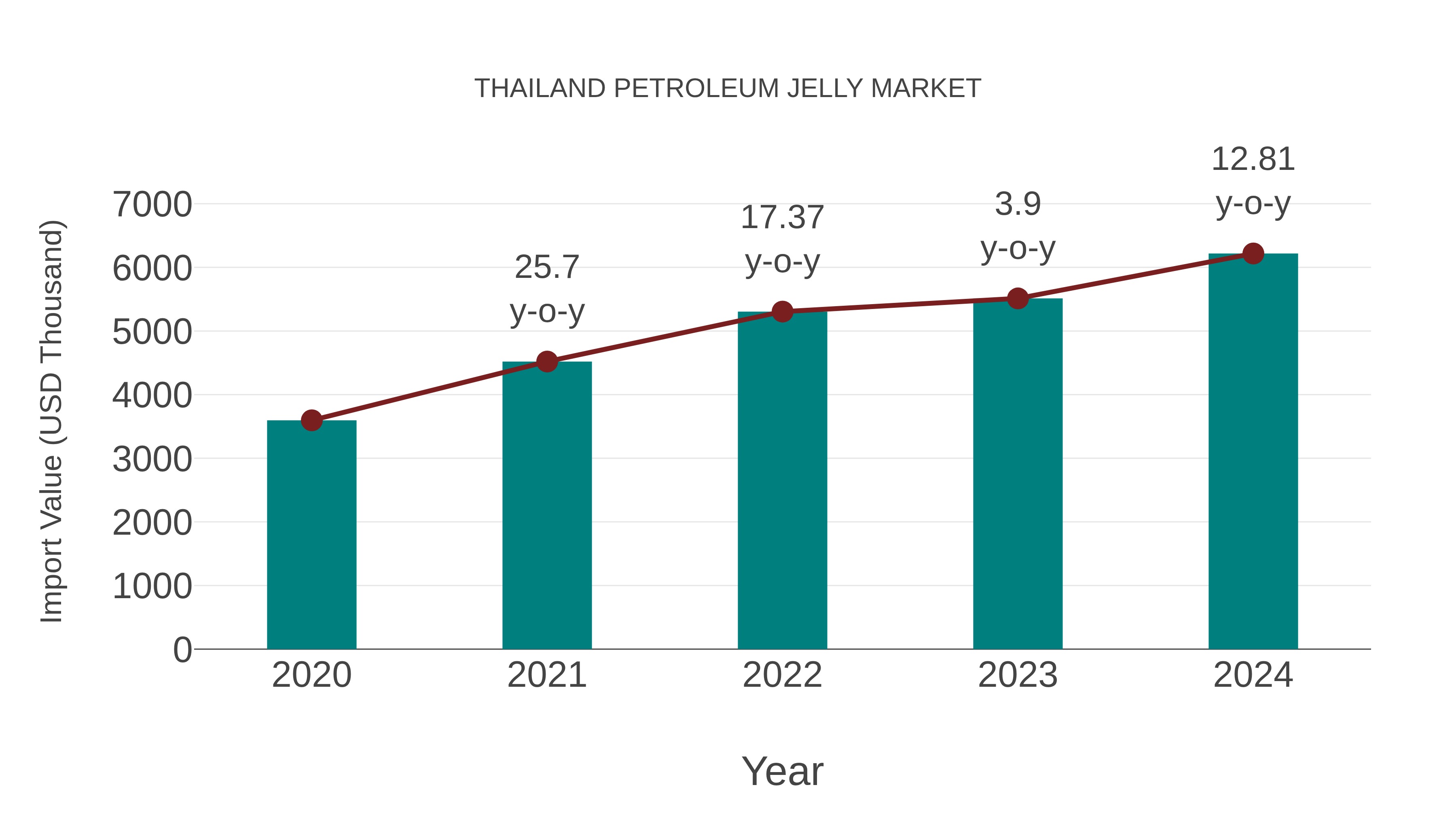
Thailand import trend for petroleum jelly saw a growth rate of 12.81% from 2023 to 2024, with a compound annual growth rate (CAGR) of 14.67% from 2020 to 2024. This significant increase in imports can be attributed to the expanding demand for skincare and cosmetic products in the Thai market, driving the need for raw materials like petroleum jelly to meet consumer needs.
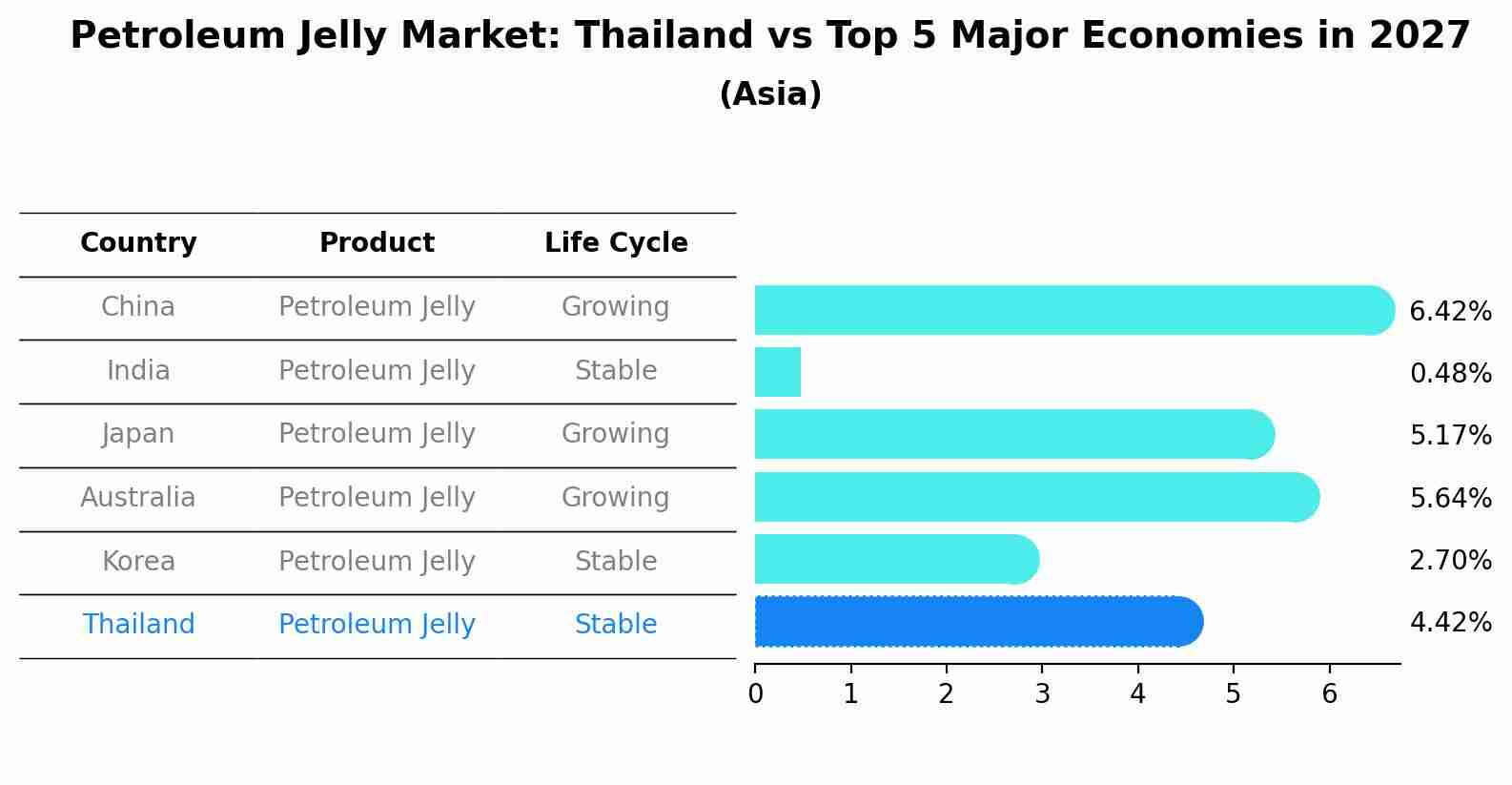
Petroleum Jelly Market: Thailand vs Top 5 Major Economies in 2027 (Asia)
By 2027, Thailand's Petroleum Jelly market is forecasted to achieve a stable growth rate of 4.42%, with China leading the Asia region, followed by India, Japan, Australia and South Korea.
Thailand Petroleum Jelly Market Synopsis
The petroleum jelly market in Thailand serves various industries, including cosmetics, pharmaceuticals, and manufacturing. Petroleum jelly is a versatile product known for its moisturizing and protective properties. Its demand is closely tied to consumer preferences, health and beauty trends, and industrial applications, making it a dynamic market in Thailand.
Drivers of the Market
The Thailand Petroleum Jelly market is primarily driven by the cosmetics and pharmaceutical industries. Petroleum jelly is a key ingredient in various skincare and medicinal products due to its moisturizing and protective properties. As consumer awareness regarding skincare and personal hygiene increases, the demand for petroleum jelly in cosmetics and skincare products is surging. Furthermore, the pharmaceutical industry utilizes petroleum jelly in various ointments and topical medications, further propelling market growth. The availability of high-quality petroleum feedstock in Thailand`s refineries also contributes to the market`s stability and growth.
Challenges of the Market
The Thailand Petroleum Jelly market faces competition from alternative products in the cosmetics and pharmaceutical industries. Regulatory compliance, especially concerning product purity and safety, is a significant concern. Market players must also manage raw material price fluctuations, as petroleum-derived products are susceptible to price swings in the oil and gas sector.
COVID-19 Impact on the Market
The Thailand Petroleum Jelly Market faced headwinds during the COVID-19 pandemic, as lockdowns and travel restrictions reduced the demand for cosmetics, which is a significant end-use segment for petroleum jelly. The market witnessed a decline in sales, but as restrictions eased and consumer spending rebounded, the cosmetics industry began to recover, leading to an eventual stabilization of the petroleum jelly market.
Key Players in the Market
PTG Energy, Shell Thailand, Bangchak Corporation, Thai Oil, and IRPC. These are some top companies offering ranges of products to their customers in order to cater their needs.
Key Highlights of the Report:
- Thailand Petroleum Jelly Market Outlook
- Market Size of Thailand Petroleum Jelly Market, 2025
- Forecast of Thailand Petroleum Jelly Market, 2032
- Historical Data and Forecast of Thailand Petroleum Jelly Revenues & Volume for the Period 2022-2032F
- Thailand Petroleum Jelly Market Trend Evolution
- Thailand Petroleum Jelly Market Drivers and Challenges
- Thailand Petroleum Jelly Price Trends
- Thailand Petroleum Jelly Porter's Five Forces
- Thailand Petroleum Jelly Industry Life Cycle
- Historical Data and Forecast of Thailand Petroleum Jelly Market Revenues & Volume By Grade for the Period 2022-2032F
- Historical Data and Forecast of Thailand Petroleum Jelly Market Revenues & Volume By USP for the Period 2022-2032F
- Historical Data and Forecast of Thailand Petroleum Jelly Market Revenues & Volume By Technical for the Period 2022-2032F
- Historical Data and Forecast of Thailand Petroleum Jelly Market Revenues & Volume By End Use for the Period 2022-2032F
- Historical Data and Forecast of Thailand Petroleum Jelly Market Revenues & Volume By Pharmaceuticals for the Period 2022-2032F
- Historical Data and Forecast of Thailand Petroleum Jelly Market Revenues & Volume By Cosmetics & Personal Care for the Period 2022-2032F
- Historical Data and Forecast of Thailand Petroleum Jelly Market Revenues & Volume By Food for the Period 2022-2032F
- Historical Data and Forecast of Thailand Petroleum Jelly Market Revenues & Volume By Other Industrial for the Period 2022-2032F
- Thailand Petroleum Jelly Import Export Trade Statistics
- Market Opportunity Assessment By Grade
- Market Opportunity Assessment By End Use
- Thailand Petroleum Jelly Top Companies Market Share
- Thailand Petroleum Jelly Competitive Benchmarking By Technical and Operational Parameters
- Thailand Petroleum Jelly Company Profiles
- Thailand Petroleum Jelly Key Strategic Recommendations






































