Thailand Phenol Market: Import Trend Analysis
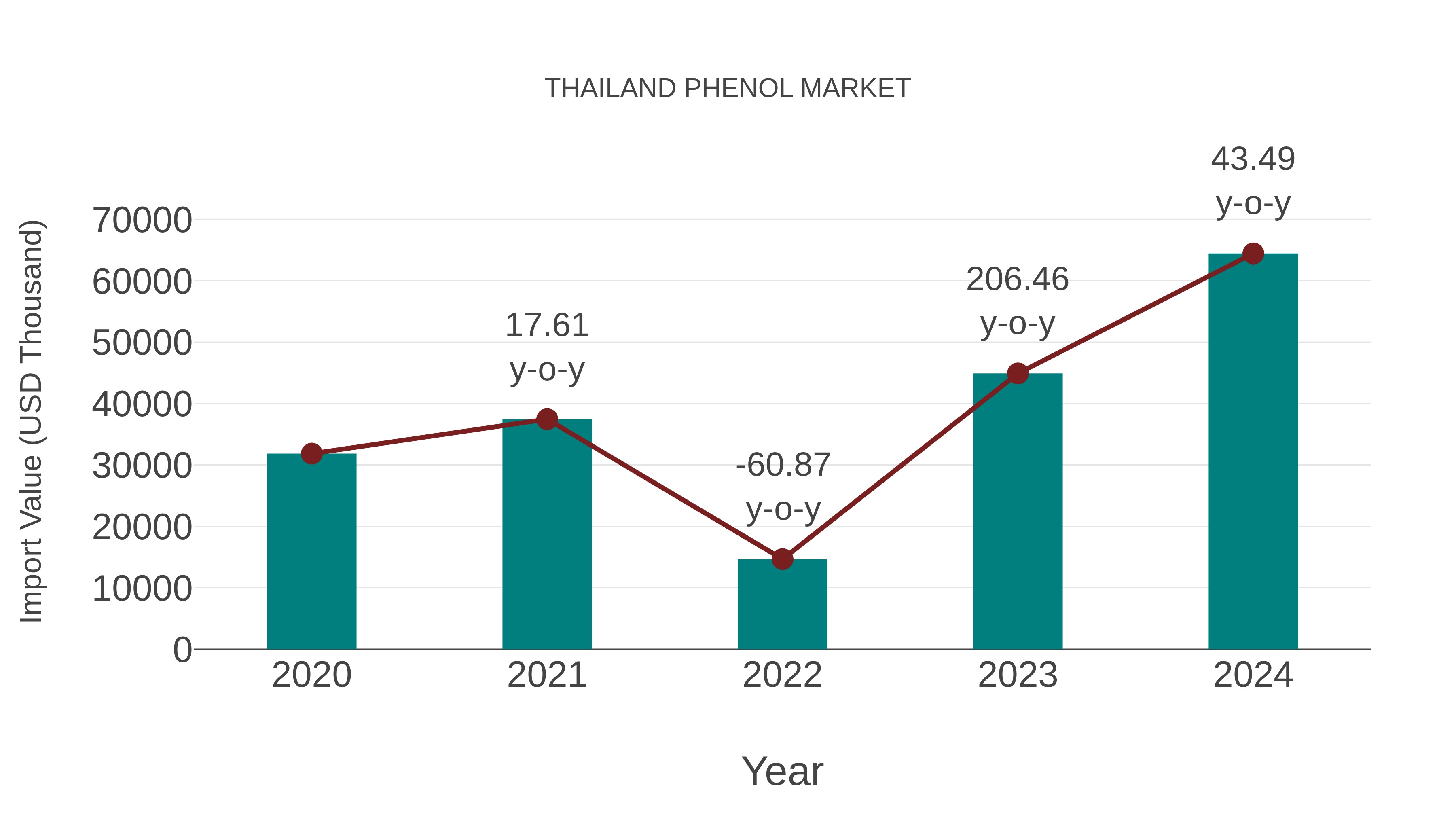
Thailand import trend for the phenol market showed significant growth from 2023 to 2024, with a growth rate of 43.49%. The compound annual growth rate (CAGR) from 2020 to 2024 stood at 19.27%. This surge in imports can be attributed to increased demand for phenol-based products within the region, indicative of a strengthening market momentum and potentially shifting trade dynamics.
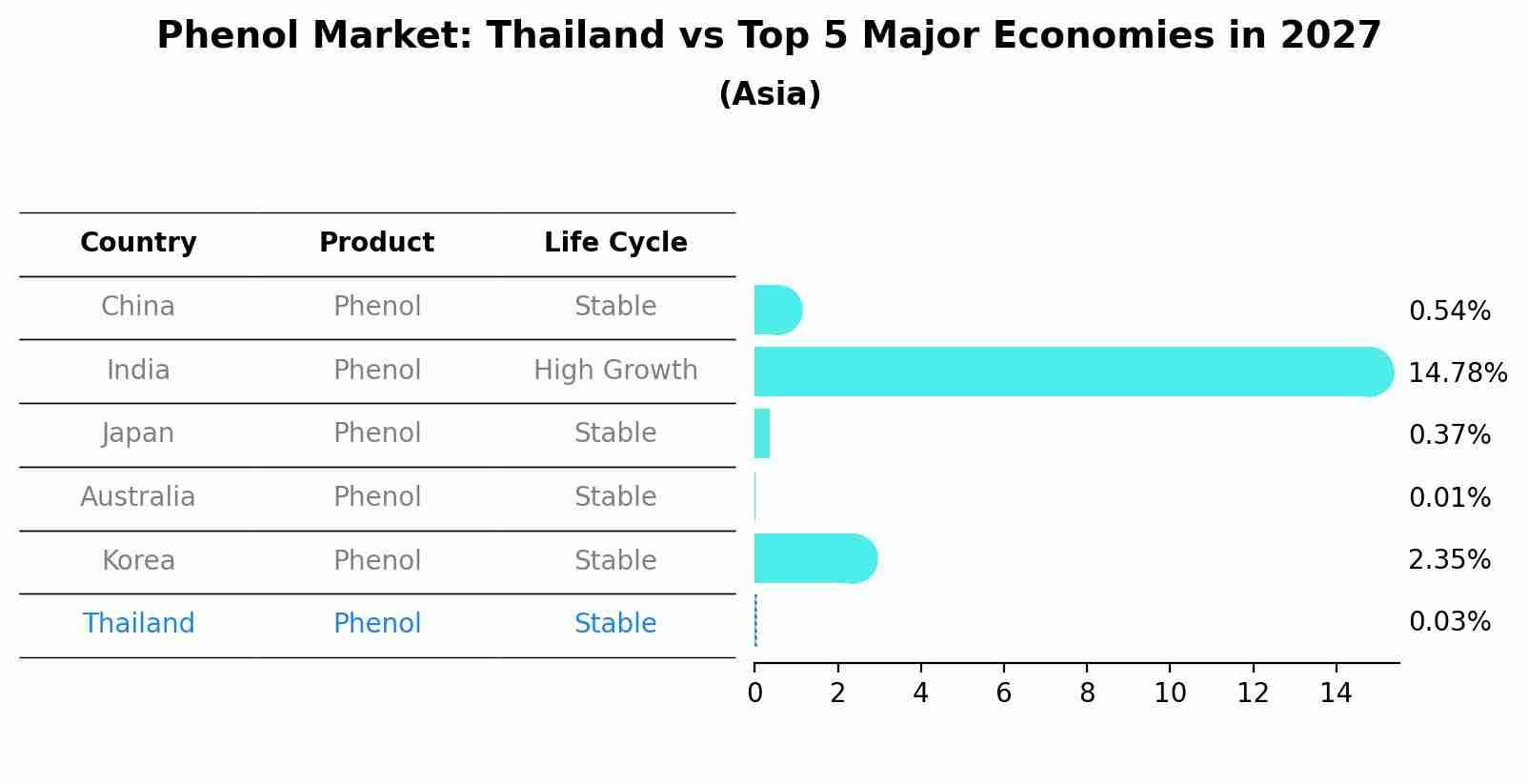
Phenol Market: Thailand vs Top 5 Major Economies in 2027 (Asia)
Thailand's Phenol market is anticipated to experience a stable growth rate of 0.03% by 2027, reflecting trends observed in the largest economy China, followed by India, Japan, Australia and South Korea.
Thailand Phenol Market Synopsis
The phenol market size in Thailand was estimated at around US$ 1 billion during 2025 and is projected to register a higher growth rate over the forecast period. Growing demand from various end-use industries such as pharmaceuticals, automotive coatings, adhesives & sealants, etc., coupled with increasing investments towards infrastructural developments have contributed significantly towards the development of this sector in Thailand over the last few years. Moreover, rising need for better quality paints & coatings due to rapid urbanization has positively influenced product demand across the region over recent past years.
Drivers of the Market
The Thailand phenol market is driven by a combination of industrial demand and evolving consumer preferences. Phenol, a vital building block for a range of chemicals and resins, including bisphenol A and phenolic resins, is essential for the production of plastics, automotive parts, electronics, and construction materials. As Thailandindustrial and manufacturing sectors continue to expand, the demand for phenol remains strong. Additionally, the market`s growth is influenced by the increasing focus on sustainable materials and the use of phenolic resins in eco-friendly coatings and adhesives. The healthcare and personal care sectors` reliance on phenol further contributes to its market dynamics.
Challenges of the Market
The Thailand phenol market encounters challenges associated with feedstock availability and environmental considerations. Phenol production primarily relies on petrochemical feedstocks, making it susceptible to fluctuations in crude oil prices. Reducing the carbon footprint of phenol production and addressing concerns related to pollution and waste disposal are critical challenges. The shift towards more sustainable processes, such as biomass-derived phenol, demands technological advancements and investments. Striking a balance between meeting industry demands and adhering to environmental sustainability goals poses a complex challenge for the phenol market.
COVID-19 Impact on the Market
The Thailand phenol market experienced mixed effects from the pandemic. Industries like automotive and construction, which rely on phenol-based products, were impacted by supply chain disruptions and reduced economic activities. However, the market`s applications in healthcare and sanitization products saw increased demand. The heightened focus on health and safety bolstered the market for phenol-based disinfectants and cleaning solutions.
Key Players in the Market
In the Thailand phenol market, prominent players like PhenolSource Ltd., ThaiChem Works, and PetroPhenol Industries have been influential. These companies have been engaged in producing phenol and its derivatives for various sectors, including plastics, pharmaceuticals, and industrial applications. Their consistent supply of essential chemicals and commitment to sustainable practices have positioned them as key players in the phenol market.
Key Highlights of the Report:
- Thailand Phenol Market Outlook
- Market Size of Thailand Phenol Market, 2025
- Forecast of Thailand Phenol Market, 2032
- Historical Data and Forecast of Thailand Phenol Revenues & Volume for the Period 2022-2032F
- Thailand Phenol Market Trend Evolution
- Thailand Phenol Market Drivers and Challenges
- Thailand Phenol Price Trends
- Thailand Phenol Porter's Five Forces
- Thailand Phenol Industry Life Cycle
- Historical Data and Forecast of Thailand Phenol Market Revenues & Volume By End-users for the Period 2022-2032F
- Historical Data and Forecast of Thailand Phenol Market Revenues & Volume By Bisphenol A for the Period 2022-2032F
- Historical Data and Forecast of Thailand Phenol Market Revenues & Volume By Phenolic Resins for the Period 2022-2032F
- Historical Data and Forecast of Thailand Phenol Market Revenues & Volume By Caprolactam for the Period 2022-2032F
- Historical Data and Forecast of Thailand Phenol Market Revenues & Volume By Alkyl Phenyls for the Period 2022-2032F
- Historical Data and Forecast of Thailand Phenol Market Revenues & Volume By Others for the Period 2022-2032F
- Thailand Phenol Import Export Trade Statistics
- Market Opportunity Assessment By End-users
- Thailand Phenol Top Companies Market Share
- Thailand Phenol Competitive Benchmarking By Technical and Operational Parameters
- Thailand Phenol Company Profiles
- Thailand Phenol Key Strategic Recommendations






































