Thailand Physiotherapy Equipment Market Summary
The thailand physiotherapy equipment market was estimated at USD 126 Million in 2025 and is projected to reach USD 144 Million by 2032, growing at a CAGR of 2.8% from 2026 to 2032.
Thailand Physiotherapy Equipment Market Year-wise Growth Rate and Key Drivers
This graph highlights how the Thailand Physiotherapy Equipment Market has steadily grown over the past five years, supported by major growth factors.
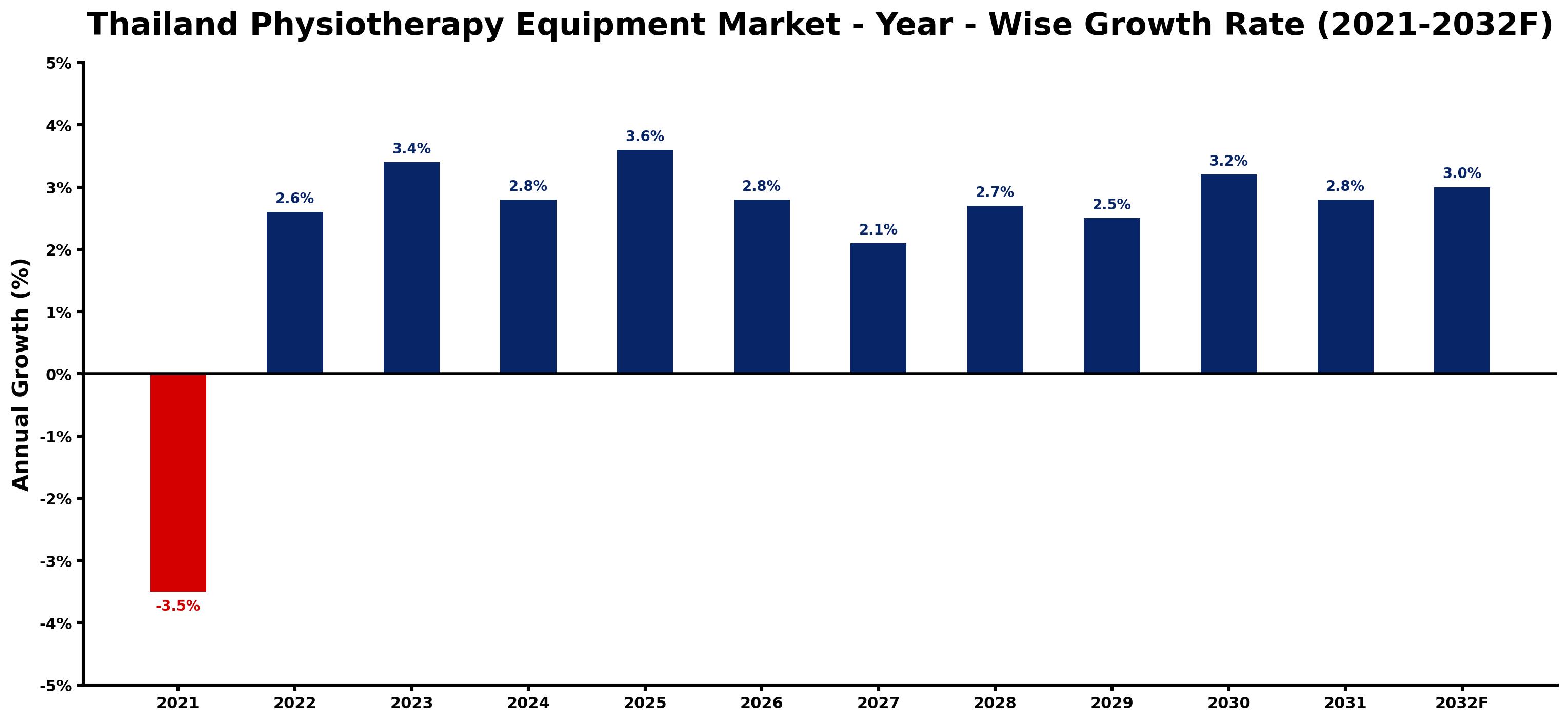
The table below presents the year wise growth rates along with the key drivers influencing the market
| Year | Growth Rate | Major Drivers |
| 2021 | -3.5% | Heightened competition from lowcost alternative therapies diminished the demand for specialized physiotherapy equipment. |
| 2022 | 2.6% | Emerging health consciousness prompted investments in home physiotherapy equipment by families. |
| 2023 | 3.4% | Healthcare collaborations between private clinics and suppliers improved access to specialized equipment. |
| 2024 | 2.8% | Increased sports activities spurred demand for athletic rehabilitation and physiotherapy devices. |
| 2025 | 3.6% | Technological innovations attracted attention, leading to smarter physiotherapy solutions entering the market. |
| 2026 | 2.8% | Aging population necessitated comprehensive rehabilitation facilities and advanced physiotherapy tools. |
| 2027 | 2.1% | Corporate wellness programs integrated physiotherapy equipment for employee health and productivity. |
| 2028 | 2.7% | Rural healthcare initiatives expanded, increasing demand for portable physiotherapy equipment. |
| 2029 | 2.5% | Local manufacturing partnerships emerged, enhancing supply chain efficiencies within the sector. |
| 2030 | 3.2% | Digital platforms connecting therapists and patients increased the focus on individualized equipment. |
| 2031 | 2.8% | Public health campaigns emphasized physical therapy, further boosting market growth opportunities. |
| 2032 | 3.0% | Investment in telehealth services created new pathways for remote physiotherapy equipment usage. |
Note - Market size estimations and growth projections presented in this report are based on 6Wresearch's advanced forecasting approach, validated with industry datasets as of June 2026.
Thailand Physiotherapy Equipment Market Synopsis
The Thailand Physiotherapy Equipment Market is projected to reach 2.8% and witness significant growth during the forecast period (2026-2032). The market was valued at USD 11.1 million in 2020, and forecasts indicate a compound annual growth rate (CAGR) of 5.3% during the specified period. This anticipated growth stems from several factors, including an increasing geriatric population, a rising prevalence of chronic diseases, heightened awareness regarding preventive healthcare measures, the growing preference for home care treatment, and notable technological advancements in physiotherapy devices.
Thailand Physiotherapy Equipment Market Growth Drivers
Several key drivers are steering the growth of the Thailand Physiotherapy Equipment Market. Firstly, the geriatric population is steadily growing, influenced by better healthcare services and improved living standards in the region. This demographic shift leads to increased demand for physiotherapeutic products, as older individuals often require rehabilitation and therapy for age-related ailments.
- The prevalence of chronic diseases, such as arthritis and diabetes, is on the rise. This trend drives many patients to seek physical therapy as a viable treatment option, thereby boosting the demand for specialized equipment and devices aimed at rehabilitation.
- An increasing emphasis on preventive healthcare measures is resulting in more individuals adopting healthier lifestyle choices, which in turn reduces the incidents of injuries needing physiotherapy. As public awareness grows, demand for physiotherapy solutions is expected to rise, further enhancing market revenue.
- The adoption of home care settings for treatment has gained popularity, particularly among patients with chronic conditions who prefer the convenience and comfort of home-based therapy instead of frequent hospital visits. This shift is creating new sales avenues for physiotherapy equipment manufacturers.
- Technological innovations in medical devices, such as smart physiotherapy equipment that delivers real-time feedback, are improving patient engagement and effectiveness of treatments. The resultant advancements are attracting investments and propelling market growth as they offer enhanced patient comfort and treatment efficiency.
Thailand Physiotherapy Equipment Market Challenges and Restraints
Despite the promising growth outlook, the Thailand Physiotherapy Equipment Market faces several challenges. One of the primary hurdles is the high cost associated with advanced physiotherapy equipment, which can limit access for lower-income patients or healthcare facilities.
- Regulatory challenges present another significant barrier, as navigating the approval processes for new devices can be time-consuming and costly, potentially delaying market entry for innovative solutions.
- Furthermore, the market must contend with a shortage of trained physiotherapists, which can restrict the effective implementation and utilization of advanced physiotherapy equipment, negatively impacting patient outcomes.
- Additionally, a lack of awareness regarding the benefits of physiotherapy treatment in some regions can hinder market penetration and acceptance. Educational campaigns may be necessary to improve understanding among potential users.
- Lastly, economic fluctuations and the ongoing effects of the COVID-19 pandemic may affect healthcare spending, which can subsequently impact investment in physiotherapy equipment.
Thailand Physiotherapy Equipment Market Government Investment and Initiatives
The Thai government has been actively involved in promoting healthcare initiatives that support the physiotherapy sector. Investment in public healthcare infrastructure has seen an increase, which is vital for enhancing the accessibility of physiotherapy services, particularly for the aging population that necessitates these treatments. Initiatives aimed at training healthcare professionals in physiotherapy and rehabilitation techniques have been implemented to address the shortage of trained staff, thereby strengthening the market capacity.
Moreover, government policies encouraging research and development within the medical device sector are also beneficial. These policies foster innovation and the introduction of new technologies that can improve patient care and rehabilitation outcomes. Incentives for private sector players to invest in physiotherapy technologies further demonstrate the government's commitment to enhancing the healthcare system, ultimately benefiting the Thailand Physiotherapy Equipment Market.
Thailand Physiotherapy Equipment Market Latest Developments (May 2025 - June 2026)
In the timeframe from May 2025 to June 2026, the Thailand Physiotherapy Equipment Market has witnessed notable advancements and developments. The period has seen an increased focus on home care solutions, with manufacturers enhancing their product lines to cater to patients seeking at-home rehabilitation options. This has been accompanied by a rise in telehealth services, facilitating remote consultations and therapy sessions, thereby broadening access to physiotherapy services.
Furthermore, there has been a significant uptick in research activities focused on patient safety and comfort in the usage of physiotherapy equipment. Increased collaboration between academic institutions and industry players has fostered innovation, resulting in the launch of more efficient and user-friendly devices. The integration of artificial intelligence and machine learning technologies into physiotherapy equipment is also on the rise, aimed at improving treatment personalization and outcomes.
Finally, global supply chain disruptions have led companies to re-evaluate their sourcing strategies, focusing on local manufacturing capabilities and partnerships to ensure a steady supply of physiotherapy equipment amidst ongoing challenges.
Thailand Physiotherapy Equipment Market - Key Attractiveness of the Report
- 10 Years of Market Numbers
- Historical Data Starting from 2022 to 2025
- Base Year: 2025
- Forecast Data until 2032
- Key Performance Indicators Impacting the Market
- Major Upcoming Developments and Projects
Key Highlights of the Report:
- Thailand Physiotherapy Equipment Market Outlook
- Market Size of Thailand Physiotherapy Equipment Market, 2025
- Forecast of Thailand Physiotherapy Equipment Market, 2032F
- Historical Data and Forecast of Thailand Physiotherapy Equipment Revenues & Volume for the Period 2022-2032F
- Thailand Physiotherapy Equipment Market Trend Evolution
- Thailand Physiotherapy Equipment Market Drivers and Challenges
- Thailand Physiotherapy Equipment Price Trends
- Thailand Physiotherapy Equipment Porter's Five Forces
- Thailand Physiotherapy Equipment Industry Life Cycle
- Historical Data and Forecast of Thailand Physiotherapy Equipment Market Revenues & Volume By Product Types for the Period 2022-2032F
- Historical Data and Forecast of Thailand Physiotherapy Equipment Market Revenues & Volume By Equipment for the Period 2022-2032F
- Historical Data and Forecast of Thailand Physiotherapy Equipment Market Revenues & Volume By Accessories for the Period 2022-2032F
- Historical Data and Forecast of Thailand Physiotherapy Equipment Market Revenues & Volume By Application? for the Period 2022-2032F
- Historical Data and Forecast of Thailand Physiotherapy Equipment Market Revenues & Volume By Musculoskeletal Applications for the Period 2022-2032F
- Historical Data and Forecast of Thailand Physiotherapy Equipment Market Revenues & Volume By Neurological Applications for the Period 2022-2032F
- Historical Data and Forecast of Thailand Physiotherapy Equipment Market Revenues & Volume By Cardiovascular & Pulmonary Applications for the Period 2022-2032F
- Historical Data and Forecast of Thailand Physiotherapy Equipment Market Revenues & Volume By Pediatric Applications for the Period 2022-2032F
- Historical Data and Forecast of Thailand Physiotherapy Equipment Market Revenues & Volume By Gynecological Applications for the Period 2022-2032F
- Historical Data and Forecast of Thailand Physiotherapy Equipment Market Revenues & Volume By Other? for the Period 2022-2032F
- Historical Data and Forecast of Thailand Physiotherapy Equipment Market Revenues & Volume By End-user for the Period 2022-2032F
- Historical Data and Forecast of Thailand Physiotherapy Equipment Market Revenues & Volume By Physiotherapy & Rehabilitation Centers for the Period 2022-2032F
- Historical Data and Forecast of Thailand Physiotherapy Equipment Market Revenues & Volume By Hospitals for the Period 2022-2032F
- Historical Data and Forecast of Thailand Physiotherapy Equipment Market Revenues & Volume By Home Care Settings for the Period 2022-2032F
- Historical Data and Forecast of Thailand Physiotherapy Equipment Market Revenues & Volume By Physician Offices for the Period 2022-2032F
- Historical Data and Forecast of Thailand Physiotherapy Equipment Market Revenues & Volume By Others for the Period 2022-2032F
- Thailand Physiotherapy Equipment Import Export Trade Statistics
- Market Opportunity Assessment By Product Types
- Market Opportunity Assessment By Application?
- Market Opportunity Assessment By End-user
- Thailand Physiotherapy Equipment Top Companies Market Share
- Thailand Physiotherapy Equipment Competitive Benchmarking By Technical and Operational Parameters
- Thailand Physiotherapy Equipment Company Profiles
- Thailand Physiotherapy Equipment Key Strategic Recommendations






































