Thailand Pizza Crust Market: Import Trend Analysis
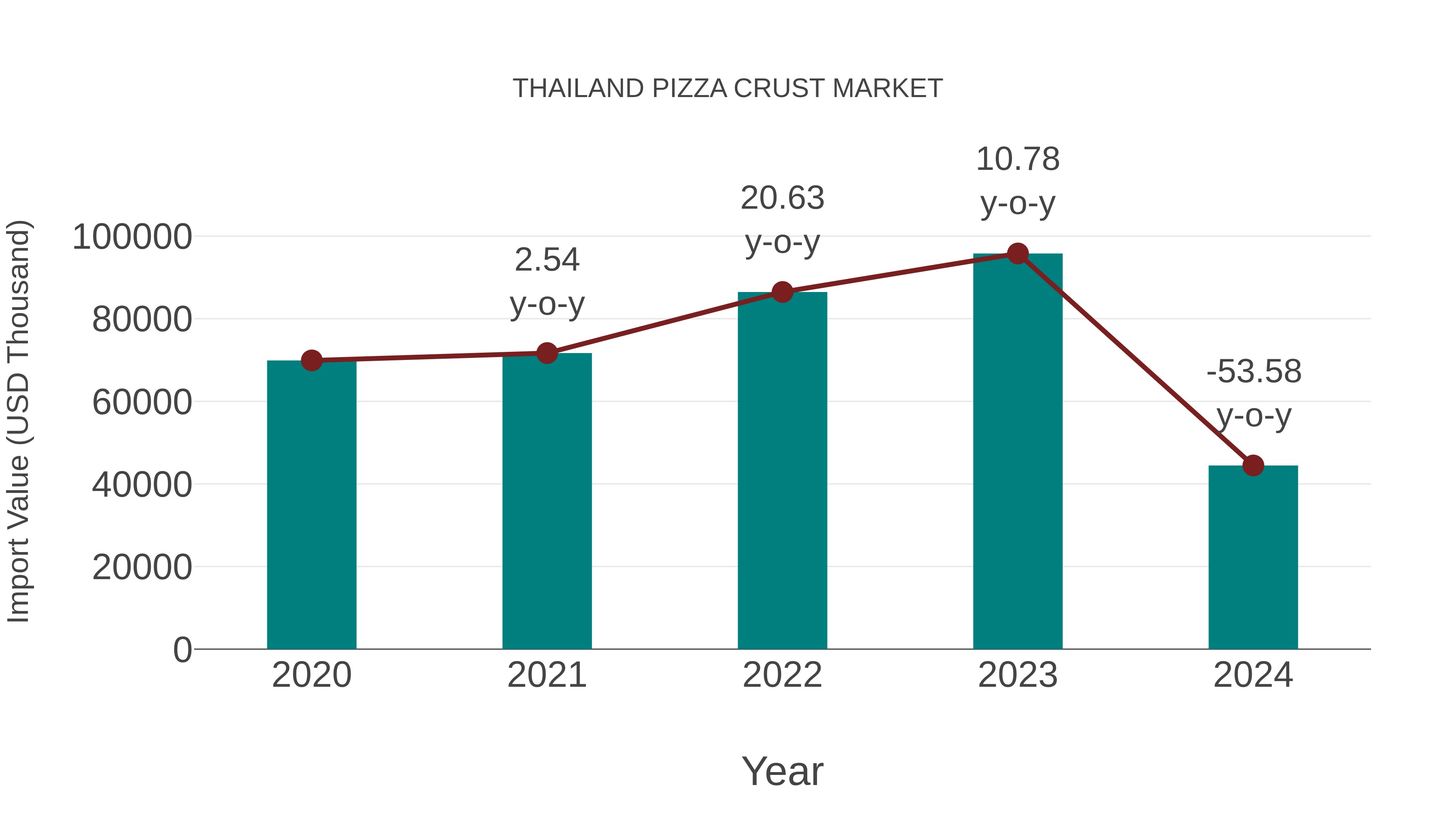
Thailand import trend for the pizza crust market experienced a notable decline from 2023 to 2024, with a growth rate of -53.58%. The compound annual growth rate (CAGR) for the period 2020-2024 stood at -10.69%. This sharp decrease could be attributed to shifts in consumer preferences, changes in trade policies, or market saturation impacting import momentum.
Thailand Pizza Crust Market Synopsis
The Thailand pizza crust market is experiencing steady growth driven by increasing consumer demand for convenience foods and a rising popularity of pizza among Thai consumers. Traditional thin crust options remain popular, but there is a growing trend towards thicker and stuffed crust varieties. Local and international pizza chains are expanding their presence in the market, offering a wide range of crust options to cater to diverse consumer preferences. The market is also witnessing a shift towards healthier alternatives, with whole wheat and gluten-free crust options gaining traction. Innovative flavors and ingredients are being introduced to appeal to the evolving tastes of Thai consumers. Overall, the Thailand pizza crust market presents opportunities for manufacturers to innovate and differentiate their products to meet the changing demands of consumers.
Thailand Pizza Crust Market Trends
The Thailand Pizza Crust Market is experiencing a growing trend towards healthier and more diverse options to cater to changing consumer preferences. There is a rising demand for gluten-free, whole wheat, and plant-based crust options, driven by increasing health consciousness among consumers. Additionally, there is a growing interest in artisanal and gourmet pizza crusts, providing opportunities for premiumization and differentiation in the market. With the increasing popularity of delivery and takeaway services, there is a significant opportunity for pizza crust manufacturers to collaborate with pizza chains and restaurants to offer innovative and convenient crust solutions. Embracing sustainability practices, such as using locally sourced ingredients and eco-friendly packaging, can also be a key differentiator in this competitive market landscape.
Thailand Pizza Crust Market Challenges
In the Thailand Pizza Crust Market, one of the main challenges faced is the competition from traditional Thai cuisine, which holds a strong presence in the local food industry. Thai consumers have a preference for their traditional dishes over Western-style pizzas, making it difficult for pizza crust products to gain widespread acceptance. Additionally, the rising health consciousness among Thai consumers poses a challenge, as many are seeking healthier and more nutritious food options, which may not align with the perception of pizza as a high-calorie and indulgent meal. Furthermore, logistical challenges related to the distribution and storage of pizza crust products in a tropical climate can impact the quality and freshness of the product, affecting consumer satisfaction and repeat purchases.
Thailand Pizza Crust Market Investment Opportunities
The Thailand Pizza Crust Market is primarily driven by the growing popularity of Western-style fast food, including pizza, among Thai consumers. The increasing influence of global food trends and the rising disposable incomes in urban areas have led to a higher demand for convenient and tasty food options like pizza. Additionally, the expansion of international pizza chains and the availability of a wide variety of toppings and crust options have further fueled the market growth. Health consciousness among consumers has also driven the demand for healthier pizza crust options, such as whole wheat or gluten-free crusts. The convenience of ready-to-bake or pre-made pizza crusts in supermarkets and online platforms has made it easier for consumers to enjoy homemade pizza, contributing to the overall growth of the Thailand Pizza Crust Market.
Thailand Pizza Crust Market Government Polices
The Thailand Pizza Crust Market is subject to various government policies that affect its operations. The Thai government has implemented regulations related to food safety and hygiene standards to ensure the quality of pizza crusts produced and sold in the market. Additionally, there are import and export regulations that impact the sourcing of ingredients for pizza crusts, as well as the distribution of finished products. In recent years, the government has also shown support for promoting local food production and entrepreneurship, which could potentially benefit domestic pizza crust manufacturers. Overall, compliance with government regulations is essential for businesses operating in the Thailand Pizza Crust Market to maintain quality standards and ensure consumer trust.
Thailand Pizza Crust Market Future Outlook
The future outlook for the Thailand Pizza Crust Market appears promising, driven by factors such as the increasing popularity of Western fast-food chains, rising disposable incomes, and changing consumer preferences towards convenience foods. As urbanization and hectic lifestyles continue to prevail in Thailand, the demand for ready-to-eat pizza crusts is expected to grow steadily. Health consciousness among consumers may also drive the demand for healthier and artisanal pizza crust options, promoting innovation in the market. Additionally, the growing trend of food delivery services and online ordering platforms is likely to further boost the consumption of pizza crusts in Thailand. Overall, the market is anticipated to witness growth opportunities for both traditional and innovative pizza crust offerings in the coming years.
Key Highlights of the Report:
- Thailand Pizza Crust Market Outlook
- Market Size of Thailand Pizza Crust Market, 2025
- Forecast of Thailand Pizza Crust Market, 2032
- Historical Data and Forecast of Thailand Pizza Crust Revenues & Volume for the Period 2022 - 2032F
- Thailand Pizza Crust Market Trend Evolution
- Thailand Pizza Crust Market Drivers and Challenges
- Thailand Pizza Crust Price Trends
- Thailand Pizza Crust Porter's Five Forces
- Thailand Pizza Crust Industry Life Cycle
- Historical Data and Forecast of Thailand Pizza Crust Market Revenues & Volume By Type for the Period 2022 - 2032F
- Historical Data and Forecast of Thailand Pizza Crust Market Revenues & Volume By Par-Baked Crusts for the Period 2022 - 2032F
- Historical Data and Forecast of Thailand Pizza Crust Market Revenues & Volume By Wood-Fired Crusts for the Period 2022 - 2032F
- Historical Data and Forecast of Thailand Pizza Crust Market Revenues & Volume By Self-Rising Crusts for the Period 2022 - 2032F
- Historical Data and Forecast of Thailand Pizza Crust Market Revenues & Volume By Custom Crusts for the Period 2022 - 2032F
- Historical Data and Forecast of Thailand Pizza Crust Market Revenues & Volume By Others for the Period 2022 - 2032F
- Historical Data and Forecast of Thailand Pizza Crust Market Revenues & Volume By Size for the Period 2022 - 2032F
- Historical Data and Forecast of Thailand Pizza Crust Market Revenues & Volume By Thick Pizza Crusts for the Period 2022 - 2032F
- Historical Data and Forecast of Thailand Pizza Crust Market Revenues & Volume By Thin Pizza Crusts for the Period 2022 - 2032F
- Historical Data and Forecast of Thailand Pizza Crust Market Revenues & Volume By Organic/Conventional for the Period 2022 - 2032F
- Historical Data and Forecast of Thailand Pizza Crust Market Revenues & Volume By Organic for the Period 2022 - 2032F
- Historical Data and Forecast of Thailand Pizza Crust Market Revenues & Volume By Conventional for the Period 2022 - 2032F
- Historical Data and Forecast of Thailand Pizza Crust Market Revenues & Volume By Distribution Channel for the Period 2022 - 2032F
- Historical Data and Forecast of Thailand Pizza Crust Market Revenues & Volume By Business to Business for the Period 2022 - 2032F
- Historical Data and Forecast of Thailand Pizza Crust Market Revenues & Volume By Supermarkets and Hypermarkets for the Period 2022 - 2032F
- Historical Data and Forecast of Thailand Pizza Crust Market Revenues & Volume By Convenience Stores for the Period 2022 - 2032F
- Historical Data and Forecast of Thailand Pizza Crust Market Revenues & Volume By Bakeries for the Period 2022 - 2032F
- Historical Data and Forecast of Thailand Pizza Crust Market Revenues & Volume By Online for the Period 2022 - 2032F
- Historical Data and Forecast of Thailand Pizza Crust Market Revenues & Volume By Others for the Period 2022 - 2032F
- Thailand Pizza Crust Import Export Trade Statistics
- Market Opportunity Assessment By Type
- Market Opportunity Assessment By Size
- Market Opportunity Assessment By Organic/Conventional
- Market Opportunity Assessment By Distribution Channel
- Thailand Pizza Crust Top Companies Market Share
- Thailand Pizza Crust Competitive Benchmarking By Technical and Operational Parameters
- Thailand Pizza Crust Company Profiles
- Thailand Pizza Crust Key Strategic Recommendations






































