Thailand Plastic Furniture Market: Import Trend Analysis
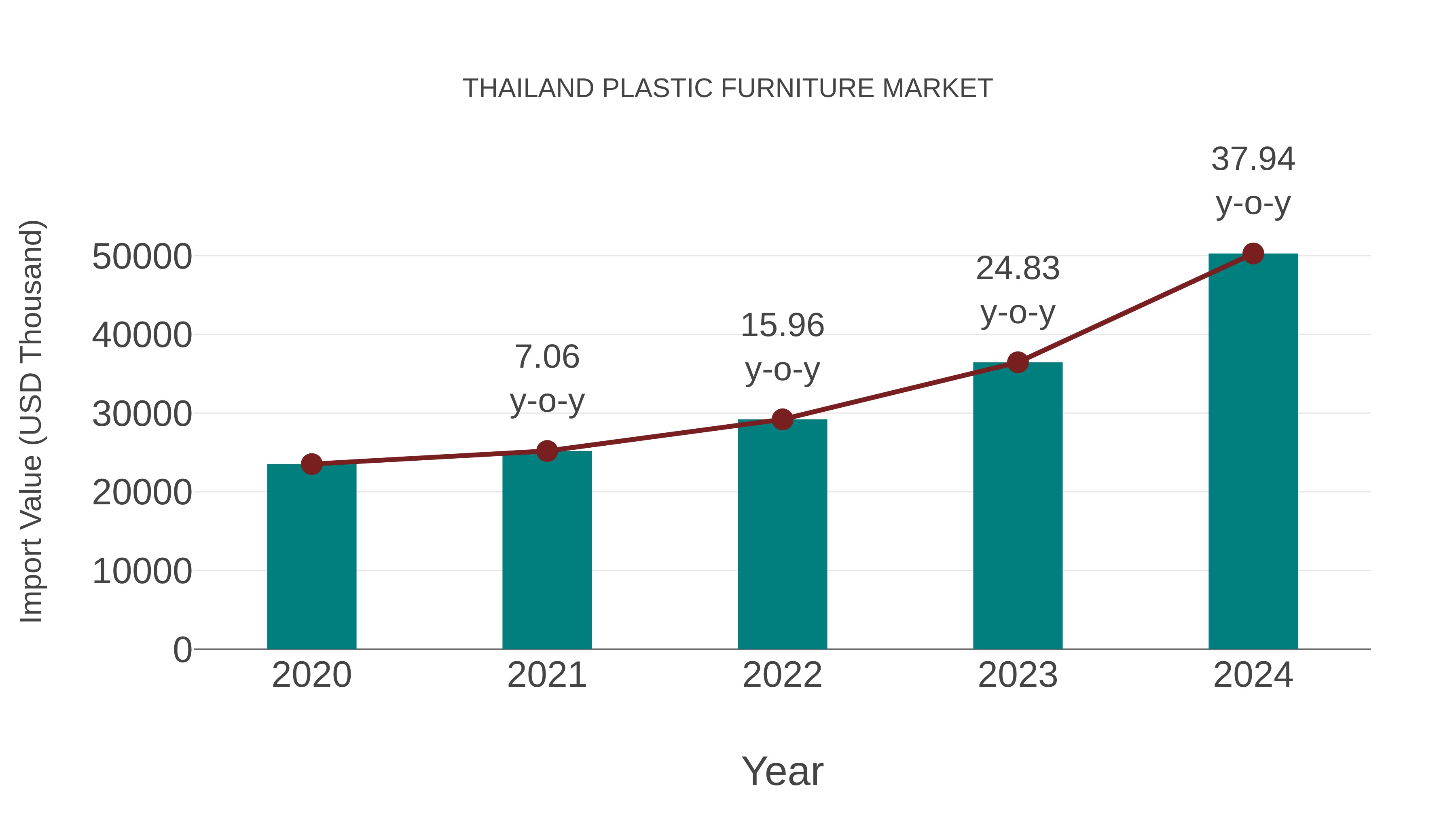
In 2024, Thailand import momentum for the plastic furniture market exhibited robust growth, with a notable increase of 37.94% from the previous year. The compound annual growth rate (CAGR) from 2020 to 2024 stood at 20.92%. This surge in imports can be attributed to shifting consumer preferences towards durable and cost-effective furniture solutions, driving market stability and increasing demand for plastic furniture in Thailand.
Plastic Furniture Market: Thailand vs Top 5 Major Economies in 2027 (Asia)
By 2027, Thailand's Plastic Furniture market is forecasted to achieve a growing growth rate of 6.57%, with China leading the Asia region, followed by India, Japan, Australia and South Korea.

Thailand Plastic Furniture Market Synopsis
Plastic furniture holds a significant share in Thailand furniture market due to its affordability and versatility. Plastic chairs, tables, and storage solutions are popular choices for both residential and commercial use. Local manufacturers produce a variety of plastic furniture items to meet the diverse needs of consumers.
Drivers of the Market
The Thailand plastic furniture market is expanding due to several key drivers. Firstly, the affordability and lightweight nature of plastic furniture make it an attractive option for consumers looking for budget-friendly and portable seating and storage solutions. Secondly, the ease of maintenance and resistance to environmental factors such as humidity make plastic furniture ideal for the Thai climate. Thirdly, the growing trend of eco-consciousness has led to the development of recycled and sustainable plastic furniture options, further promoting market growth.
Challenges of the Market
The Thailand plastic furniture market faces competition from alternative materials like wood and metal. Environmental concerns related to plastic waste also pose challenges for the industry. Manufacturers need to innovate with eco-friendly materials and designs to address these concerns and appeal to environmentally conscious consumers.
COVID-19 Impact on the Market
The Thailand plastic furniture market experienced a significant impact from the COVID-19 pandemic. As the pandemic spread, various restrictions and lockdowns were imposed, leading to disruptions in the supply chain and manufacturing processes. Consumer spending declined due to economic uncertainties and reduced disposable income, affecting the demand for plastic furniture. With many people staying at home, there was a shift towards online shopping, which offered some respite to the market. However, the overall market saw a decrease in sales and production.
Key Players in the Market
The Thailand plastic furniture market is characterized by key players who manufacture a wide variety of plastic furniture items for residential and commercial use. Brands like PlastiCraft Furniture, EcoPoly Furnishings, and PolyDesigns are known for their affordable and versatile plastic furniture options that cater to different consumer needs.
Key Highlights of the Report:
- Thailand Plastic Furniture Market Outlook
- Market Size of Thailand Plastic Furniture Market, 2025
- Forecast of Thailand Plastic Furniture Market, 2032
- Historical Data and Forecast of Thailand Plastic Furniture Revenues & Volume for the Period 2022-2032F
- Thailand Plastic Furniture Market Trend Evolution
- Thailand Plastic Furniture Market Drivers and Challenges
- Thailand Plastic Furniture Price Trends
- Thailand Plastic Furniture Porter's Five Forces
- Thailand Plastic Furniture Industry Life Cycle
- Historical Data and Forecast of Thailand Plastic Furniture Market Revenues & Volume By Distribution Channel for the Period 2022-2032F
- Historical Data and Forecast of Thailand Plastic Furniture Market Revenues & Volume By Online for the Period 2022-2032F
- Historical Data and Forecast of Thailand Plastic Furniture Market Revenues & Volume By Offline for the Period 2022-2032F
- Historical Data and Forecast of Thailand Plastic Furniture Market Revenues & Volume By Application for the Period 2022-2032F
- Historical Data and Forecast of Thailand Plastic Furniture Market Revenues & Volume By Residential for the Period 2022-2032F
- Historical Data and Forecast of Thailand Plastic Furniture Market Revenues & Volume By Commercial for the Period 2022-2032F
- Thailand Plastic Furniture Import Export Trade Statistics
- Market Opportunity Assessment By Distribution Channel
- Market Opportunity Assessment By Application
- Thailand Plastic Furniture Top Companies Market Share
- Thailand Plastic Furniture Competitive Benchmarking By Technical and Operational Parameters
- Thailand Plastic Furniture Company Profiles
- Thailand Plastic Furniture Key Strategic Recommendations






































