Thailand Processed Food Market: Import Trend Analysis
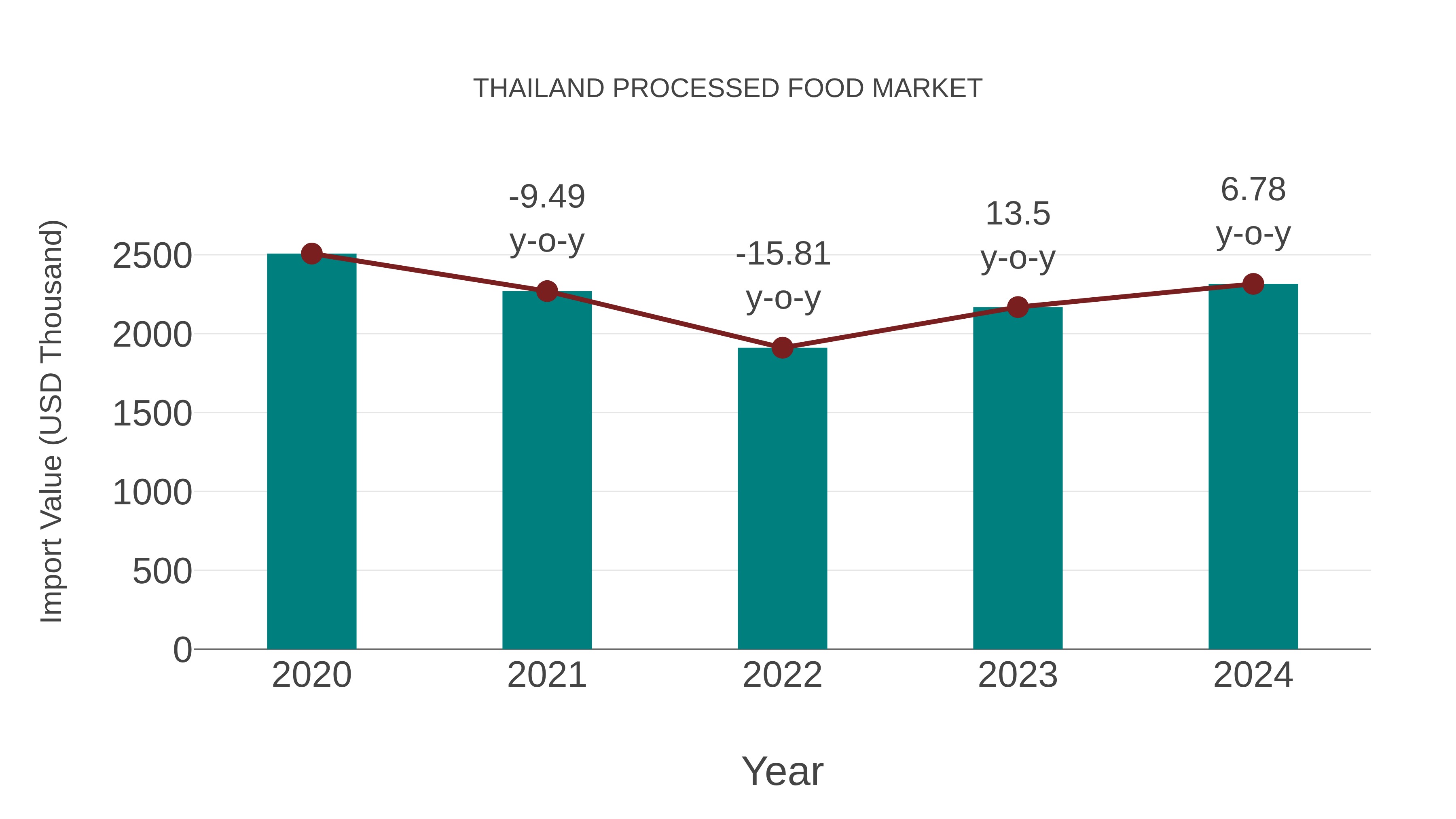
In the Thailand processed food market, the import trend saw a growth rate of 6.78% from 2023 to 2024, contrasting with a compound annual growth rate (CAGR) of -1.97% from 2020 to 2024. This shift could be attributed to evolving consumer preferences or changes in trade policies impacting market dynamics.
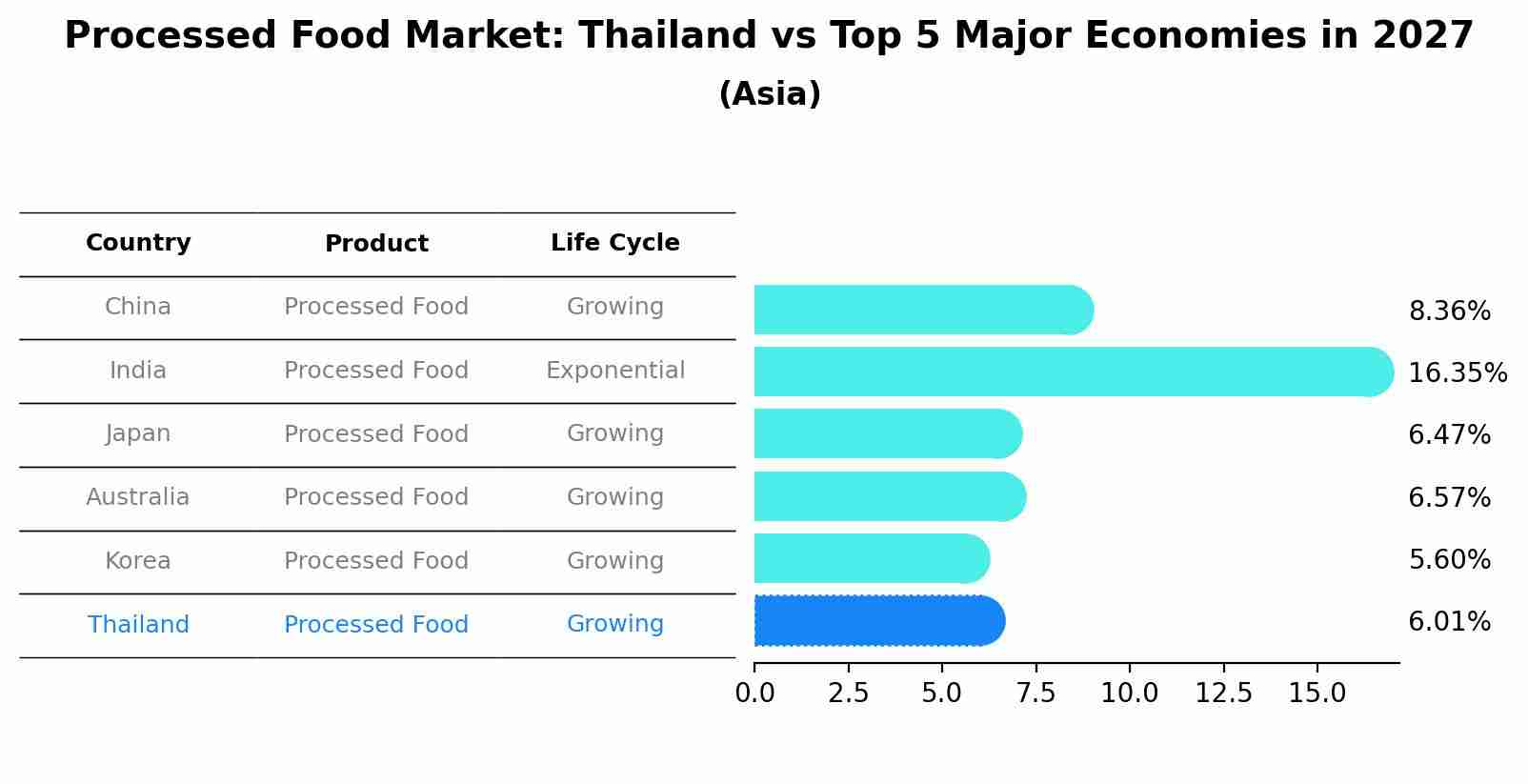
Processed Food Market: Thailand vs Top 5 Major Economies in 2027 (Asia)
The Processed Food market in Thailand is projected to grow at a growing growth rate of 6.01% by 2027, within the Asia region led by China, along with other countries like India, Japan, Australia and South Korea, collectively shaping a dynamic and evolving market environment driven by innovation and increasing adoption of emerging technologies.
Thailand Processed Food Market Synopsis
The Thailand Processed Food market is expanding as consumers seek convenient and ready-to-eat food options. Urbanization and changing lifestyles have boosted the demand for packaged and processed foods. Key segments include snacks, frozen foods, and canned products. Market players are focused on introducing healthier and innovative processed food options to cater to evolving consumer preferences.
Drivers of the Market
The Thailand Processed Food market is propelled by changing consumer lifestyles and preferences. As urbanization continues, people are leading busier lives and seeking convenient food options. Processed foods offer the advantage of easy preparation and storage, making them increasingly popular. Furthermore, the export potential of Thai processed foods, especially products like rice, noodles, and canned seafood, is driving growth in this market.
Challenges of the Market
In the Thailand Processed Food Market, challenges primarily revolve around food safety and quality control. Maintaining high standards in food processing and packaging is crucial to meet consumer expectations and comply with regulatory requirements. Additionally, fluctuations in the prices of raw materials and transportation costs can impact profit margins in this industry.
COVID-19 Impact on the Market
The COVID-19 pandemic had a significant impact on the Thailand Processed Food Market. With lockdowns and restrictions on dining out, consumer preferences shifted toward packaged and processed foods that could be easily prepared at home. This led to an initial surge in demand for processed food products. However, the market also faced challenges in terms of supply chain disruptions, labor shortages in food processing facilities, and health and safety concerns. As the pandemic continued, there was increased scrutiny on food safety and hygiene practices. The market adapted by implementing stricter safety measures and emphasizing the nutritional value of processed food products. Despite initial disruptions, the processed food market remained resilient, with a continued focus on convenience and health-conscious offerings.
Key Players in the Market
The Thailand Processed Food Market features several prominent companies that have excelled in providing a wide array of processed food products to meet consumer demands. Leading players such as ThaiTaste Foods, FoodMasters Thailand, and Gourmet Delights Co. have built strong reputations for delivering delicious and convenient processed food options. Their commitment to quality and innovative product development has solidified their positions in the competitive processed food market in Thailand.
Key Highlights of the Report:
- Thailand Processed Food Market Outlook
- Market Size of Thailand Processed Food Market, 2025
- Forecast of Thailand Processed Food Market, 2032
- Historical Data and Forecast of Thailand Processed Food Revenues & Volume for the Period 2022-2032F
- Thailand Processed Food Market Trend Evolution
- Thailand Processed Food Market Drivers and Challenges
- Thailand Processed Food Price Trends
- Thailand Processed Food Porter's Five Forces
- Thailand Processed Food Industry Life Cycle
- Historical Data and Forecast of Thailand Processed Food Market Revenues & Volume By Process for the Period 2022-2032F
- Historical Data and Forecast of Thailand Processed Food Market Revenues & Volume By Minimally for the Period 2022-2032F
- Historical Data and Forecast of Thailand Processed Food Market Revenues & Volume By Highly for the Period 2022-2032F
- Historical Data and Forecast of Thailand Processed Food Market Revenues & Volume By Product type for the Period 2022-2032F
- Historical Data and Forecast of Thailand Processed Food Market Revenues & Volume By Plant based for the Period 2022-2032F
- Historical Data and Forecast of Thailand Processed Food Market Revenues & Volume By Fruits for the Period 2022-2032F
- Historical Data and Forecast of Thailand Processed Food Market Revenues & Volume By Vegetables for the Period 2022-2032F
- Historical Data and Forecast of Thailand Processed Food Market Revenues & Volume By Legumes for the Period 2022-2032F
- Historical Data and Forecast of Thailand Processed Food Market Revenues & Volume By Extracted foods for the Period 2022-2032F
- Historical Data and Forecast of Thailand Processed Food Market Revenues & Volume By Others for the Period 2022-2032F
- Historical Data and Forecast of Thailand Processed Food Market Revenues & Volume By Animal based for the Period 2022-2032F
- Historical Data and Forecast of Thailand Processed Food Market Revenues & Volume By Milk for the Period 2022-2032F
- Historical Data and Forecast of Thailand Processed Food Market Revenues & Volume By Application for the Period 2022-2032F
- Historical Data and Forecast of Thailand Processed Food Market Revenues & Volume By Baked foods for the Period 2022-2032F
- Historical Data and Forecast of Thailand Processed Food Market Revenues & Volume By Baby food for the Period 2022-2032F
- Historical Data and Forecast of Thailand Processed Food Market Revenues & Volume By Breakfast Cereal for the Period 2022-2032F
- Historical Data and Forecast of Thailand Processed Food Market Revenues & Volume By Biscuits for the Period 2022-2032F
- Historical Data and Forecast of Thailand Processed Food Market Revenues & Volume By Cheese for the Period 2022-2032F
- Historical Data and Forecast of Thailand Processed Food Market Revenues & Volume By Chocolate confectionary for the Period 2022-2032F
- Historical Data and Forecast of Thailand Processed Food Market Revenues & Volume By Ice creams for the Period 2022-2032F
- Historical Data and Forecast of Thailand Processed Food Market Revenues & Volume By Instant Noodles for the Period 2022-2032F
- Thailand Processed Food Import Export Trade Statistics
- Market Opportunity Assessment By Process
- Market Opportunity Assessment By Product type
- Market Opportunity Assessment By Application
- Thailand Processed Food Top Companies Market Share
- Thailand Processed Food Competitive Benchmarking By Technical and Operational Parameters
- Thailand Processed Food Company Profiles
- Thailand Processed Food Key Strategic Recommendations






































