Thailand Radio Receivers Market Summary
The thailand radio receivers market was estimated at USD 243 Million in 2025 and is projected to reach USD 278 Million by 2032, growing at a CAGR of 3.3% from 2026 to 2032.
Thailand Radio Receivers Market Year-wise Growth Rate and Key Drivers
This graph highlights how the Thailand Radio Receivers Market has steadily grown over the past five years, supported by major growth factors.
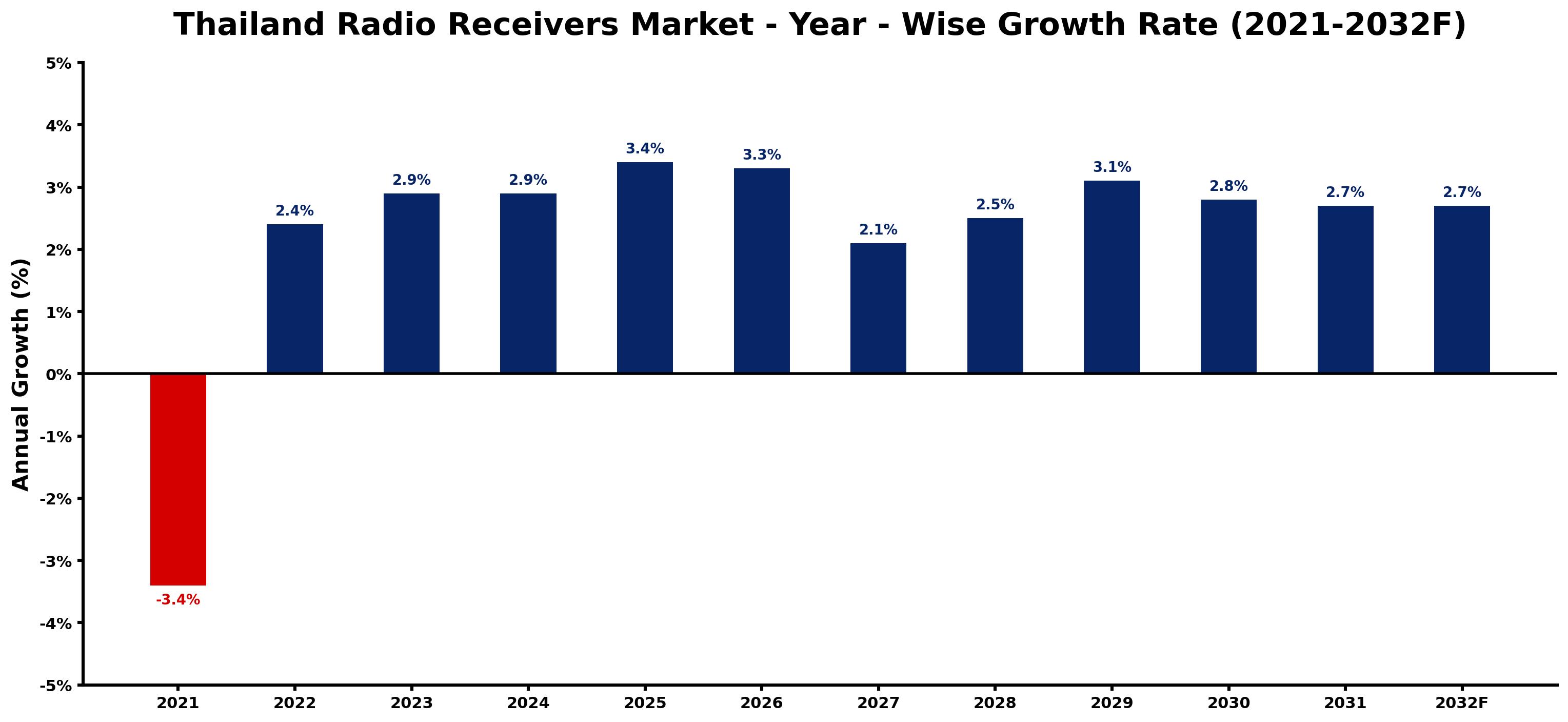
The table below presents the year wise growth rates along with the key drivers influencing the market
| Year | Growth Rate | Major Drivers |
| 2021 | -3.4% | Increased smartphone penetration diminished demand for traditional radio receivers among techsavvy consumers. |
| 2022 | 2.4% | The integration of Bluetooth technology into radio receivers attracted younger audiences. |
| 2023 | 2.9% | Consumer preferences shifted towards multifunctional devices, merging radios with smart technology. |
| 2024 | 2.9% | Local manufacturers ramped up production, enhancing affordability and accessibility for households. |
| 2025 | 3.4% | Increased urbanization led to higher demand for portable, battery-operated radio devices. |
| 2026 | 3.3% | Emerging podcast popularity created new markets for radio receivers with streaming capabilities. |
| 2027 | 2.1% | Collaborations with automotive industries expanded radio receiver installations in smart vehicles. |
| 2028 | 2.5% | Digital signal enhancements improved audio quality, enticing audiophiles and casual listeners alike. |
| 2029 | 3.1% | Community-driven radio stations flourished, fostering local content creation and listener engagement. |
| 2030 | 2.8% | Environmental awareness encouraged the development of solar-powered radio receiver models. |
| 2031 | 2.7% | Youth engagement in radio programming fueled interest in bespoke content and formats. |
| 2032 | 2.7% | Technological convergence saw radio receivers becoming integral to home automation systems. |
Note - Market size estimations and growth projections presented in this report are based on 6Wresearch's advanced forecasting approach, validated with industry datasets as of June 2026.
Thailand Radio Receivers Market Synopsis
The Thailand Radio Receivers Market is projected to reach 3.3% and witness significant growth during the forecast period (2026-2032). The anticipated compound annual growth rate (CAGR) of 6.75% reflects a robust upward trajectory, primarily fueled by factors such as the expanding number of digital radio stations, increasing disposable incomes, and evolving consumer lifestyles within the country. These dynamics are expected to foster a conducive environment for the radio receivers market in Thailand.
Thailand Radio Receivers Market Growth Drivers
Several critical growth drivers are propelling the Thailand Radio Receivers Market. Firstly, rising disposable income among Thai consumers has led to a greater willingness to invest in advanced audio technology. These consumers are increasingly drawn toward sophisticated products, including smart radios that offer connectivity through Wi-Fi and Bluetooth, thus enhancing the overall user experience.
- The proliferation of digital radio stations across Thailand is a significant catalyst for market growth, providing consumers with better sound quality and a broader range of programming options. This shift encourages more listeners to invest in radio receivers capable of accessing these digital formats.
- The convergence of technology is another driving force. As more households adopt smart home technologies, the integration of radio receivers with other home entertainment systems becomes increasingly appealing. This trend is expected to bolster demand for multifunctional and interactive radio devices.
- Consumer preferences are evolving, prioritizing quality and user experience. The growing inclination towards audio devices that offer immersive sound experiences and modern design is influencing purchasing decisions, further driving market growth.
- The rising trend of audio streaming has created awareness and interest in radio receivers, particularly those that support internet connectivity. This adaptation to modern listening habits is essential for manufacturers aiming to align their products with consumer expectations.
- The ongoing urbanization in Thailand is contributing to a broader audience for radio content, as urban dwellers seek new forms of entertainment and information dissemination, thereby positively impacting the radio receivers market.
Thailand Radio Receivers Market Challenges and Restraints
While the Thailand Radio Receivers Market is poised for significant growth, it faces challenges that could impede its development. The primary challenge is the rapid advancement of technology, particularly the ubiquity of smartphones equipped with internet access. These devices provide users with easy access to a multitude of online streaming services, which may divert attention away from traditional radio receivers.
- The changing landscape of media consumption is another challenge, as consumers increasingly favor digital formats over traditional radio. This shift may limit the market's growth potential unless manufacturers innovate to enhance the appeal of radio receivers.
- Price sensitivity remains an ongoing concern. As consumers become more discerning in their spending habits, manufacturers will need to balance premium features with affordability to attract a broader audience.
- Supply chain disruptions caused by global events can impact production capabilities, leading to shortages or delays in the availability of radio receiver products. The market must remain agile in addressing such challenges.
- Marketing and education efforts are required to reinvigorate interest in radio receivers, particularly among younger demographics who may prioritize other forms of media consumption. Without effective strategies, growth could stagnate.
Thailand Radio Receivers Market Government Investment and Initiatives
The Thai government has recognized the importance of the radio broadcasting sector and is committed to fostering its growth through various initiatives and investments. Efforts to enhance digital broadcasting infrastructure have been a priority, aimed at improving access to quality radio services across the country.
- Public spending in the telecommunications and broadcasting sectors is being directed towards upgrading existing facilities and launching new technologies. This investment will significantly enhance the quality of radio transmission.
- The government's initiatives to promote digital literacy among the population have the potential to impact the radio receivers market positively. Educating consumers about the benefits of digital radio could stimulate demand.
- Regulatory frameworks encouraging competition among service providers are being established, which can lead to improvements in service delivery and innovation in the radio receivers segment.
- Support for local manufacturers through subsidies and grants can bolster the domestic production of radio receivers, making advanced technologies more accessible to consumers while stimulating local economies.
- Strategic partnerships between the government and private sectors are being encouraged to develop comprehensive solutions that address the evolving needs of radio consumers in Thailand.
Thailand Radio Receivers Market Latest Developments (May 2025 - June 2026)
The period between May 2025 and June 2026 has witnessed notable developments in the Thailand Radio Receivers Market. The introduction of new digital models by various manufacturers has significantly reshaped the competitive landscape, with a focus on enhancing user experience through improved connectivity options.
- Emerging trends indicate a growing preference for eco-friendly radio receivers, prompting several manufacturers to invest in sustainable materials and energy-efficient technologies.
- Research and development activities have intensified, leading to innovative features such as voice control and integration with smart home systems, reflecting the industry's response to consumer demand for convenience.
- A surge in promotional campaigns has been observed as brands strive to increase market penetration and enhance brand awareness among consumers, particularly in urban areas.
- Collaborations between traditional radio stations and digital platforms have emerged, creating hybrid content offerings that cater to diverse audience preferences, thus expanding the reach of radio programming.
- Market players are increasingly focusing on customer engagement strategies, utilizing social media and online platforms to create interactive experiences for audiences, aimed at revitalizing interest in radio as a medium.
Thailand Radio Receivers Market - Key Attractiveness of the Report
- 10 Years of Market Numbers
- Historical Data Starting from 2022 to 2025
- Base Year: 2025
- Forecast Data until 2032
- Key Performance Indicators Impacting the Market
- Major Upcoming Developments and Projects
Key Highlights of the Report:
- Thailand Radio Receivers Market Outlook
- Market Size of Thailand Radio Receivers Market, 2025
- Forecast of Thailand Radio Receivers Market, 2032
- Historical Data and Forecast of Thailand Radio Receivers Revenues & Volume for the Period 2022-2032F
- Thailand Radio Receivers Market Trend Evolution
- Thailand Radio Receivers Market Drivers and Challenges
- Thailand Radio Receivers Price Trends
- Thailand Radio Receivers Porter's Five Forces
- Thailand Radio Receivers Industry Life Cycle
- Historical Data and Forecast of Thailand Radio Receivers Market Revenues & Volume By Product for the Period 2022-2032F
- Historical Data and Forecast of Thailand Radio Receivers Market Revenues & Volume By Power Amplifier for the Period 2022-2032F
- Historical Data and Forecast of Thailand Radio Receivers Market Revenues & Volume By Filters for the Period 2022-2032F
- Historical Data and Forecast of Thailand Radio Receivers Market Revenues & Volume By Antenna Switches for the Period 2022-2032F
- Historical Data and Forecast of Thailand Radio Receivers Market Revenues & Volume By Modulators and Demodulators for the Period 2022-2032F
- Historical Data and Forecast of Thailand Radio Receivers Market Revenues & Volume By Duplexer for the Period 2022-2032F
- Historical Data and Forecast of Thailand Radio Receivers Market Revenues & Volume By Others for the Period 2022-2032F
- Historical Data and Forecast of Thailand Radio Receivers Market Revenues & Volume By Application for the Period 2022-2032F
- Historical Data and Forecast of Thailand Radio Receivers Market Revenues & Volume By Consumer Electronics for the Period 2022-2032F
- Historical Data and Forecast of Thailand Radio Receivers Market Revenues & Volume By Automotive for the Period 2022-2032F
- Historical Data and Forecast of Thailand Radio Receivers Market Revenues & Volume By Military for the Period 2022-2032F
- Historical Data and Forecast of Thailand Radio Receivers Market Revenues & Volume By Others for the Period 2022-2032F
- Thailand Radio Receivers Import Export Trade Statistics
- Market Opportunity Assessment By Product
- Market Opportunity Assessment By Application
- Thailand Radio Receivers Top Companies Market Share
- Thailand Radio Receivers Competitive Benchmarking By Technical and Operational Parameters
- Thailand Radio Receivers Company Profiles
- Thailand Radio Receivers Key Strategic Recommendations






































