Thailand Rice Noodles Market: Import Trend Analysis
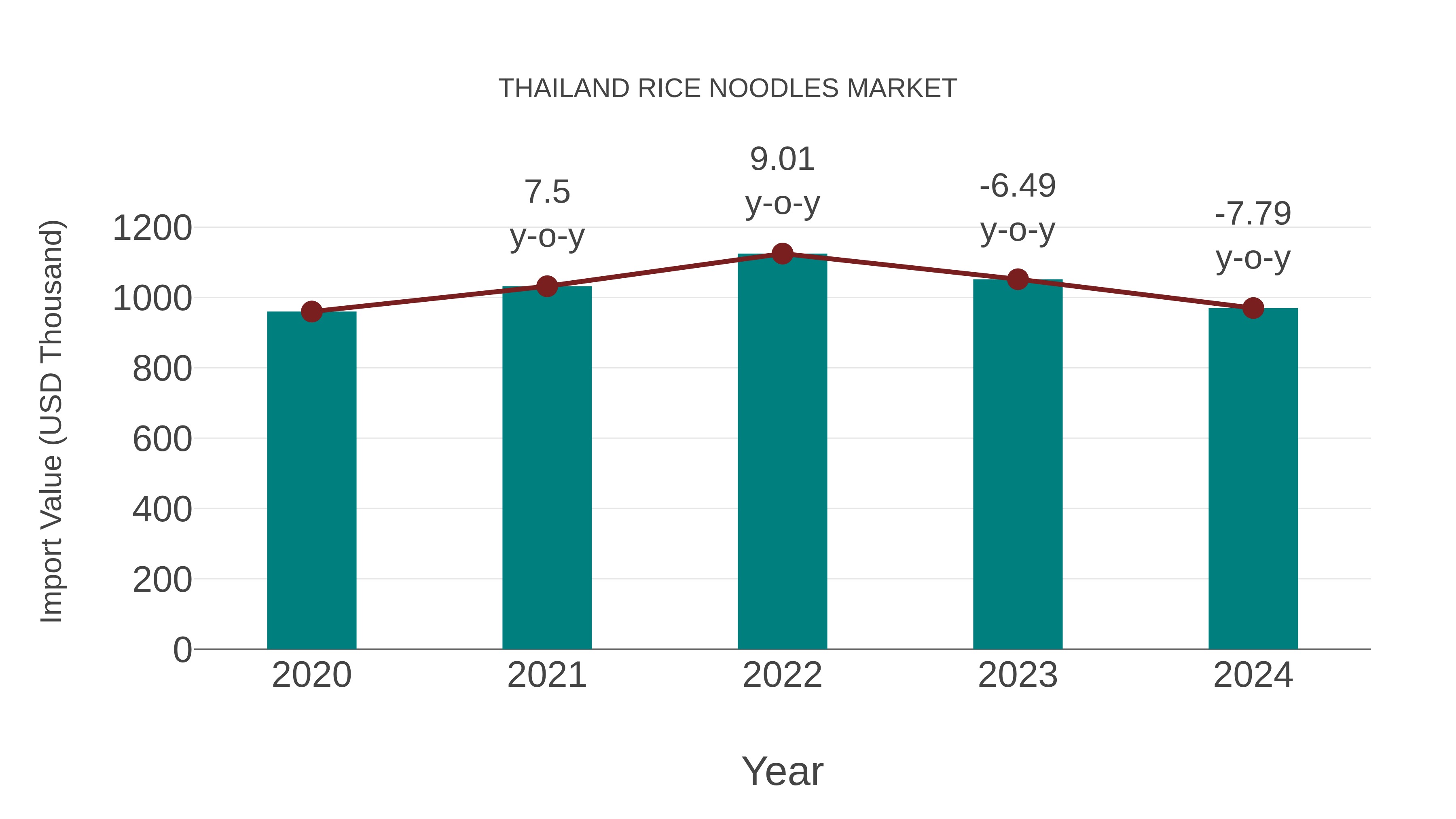
Thailand import trend for rice noodles showed a decline in growth from 2023 to 2024 with a rate of -7.79%, while the compound annual growth rate (CAGR) for 2020-2024 stood at 0.26%. This negative momentum could be attributed to shifts in consumer preferences or changes in trade policies impacting the market stability.
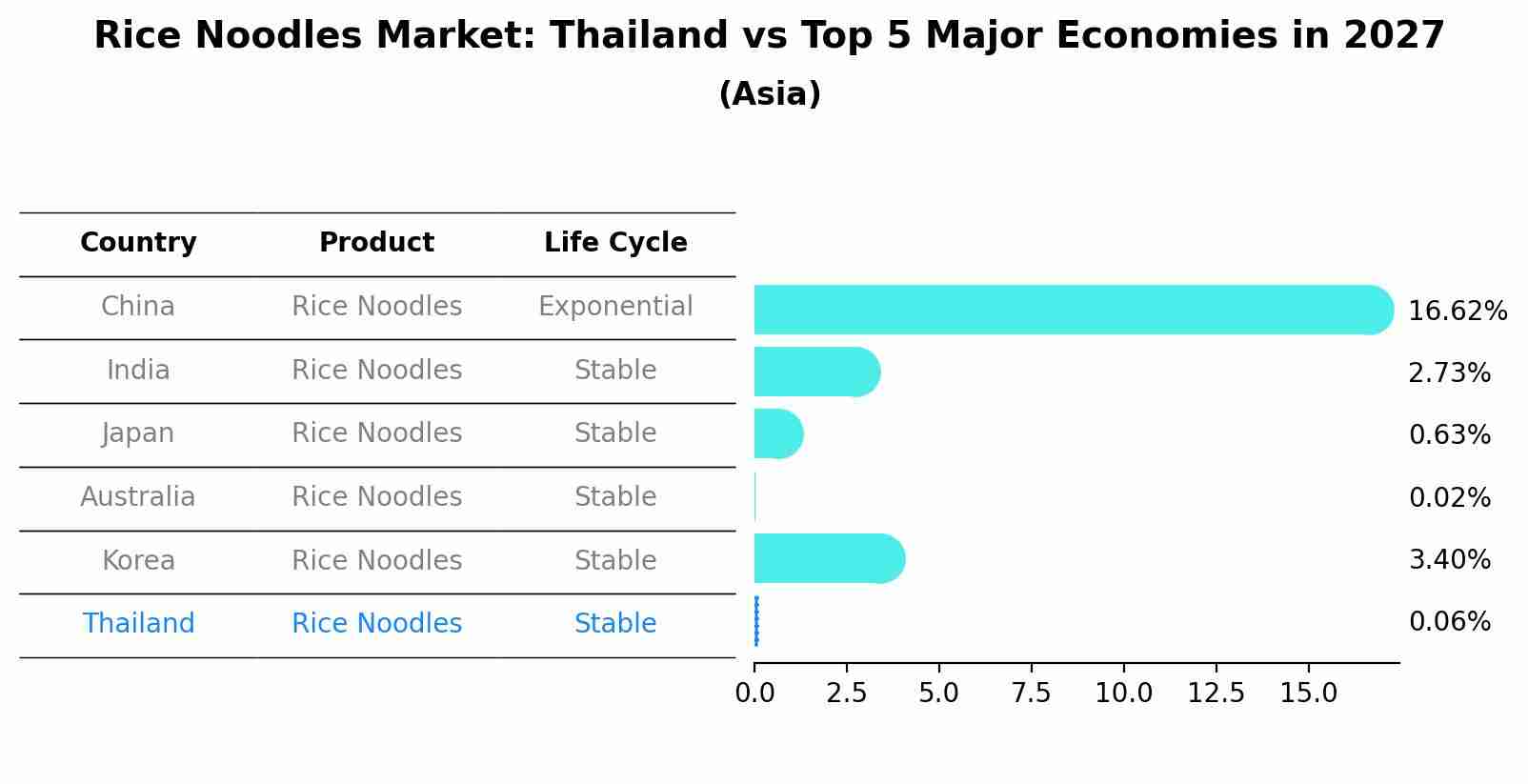
Rice Noodles Market: Thailand vs Top 5 Major Economies in 2027 (Asia)
In the Asia region, the Rice Noodles market in Thailand is projected to expand at a stable growth rate of 0.06% by 2027. The largest economy is China, followed by India, Japan, Australia and South Korea.
Thailand Rice Noodles Market Synopsis
The Thailand Rice Noodles Market is deeply rooted in Thai cuisine, with rice noodles being a staple in dishes like Pad Thai and Tom Yum. These noodles come in various shapes and s, offering versatility to both home cooks and professional chefs. The market is influenced by consumers` preference for authentic Thai flavors, and manufacturers continually innovate to cater to changing tastes.
Drivers of the Market
The Thailand rice noodles market is experiencing significant growth, driven by several factors. Firstly, rice noodles are a staple in Thai cuisine, and the country`s rich culinary heritage has contributed to their popularity. The demand for convenient and quick meal solutions has boosted the consumption of rice noodles as they are easy to prepare. Moreover, the global trend toward healthier eating has led consumers to choose rice noodles as a gluten-free and lower-calorie alternative to wheat-based pasta. The market also benefits from innovations in rice noodle products, including flavored and pre-cooked options, catering to changing consumer preferences. Furthermore, the export potential of Thai rice noodles has expanded the market`s reach to international consumers.
Challenges of the Market
In the Thailand Rice Noodles Market, challenges include the need to innovate and offer a variety of flavors and textures to cater to changing consumer preferences. Quality control during production and packaging to maintain the freshness and texture of rice noodles can also be a significant challenge. Price competition from other noodle types can affect market share.
COVID-19 Impact on the Market
The Thailand Rice Noodles market faced both challenges and opportunities due to COVID-19. While the market initially saw increased demand as consumers stockpiled non-perishable items, lockdowns and restaurant closures had a significant impact on foodservice sales, which traditionally contributed to a substantial portion of rice noodle consumption. To adapt, many manufacturers shifted their focus towards retail and e-commerce channels. Additionally, the market witnessed a growing trend of consumers looking for healthier and gluten-free rice noodle options, prompting innovation in product development.
Key Players in the Market
The Thailand rice noodles market is highly competitive, with numerous local and regional players. One of the leading companies in this segment is Thai President Foods Public Company Limited, known for its "Mama" brand rice noodles. Another key player is Thai Heritage Noodle Co., Ltd., which produces a variety of traditional and specialty rice noodle products.
Key Highlights of the Report:
- Thailand Rice Noodles Market Outlook
- Market Size of Thailand Rice Noodles Market, 2025
- Forecast of Thailand Rice Noodles Market, 2032
- Historical Data and Forecast of Thailand Rice Noodles Revenues & Volume for the Period 2022-2032F
- Thailand Rice Noodles Market Trend Evolution
- Thailand Rice Noodles Market Drivers and Challenges
- Thailand Rice Noodles Price Trends
- Thailand Rice Noodles Porter's Five Forces
- Thailand Rice Noodles Industry Life Cycle
- Historical Data and Forecast of Thailand Rice Noodles Market Revenues & Volume By Product for the Period 2022-2032F
- Historical Data and Forecast of Thailand Rice Noodles Market Revenues & Volume By Vermicelli for the Period 2022-2032F
- Historical Data and Forecast of Thailand Rice Noodles Market Revenues & Volume By Stick for the Period 2022-2032F
- Historical Data and Forecast of Thailand Rice Noodles Market Revenues & Volume By Wide for the Period 2022-2032F
- Historical Data and Forecast of Thailand Rice Noodles Market Revenues & Volume By Others for the Period 2022-2032F
- Historical Data and Forecast of Thailand Rice Noodles Market Revenues & Volume By Cooking Method for the Period 2022-2032F
- Historical Data and Forecast of Thailand Rice Noodles Market Revenues & Volume By Instant for the Period 2022-2032F
- Historical Data and Forecast of Thailand Rice Noodles Market Revenues & Volume By Conventional for the Period 2022-2032F
- Historical Data and Forecast of Thailand Rice Noodles Market Revenues & Volume By Distribution Channel for the Period 2022-2032F
- Historical Data and Forecast of Thailand Rice Noodles Market Revenues & Volume By Hypermarkets & Supermarkets for the Period 2022-2032F
- Historical Data and Forecast of Thailand Rice Noodles Market Revenues & Volume By Convenience Stores for the Period 2022-2032F
- Historical Data and Forecast of Thailand Rice Noodles Market Revenues & Volume By Online & D2C for the Period 2022-2032F
- Thailand Rice Noodles Import Export Trade Statistics
- Market Opportunity Assessment By Product
- Market Opportunity Assessment By Cooking Method
- Market Opportunity Assessment By Distribution Channel
- Thailand Rice Noodles Top Companies Market Share
- Thailand Rice Noodles Competitive Benchmarking By Technical and Operational Parameters
- Thailand Rice Noodles Company Profiles
- Thailand Rice Noodles Key Strategic Recommendations






































