Thailand Rosemary Essential Oil Market Size, Share & Growth Rate
The Thailand Rosemary Essential Oil Market was estimated at USD 203 Million in 2025 and is projected to reach USD 232 Million by 2032, growing at a CAGR of 1.9% from 2026 to 2032. This growth trajectory can be attributed to the rising consumer preference for natural wellness products and the expanding aromatherapy sector. Additionally, Thailand's ideal cultivation conditions for rosemary contribute to a consistent supply of high-quality essential oils, reinforcing market growth.
Thailand Rosemary Essential Oil Market Year-wise Growth Rate and Key Drivers
This graph highlights how the Thailand Rosemary Essential Oil Market has steadily grown over the years, supported by major growth factors.
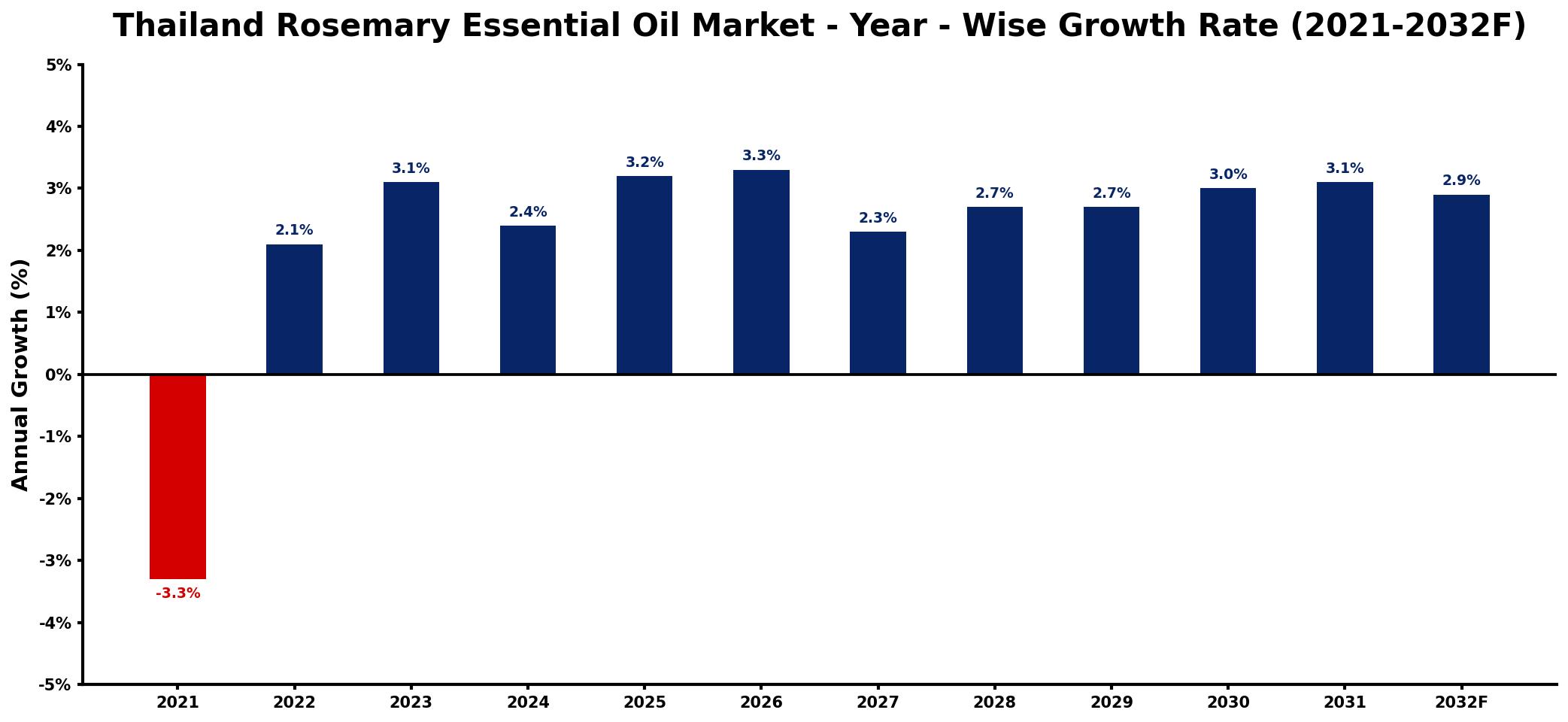
The table below presents the year‑wise growth rates along with the key drivers influencing the market
| Year | Growth Rate | Major Drivers |
| 2021 | -3.3% | decreased consumer interest in wellness |
| 2022 | 2.1% | growing popularity of natural remedies |
| 2023 | 3.1% | increased demand for aromatherapy products |
| 2024 | 2.4% | expanding manufacturing base activity |
| 2025 | 3.2% | rising consumer awareness of benefits |
| 2026 | 3.3% | growth in holistic health practices |
| 2027 | 2.3% | surge in online retail platforms |
| 2028 | 2.7% | increased interest in organic products |
| 2029 | 2.7% | increased overall sector activity |
| 2030 | 3.0% | rising infrastructure development spending |
| 2031 | 3.1% | enhanced marketing strategies for wellness |
| 2032 | 2.9% | increased collaborations with health influencers |
Note: Market size estimations and growth projections presented in this report are based on 6Wresearch's proprietary forecasting methodology, utilizing the latest available industry data, government publications, and primary research inputs.
Thailand Rosemary Essential Oil Market Synopsis
The Thai rosemary essential oil market is uniquely positioned due to its geographic advantages, with the country's favorable climate facilitating the abundant cultivation of high-quality rosemary. This is particularly beneficial for domestic producers who aim to meet the increasing local and international demand for natural essential oils.
As the popularity of holistic wellness and natural remedies grows, rosemary essential oil is increasingly being sought after for its therapeutic benefits in skincare and stress relief. This trend is bolstered by the expanding wellness tourism industry, with visitors seeking authentic, locally sourced products that align with their health-conscious lifestyles.
Thailand Rosemary Essential Oil Market Key Takeaways
- The market is driven by increasing demand for natural and organic products.
- Wellness tourism in Thailand is enhancing local product appeal.
- The therapeutic properties of rosemary oil support its growing applications.
- Consistent supply from favorable growing conditions aids market stability.
- Competition in the essential oil sector remains a challenging factor.
Evaluation of Restraints in Thailand Rosemary Essential Oil Market
Despite its growth potential, the Thailand rosemary essential oil market encounters several significant restraints. The market's reliance on specific climatic conditions can pose challenges, as adverse weather events and pests may jeopardize crop yields and oil quality. Additionally, ensuring sustainable harvesting practices is essential to maintain biodiversity and product integrity, which requires ongoing attention and resource allocation. Furthermore, the presence of alternative essential oils and herbal extracts in the market increases competition, making it vital for producers to differentiate their offerings while addressing these environmental concerns.
Thailand Rosemary Essential Oil Market Trends
Several key trends are emerging in the Thailand rosemary essential oil market. The shift towards eco-conscious consumerism is leading to an increased focus on sustainable and organic production methods. Additionally, the integration of rosemary oil into innovative cosmetic formulations is becoming more prevalent as brands seek to enhance product efficacy and appeal. Moreover, the rise of online retail channels is expanding market access, providing both producers and consumers greater convenience and choice.
Thailand Rosemary Essential Oil Market Opportunities
Investment opportunities abound in the Thailand rosemary essential oil market, particularly for producers who can leverage the country's agricultural advantages. Collaborations with wellness tourism entities can facilitate the creation of exclusive product lines that resonate with health-conscious travelers. Furthermore, expanding into export markets can capitalize on the global demand for natural essential oils. Innovative product development, including blends that combine rosemary with other essential oils, presents additional avenues for market growth.
Government Initiatives in the Thailand Rosemary Essential Oil Market
The Thai government has implemented various initiatives aimed at promoting agricultural sustainability and enhancing the essential oil sector. Policies supporting organic farming practices and eco-tourism are particularly beneficial for rosemary oil producers. Investments in research and development, along with financial incentives for sustainable cultivation methods, are also part of a broader strategy to increase the competitiveness of Thailand's agricultural products on the international stage.
Future Insights of the Thailand Rosemary Essential Oil Market
Looking ahead to 2026-2032, the Thailand rosemary essential oil market is poised for continued growth, driven by evolving consumer preferences for natural wellness solutions. As the trend towards holistic health practices deepens, rosemary oil's popularity is expected to soar. Additionally, advancements in sustainable cultivation methods and technology will likely enhance product quality and availability, providing producers with the tools necessary to meet rising global demand.
Thailand Rosemary Essential Oil Market Latest Developments (2025 - 2026)
Recent developments in the Thailand rosemary essential oil market indicate a growing emphasis on sustainability and innovation. Producers are increasingly adopting eco-friendly farming practices and exploring new extraction techniques to enhance oil purity. Furthermore, collaborations between local growers and global brands have started to emerge, aiming to introduce unique product lines to international markets. These trends signal a robust future for the industry as it adapts to changing consumer demands.
Thailand Rosemary Essential Oil Market - Key Attractiveness of the Report
- 10 Years of Market Numbers
- Historical Data Starting from 2022 to 2025
- Base Year: 2025
- Forecast Data until 2032
- Key Performance Indicators Impacting the Market
- Major Upcoming Developments and Projects
Key Highlights of the Report:
- Thailand Rosemary Essential Oil Market Outlook
- Market Size of Thailand Rosemary Essential Oil Market, 2025
- Forecast of Thailand Rosemary Essential Oil Market, 2032
- Historical Data and Forecast of Thailand Rosemary Essential Oil Revenues & Volume for the Period 2022-2032F
- Thailand Rosemary Essential Oil Market Trend Evolution
- Thailand Rosemary Essential Oil Market Drivers and Challenges
- Thailand Rosemary Essential Oil Price Trends
- Thailand Rosemary Essential Oil Porter's Five Forces
- Thailand Rosemary Essential Oil Industry Life Cycle
- Historical Data and Forecast of Thailand Rosemary Essential Oil Market Revenues & Volume By Type for the Period 2022-2032F
- Historical Data and Forecast of Thailand Rosemary Essential Oil Market Revenues & Volume By Organic for the Period 2022-2032F
- Historical Data and Forecast of Thailand Rosemary Essential Oil Market Revenues & Volume By Conventional for the Period 2022-2032F
- Historical Data and Forecast of Thailand Rosemary Essential Oil Market Revenues & Volume By Application for the Period 2022-2032F
- Historical Data and Forecast of Thailand Rosemary Essential Oil Market Revenues & Volume By Pharmaceutical industry for the Period 2022-2032F
- Historical Data and Forecast of Thailand Rosemary Essential Oil Market Revenues & Volume By Cosmetic industry for the Period 2022-2032F
- Historical Data and Forecast of Thailand Rosemary Essential Oil Market Revenues & Volume By Fragrance industry for the Period 2022-2032F
- Historical Data and Forecast of Thailand Rosemary Essential Oil Market Revenues & Volume By Distribution Channel for the Period 2022-2032F
- Historical Data and Forecast of Thailand Rosemary Essential Oil Market Revenues & Volume By Convenience store for the Period 2022-2032F
- Historical Data and Forecast of Thailand Rosemary Essential Oil Market Revenues & Volume By Food store for the Period 2022-2032F
- Historical Data and Forecast of Thailand Rosemary Essential Oil Market Revenues & Volume By Health store for the Period 2022-2032F
- Historical Data and Forecast of Thailand Rosemary Essential Oil Market Revenues & Volume By E-commerce for the Period 2022-2032F
- Thailand Rosemary Essential Oil Import Export Trade Statistics
- Market Opportunity Assessment By Type
- Market Opportunity Assessment By Application
- Market Opportunity Assessment By Distribution Channel
- Thailand Rosemary Essential Oil Top Companies Market Share
- Thailand Rosemary Essential Oil Competitive Benchmarking By Technical and Operational Parameters
- Thailand Rosemary Essential Oil Company Profiles
- Thailand Rosemary Essential Oil Key Strategic Recommendations






































