Thailand Small Wind Turbine Market: Import Trend Analysis
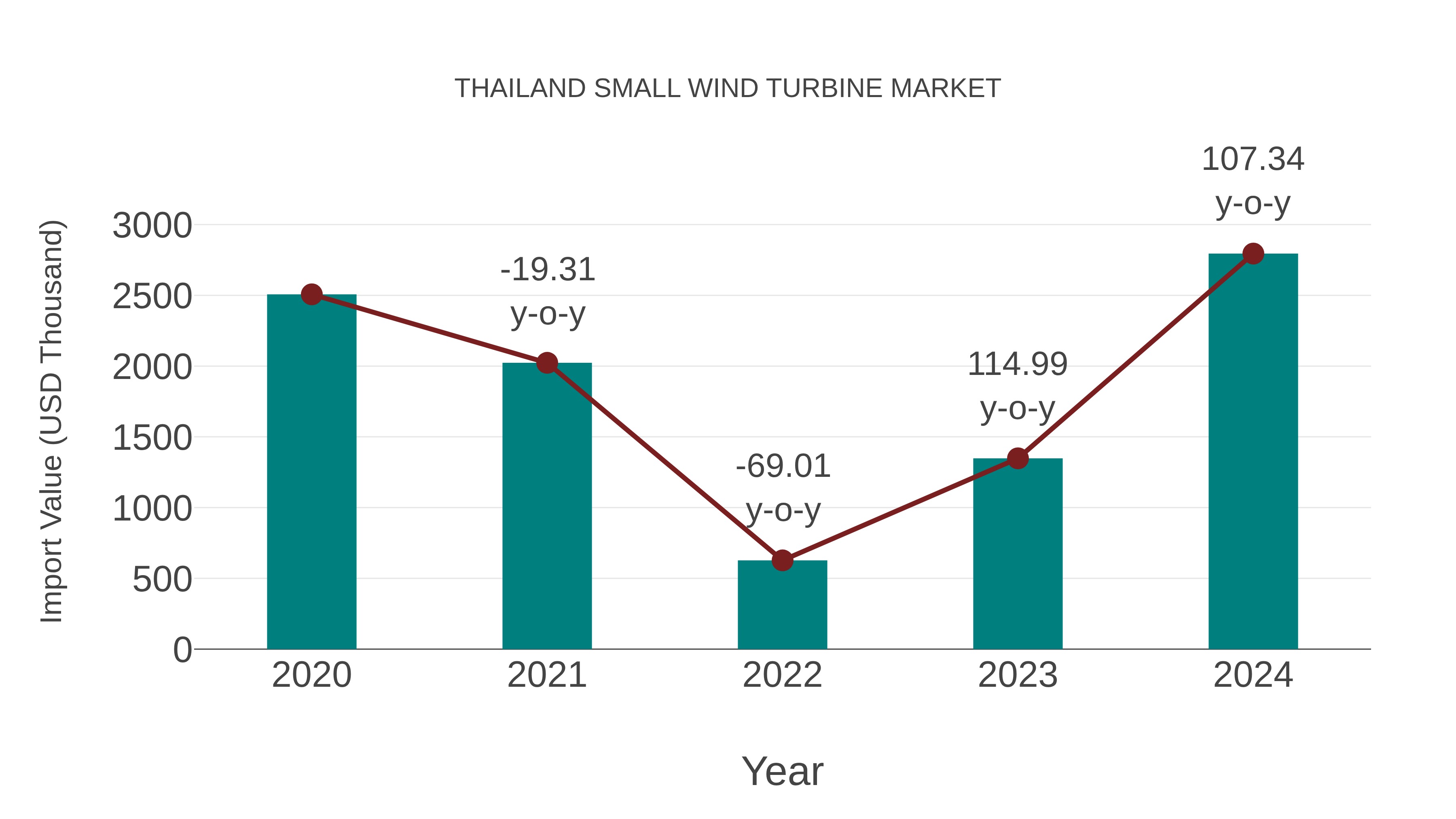
Thailand import trend for the small wind turbine market saw significant growth from 2023 to 2024, with a remarkable growth rate of 107.34%. The compound annual growth rate (CAGR) for the period 2020-2024 stood at 2.76%. This surge in imports could be attributed to a shifting demand towards sustainable energy sources in the region.
Thailand Small Wind Turbine Market Synopsis
The Thailand small wind turbine market deals with the manufacturing and installation of small-scale wind turbines designed for renewable energy generation. These turbines are typically used for decentralized power generation in rural and remote areas. The market growth is influenced by Thailand`s efforts to promote clean energy and reduce carbon emissions.
Drivers of the Market
The small wind turbine market in Thailand is experiencing growth due to the country`s efforts to expand its renewable energy capacity. Government incentives and policies promoting clean energy sources have spurred investments in wind power projects. Small wind turbines are particularly suitable for decentralized power generation in rural areas and off-grid locations, contributing to rural electrification and reducing dependence on fossil fuels. Additionally, environmental concerns and the desire for sustainable energy sources are driving the adoption of small wind turbines.
Challenges of the Market
The Thailand Small Wind Turbine Market faces challenges related to energy policies and infrastructure. Government policies play a crucial role in incentivizing renewable energy adoption, and changes in these policies can impact market growth. Furthermore, the intermittent nature of wind power necessitates grid upgrades and energy storage solutions, which can be costly. Small wind turbines also face competition from solar power, making market penetration a challenge.
COVID-19 Impact on the Market
The Thailand Small Wind Turbine market faced challenges during the COVID-19 pandemic, mainly linked to disruptions in the supply chain and project delays. As the pandemic unfolded, the supply of components and materials required for small wind turbine manufacturing was disrupted due to lockdowns and restrictions in various countries. Additionally, many wind energy projects, especially small-scale installations, experienced delays or cancellations as a result of economic uncertainties and travel restrictions. Investors and project developers became cautious, affecting the demand for small wind turbines.
Key Players in the Market
In the Thailand Small Wind Turbine market, notable players include Vestas Wind Systems A/S, Siemens Gamesa Renewable Energy, and Suzlon Energy Limited. Their wind turbine technology is pivotal in harnessing clean energy from wind resources in Thailand.
Key Highlights of the Report:
- Thailand Small Wind Turbine Market Outlook
- Market Size of Thailand Small Wind Turbine Market, 2025
- Forecast of Thailand Small Wind Turbine Market, 2032
- Historical Data and Forecast of Thailand Small Wind Turbine Revenues & Volume for the Period 2022-2032F
- Thailand Small Wind Turbine Market Trend Evolution
- Thailand Small Wind Turbine Market Drivers and Challenges
- Thailand Small Wind Turbine Price Trends
- Thailand Small Wind Turbine Porter's Five Forces
- Thailand Small Wind Turbine Industry Life Cycle
- Historical Data and Forecast of Thailand Small Wind Turbine Market Revenues & Volume By Axis Type for the Period 2022-2032F
- Historical Data and Forecast of Thailand Small Wind Turbine Market Revenues & Volume By Horizontal Axis Wind Turbine for the Period 2022-2032F
- Historical Data and Forecast of Thailand Small Wind Turbine Market Revenues & Volume By Vertical Axis Wind Turbine for the Period 2022-2032F
- Historical Data and Forecast of Thailand Small Wind Turbine Market Revenues & Volume By Application for the Period 2022-2032F
- Historical Data and Forecast of Thailand Small Wind Turbine Market Revenues & Volume By On-grid for the Period 2022-2032F
- Historical Data and Forecast of Thailand Small Wind Turbine Market Revenues & Volume By Off-grid for the Period 2022-2032F
- Thailand Small Wind Turbine Import Export Trade Statistics
- Market Opportunity Assessment By Axis Type
- Market Opportunity Assessment By Application
- Thailand Small Wind Turbine Top Companies Market Share
- Thailand Small Wind Turbine Competitive Benchmarking By Technical and Operational Parameters
- Thailand Small Wind Turbine Company Profiles
- Thailand Small Wind Turbine Key Strategic Recommendations






































