Thailand Synthetic Rope Market: Import Trend Analysis
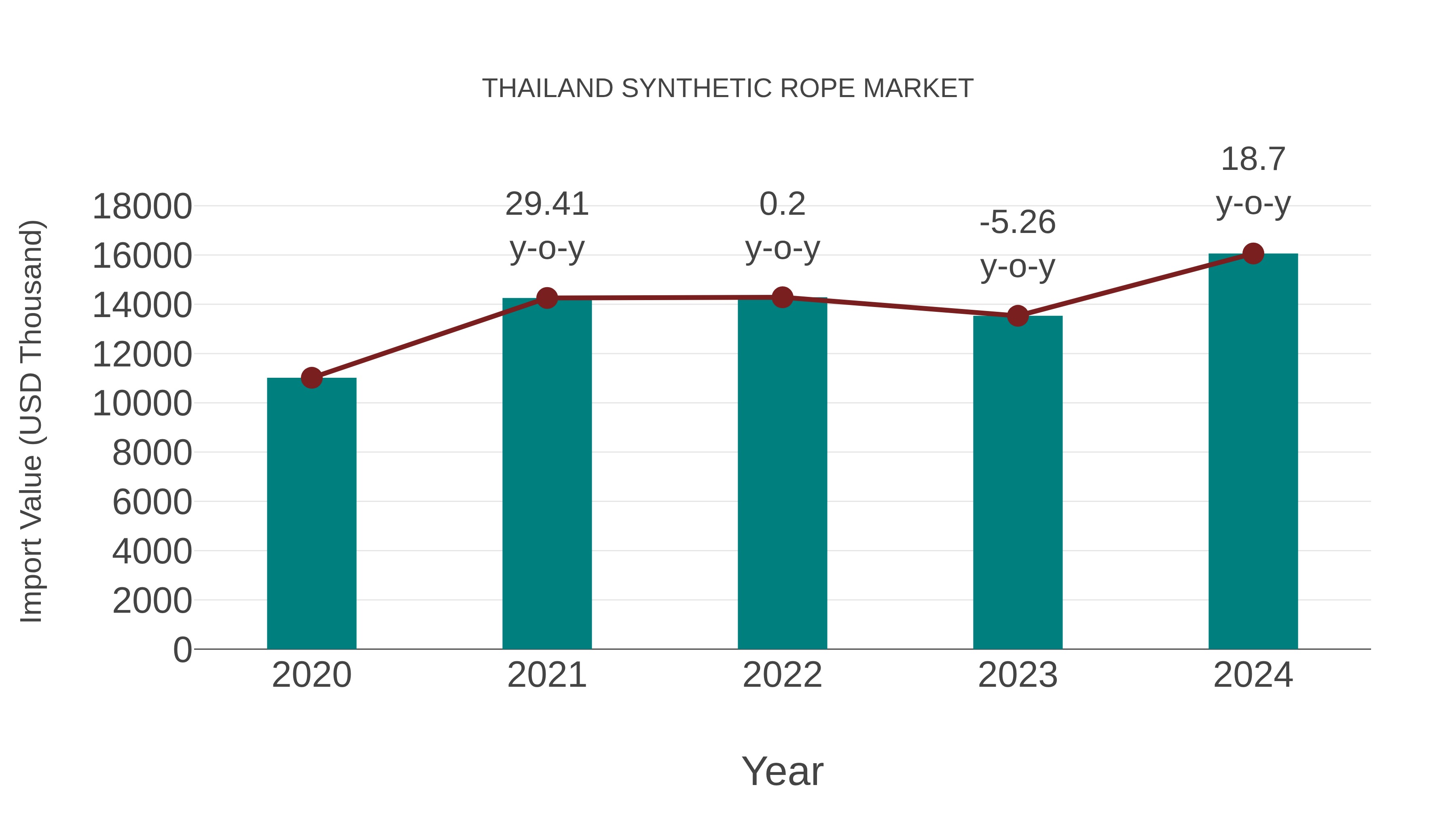
Thailand import trend for the synthetic rope market exhibited significant growth from 2023 to 2024, with a notable 18.7% increase. The compound annual growth rate (CAGR) from 2020 to 2024 stood at 9.89%. This surge in imports can be attributed to a notable shift in demand towards synthetic rope products, reflecting a strong market momentum and stability during the period analyzed.
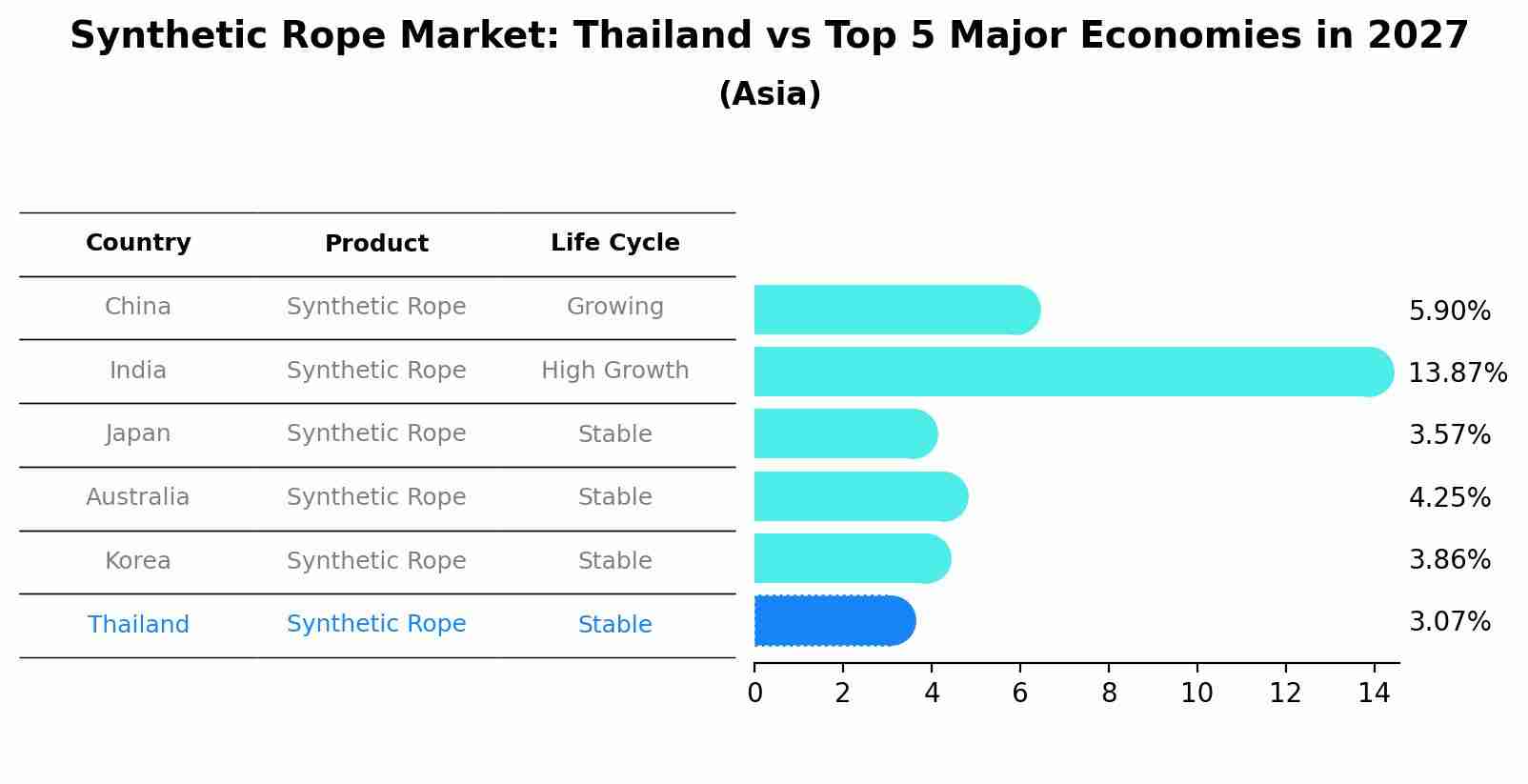
Synthetic Rope Market: Thailand vs Top 5 Major Economies in 2027 (Asia)
The Synthetic Rope market in Thailand is projected to grow at a stable growth rate of 3.07% by 2027, within the Asia region led by China, along with other countries like India, Japan, Australia and South Korea, collectively shaping a dynamic and evolving market environment driven by innovation and increasing adoption of emerging technologies.
Thailand Synthetic Rope Market Synopsis
The synthetic rope market in Thailand is driven by its versatile applications in sectors such as shipping, construction, and outdoor recreation. Synthetic ropes are favored for their strength, durability, and resistance to environmental factors. The growth in the construction industry and the increasing popularity of outdoor activities contribute to the demand for synthetic ropes. The market is also influenced by advancements in rope manufacturing technologies, which result in stronger and more durable products.
Drivers of the Market
The Thailand synthetic rope market is experiencing growth due to several compelling drivers. One of the primary factors is the rising maritime and fishing industry, where synthetic ropes are favored over traditional materials due to their superior strength and durability. Additionally, the construction and industrial sectors have increased the demand for synthetic ropes in various applications, including lifting and towing. The market is also benefiting from the need for safety and rescue equipment, such as synthetic ropes used in climbing and rescue operations. Moreover, the low maintenance requirements and resistance to environmental factors like corrosion and moisture make synthetic ropes a preferred choice across multiple sectors.
Challenges of the Market
The Thailand synthetic rope market faces challenges linked to maintaining product quality and strength while managing production costs. Ensuring compliance with safety and durability standards for various applications, such as maritime and industrial use, is essential. Adapting to changing material technologies and consumer preferences while facing competition from traditional materials like natural fiber ropes is an ongoing concern. Environmental sustainability and disposal practices for synthetic ropes are also important challenges.
COVID-19 Impact on the Market
The Thailand synthetic rope market experienced a decline in demand from the marine and industrial sectors during the pandemic. Reduced shipping activity and industrial operations affected the market. However, as the economy gradually reopened, demand for synthetic ropes rebounded, especially in construction and logistics sectors.
Key Players in the Market
Key players in the Thailand synthetic rope market include rope manufacturers and suppliers such as Thai Ropes Co., Ltd., Bangkok Rope Co., Ltd., and Siam Synthetic Co., Ltd. These companies specialize in producing high-strength synthetic ropes for various industrial and recreational applications, making them prominent names in the market.
Key Highlights of the Report:
- Thailand Synthetic Rope Market Outlook
- Market Size of Thailand Synthetic Rope Market, 2025
- Forecast of Thailand Synthetic Rope Market, 2032
- Historical Data and Forecast of Thailand Synthetic Rope Revenues & Volume for the Period 2022-2032F
- Thailand Synthetic Rope Market Trend Evolution
- Thailand Synthetic Rope Market Drivers and Challenges
- Thailand Synthetic Rope Price Trends
- Thailand Synthetic Rope Porter's Five Forces
- Thailand Synthetic Rope Industry Life Cycle
- Historical Data and Forecast of Thailand Synthetic Rope Market Revenues & Volume By Material for the Period 2022-2032F
- Historical Data and Forecast of Thailand Synthetic Rope Market Revenues & Volume By Polypropylene for the Period 2022-2032F
- Historical Data and Forecast of Thailand Synthetic Rope Market Revenues & Volume By Polyester for the Period 2022-2032F
- Historical Data and Forecast of Thailand Synthetic Rope Market Revenues & Volume By Nylon for the Period 2022-2032F
- Historical Data and Forecast of Thailand Synthetic Rope Market Revenues & Volume By Polyethylene for the Period 2022-2032F
- Historical Data and Forecast of Thailand Synthetic Rope Market Revenues & Volume By Specialty Fibers for the Period 2022-2032F
- Historical Data and Forecast of Thailand Synthetic Rope Market Revenues & Volume By End Use Industry for the Period 2022-2032F
- Historical Data and Forecast of Thailand Synthetic Rope Market Revenues & Volume By Marine & Fishing for the Period 2022-2032F
- Historical Data and Forecast of Thailand Synthetic Rope Market Revenues & Volume By Oil & Gas for the Period 2022-2032F
- Historical Data and Forecast of Thailand Synthetic Rope Market Revenues & Volume By Sports & Leisure for the Period 2022-2032F
- Historical Data and Forecast of Thailand Synthetic Rope Market Revenues & Volume By Construction for the Period 2022-2032F
- Historical Data and Forecast of Thailand Synthetic Rope Market Revenues & Volume By Others for the Period 2022-2032F
- Thailand Synthetic Rope Import Export Trade Statistics
- Market Opportunity Assessment By Material
- Market Opportunity Assessment By End Use Industry
- Thailand Synthetic Rope Top Companies Market Share
- Thailand Synthetic Rope Competitive Benchmarking By Technical and Operational Parameters
- Thailand Synthetic Rope Company Profiles
- Thailand Synthetic Rope Key Strategic Recommendations






































