Thailand Tempered Glass Market: Import Trend Analysis
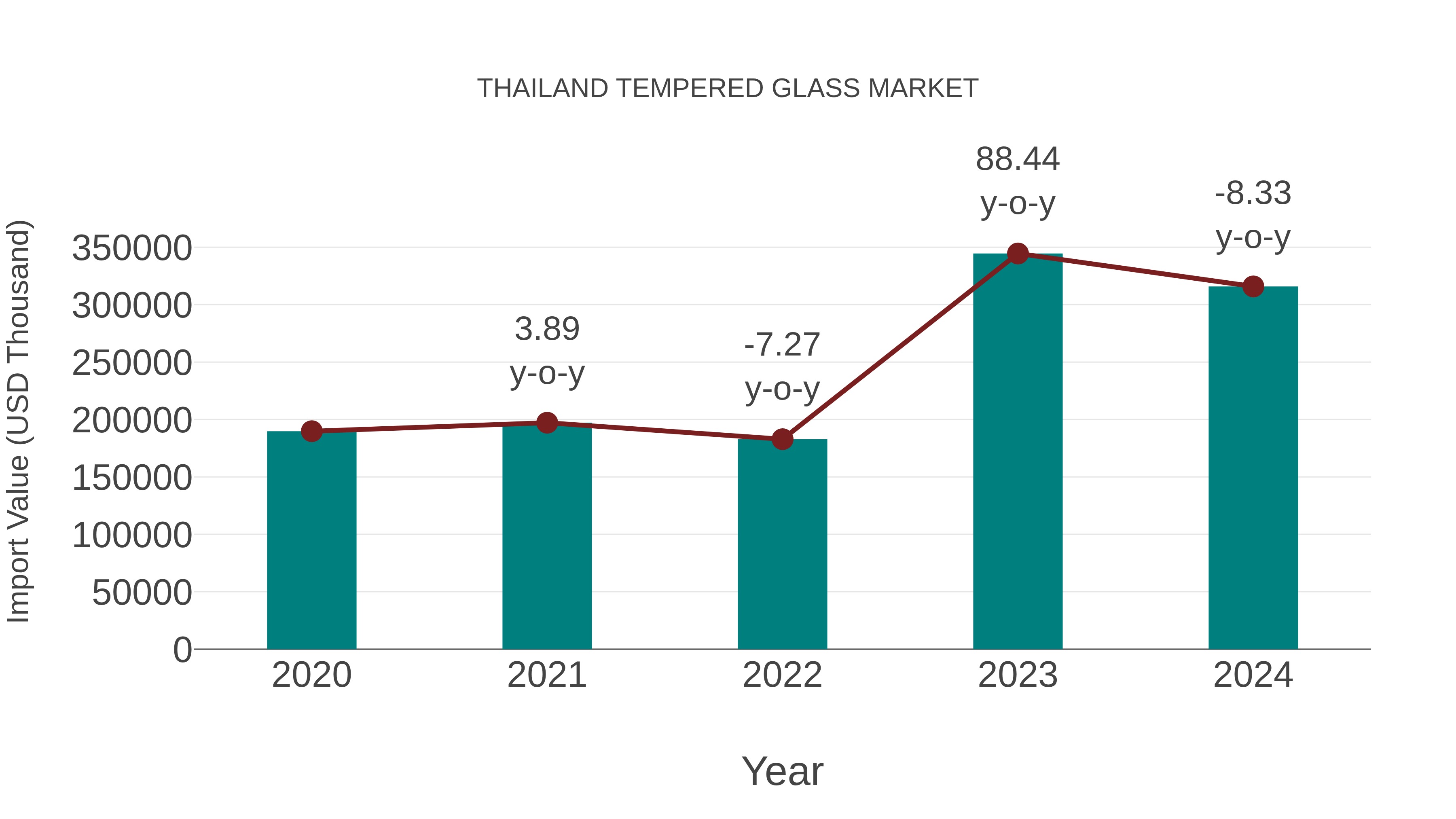
In the Thailand tempered glass market, the import trend experienced a decline from 2023 to 2024, with a growth rate of -8.33%. However, the compound annual growth rate (CAGR) for imports from 2020 to 2024 stood at 13.58%. This shift may be attributed to changes in demand dynamics or market conditions influencing import momentum.
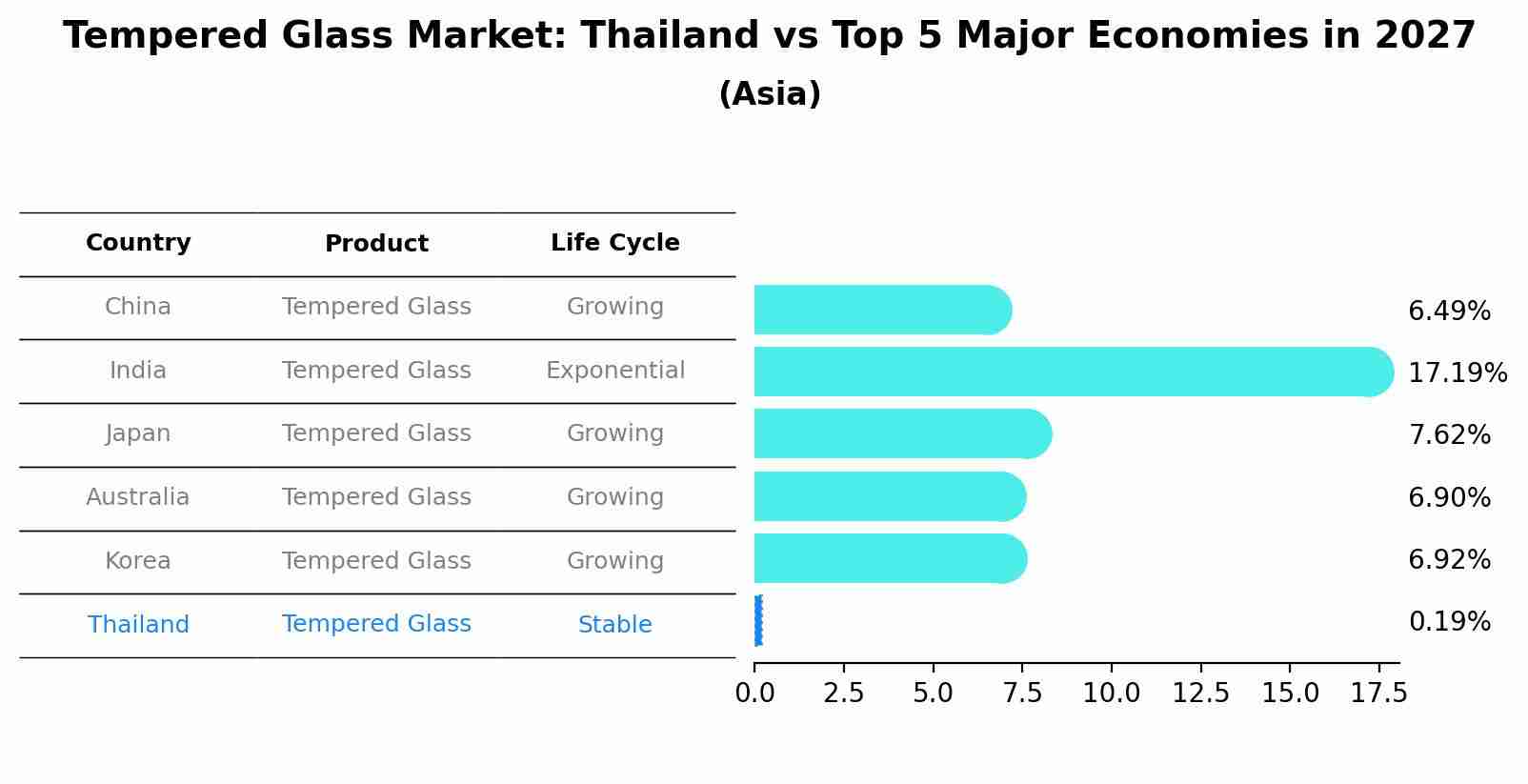
Tempered Glass Market: Thailand vs Top 5 Major Economies in 2027 (Asia)
In the Asia region, the Tempered Glass market in Thailand is projected to expand at a stable growth rate of 0.19% by 2027. The largest economy is China, followed by India, Japan, Australia and South Korea.
Thailand Tempered Glass Market Synopsis
Tempered glass is essential in the automotive, construction, and consumer electronics industries due to its safety and durability features. The Thailand Tempered Glass Market is witnessing growth as safety standards become more stringent. This type of glass is widely used in vehicle windshields, shower enclosures, and building facades, ensuring a robust market demand.
Drivers of the Market
The Thailand Tempered Glass market is driven by its safety and durability features. Tempered glass is highly resistant to breakage and is used extensively in applications where safety is paramount, such as automotive windows, building facades, and electronic devices. Growing concerns about safety and building codes drive the demand for tempered glass.
Challenges of the Market
The Thailand Tempered Glass Market faces several challenges. One significant challenge is the high cost of production. The tempering process requires specialized equipment and technology, leading to increased manufacturing expenses. This cost can be a barrier for businesses and consumers looking for affordable glass solutions. Additionally, tempered glass can still shatter under extreme stress, although it breaks into small, less harmful pieces. This characteristic may lead to concerns about safety in certain applications, especially in high-impact environments. Moreover, the market faces competition from alternative safety glass options like laminated glass. To address these challenges, companies in this market should explore cost-effective production methods, conduct safety awareness campaigns, and differentiate their tempered glass products based on unique features and applications.
COVID-19 Impact on the Market
The pandemic had a mixed impact on the Thailand Tempered Glass Market. While demand from the construction sector slowed during lockdowns, the market saw increased demand in the healthcare and electronics industries for applications such as medical equipment and touchscreens. The market also faced supply chain challenges. Post-pandemic, recovery in construction and consumer electronics is expected to drive market growth.
Key Players in the Market
In the Thailand Tempered Glass market, Bangkok Glass Public Company Limited stands out as a major player. They are renowned for their advanced glass tempering technology and diversified product offerings. Bangkok Glass has a wide customer base, serving both residential and commercial sectors with tempered glass solutions. Another noteworthy player is Siam Global House Public Company Limited, which operates in the construction and building materials industry. They offer a range of tempered glass products, focusing on safety and durability. These key players have played pivotal roles in shaping the tempered glass market in Thailand.
Key Highlights of the Report:
- Thailand Tempered Glass Market Outlook
- Market Size of Thailand Tempered Glass Market, 2025
- Forecast of Thailand Tempered Glass Market, 2032
- Historical Data and Forecast of Thailand Tempered Glass Revenues & Volume for the Period 2022-2032F
- Thailand Tempered Glass Market Trend Evolution
- Thailand Tempered Glass Market Drivers and Challenges
- Thailand Tempered Glass Price Trends
- Thailand Tempered Glass Porter's Five Forces
- Thailand Tempered Glass Industry Life Cycle
- Historical Data and Forecast of Thailand Tempered Glass Market Revenues & Volume By End-user Industry for the Period 2022-2032F
- Historical Data and Forecast of Thailand Tempered Glass Market Revenues & Volume By Automotive for the Period 2022-2032F
- Historical Data and Forecast of Thailand Tempered Glass Market Revenues & Volume By Construction for the Period 2022-2032F
- Historical Data and Forecast of Thailand Tempered Glass Market Revenues & Volume By Electronics for the Period 2022-2032F
- Historical Data and Forecast of Thailand Tempered Glass Market Revenues & Volume By Other End-user Industries for the Period 2022-2032F
- Thailand Tempered Glass Import Export Trade Statistics
- Market Opportunity Assessment By End-user Industry
- Thailand Tempered Glass Top Companies Market Share
- Thailand Tempered Glass Competitive Benchmarking By Technical and Operational Parameters
- Thailand Tempered Glass Company Profiles
- Thailand Tempered Glass Key Strategic Recommendations






































