Togo Agricultural Equipment Market Growth Rate Analysis (2025 - 2031)
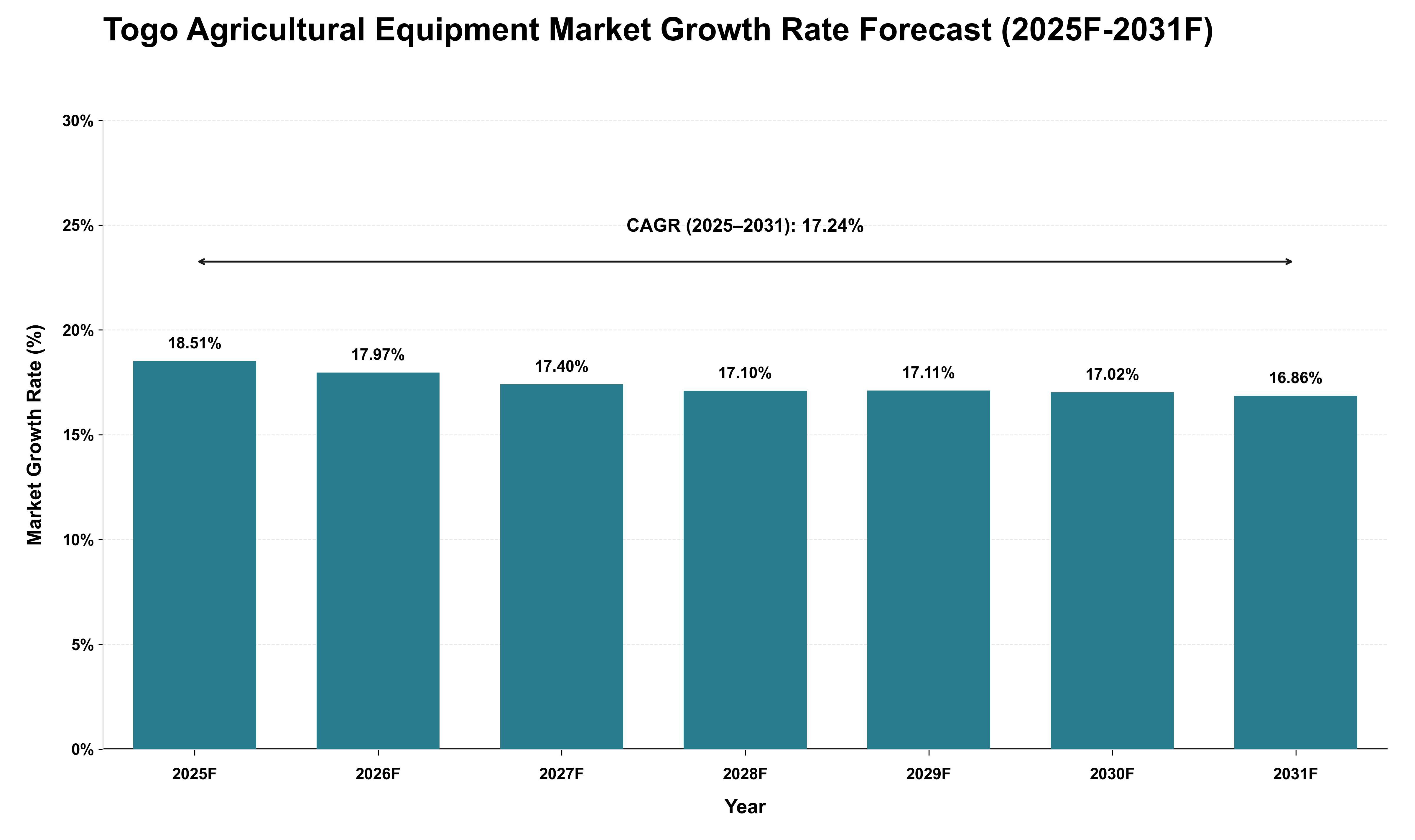
From 2025 onward, the Togo agricultural equipment market will experience robust growth, driven by increasing demand for mechanization in agriculture and supportive macroeconomic conditions. The projected compound annual growth rate (CAGR) of 17.24% reflects a strong upward trajectory, with annual growth rates peaking at 18.51% in 2025 before gradually stabilizing around 16.86% by 2031. This trend will be influenced by rising agricultural productivity needs, urbanization pressures, and government initiatives aimed at enhancing food security. Additionally, import dependencies on advanced agricultural technologies will likely spur investments in local distribution networks and service infrastructures, fostering a more competitive landscape. As global commodity prices fluctuate and climate change impacts agricultural practices, cyclical trends may emerge that further shape equipment demand dynamics, ensuring sustained interest from both domestic and foreign investors throughout this forecast period.
Key Highlights of the Report:
- Togo Agricultural Equipment Market Outlook
- Market Size of Togo Agricultural Equipment Market, 2024
- Forecast of Togo Agricultural Equipment Market, 2031
- Historical Data and Forecast of Togo Agricultural Equipment Revenues & Volume for the Period 2021-2031
- Togo Agricultural Equipment Market Trend Evolution
- Togo Agricultural Equipment Market Drivers and Challenges
- Togo Agricultural Equipment Price Trends
- Togo Agricultural Equipment Porter's Five Forces
- Togo Agricultural Equipment Industry Life Cycle
- Historical Data and Forecast of Togo Agricultural Equipment Market Revenues & Volume By Equipment Type for the Period 2021-2031
- Historical Data and Forecast of Togo Agricultural Equipment Market Revenues & Volume By Tractors for the Period 2021-2031
- Historical Data and Forecast of Togo Agricultural Equipment Market Revenues & Volume By Combine Harvesters for the Period 2021-2031
- Historical Data and Forecast of Togo Agricultural Equipment Market Revenues & Volume By Planters & Seeders for the Period 2021-2031
- Historical Data and Forecast of Togo Agricultural Equipment Market Revenues & Volume By Irrigation Equipment for the Period 2021-2031
- Historical Data and Forecast of Togo Agricultural Equipment Market Revenues & Volume By Application for the Period 2021-2031
- Historical Data and Forecast of Togo Agricultural Equipment Market Revenues & Volume By Crop Production for the Period 2021-2031
- Historical Data and Forecast of Togo Agricultural Equipment Market Revenues & Volume By Livestock Management for the Period 2021-2031
- Historical Data and Forecast of Togo Agricultural Equipment Market Revenues & Volume By Forestry Management for the Period 2021-2031
- Historical Data and Forecast of Togo Agricultural Equipment Market Revenues & Volume By End User for the Period 2021-2031
- Historical Data and Forecast of Togo Agricultural Equipment Market Revenues & Volume By Farmers for the Period 2021-2031
- Historical Data and Forecast of Togo Agricultural Equipment Market Revenues & Volume By Agricultural Contractors for the Period 2021-2031
- Historical Data and Forecast of Togo Agricultural Equipment Market Revenues & Volume By Agricultural Service Providers for the Period 2021-2031
- Togo Agricultural Equipment Import Export Trade Statistics
- Market Opportunity Assessment By Equipment Type
- Market Opportunity Assessment By Application
- Market Opportunity Assessment By End User
- Togo Agricultural Equipment Top Companies Market Share
- Togo Agricultural Equipment Competitive Benchmarking By Technical and Operational Parameters
- Togo Agricultural Equipment Company Profiles
- Togo Agricultural Equipment Key Strategic Recommendations






































