Togo Air Filters Market Growth Rate Analysis (2025 - 2031)
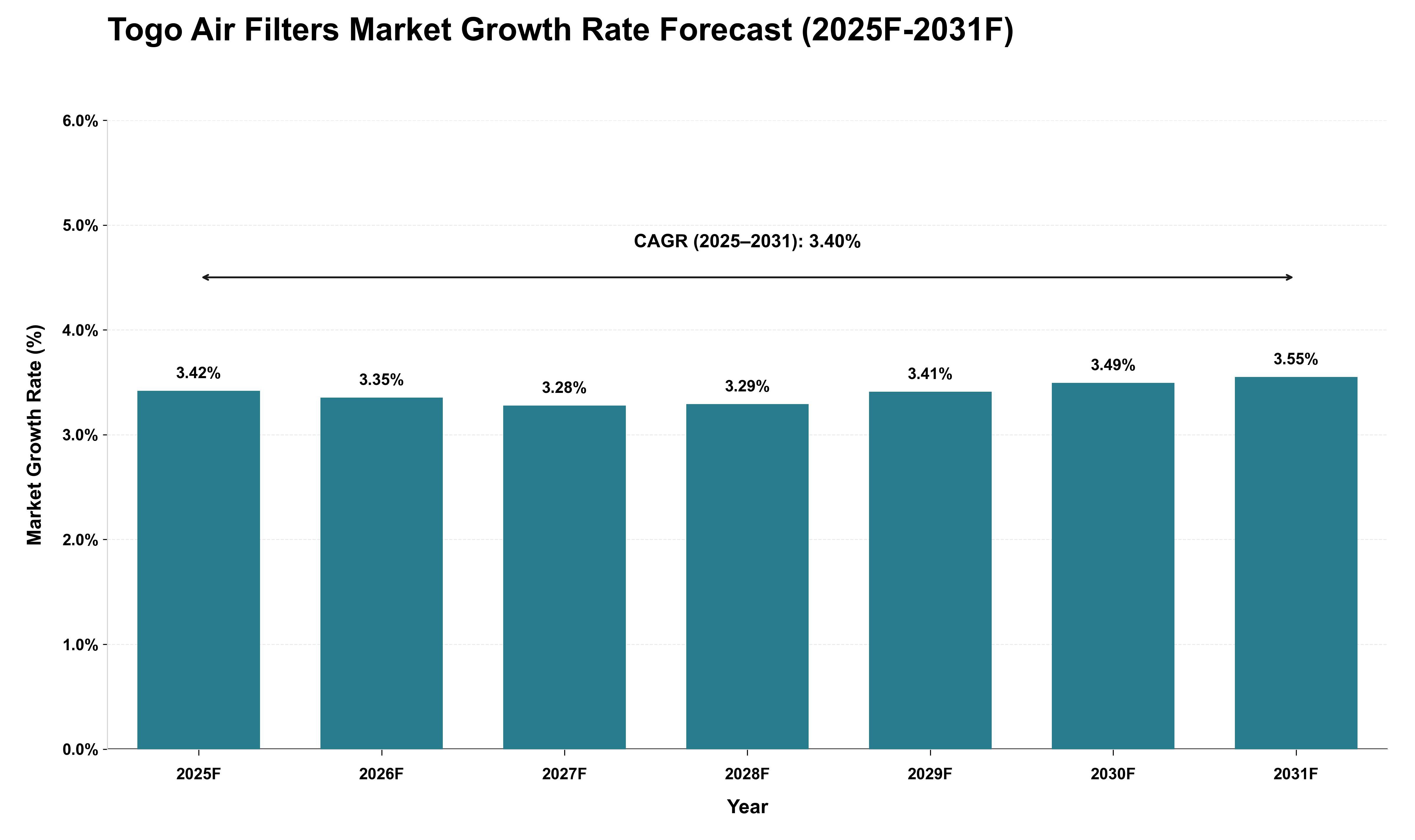
The Togo air filters market is poised to experience a steady growth trajectory from 2025 to 2031, driven by increasing urbanization and rising environmental awareness, which will enhance demand for cleaner air solutions. With a projected CAGR of 3.40%, the annual growth rates will reflect slight fluctuations, peaking at 3.55% in 2031. This trend indicates a consistent upward momentum in import volumes as domestic production may not fully meet the escalating demand, necessitating reliance on foreign suppliers for advanced filtration technologies. As global supply chains adapt to shifting consumer preferences and regulatory standards, Togo's import dependencies are expected to intensify, particularly for high-efficiency particulate air (HEPA) filters and other specialized products. Consequently, trade flows will likely reflect an increasing volume of imports that align with the anticipated growth in both residential and industrial sectors throughout this period.
Key Highlights of the Report:
- Togo Air Filters Market Outlook
- Market Size of Togo Air Filters Market, 2024
- Forecast of Togo Air Filters Market, 2031
- Historical Data and Forecast of Togo Air Filters Revenues & Volume for the Period 2021-2031
- Togo Air Filters Market Trend Evolution
- Togo Air Filters Market Drivers and Challenges
- Togo Air Filters Price Trends
- Togo Air Filters Porter`s Five Forces
- Togo Air Filters Industry Life Cycle
- Historical Data and Forecast of Togo Air Filters Market Revenues & Volume By Type for the Period 2021-2031
- Historical Data and Forecast of Togo Air Filters Market Revenues & Volume By Cartridge Filters for the Period 2021-2031
- Historical Data and Forecast of Togo Air Filters Market Revenues & Volume By Dust Collector for the Period 2021-2031
- Historical Data and Forecast of Togo Air Filters Market Revenues & Volume By HEPA Filters for the Period 2021-2031
- Historical Data and Forecast of Togo Air Filters Market Revenues & Volume By Baghouse Filters for the Period 2021-2031
- Historical Data and Forecast of Togo Air Filters Market Revenues & Volume By Others for the Period 2021-2031
- Historical Data and Forecast of Togo Air Filters Market Revenues & Volume By End-User for the Period 2021-2031
- Historical Data and Forecast of Togo Air Filters Market Revenues & Volume By Residential for the Period 2021-2031
- Historical Data and Forecast of Togo Air Filters Market Revenues & Volume By Commercial for the Period 2021-2031
- Historical Data and Forecast of Togo Air Filters Market Revenues & Volume By Industrial for the Period 2021-2031
- Togo Air Filters Import Export Trade Statistics
- Market Opportunity Assessment By Type
- Market Opportunity Assessment By End-User
- Togo Air Filters Top Companies Market Share
- Togo Air Filters Competitive Benchmarking By Technical and Operational Parameters
- Togo Air Filters Company Profiles
- Togo Air Filters Key Strategic Recommendations






































